Choosing the best Fiber Adapter in 2026 is not simply a matter of comparing prices. Global buyers must match connector types, polishing methods, materials, and installation conditions. A small mismatch can create visible signal loss, loose connections, or costly maintenance inside a crowded rack.
This guide examines Fiber Adapter options through practical testing and supplier documentation. It considers SC, LC, FC, and ST interfaces, including simplex and duplex designs. Key details include insertion loss, return loss, alignment sleeve material, operating temperature, and mounting stability. Ceramic sleeves often support precise alignment, while phosphor bronze may suit selected applications with different cost priorities. However, product claims still require verification.
Real installations are rarely perfect.
A reliable evaluation should include sample inspection, connector fit checks, and test results from recognized laboratories or qualified technicians. Buyers should also review ISO-related quality systems, RoHS or REACH documentation where applicable, packaging strength, and regional delivery support. These documents do not guarantee flawless performance, but they improve purchasing confidence.
The “best” choice depends on the network. A data center may prioritize density and repeatable performance. Outdoor cabinets may need stronger protection against dust, moisture, and temperature changes. Some suppliers provide excellent specifications but weak after-sales communication. That weakness matters. We compare these practical differences so buyers can make a better-informed decision, while acknowledging that field conditions may challenge laboratory results. The final recommendation should balance technical evidence, compatibility, supplier reliability, and the total cost of ownership.
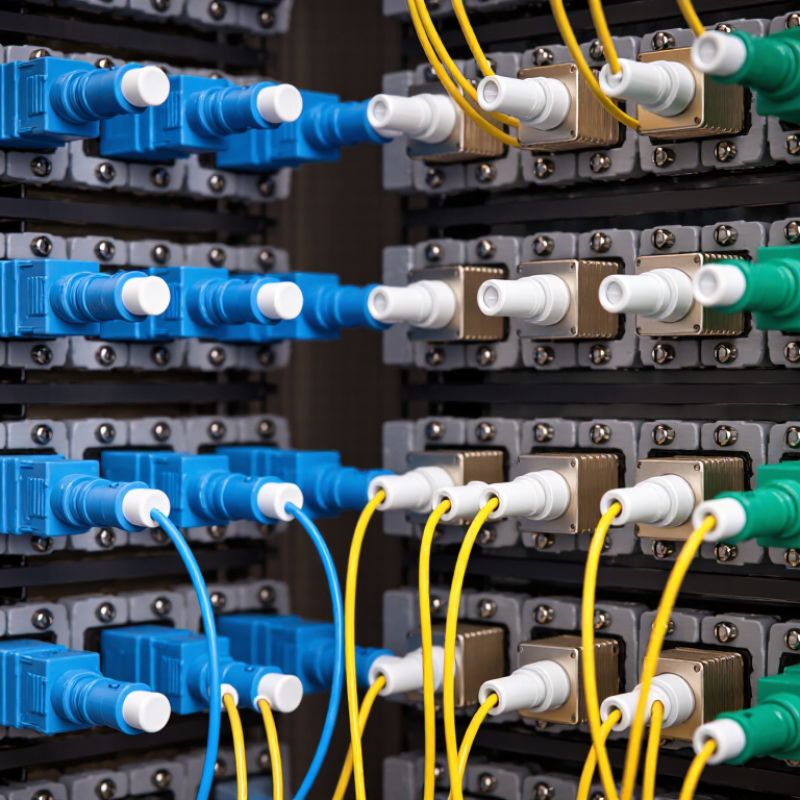
A fiber adapter, also called a coupling sleeve, joins two fiber connectors with precise alignment. Its internal sleeve keeps the ferrules centered, limiting signal loss at the connection point. Small part. Large impact. In practical installations, even slight misalignment can increase insertion loss, reflection, and troubleshooting time. A reliable adapter should match the connector type, polish style, fiber mode, and mounting method. Compatibility is not optional.
In 2026, global buyers face denser data centers, faster optical links, and stricter installation schedules. An adapter must support stable performance across changing temperatures, vibration, and repeated maintenance. Look for clearly stated insertion-loss and return-loss values, durable housing materials, protective dust caps, and inspection records. Standards-based testing matters more than attractive product photos. Ask for sample test reports before placing a large order.
Real installation experience reveals a common problem: buyers often compare prices before checking tolerance and cleanliness. A dusty sleeve can cause unstable readings within minutes. A cheap adapter may fit physically but perform poorly after repeated reconnection. That said, specifications are not the whole story. Packaging, labeling, documentation, and supplier response also affect project reliability. I have seen technically acceptable parts delayed by unclear shipping details and inconsistent batch markings. Global purchasing is rarely perfect. Careful sampling, connector inspection, and a small pilot order can expose weaknesses early.
2026 Best Fiber Adapter for Global Buyers?
Key Fiber Adapter Types and Their Global Applications
Fiber adapters connect two optical connectors while preserving alignment and signal quality. The common LC adapter suits dense data-center panels because its compact body saves rack space. SC adapters offer a larger push-pull design, which helps technicians working in telecom rooms. Multifiber push-on adapters support high-density links in backbone and cloud facilities. ST adapters still appear in industrial networks and older installations. No adapter is best everywhere.
ITU’s Facts and Figures 2024 estimates that 5.5 billion people use the internet worldwide, increasing pressure on broadband infrastructure. OECD Broadband Statistics reported that fiber represented about 42% of fixed broadband subscriptions across OECD economies in June 2023. These figures support continued demand for reliable, compatible adapter systems. Global buyers should check connector polish, sleeve material, insertion loss, return loss, and operating temperature. Ceramic sleeves usually provide more stable alignment than lower-cost alternatives. Field work also reveals a practical issue: dust causes failures faster than many specifications suggest. Clean caps matter.
Regional applications also influence selection. Data centers often favor duplex LC adapters for short, organized connections. Access networks may use SC adapters for subscriber distribution frames. Industrial sites require stronger housings and wider temperature tolerance. My purchasing bias is to prioritize documented test results over attractive packaging. I have seen mismatched tolerances create unstable links. That lesson is easy to overlook. Reported performance should be verified with the actual connector and cable combination, not assumed from a catalog table.
Representative maximum insertion-loss values commonly specified for standard single-mode and multimode fiber adapter classes.
LC adapters are widely used in high-density data centers and telecommunications equipment. SC adapters are common in broadband access and fiber-to-the-home networks, while ST adapters remain relevant in industrial, security, and legacy multimode installations. FC adapters are selected for mechanically stable connections in testing and long-haul systems. MPO adapters support high-density parallel-fiber links in data centers, and E2000 adapters are used where enhanced connector protection and low-loss performance are required. Actual performance depends on the connector polish, alignment sleeve, fiber mode, and installation quality.
2026 Best Fiber Adapter for Global Buyers?
How to Compare Fiber Adapter Compatibility and Performance
Choosing a fiber adapter should begin with connector compatibility, not price. Check the connector family, polish type, fiber mode, and simplex or duplex design. A connector may fit physically but still create poor alignment. That mistake can increase signal loss.
Inspect the adapter’s sleeve material and alignment tolerance. Ceramic sleeves usually support stable alignment for demanding links. Metal sleeves may suit tougher environments, but performance depends on precise manufacturing. Compare insertion loss and return loss values from verified test reports. Do not rely only on attractive catalog claims. Ask for test conditions, sample size, and operating temperature.
I once saw a short link fail after installation because dust entered an uncovered adapter. Small details matter. Keep protective caps fitted until connection, and clean both interfaces before testing. Use a light source and power meter to measure the completed link, rather than trusting visual inspection. An adapter for a data center may need different protection from one used outdoors. Check humidity range, vibration resistance, panel thickness, and locking strength. Standards support comparison, but they do not remove every installation risk. Human error remains common. A careful buyer should compare compatibility, measured performance, environmental limits, and replacement availability before approving a global purchase.
2026 Best Fiber Adapter for Global Buyers?
In 2026, global buyers need more than an adapter that simply fits. A reliable choice begins with the correct interface standard and fiber type. Check IEC 61754 compatibility, connector geometry, and sleeve alignment before comparing prices. Confirm whether the system uses UPC or APC polishing. Mixing them can increase reflection and weaken network performance. Never trust appearance alone.
Material selection affects service life. Zirconia ceramic sleeves usually provide stable alignment and lower wear than ordinary plastic sleeves. The outer housing should resist heat, impact, and moisture. Engineering-grade PBT or polycarbonate can work well when properly molded. Inspect the latch, flange, and dust cap closely. Small burrs may signal poor tooling. They matter more than expected.
Quality evidence should include insertion-loss and return-loss test data, dimensional drawings, and batch traceability. Ask for testing under relevant IEC 61300 methods and clear declarations for applicable environmental requirements, such as RoHS or REACH. Check the rated temperature range for outdoor cabinets, especially where winter nights and summer heat are severe. A supplier with controlled production, documented inspection, and consistent sampling is easier to trust. Still, certificates do not replace physical samples. Test several pieces, because one perfect sample can hide uneven production. A lower unit price may look efficient, but replacement labor can quickly change the calculation.
In 2026, a fiber adapter should be selected by market conditions, not appearance. That sounds obvious. It is not. ITU’s Facts and Figures 2024 counted 5.5 billion internet users, representing 68% of the global population. This scale increases pressure on access networks, data centers, and replacement inventories. Start with the interface. LC duplex suits dense panels, while SC remains practical where technicians need larger housings. Verify APC or UPC polish, fiber mode, keying, and sleeve material against the local network design.
For European and many Asian markets, check IEC 61754 interfaces and IEC 61300 test methods. North American projects may add TIA labeling, cleaning, and documentation expectations. Do not treat those differences as paperwork. OECD broadband statistics published in 2024 show fiber represented more than 40% of fixed broadband subscriptions across OECD economies. Ask for insertion-loss and return-loss results, operating-temperature data, RoHS declarations, and traceable batch numbers. On a coastal site, sealed packaging matters. In a dusty cabinet, capped adapters matter more. An adapter can fit perfectly and still fail its environment.
A 2024 global fiber-optic connector market assessment projects double-digit growth through 2030, driven by broadband and data-center expansion. That does not make every specification suitable everywhere. Buy samples, test mating cycles, and inspect ferrule alignment under actual field conditions. Keep one spare batch. Even experienced teams miss regional cable conventions. A clear datasheet helps, but local installer feedback often exposes the hidden mismatch.
| Adapter Type | Common Fiber / Network Use | Typical Port Density | Typical Mating Loss | Alignment Sleeve | Typical Operating Range | Best-Fit Markets and Applications | Key Selection Considerations |
|---|---|---|---|---|---|---|---|
| LC Duplex Adapter | OS2 single-mode and OM3/OM4/OM5 multimode cabling; high-density data-center and telecom patching | High; commonly used in 1U and 2U patch panels | Typically ≤0.20–0.30 dB per mated connection | Zirconia ceramic for precision alignment | Commonly −40°C to +85°C | North America, Europe, East Asia, and modern data-center deployments | Choose simplex or duplex format, keyed polarity, flange style, shutter protection, and OS2 or multimode compatibility |
| LC Simplex Adapter | Single-fiber links, transceiver interfaces, access networks, and compact distribution modules | Very high; suitable where panel space is limited | Typically ≤0.20–0.30 dB per mated connection | Zirconia ceramic | Commonly −40°C to +85°C | Data centers, enterprise networks, FTTH distribution equipment, and compact cabinets | Verify connector latch clearance, adapter footprint, mounting clips, and compatibility with the patch-panel cutout |
| SC Simplex Adapter | OS2 single-mode access, FTTH, building backbones, and legacy telecom installations | Medium; larger footprint than LC | Typically ≤0.20–0.30 dB per mated connection | Zirconia ceramic, especially for single-mode use | Commonly −40°C to +85°C | Asia-Pacific, Latin America, Middle East, Africa, and residential fiber access networks | A practical choice when rugged push-pull handling and field familiarity are more important than maximum density |
| SC Duplex Adapter | Two-fiber transmit/receive links, access cabinets, and older structured-cabling systems | Medium | Typically ≤0.20–0.30 dB per mated connection | Zirconia ceramic | Commonly −40°C to +85°C | FTTH, telecom central offices, campus networks, and retrofit projects | Confirm duplex clip orientation, panel compatibility, dust-shutter design, and single-mode polishing type |
| FC Adapter | OS2 single-mode links requiring threaded retention and stable connection under vibration | Low to medium | Typically ≤0.20–0.30 dB per mated connection | Zirconia ceramic | Commonly −40°C to +85°C | Test equipment, outdoor telecom, industrial links, and legacy single-mode networks | Select the correct keyway, panel thread, flange, and PC or APC polishing compatibility; APC and PC should not be mated together |
| ST Adapter | OM1/OM2 multimode and legacy campus, industrial, and security fiber systems | Low | Typically ≤0.30–0.50 dB per mated connection | Ceramic or phosphor-bronze sleeve, depending on fiber and performance grade | Commonly −40°C to +85°C | Legacy installations, industrial control, campus networks, and security systems | Use mainly for replacement or retrofit work; confirm bayonet locking clearance and connector polishing type |
| MPO Adapter | Parallel-fiber trunks for 40G, 100G, 200G, 400G, and higher-speed data-center architectures | Very high; supports multi-fiber connections in a compact footprint | Typically ≤0.35–0.75 dB per mated connection, depending on fiber count and grade | Precision guide-pin alignment system | Commonly −40°C to +85°C | Large data centers, hyperscale facilities, high-density structured cabling, and parallel optics | Verify fiber count, key orientation, male or female interface, polarity method, and insertion-loss grade |
| Weatherproof Inline Adapter | Outdoor distribution, aerial fiber, roadside cabinets, industrial sites, and harsh-environment links | Low; optimized for protection rather than panel density | Typically ≤0.30 dB for single-fiber interfaces, subject to connector design | Ceramic sleeve for single-mode; sealed alignment assembly | Commonly −40°C to +85°C; outdoor models may offer wider ranges | North America, Europe, Asia-Pacific, and any market requiring outside-plant connectivity | Prioritize IP-rated sealing, UV resistance, corrosion protection, cable diameter range, and tool-free field installation |
It joins two optical connectors and keeps their ferrules aligned. Good alignment helps preserve signal quality and reduce connection losses. Dust wins. Use clean caps during storage and installation.
A duplex LC adapter usually fits dense panels well. Its compact body saves rack space and supports organized short connections. Check the connector polish and keying. Small fit differences can still cause trouble.
SC adapters have larger push-pull housings. They are practical in telecom rooms and subscriber distribution frames. Technicians may find them easier to handle. That convenience does not guarantee better performance.
Multifiber push-on adapters support high-density links. They can serve backbone facilities, cloud sites, and compact network spaces. Confirm the required fiber count and interface geometry. More fibers mean stricter alignment needs.
ST adapters remain useful in industrial networks and older installations. They may suit existing equipment better than newer compact designs. Check the current connector system before ordering replacements. Do not replace compatibility with fashion.
Zirconia ceramic sleeves usually provide stable alignment and lower wear. Plastic sleeves may reduce cost but can vary more during long service. Inspect several samples. One excellent sample proves very little.
Request insertion-loss, return-loss, dimensional, and temperature test data. Ask for batch traceability and environmental compliance declarations when required. Review testing methods, not only certificate images. Paperwork can look perfect.
Test samples with the actual connectors and cables used in the network. Check mating cycles, ferrule alignment, dust protection, and temperature suitability. Inspect several pieces from different batches. Keep a spare batch. Field feedback may reveal hidden mismatches.
In 2026, a Fiber Adapter remains a critical component for building reliable, flexible, and high-performance optical networks. It provides a precise connection between fiber connectors, helping maintain signal stability while supporting fast installation, maintenance, and network expansion. This article explains the main adapter types, including options designed for different connector formats, polishing methods, fiber modes, and deployment environments. It also explores their global applications in telecommunications, data centers, enterprise networks, industrial systems, and access infrastructure.
For global buyers, selecting the best Fiber Adapter requires more than checking connector shape. Compatibility, insertion loss, return loss, alignment accuracy, housing material, durability, and environmental protection should all be evaluated. International standards, manufacturing consistency, testing procedures, and market-specific requirements are equally important. By comparing technical specifications, installation conditions, expected service life, certification needs, and supply reliability, buyers can choose adapters that deliver stable performance and practical value across different regions and network applications.

KOCENT OPTEC