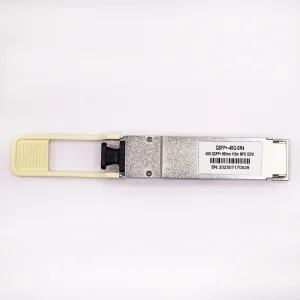
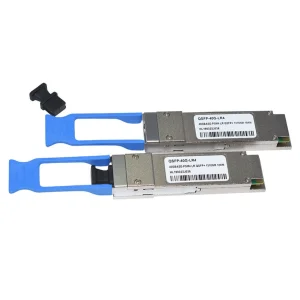
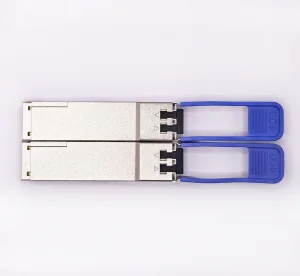
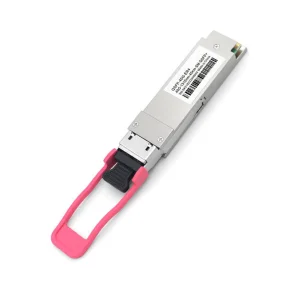
Explore our comprehensive catalog of 40G QSFP+ transceivers, multiplexers, and high-density fiber path cables engineered to sustain peak data flow across hyperscale enterprise grids.
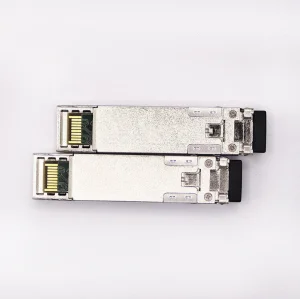
The modernization of contemporary enterprise local area networks (LANs), metropolitan area backbones, and carrier environments has demanded an increase in physical interface throughput. Standardized under the Small Form Factor committee, the QSFP (Quad Small Form-factor Pluggable) structure provides a scalable platform for 40 Gigabit Ethernet (40GbE) connectivity. Structurally, 40G QSFP modules employ 4 distinct transmission lanes, each processing data at a nominal line rate of 10 Gbps per lane. By multiplexing these optical streams, network engineers can achieve an aggregated 40 Gbps transport capacity over single-mode (SMF) or multi-mode fiber (MMF).
This dual-path system topology supports legacy NRZ (Non-Return-to-Zero) encoding, simplifying physical link budgets while minimizing transmission latency. By omitting complex forward error correction (FEC) logic on legacy copper or short-reach fiber links, 40G networks realize a significant drop in end-to-end packet propagation delay compared to early implementations of high-latency 100G configurations.
Across the global market, 40G optical interfaces are experiencing a secondary expansion phase. While hyper-scale cloud operators are prioritizing deployments of 400G and 800G optical engines, industrial automation ecosystems, public sector municipal networks, and medium-tier regional telecommunications nodes rely heavily on 40G modules. The hardware profile is highly robust, mature, and has established an optimal cost-to-performance matrix.
Sourcing coordinators favor 40G because it leverages existing OM3/OM4 parallel MPO infrastructure, avoiding the high cost of greenfield fiber installations. In developing network regions throughout Southeast Asia, Latin America, and Eastern Europe, regional telecommunication operators utilize KCO QSFP+ 40G LR4 and ER4 transceivers to build cost-effective ring topologies. This architecture ensures high-bandwidth connectivity over spans ranging from 10km up to 40km without requiring inline optical amplifications.
Selecting the appropriate 40G QSFP variant depends on path attenuation, connection distance, fiber medium, and interface style. Below is a structured engineering layout detailing key differences in transceivers:
| Interface Specification | Fiber Type | Wavelength (nm) | Connector Type | Max Link Distance | Digital Diagnostics (DDM) |
|---|---|---|---|---|---|
| KCO QSFP+ 40G SR4 | Multi-Mode (OM3/OM4) | 850nm VCSEL Array | MPO / MTP (12-Fiber) | 100m (OM3) / 150m (OM4) | Yes (Real-time monitoring) |
| KCO QSFP+ 40G PLR4 | Single-Mode (G.652) | 1310nm DFB | MPO / MTP (12-Fiber) | 10km | Yes (Laser temperature/power) |
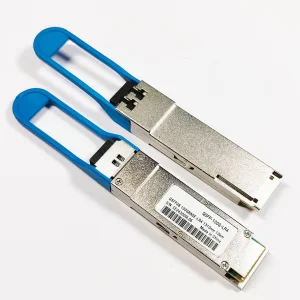
| KCO QSFP+ 40G LR4 | Single-Mode (G.652) | CWDM (1271, 1291, 1311, 1331) | LC Duplex | 10km | Yes (Receiver optical power) |
| KCO QSFP+ 40G ER4 | Single-Mode (G.652) | CWDM (1271, 1291, 1311, 1331) | LC Duplex | 40km | Yes (Transmit bias / temperature) |
Understanding the difference between parallel optics (such as the 40G SR4 and PLR4) and Wavelength Division Multiplexing (like the 40G LR4 and ER4) is critical for structural planning.
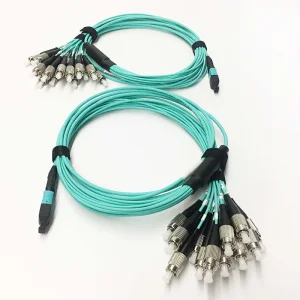
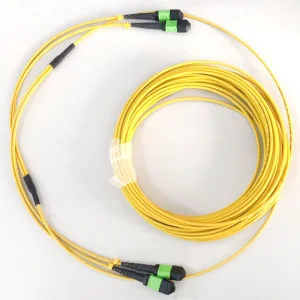
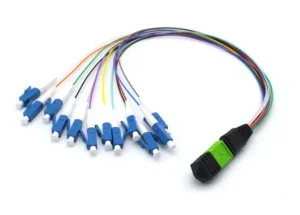
Parallel optical modules transmit data across four distinct fibers and receive over another four fibers, requiring an MPO/MTP structured cabling system. This architecture is highly cost-effective for short distances and allows break-out options (e.g., splitting one 40G port into four 10G SFP+ links). Conversely, CWDM modules integrate a multiplexer and demultiplexer inside the transceiver. They combine four wavelengths onto a single pair of SMF fibers, terminating at a standard LC Duplex connection. This preserves fiber counts over long runs but prevents port breakout.
Integrating high-speed optical hardware demands system-wide optimization. Kocent Optec’s 40G solutions are engineered to interface with modern networking hardware, facilitating smooth data routing in varied physical scenarios.
In modern flat networks, leaf-spine topologies replace traditional three-tier structures. 40G QSFP+ transceivers serve as the ideal spine-to-leaf interconnect. By utilizing KCO-25G-SFP28-LR for server connections and 40G SR4 modules for leaf-to-spine pathways, data centers achieve high throughput without the cost premium of 100G.
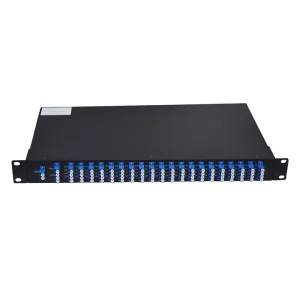
For long-distance data transport across cities, combining active 40G transceivers with passive DWDM solutions is highly efficient. By deploying OEM 19inch 100GHz C21-C60 40-Channel Mux Demux systems, network operators can consolidate multiple 40G channels onto a single fiber pair. This maximizes return on investment for leased dark fiber lines.
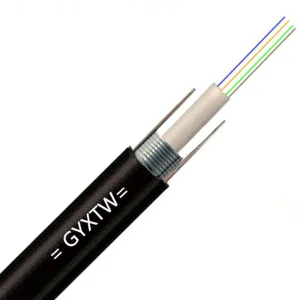
Industrial plants and campuses face harsh outdoor environments. Sourcing robust fiber links like the OM3 50/125 GYXTW Central Loose Outdoor Cable ensures protection against moisture, UV exposure, and mechanical stress. Standardizing on high-grade cabling maintains stable signal transmission for high-speed transceivers.
Established in 2012 in Hong Kong as a high-tech communication enterprise, Kocent Optec Limited is one of China's leading fiber optic termination product manufacturers and solution providers. We are dedicated to developing and manufacturing fiber optic communication products ranging from passive to active categories for telecommunication networks, enterprise networks, and data centers.
By leveraging our extensive experience and excellent production capacity gained over the years, we magnify the outcome for our valuable customers. This ultimately expands their core competencies and helps them outperform competitors. We place emphasis on customer collaboration, and we define ourselves as your valuable partner in fiber optic connection solutions. We believe our differentiators are your perceived advantages.
With more than 13 years of experience in manufacturing telecommunication fiber optic products, we strictly follow fiber optic industry standards. We use mature scientific methods to deliver your products on time and ensure that 100% of products are tested and inspected before shipment.

Years of sales and service experience have enabled us to win customers from different regions. Today, we have customers from East Asia, Southeast Asia, Middle East, Eastern Europe, Western Europe, Northern Europe, South America, North America, North Africa, and South Africa. Win-win cooperation is our constant goal. Many of our OEM and ODM products have won Telecom Operator tenders and satisfy end-user requests.
Our primary terminal telecom operator clients include:
Developing a forward-looking infrastructure strategy requires planning migration paths. 40G QSFP+ transceivers are ideal for modernizing 10G networks while preparing for future upgrades to 100G and 400G interfaces.
When requesting a 40G QSFP pricelist, cost variations depend on specific configuration requirements:
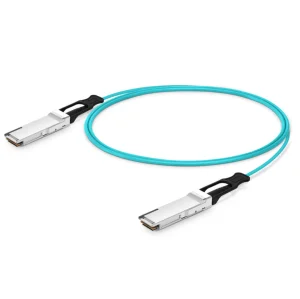
Because 40G SR4 utilizes standard 12-fiber MPO connectors, migrating to 100G (specifically 100G QSFP28 SR4) uses the same physical fiber path. Sourcing KCO QSFP56 200G LR4 S or China 200G QSFP-DD Active Optical Cables allows operators to scale bandwidth over existing runs, maximizing infrastructure value.
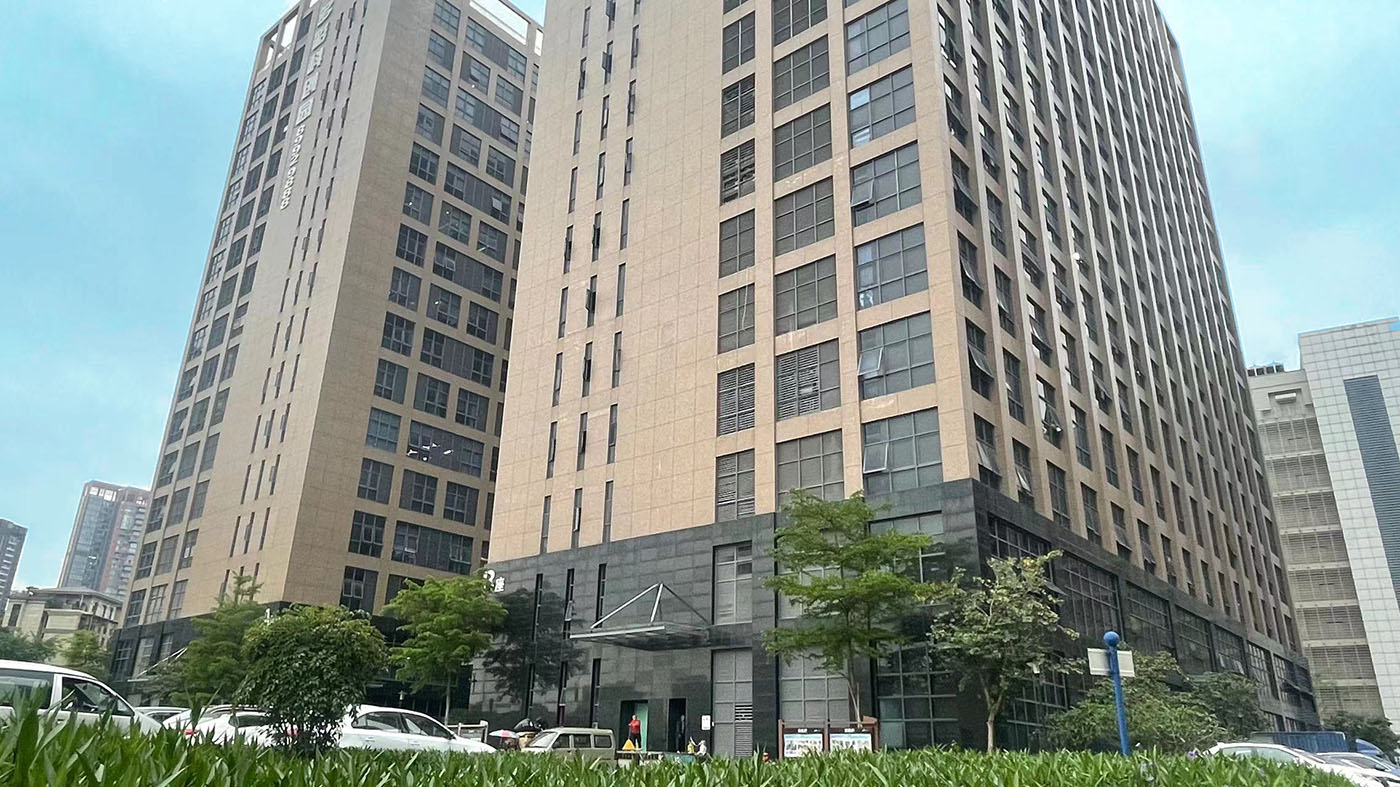
At Kocent Optec, we conduct rigorous testing to ensure product reliability. Every module is run through state-of-the-art testing equipment to verify:
Answers to common technical queries regarding 40G QSFP+ integration and deployment:
Expand and optimize your high-density fiber networks with our selection of active transceivers, rugged outdoor cabling, and passive multiplexing components:
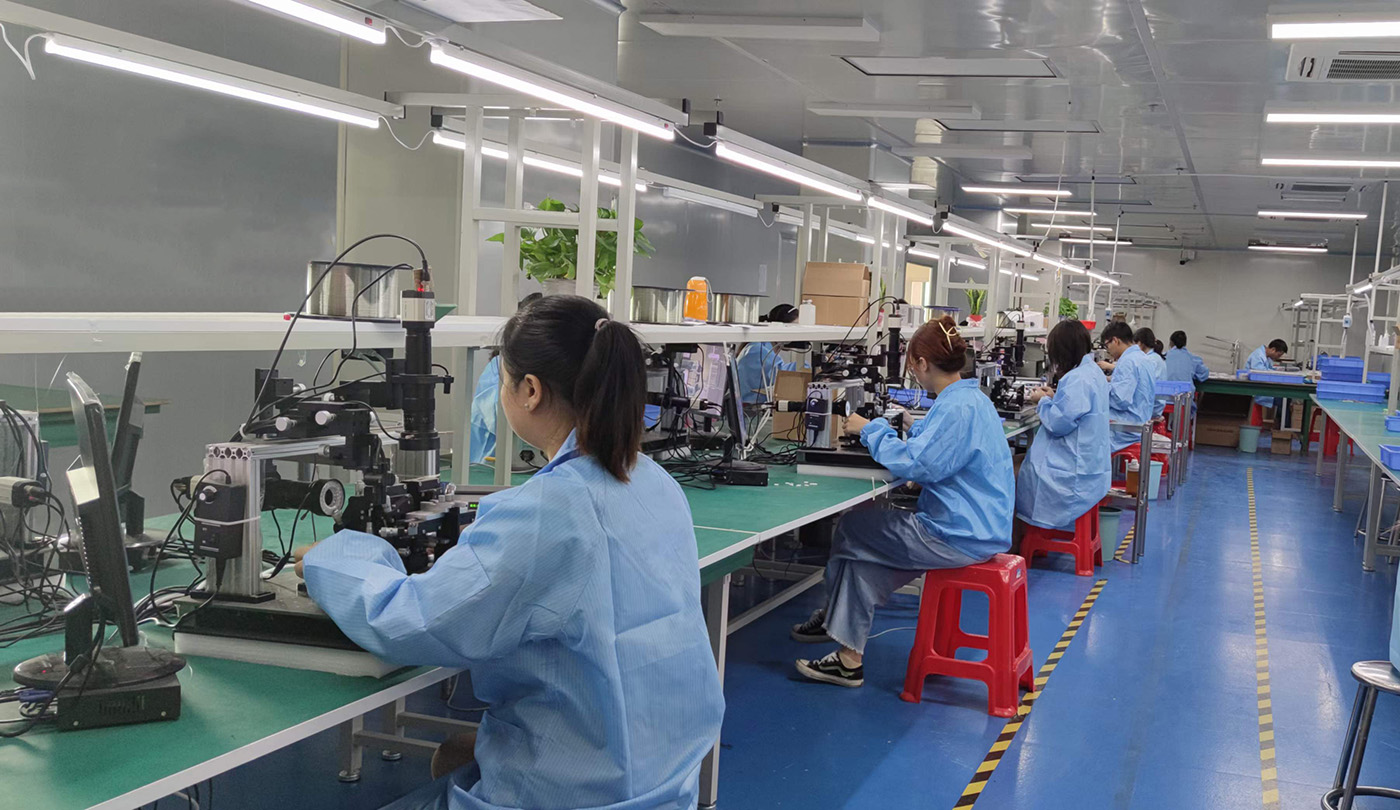
At Kocent Optec Limited, we prioritize reliable network connectivity. Reach out to our technical sales team for comprehensive compatibility charts, specialized project specifications, or volume pricing for 40G QSFP+ transceivers and high-density fiber assemblies.
 KOCENT OPTEC