Explore our industrial-grade DAC and AOC assemblies engineered for seamless switch, server, and storage deployment.
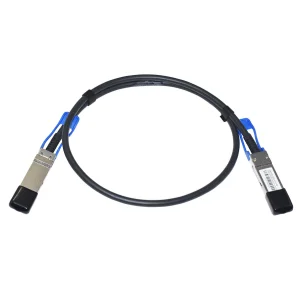
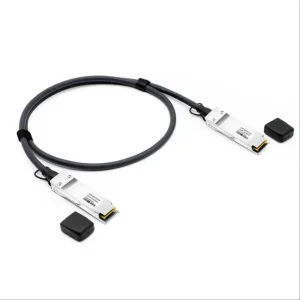
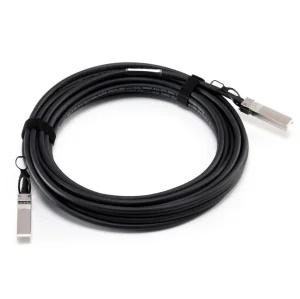
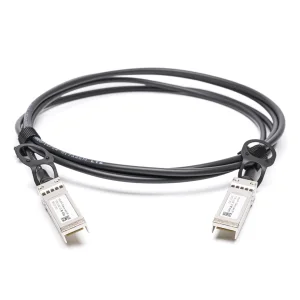
In the modern landscape of high-performance computing (HPC) and hyperscale cloud systems, the demand for bandwidth is experiencing an exponential shift. With transitions from legacy 10G/40G configurations to higher capacity 100G, 400G, and 800G fabrics, networking architects face critical decisions regarding inter-cabinet and intra-cabinet physical connections.
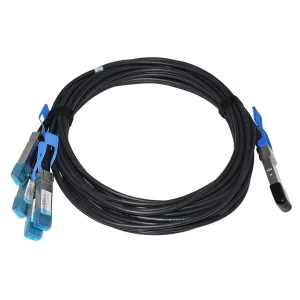
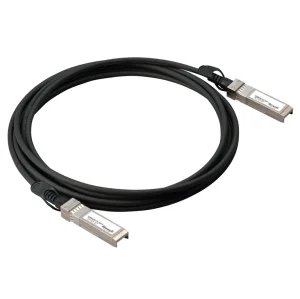
Direct Attach Copper (DAC) Cables: Running passively, DAC twinaxial cables rely directly on high-performance copper conductors to transmit signals. Because they do not feature electrical-to-optical conversion components, they demonstrate nearly zero latency, zero power dissipation, and ultimate deployment economy. DAC is the optimal Choice for short runs up to 3-5 meters.
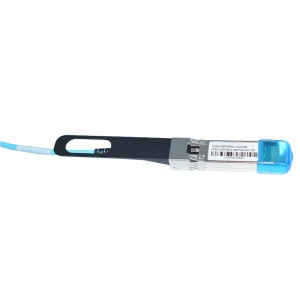
Active Optical Cables (AOC): Utilizing active electrical-to-optical converter chipsets on either transceiver end, AOC translates signals into optical pulses sent over multi-mode optical fibers. Free from electromagnetic interference (EMI) issues and boasting a reach up to 100 meters, AOC provides flexible routing, smaller bend radiuses, and significantly lower weight profiles for long-distance runs.

To help database architects select the perfect medium, here is a detailed performance breakdown based on speed, power, reach, and thermal profiles.
Direct electrical twinax assembly without active electronics inside the transceiver shell.
Uses signal booster or retimer chips (DSP) to restore signal integrity, enabling longer copper runs.
Integrates electro-optical chips inside the shell, outputting via standard multi-mode optical cables.

Established in 2012 in Hong Kong as a high-tech communication enterprise, Kocent Optec Limited has emerged as one of China's premier fiber optic termination product manufacturers and global interconnect solution providers.
We are dedicated to research, engineering, and manufacturing fiber optic communication products spanning both passive and active classifications. Our solutions are deployed worldwide in major telecommunication networks, massive enterprise grids, and hyper-scale cloud data centers.
By leveraging our deep manufacturing experience and streamlined production capacity developed over the last decade, we maximize quality outcomes for our customers, helping them minimize operational cost while outperforming their market competitors.
With more than 13 years of technical manufacturing experience in telecommunication and optical fiber technologies, we adhere strictly to international fiber optic standards (such as Telcordia, RoHS, CE, and ISO 9001/14001).
By utilizing mature scientific methodologies, automated production machinery, and high-frequency testing benches (including Bit Error Rate testing, eye-diagram evaluation, and temperature-humidity aging chambers), we verify that 100% of our products undergo rigorous inspection before packaging and shipping.
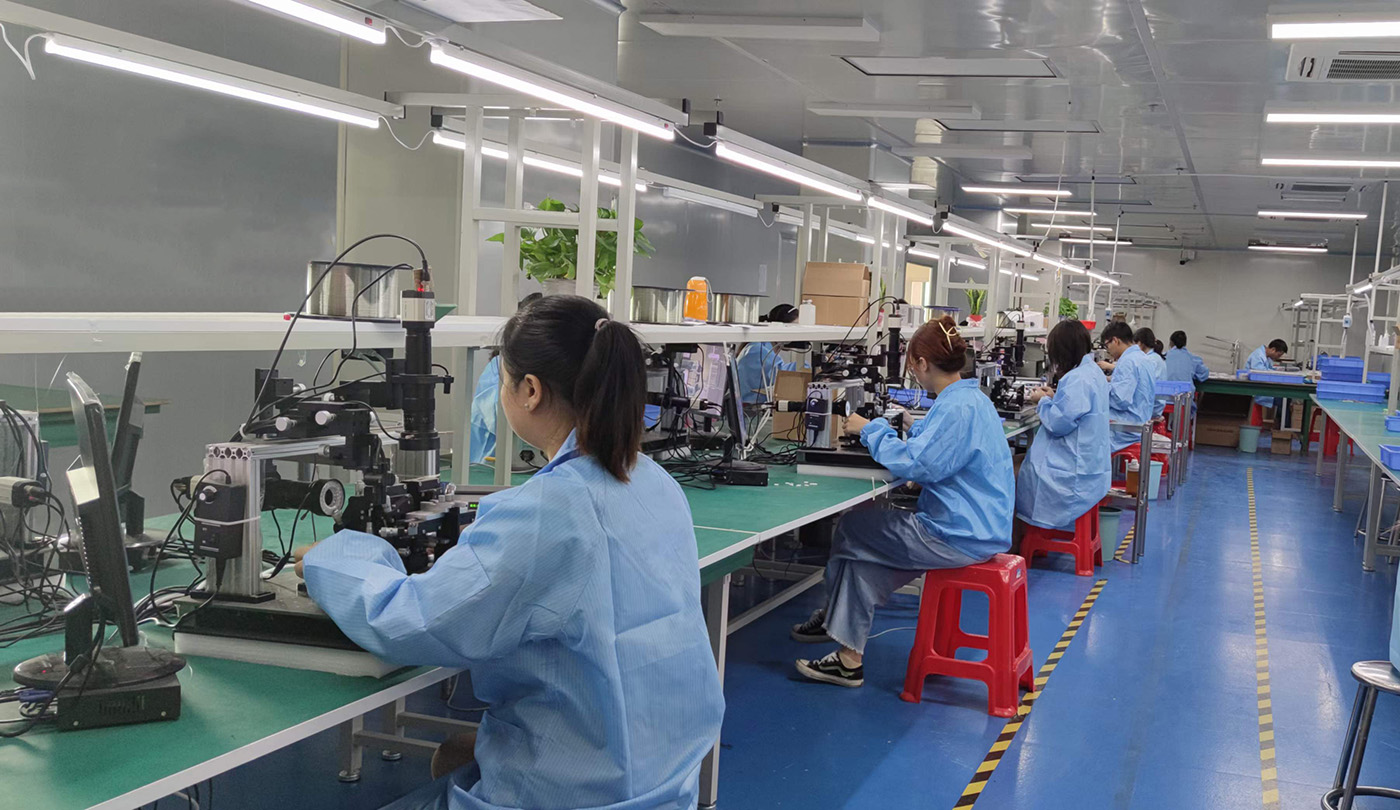
Years of sales execution and technical services have allowed us to gain trust across diversified geographic zones including East Asia, Southeast Asia, Middle East, Europe, Americas, and Africa. Many of our OEM and ODM products have won national Telecom Operator tenders.
Procuring interconnect systems for hyperscale data centers requires strict adherence to physical, thermodynamic, and programmatic specifications. Major cloud service providers (CSPs) and enterprise networks look beyond cost, focusing on structural criteria:
Modern fabrics combine hardware from Cisco, Arista, Juniper, Mellanox (Nvidia), and Dell. We program our EEPROMs/Microcontrollers with customized vendor-specific codes (compatibility keying) to ensure plug-and-play functionality, avoiding host warnings and port locks.
With the advent of high density GPU chassis consuming over 10kW per rack, the aerodynamic cross-section of connection cables is critical. DAC cables, while heat tolerant, are thick and block airflow. Light, thin AOC optical cables facilitate structured airflow, reducing cooling power draw.
Signal loss margins narrow as rates transition to PAM4. A high BER (Bit Error Rate) results in packet retransmission. Our factories optimize return loss and insertion loss to deliver flawless transmission parameters, providing clean eye diagrams on oscilloscope metrics.
As data transmission needs rise, simple NRZ (Non-Return-to-Zero) encoding has given way to PAM4 (Pulse Amplitude Modulation 4-level) at 56G and 112G per lane. Looking ahead, raw throughput demands are driving the next wave of structural evolutions:
Linear Drive Pluggable Optics (LPO): By removing DSP chips inside the transceivers and relying entirely on host-side ASIC equalization, LPO significantly reduces latency and power consumption. This architecture is increasingly integrated into next-generation AOC portfolios.
Silicon Photonics Integration: Integrating lasers and optical circuits directly onto silicon chips allows manufacturers to offer reliable multi-channel transceivers at lower price points, setting the stage for future 1.6T configurations.
CPO (Co-Packaged Optics): Overcoming high-speed trace losses between the switch chip and pluggable transceivers, CPO co-packages optics directly onto the switch substrate. While traditional pluggables will dominate through the 800G era, CPO remains the ultimate objective for ultra-low power 3.2T switch fabrics.
Find answers to technical and procurement questions about high-speed interconnect cables.
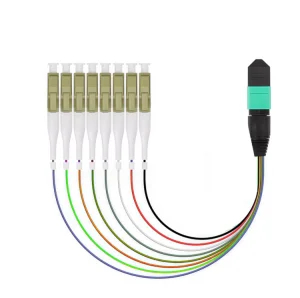
Complete your deployment with our professional termination cords, splitters, transceivers, and enclosures.
 KOCENT OPTEC