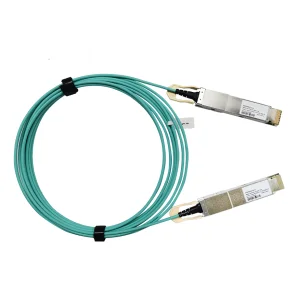
Explore our premium grade 25G SFP28 transceivers, ultra-speed interconnect solutions, and robust structural optical components engineered for absolute compatibility and carrier-class performance.
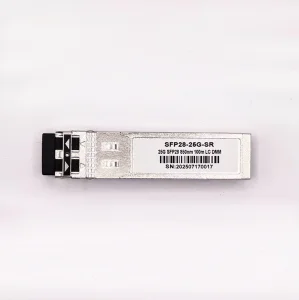
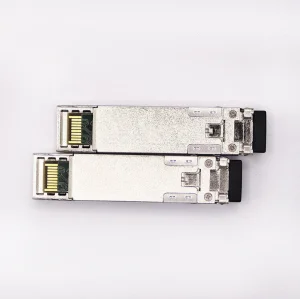
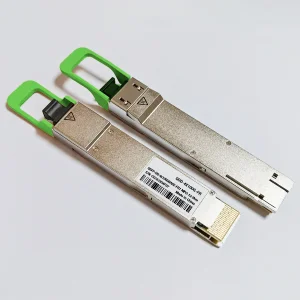
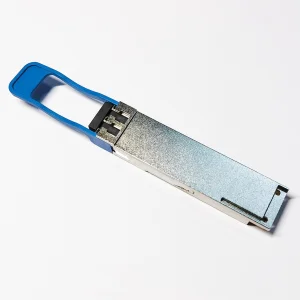
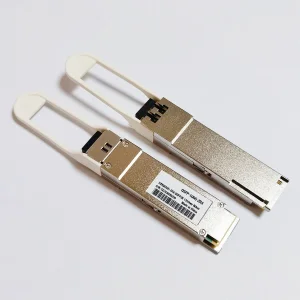
An in-depth analysis of structural integrity, electro-optical conversion mechanisms, and modern manufacturing paradigms governing high-speed telecom distribution networks.
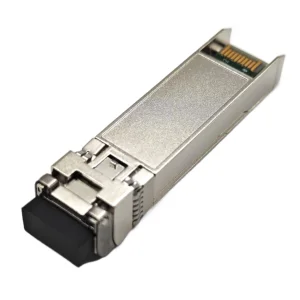
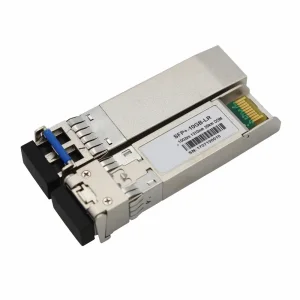
The transition from 10G SFP+ to 25G SFP28 represents a watershed moment in physical-layer networking technology. Operating on a single channel of 25.78125 Gb/s, SFP28 modules maximize physical density and lower cost-per-bit metrics by eliminating the complex lane routing associated with multi-channel optical engines. Under the hood, SFP28 transceivers leverage advanced semiconductor components like Distributed Feedback (DFB) lasers, Electro-absorption Modulated Lasers (EMLs), and highly sensitive Vertical-Cavity Surface-Emitting Lasers (VCSELs) coupled with state-of-the-art PIN or APD receivers. These integrations comply strictly with specifications defined by the SFF-8402, SFF-8431, and SFF-8472 MSA (Multi-Source Agreement) standards.
In structural deployments, the SFP28 architecture mitigates latency and signal dispersion issues. Integrated Clock and Data Recovery (CDR) circuits on both receive and transmit channels clean jitter profiles, guaranteeing ultra-low Bit Error Rates (BER) over physical ranges from 100 meters (MMF) up to 40 kilometers over Single-Mode Fiber (SMF). In contrast to older technologies, 25G SFP28 implements Digital Diagnostics Monitoring (DDM/DOM), empowering operators to inspect real-time metrics including optical output power, input power, laser bias current, module temperature, and internal supply voltages.
Providing carrier-grade optical hardware necessitates a systematic validation infrastructure. Kocent Optec ensures every transceiver complies with rigorous global interoperability criteria through custom testing paradigms:
Kocent Optec Limited, established in 2012 in Hong Kong as a hi-tech communication enterprise, stands as one of China's premier fiber optic termination product manufacturers and solution providers. We are dedicated to developing and manufacturing fiber optic communication products ranging from passive components to active transceivers designed for telecommunication networks, enterprise networks, and cloud data centers.
By leveraging our extensive experience and excellent production capacity built over the years, we magnify operational outcomes for our clients, expanding their core competencies and helping them outperform competitors. We place a deep emphasis on collaborative partnership, defining ourselves as a trusted extension of your engineering team. We believe our technical differentiators are your distinct operational advantages.
With more than 13 years of manufacturing expertise in telecommunication fiber optic products, we strictly adhere to international optical industry standards. Employing mature scientific production methods, we ensure 100% of our products are thoroughly tested, inspected, and validated before shipment to meet on-time delivery guarantees.

A breakdown of the integrated supply chains, automated packaging technologies, and scalability features that solidify China's leadership in high-speed optical module production.
From semiconductor die packaging to optical sub-assembly (TOSA/ROSA) manufacturing and mechanical housing design, our factories streamline lead times and slash material overhead by sourcing within high-density optical clusters in China.
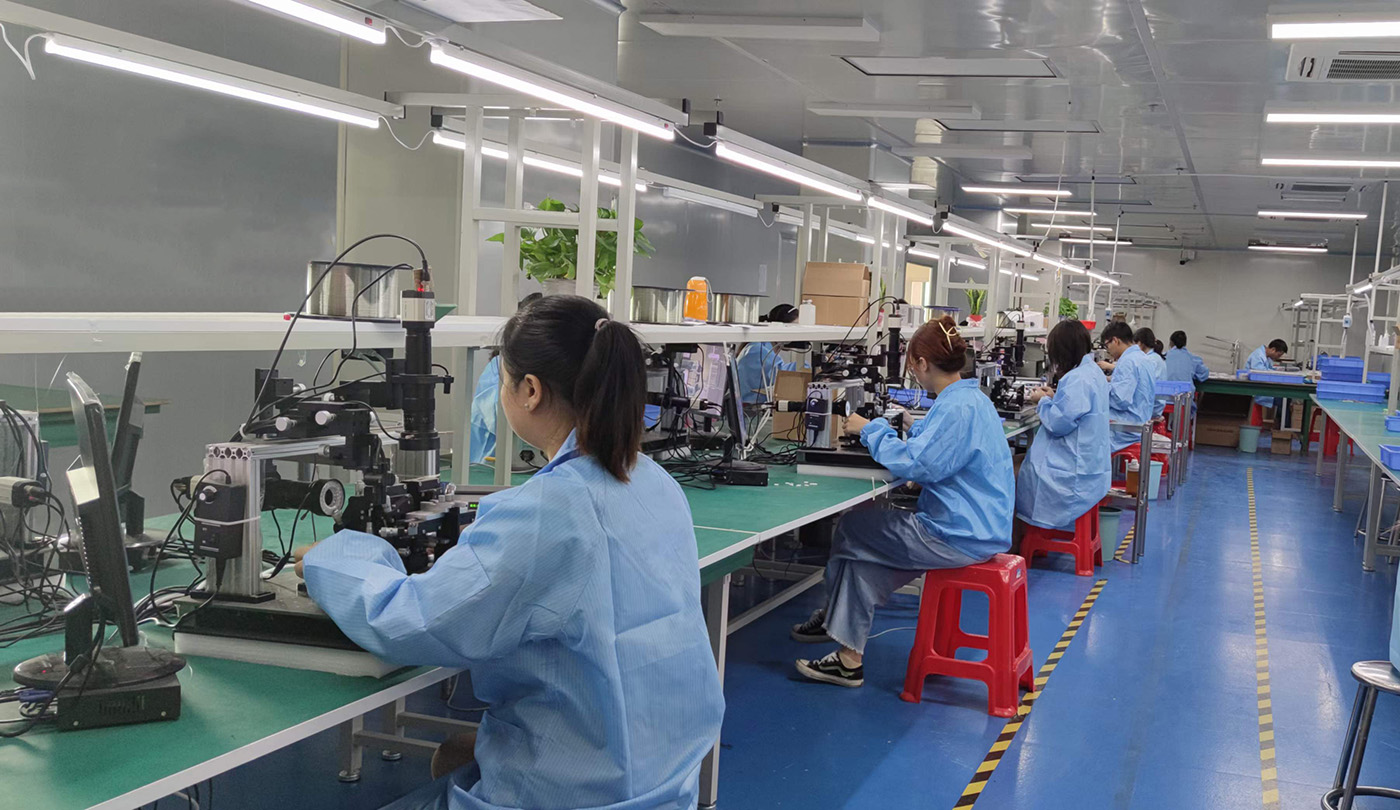
Utilizing high-precision Chip-on-Board (COB) assembly techniques and automated die bonders allows us to execute micron-level optical alignment, mitigating insertion loss while scaling up production output dynamically.
We deploy automated test configurations that subject every single active transceiver module to high-capacity packet traffic generation, checking for frame loss and monitoring performance in multi-vendor switch environments.

Our sales and service architectures have enabled Kocent Optec to build long-term relationships with network engineers across major regions, including East Asia, Southeast Asia, the Middle East, Eastern and Western Europe, Northern Europe, South America, North America, and parts of Africa.
We approach production with a strict win-win mentality. Our custom OEM and ODM configurations are engineered to satisfy Telecom Operator tender specifications, enabling our partners to deploy high-density, low-latency, and cost-effective fiber links.
Our terminal telecom networks and operators validated lists include:
Analyzing key drivers shaping deployment architectures across next-gen mobile fronthaul pipelines, enterprise cloud environments, and metro transport networks.
Modern 5G Next-Generation Radio Access Networks (NG-RAN) rely heavily on 25G SFP28 transceivers for eCPRI (enhanced Common Public Radio Interface) connections. In 5G Baseband Units (BBU) or Distributed Units (DU) linked directly to Remote Radio Units (RRU) or Active Antenna Units (AAU), data bandwidth needs exceed standard 10 Gbps limits. SFP28 optical modules provide the necessary 25 Gbps throughput on a single optical fiber channel, enabling mobile operators to scale wireless delivery systems without high fiber trenching costs.
Furthermore, BiDi (Bidirectional) SFP28 modules support single-strand duplex communications by splitting transmit and receive signals onto two distinct optical wavelengths (e.g., 1270nm and 1330nm), cutting local fiber requirements by half.
Data center topologies are moving rapidly from 10G-40G network layouts to 25G-100G architectures. In Leaf-Spine systems, Top-of-Rack (ToR) switches connect to servers via 25G links, while upstream aggregation points route traffic over 100G, 200G, or 400G backbones. Deploying 25G SFP28 modules on server Network Interface Cards (NICs) enables cloud service providers to boost computational resource efficiency by 2.5 times compared to legacy 10G ports, while maintaining the physical footprint of SFP-form-factor switch interfaces.
When procurement managers select optical transceiver suppliers, standardizing evaluation processes prevents network-wide component failures. Key operational factors to assess include:
Get answers to common technical, design, and sourcing questions about 25G SFP28 modules and patch assemblies.
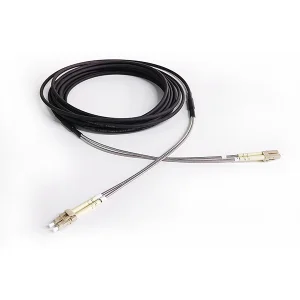
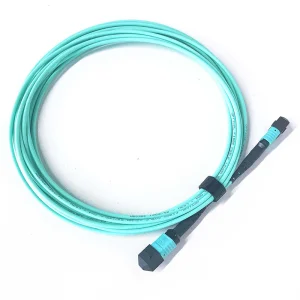
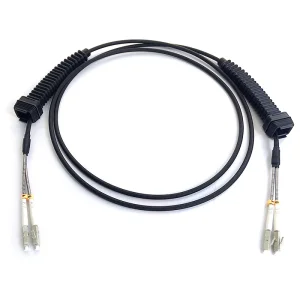
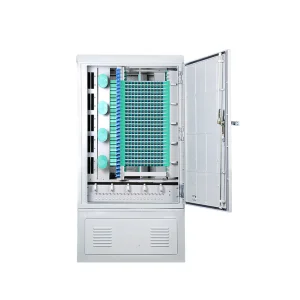
A broad selection of network solutions, including high-capacity 100G/200G/400G transceivers, active optical cables, and distribution cabinets from our production facility.
 KOCENT OPTEC