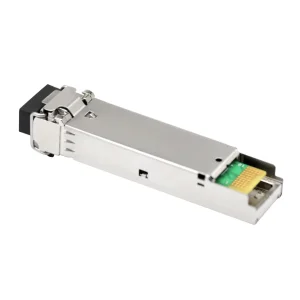
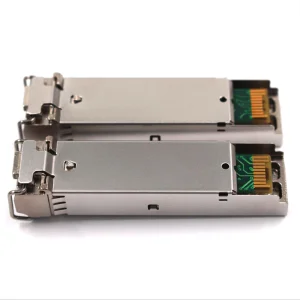
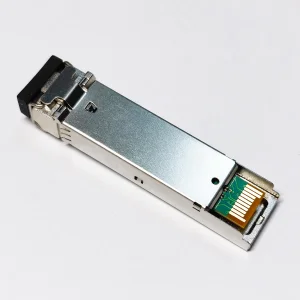
In modern telecommunication networks and enterprise IT infrastructures, Small Form-factor Pluggable (SFP) transceivers serve as the vital link between physical fiber media and active routing/switching hardware. While higher speeds such as 100G, 400G, and 800G dominate hyper-scale data center discussion, 1.25G and 2.5G SFP transceivers remain the critical backbone for edge access networks, enterprise campuses, fiber-to-the-home (FTTH) architectures, and industrial control environments.
Technically defined by the SFP Multi-Source Agreement (MSA) and standards such as IEEE 802.3z (for 1000BASE-X) and ITU-T G.984 (for GPON), these modules operate across a variety of wavelengths and transmission lengths. The physical layer design typically utilizes either a Fabry-Perot (FP) laser or a Distributed Feedback (DFB) laser paired with a photodetector—either a PIN photodiode or an Avalanche Photodiode (APD) for extended-range networks. Specifically:
Advanced diagnostic support via Digital Diagnostic Monitoring (DDM) or Digital Optical Monitoring (DOM) is standardized under SFF-8472. This system allows network administrators to track vital parameters in real-time, including transmitter optical power, receiver sensitivity, operating temperature, laser bias current, and module supply voltage. By implementing DDM, networks gain predictive failure analysis capabilities, reducing unexpected downtime and streamlining SLA maintenance.
"The longevity of 1.25G and 2.5G SFP modules lies in their maturity, thermal efficiency, and minimal power consumption. In multi-vendor environments, ensuring complete inter-manufacturer compatibility remains the primary operational metric."
The global demand for optical transceivers is evolving due to the rapid growth of smart city infrastructures, industrial IoT (IIoT), and the upgrading of regional telecom nodes. While high-capacity core switches require 400G and 800G optical engines, edge access infrastructure is experiencing a massive density expansion, utilizing cost-optimized 1.25G and 2.5G form factors.
An important industry trend is the adoption of Industrial-Grade Temperature (-40°C to 85°C) SFP modules. Standard commercial-grade modules operate within a 0°C to 70°C window. However, edge deployments such as traffic signal control boxes, outdoor wireless base stations, smart grid monitors, and railway signals are exposed to extreme environmental variations. High-quality Chinese factories have redesigned their optical sub-assemblies (TOSA/ROSA) to support these extended temperature ranges, ensuring long-term thermal stability and preventing wavelength drift.
Additionally, the rapid expansion of Wi-Fi 6 (802.11ax) and Wi-Fi 7 (802.11be) enterprise access points has created a bottleneck at the backhaul interface. Traditional 1G RJ45 copper ports cannot support the multi-gigabit wireless capacities. Therefore, switches are increasingly using 2.5G SFP ports or multi-rate SFP ports. This enables enterprises to double their network performance without replacing their existing fiber runs or upgrading to more power-intensive 10G platforms.
From precision mold injection for optical housings to multi-layer PCB design and packaging of TO-Can components (TOSA/ROSA), the complete ecosystem is concentrated in specialized industrial zones, minimizing logistical delays and component costs.
High-end testing laboratories utilize advanced software emulation tools alongside actual hardware hosts (Cisco, Juniper, Huawei, Arista) to verify EEPROM coding parameters and guarantee 100% plug-and-play operability.
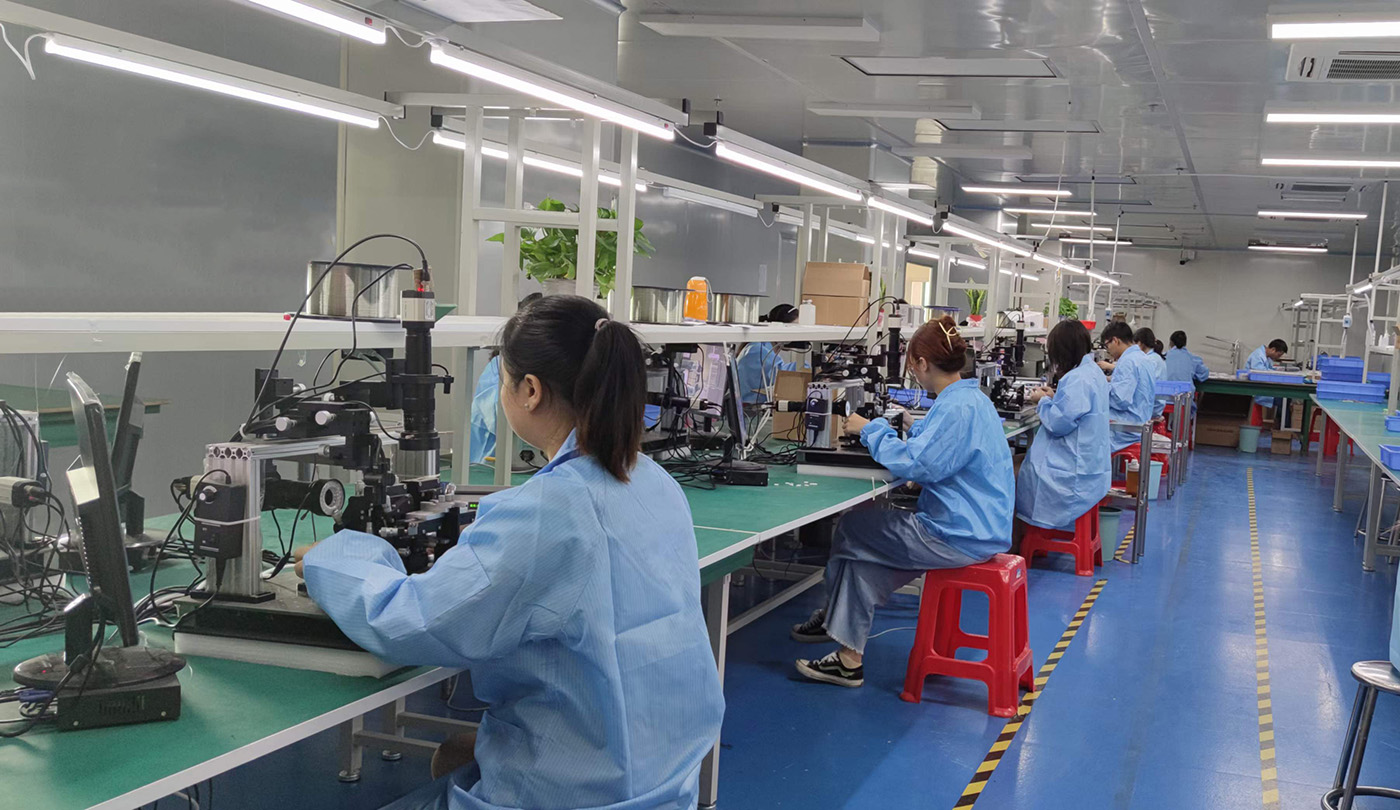
Our production facilities maintain strict compliance with ISO9001, ISO14001, RoHS, CE, FCC, and REACH standards. We use automated test systems to measure BER (Bit Error Rate) and output power across wide temperature ranges.
Implementing 1.25G and 2.5G SFP technology requires analyzing the broader network architecture. The optimal module choice is determined by transmission distance, fiber type (single-mode vs. multi-mode), and environmental operating parameters.
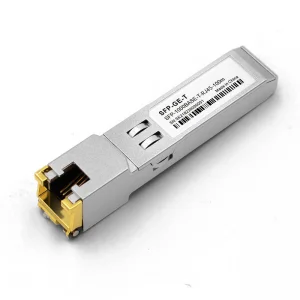
When upgrading legacy campus backbones, network engineers often face the challenge of bridging multi-mode fiber runs with new switchboards. Deploying 1.25G 850nm multi-mode SFP transceivers allows cost-effective connection of building switches to the central distribution frame up to 550m. For connections where switch ports are copper-only, using a 1.25G RJ45 Copper Transceiver (100m over Cat5e/Cat6) avoids the expense of installing dedicated optical lines, providing a highly reliable network layout.
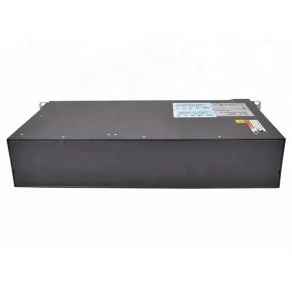
In broadband access networks, Central Office (CO) locations deploy high-density chassis OLTs (Optical Line Terminals), such as the 8 and 16 port Class C++ GPON OLT systems. These interfaces use 2.5G/1.25G asymmetric GPON transceivers to transmit downstream at 2.5 Gbps and receive upstream at 1.25 Gbps. This dynamic range management enables ISP operators to serve up to 128 ONUs (Optical Network Units) per GPON port over distances of up to 20km.

Kocent Optec Limited, established in 2012 in Hong Kong as a hi-tech communication enterprise, is one of China's leading fiber optic termination product manufacturers and solution providers. We are dedicated to developing and manufacturing fiber optic communication products ranging from passive to active categories for telecommunication networks, enterprise networks, and data centers.

By leveraging our extensive experience and excellent production capacity gained over the years, we magnify the outcomes for our valuable customers. This ultimately expands their core competencies and helps them outperform competitors. We place emphasis on customer collaboration, and we define ourselves as your valuable partner in fiber optic connection solutions. We believe our differentiators are your perceived advantages.
With more than 13 years of experience in manufacturing telecommunication fiber optic products, we follow strictly fiber optic industry standards by using mature scientific methods to deliver your products on time and ensure that 100% of products are tested and inspected before shipment.
Years of sales and service experience have enabled us to win customers from different regions. Today, we have customers from East Asia, Southeast Asia, Middle East, Eastern Europe, Western Europe, Northern Europe, South America, North America, North Africa, and South Africa.
Win-win cooperation is our constant goal. Many of our OEM and ODM products have won Telecom Operator tenders and satisfy demanding end-user requirements.
Our main terminal telecom operators include: SingTel, Vodafone, America Movil, Telefonica, Bharti Airtel, Orange, Telenor, VimpelCom, TeliaSonera, Saudi Telecom, MTN, Viettel, Bitel, VNPT, Laos Telecom, MYTEL, Telkom, Telekom, Entel, FiberTel, StarFiber, Ooredoo, Beeline, Azercell.
When sourcing 1.25G and 2.5G SFP transceivers, global procurement teams must look beyond unit costs and evaluate key performance metrics to ensure network stability:
By establishing strict incoming quality control (IQC) procedures based on these parameters, network operators can significantly reduce failure rates and lower long-term maintenance costs.
 KOCENT OPTEC