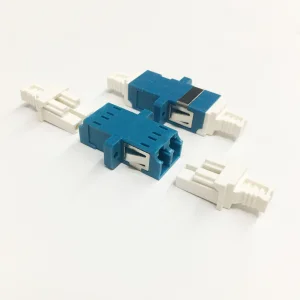
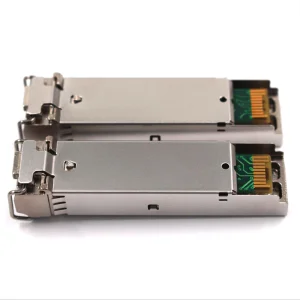
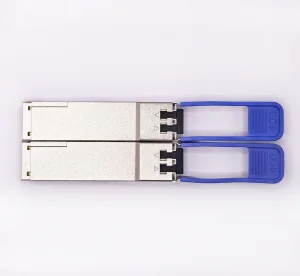
Explore our top-tier active and passive optical modules engineered for exceptional compatibility and reliable transmission.
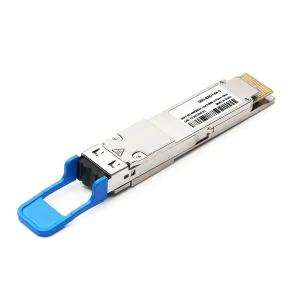
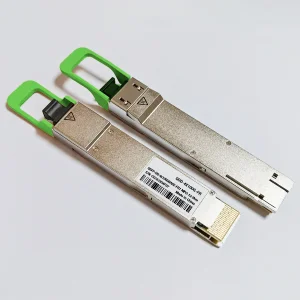
A strategic analysis of high-speed interconnect requirements, technology standards, and production line breakthroughs.
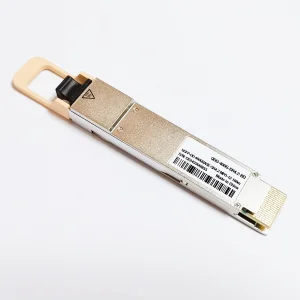
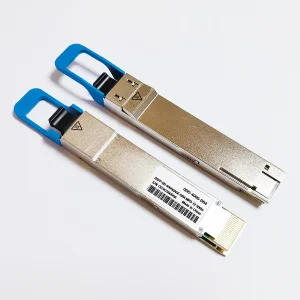
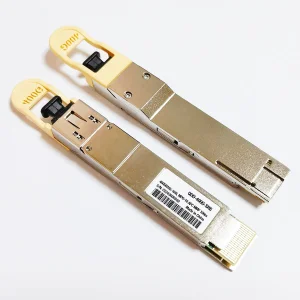
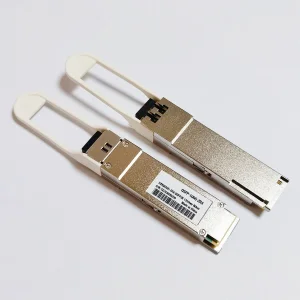
The global push for Generative Artificial Intelligence (Gen-AI), Large Language Models (LLMs), and hyper-scale cloud applications has triggered an unprecedented demand for high-bandwidth networks. Modern GPU compute clusters rely on non-blocking, high-density networks where 400G QSFP-DD transceivers form the backbone. By enabling massive East-West traffic processing, these optical interconnections prevent traffic bottlenecks between processing clusters, guaranteeing ultra-low latency execution.
Transitioning from 100G NRZ (Non-Return-to-Zero) signaling to 400G required a fundamental upgrade in signal processing. The industry adopted PAM4 (4-Level Pulse Amplitude Modulation), doubling the data rate within the same optical bandwidth. Integrated Digital Signal Processors (DSPs) sit inside our modules to run active equalization and Forward Error Correction (FEC), mitigating optical path distortions, reducing bit-error rates (BER), and stabilizing multi-vendor switch interoperability.
Managing heat in a compact QSFP-DD interface is one of the toughest challenges for engineers. A single 400G optical module can dissipate between 8W and 12W of power. Through customized optoelectronics layout and heat sink optimization, our 400G transceivers maintain a cool running profile under maximum computational loads. This stability minimizes thermal stress on adjacent components and increases the system's operational lifetime.
A detailed comparison of wavelength, medium, distance, and connectors to help network architects design optimized systems.
| Interface Standard | Wavelength (nm) | Fiber Type | Connector Type | Reach Specs | Primary Application |
|---|---|---|---|---|---|
| 400GBASE-SR4.2 | 850nm / 910nm BiDi | MMF (OM4/OM5) | MPO-12/UPC | 100m (OM4) / 150m (OM5) | Intra-rack, switch-to-switch multi-mode interconnects |
| 400GBASE-DR4 | 1310nm Single Wavelength | SMF | MPO-12/APC | 500m | Hyperscale breakout architectures, 400G to 4x 100G links |
| 400GBASE-FR4 | 1271, 1291, 1311, 1331 (CWDM) | SMF | Duplex LC | 2km | Data Center Interconnects (DCI), spine-to-spine cabling |
| 400GBASE-LR4 | LWDM Grid (1295-1309nm) | SMF | Duplex LC | 10km | Metropolitan core nodes, backhaul and enterprise campus networks |
Leveraging manufacturing clusters and strict testing protocols to guarantee consistent reliability and scale.
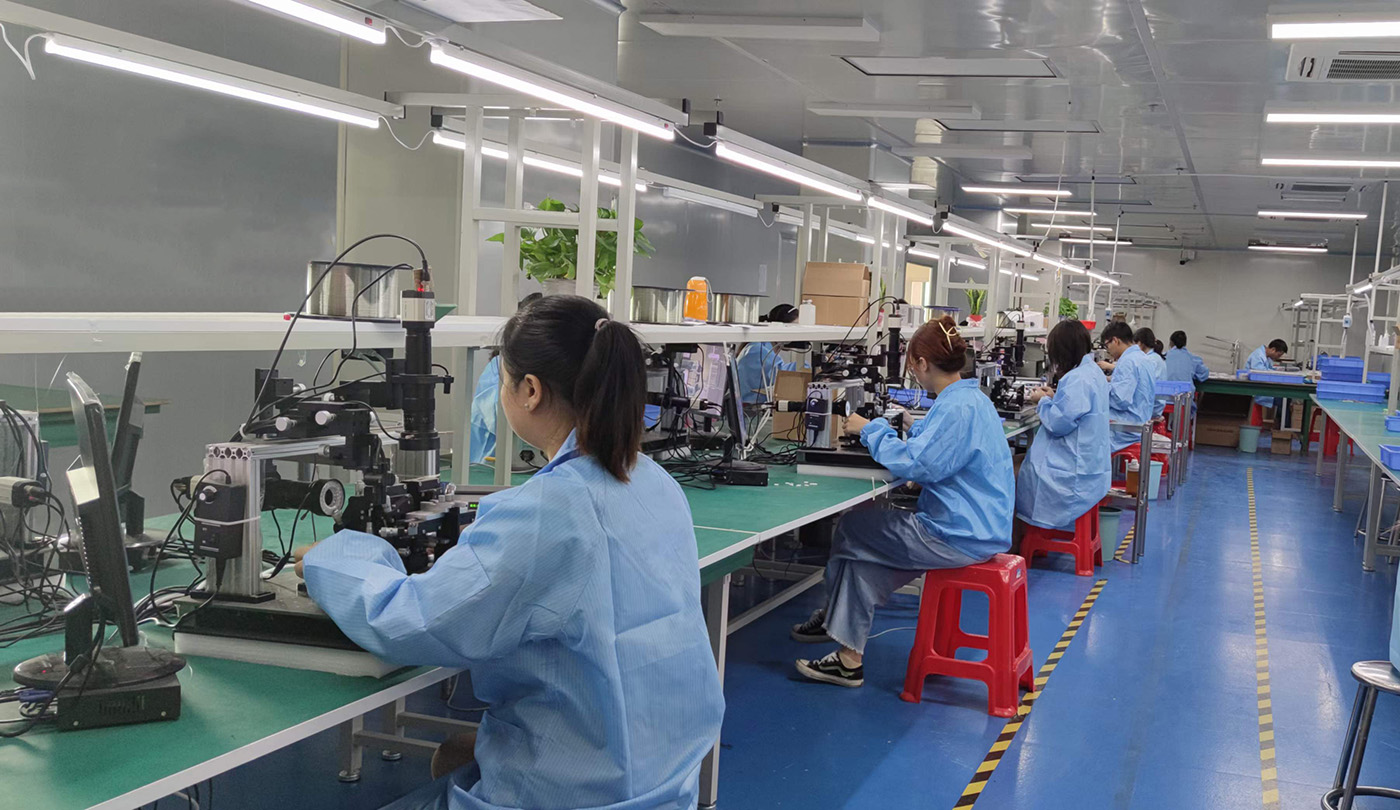
Our manufacturing facility in China acts as a major strategic hub. By positioning ourselves in the world's largest electronics and optical components cluster, we can source raw optoelectronics components (like TO-can subassemblies, VCSEL/EML lasers, and DSP chips) at highly competitive costs. We pass these savings directly to our customers through competitive prices without sacrificing quality.
Furthermore, our advanced automation systems—including robotic sub-micron coupling, cleanroom COB (Chip on Board) processing, and integrated temperature testing systems—allow us to deliver large production runs on time. Every 400G transceiver is tested in our host switches (like Cisco, Arista, Juniper, Mellanox, and Edge-core) to ensure it works out of the box. This level of quality control guarantees that each module meets the rigorous standards required by tier-1 telecom operators and high-capacity data centers.
Kocent Optec Limited established in 2012 in Hongkong as a hi-tech communication enterprise, is one of China's leading fiber optic termination product manufacturer and solution provider.
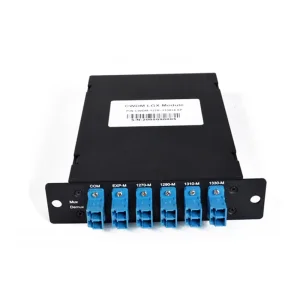
We're dedicated to developing and manufacturing fiber optic communication products ranging from passive to active categories for telecommunication networks, enterprise networks and data centers.
By leveraging our extensive experience and excellent production capacity we gained over the years, we magnify the outcome for our valuable customers, which ultimately expands their core competencies and helps them outperform competitors. We place emphasis on customer collaboration, and we define ourselves as your valuable partner in fiber optic connection solutions. We believe our differentiators are your perceived advantages.
With more than 13 years of experience in manufacturing telecommunication fiber optic products, we follow strictly fiber optic industry standards by using mature scientific methods to deliver your products on time and ensure that 100% products are tested and inspected before shipment.
Years of sales and service experience have enabled us to win customers from different regions. Today, we have customers from East Asia, Southeast Asia, Middle East, Eastern Europe, Western Europe, Northern Europe, South America, North America, North Africa, and South Africa.


Understanding technology trends helps procurement managers protect their fiber infrastructure investments.
Silicon Photonics combines laser technology with silicon-based chips to reduce product footprints and cut production costs. Integrating laser emitters, modulators, and detectors directly onto a silicon wafer reduces assembly steps and improves signal performance. This transition is essential for building cost-effective, high-density 400G and 800G optical systems.
While 400G is currently the industry workhorse, hyper-scale cloud networks are already upgrading core links to 800G and preparing for 1.6T. Using backward-compatible form factors like QSFP-DD800 makes it easy to step up transmission speeds. This allows network managers to protect their physical infrastructure investments by using existing fiber layouts for future bandwidth upgrades.
Sustainability is now a key factor in network hardware selection. Hyperscale operators are placing strict power budgets on transceiver modules, targeting sub-10W designs for 400G and sub-16W for 800G. Selecting modules with energy-efficient DSPs and low-power cooling architectures reduces ongoing operational costs (OPEX) and helps enterprises meet their environmental targets.
Answers to common questions about selecting, deploying, and maintaining 400G optical modules.
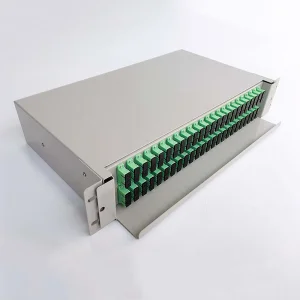
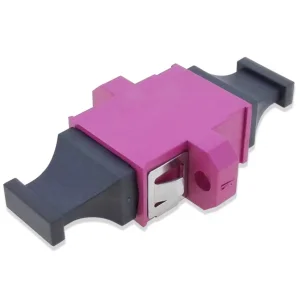
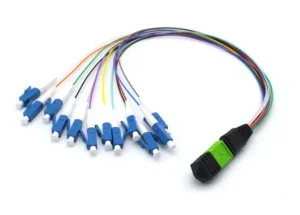
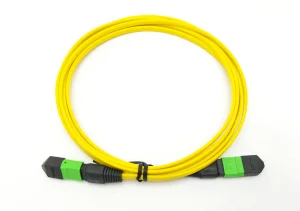
From high-speed active transceivers to passive FTTH accessories, we supply everything needed for complete end-to-end optical networks.
 KOCENT OPTEC