Choosing among the 2026 Best Fiber Access Terminal Box Suppliers Worldwide requires more than comparing catalogs and prices. A Fiber Access Terminal Box protects splices, organizes incoming cables, and supports stable connections in homes, buildings, and roadside cabinets. Its small enclosure can face dust, moisture, temperature changes, and repeated technician access. Weak hinges or unclear labeling may create serious maintenance delays.
Dr. Charles K. Kao, widely recognized as a pioneer of optical fiber communications, once said, “Without optical fiber, the information age would not have been possible.” His statement highlights the foundation behind modern access networks. Yet fiber alone does not guarantee dependable service. The terminal box must match cable capacity, connector types, sealing requirements, installation space, and future expansion plans. These details separate a practical supplier from a merely attractive website.
This guide examines worldwide suppliers through product quality, engineering experience, manufacturing consistency, customization support, and after-sales reliability. It also considers testing evidence, material selection, delivery performance, and installation feedback from actual network projects. Some suppliers may offer excellent pricing but limited technical support. Others may provide strong designs but longer lead times. There is no perfect shortlist.
Look closely.
A credible supplier should explain its ingress protection rating, splice capacity, adapter compatibility, and operating temperature range. Clear drawings matter. So do photographs showing cable routing and closure seals. Buyers should verify certifications independently, because marketing language can be incomplete or outdated. This ranking is therefore a useful starting point, not a final purchasing decision. Local conditions, installer skill, and network design may change the result.
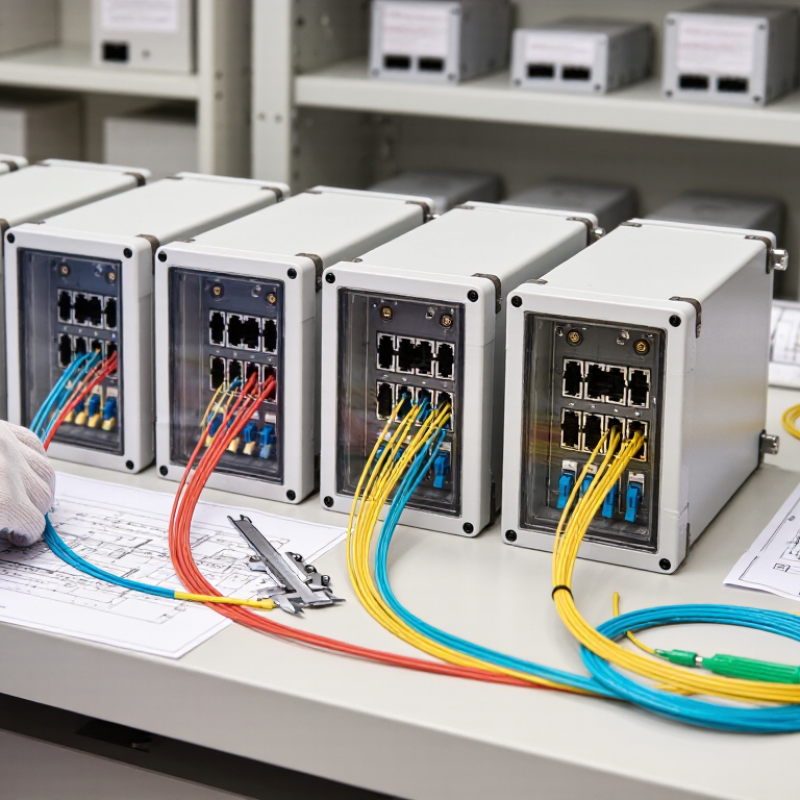
A fiber access terminal box is a compact enclosure that organizes and protects optical fiber connections. It usually sits near users, buildings, cabinets, or network distribution points. Inside, adapters, splice trays, pigtails, and routing guides keep delicate fibers controlled. The box creates a practical transition between incoming feeder cables and outgoing drop cables.
Its main purpose is protection. Fiber bends easily, and a sharp turn can weaken signal performance. A well-designed terminal box maintains safe bend radii, reduces cable tension, and limits dust or accidental contact. It also supports efficient installation and maintenance. Technicians can identify ports, test connections, replace drop cables, and complete service work without disturbing every fiber.
Core functions include fiber termination, splicing, distribution, storage, and access management. Some enclosures include sealed entry points for outdoor use, while indoor models often focus on compact installation and quick identification. In field projects, clear labeling matters more than attractive housing. A poorly marked box can delay troubleshooting for hours. That detail is easy to underestimate.
Material quality, closure strength, and mounting options should match the installation environment. Weather exposure, temperature changes, and repeated access can reveal weak designs. Specifications are useful, but physical inspection remains valuable. A box may meet basic requirements and still be inconvenient for crowded connections. Practical experience shows that service space is not wasted space; it prevents avoidable mistakes.
Modern fiber access terminal boxes are built around controlled fiber management, not simple cable storage. A compact enclosure should protect splice trays, adapters, and splitter modules from dust, moisture, and accidental pulls. Sealed cable glands reduce movement at entry points. Appropriate ingress protection depends on the installation environment and verified test requirements.
Bend-radius control is essential. Guide rings and curved trays prevent sharp turns near splice holders. This protects optical performance during installation and later maintenance. Clear labeling, modular adapters, and accessible fastening points also reduce service time. Some designs include grounding paths, flame-retardant housings, and UV-resistant materials for outdoor deployments. These details matter when temperatures change rapidly.
Field technicians often value simple access more than decorative features. A tool-less latch can save minutes, but it must resist vibration and repeated opening. Poor tray alignment remains a common weakness. It can force fibers against covers or create excessive slack. I have also seen unused ports left poorly sealed, inviting moisture into otherwise reliable boxes. Better terminal boxes support visual inspection, consistent routing, and clean testing with optical power meters and fault locators. Their design should follow applicable safety, environmental, and installation standards, with documentation that installers can actually use. Fancy features are not always useful. Reliability comes from disciplined construction.
Common fiber access terminal box configurations are increasingly designed around higher fiber density, sealed outdoor protection, modular splicing, and tool-free access. The chart shows widely used fiber-capacity configurations by deployment class rather than company or brand performance.
Typical capacity classes: compact terminal boxes commonly support 12–24 fibers, distribution boxes 48–96 fibers, and high-density cross-connect or modular boxes up to 144 fibers. Outdoor models frequently use sealed enclosures rated around IP65 or higher under IEC 60529.
Evaluating global fiber access terminal box suppliers requires more than comparing catalog prices. The OECD Broadband Statistics, updated in 2024, reported fiber connections exceeding 40% of fixed broadband subscriptions across OECD economies. This growth increases pressure on terminal boxes used in dense cabinets, outdoor poles, and apartment buildings. Ask suppliers for measured insertion loss, return loss, splice capacity, bend-radius performance, and temperature-cycle results. A polished brochure is not evidence.
Check conformity with relevant IEC connector, environmental, and enclosure standards. An IP65 claim should include test conditions, not only a printed label. Request traceable reports from accredited laboratories, factory quality records, and samples from current production. Telcordia GR-771-CORE remains a useful reference for fiber distribution hardware, especially when evaluating mechanical durability and access procedures. The FTTH Council Global Alliance also provides regional deployment data, helping buyers judge whether a supplier has experience in similar climates and network densities.
Supplier reliability is visible in small details. Can technicians replace adapters without disturbing live fibers? Are serial numbers linked to inspection records? Does packaging protect sealed boxes during long-distance transport? Check warranty exclusions carefully. Low prices can hide weak sealing or inconsistent tolerances. I have seen evaluation teams overvalue appearance and overlook field-service time. That mistake is expensive. Independent sample testing, pilot installations, and documented corrective actions offer stronger evidence than sales claims. Ask difficult questions early.
The 2026 fiber access terminal box market is becoming more regional. OECD data shows that fiber represented about 42% of fixed broadband connections across member economies in late 2023. This growth increases demand for compact boxes, reliable sealing, and faster deployment. Suppliers in East Asia often provide high-volume molding and automated assembly. Their factories commonly support tight production cycles and multiple connector layouts. European manufacturers focus more on outdoor durability, fire performance, and network modernization. North American suppliers often design around aerial cabinets, harsh weather, and installer familiarity.
Manufacturing capability matters more than a polished catalog. The FTTH Council Europe’s 2024 Market Panorama recorded continued expansion in fiber coverage across EU39 markets. That expansion requires terminal boxes that survive moisture, ultraviolet exposure, and repeated field access. Regional suppliers should prove ingress protection through independent testing. They should also show traceability for resin, seals, adapters, and metal parts. The details are visible on the factory floor: sealed cartons, labeled cavities, clean fiber-routing channels, and controlled torque tools. Small defects become expensive truck rolls.
A supplier’s location can affect lead times, tooling support, and compliance documentation. Yet regional assumptions can mislead. A nearby factory may lack spare molds or stable connector inventories. A distant supplier may maintain stronger process controls. The best assessment combines audit records, sample testing, and real installation feedback. Industry reports show demand growth, but they do not guarantee product quality. That gap deserves attention.
| Region | Supplier Landscape | Common Product Formats | Typical Fiber Capacity | Manufacturing Capabilities | Environmental Protection | Common Compliance Requirements | Typical Production Lead Time |
|---|---|---|---|---|---|---|---|
| East Asia | High supplier density with strong export coverage and broad customization options for telecom operators, contractors, and distributors. | Wall-mounted FTTH boxes, rack-mounted distribution panels, splice-and-splitter terminals, outdoor pole or aerial terminals. | 4–144 fibers; common access configurations include 4, 8, 12, 24, 48, 72, and 96 fibers. | Injection molding, sheet-metal fabrication, CNC tooling, automated labeling, fiber routing assembly, heat-shrink protection, and high-volume private-label production. | Indoor IP30–IP54; outdoor products commonly IP65–IP68 when correctly sealed and installed. | IEC 61753 environmental performance, IEC 61300 test methods, RoHS, REACH, and enclosure flammability requirements where specified. | Approximately 2–6 weeks for standard products; 6–10 weeks for tooling or major customizations. |
| South Asia | Growing domestic manufacturing base supported by rapid FTTH deployment, infrastructure expansion, and increasing local-content requirements. | Compact subscriber termination boxes, pole-mounted terminals, fiber distribution boxes, and splitter-ready access enclosures. | 4–48 fibers for access applications; larger 72–96-fiber configurations are used in distribution locations. | Plastic molding, basic metal fabrication, manual and semi-automated assembly, connectorized pigtail integration, and project-specific kitting. | Typically IP54–IP65 for indoor or sheltered installations; IP66–IP68 available for exposed outdoor deployments. | IEC-based optical and mechanical testing, RoHS-aligned material controls, UV resistance, corrosion resistance, and local telecom tender specifications. | Approximately 3–8 weeks for standard orders, depending on configuration and production volume. |
| Europe | Fragmented but technically mature supplier base focused on engineering quality, network reliability, traceability, and compliance documentation. | Modular wall boxes, DIN-rail terminals, street-cabinet distribution modules, high-density patching systems, and pre-terminated access units. | 4–96 fibers; high-density systems may support more than 144 fibers in cabinet or rack configurations. | Precision molding, automated optical inspection, controlled assembly, serialized traceability, low-smoke material options, and small-to-medium batch customization. | Indoor IP30–IP54; outdoor and street-cabinet products commonly IP55–IP68, with enhanced UV and corrosion resistance. | IEC 61753, IEC 61300, EN 60529, RoHS, REACH, CE-related obligations, and project-specific fire or railway requirements. | Approximately 4–10 weeks; engineered or certified project variants may require longer validation cycles. |
| North America | Established supplier and integrator ecosystem emphasizing outside-plant durability, network operator qualification, and standardized field installation. | Fiber distribution terminals, hardened drop terminals, pedestal boxes, cabinet modules, and aerial or pole-line enclosures. | 4–96 fibers for access terminals; distribution cabinets and splice closures can support substantially higher counts. | Outdoor-grade polymer molding, gasketed enclosure production, ruggedized cable-entry systems, connectorized drop assemblies, and environmental qualification testing. | Commonly IP65–IP68 for outside-plant products, with resistance to UV exposure, moisture, temperature cycling, and mechanical impact. | IEC or Telcordia-based testing, UL 94 material ratings where required, NEMA enclosure classifications, RoHS, and operator-specific specifications. | Approximately 4–12 weeks, with qualification and operator approval potentially extending project schedules. |
| Southeast Asia | Expanding manufacturing and assembly market supported by urban FTTH growth, regional export activity, and electronics supply-chain integration. | Compact subscriber boxes, outdoor distribution terminals, splitter boxes, rack panels, and pre-assembled fiber access kits. | 4–72 fibers; 8-, 12-, 24-, and 48-fiber formats are common in access networks. | Plastic and metal enclosure assembly, cable gland integration, optical adapter installation, harness preparation, and contract manufacturing for regional projects. | IP54–IP65 for sheltered installations and IP66–IP68 for humid, coastal, or exposed environments. | IEC 60529, IEC 61300, RoHS, UV stability, salt-mist or corrosion testing, and local operator procurement standards. | Approximately 3–8 weeks for standard configurations. |
| Latin America | Primarily project-driven market with a mix of local assembly, regional distribution, and imported components adapted to climate and installation conditions. | Wall boxes, aerial terminals, pole-mounted enclosures, splice trays, splitter-ready boxes, and compact multi-dwelling-unit terminals. | 4–48 fibers for subscriber access; 72–96 fibers are used for neighborhood distribution points. | Assembly and configuration, polymer enclosure production, cable-entry preparation, field-repair kits, and customization for high-temperature or high-humidity environments. | Typically IP65–IP68 for outdoor use, with emphasis on UV resistance, dust protection, rain protection, and corrosion control. | IEC 60529, IEC 61300, RoHS-aligned requirements, local electrical or telecom certifications, and operator-specific environmental tests. | Approximately 5–12 weeks, including international logistics when products are imported. |
| Middle East & Africa | Demand is concentrated in national broadband programs, urban developments, data connectivity projects, and harsh-environment outside-plant deployments. | Weatherproof distribution boxes, dust-resistant FTTH terminals, cabinet modules, pole-mounted boxes, and high-temperature splice-and-splitter enclosures. | 4–96 fibers; 12-, 24-, 48-, and 96-fiber configurations are frequently specified for access and distribution points. | Rugged polymer molding, gasket and seal assembly, UV-stabilized materials, corrosion-resistant hardware, cable management, and project-based pre-assembly. | IP65–IP68 is common for outdoor installations, with enhanced resistance to dust, sand, heat, UV radiation, and humidity. | IEC 60529, IEC 61753, IEC 61300, RoHS, UV and temperature-cycle testing, corrosion testing, and local authority requirements. | Approximately 6–14 weeks, depending on project approval, customization, and shipping distance. |
When selecting fiber access terminal box suppliers for 2026 projects, quality should be proven, not simply advertised. Inspect enclosure materials, hinge strength, sealing gaskets, and splice-tray alignment. A box may look robust but fail after repeated opening or temperature changes. Ask for sample units, factory inspection records, and batch traceability. Check insertion loss, return loss, fiber bend control, and port durability under realistic installation conditions.
Compliance requires more than a certificate copied into a quotation. Request current test reports, product drawings, material declarations, and evidence supporting claimed IP protection. Confirm whether testing follows relevant IEC requirements and whether materials meet applicable substance restrictions in the destination market. Regional installation rules can differ. Procurement teams should verify them with qualified local specialists, especially for outdoor cabinets, fire exposure, and grounding arrangements.
Customization often affects reliability. Confirm fiber counts, adapter types, cable entry sizes, labeling, lock options, and mounting methods before production begins. Small changes can alter bend radius or sealing performance. Support matters after delivery. A capable supplier should offer installation guidance, replacement parts, response targets, and clear fault analysis. In field work, delayed answers can cost more than the terminal box itself. That part is easy to underestimate. One practical weakness remains: buyers sometimes compare unit prices while ignoring inspection time, training, and future maintenance. A lower quotation is not always the lower procurement cost.
It is a compact enclosure for organizing and protecting optical fiber connections. It links incoming feeder cables with outgoing drop cables. Small box, important job.
They are commonly placed near users, buildings, cabinets, or network distribution points. Indoor models favor compact mounting. Outdoor models need stronger sealing and weather resistance.
Core functions include fiber termination, splicing, distribution, storage, and access management. Adapters, splice trays, pigtails, and routing guides keep fibers controlled.
Guide rings and curved trays help prevent sharp bends. Safe bend radii reduce signal weakening during installation and maintenance. Excessive cable tension can still cause problems.
Look for sealed cable entries, clear labels, accessible fastening points, and suitable mounting options. UV-resistant materials may help outdoors. Decorative features are less important.
Clear labels help technicians identify ports and trace connections quickly. Poor marking can delay troubleshooting for hours. That mistake is easy to underestimate.
Review sample quality, process records, testing evidence, and installation feedback. Check seals, adapters, resin, metal parts, and connector inventories. A polished catalog proves little.
Poor tray alignment may press fibers against covers. Unused ports may remain poorly sealed, allowing moisture inside. Crowded connections can make routine testing frustrating. More service space is usually safer.
This guide explores the role of the Fiber Access Terminal Box in modern fiber-optic networks, explaining its definition, purpose, and core functions in organizing, protecting, and distributing optical connections. It also examines the key technologies and design features found in contemporary terminal boxes, including secure fiber management, environmental protection, flexible port configurations, efficient installation, and reliable long-term performance.
The article provides a practical framework for evaluating global suppliers by comparing product quality, manufacturing capabilities, technical expertise, compliance practices, customization options, delivery reliability, and after-sales support. It also reviews regional supplier landscapes to help buyers understand production strengths and sourcing considerations across different markets. By focusing on performance, compatibility, scalability, and total procurement value, this guide supports informed decisions when selecting a dependable Fiber Access Terminal Box supplier for access, distribution, and broadband network projects.

KOCENT OPTEC