What Are the Best Direct Attach Cable Manufacturers in China?

Time:2026-09-25 Author:Isabella
0%

Choosing the best Direct Attach Cable manufacturers in China requires more than comparing online prices. Performance depends on engineering quality, material control, testing discipline, and after-sales support.

A reliable manufacturer should offer compatible SFP+, SFP28, QSFP+, or QSFP56 options. Product details should include data rates, cable length, conductor gauge, shielding, bend radius, and connector coding. These details affect signal stability inside crowded server racks. A practical evaluation begins with samples. Inspect the connector shell, cable flexibility, labels, and strain relief. Then test the cable in real switches, servers, and storage systems.

Factory experience also matters. Look for documented production processes, calibrated testing equipment, and traceable batches. Certifications can support confidence, but certificates alone do not prove consistent performance. Ask for eye-diagram results, insertion-loss data, compliance documents, and sample inspection records. A manufacturer serving data centers may understand thermal limits better than a general cable trader. Still, every supplier deserves verification.

No ranking is perfect. Some manufacturers communicate well but provide limited technical evidence. Others offer strong engineering but slower responses. That trade-off deserves attention. This guide compares leading Chinese suppliers through product range, customization ability, quality control, communication, delivery reliability, and market experience. The goal is not to promote the cheapest option. It is to identify partners that can deliver stable Direct Attach Cable solutions for demanding network environments. Short-term savings can become expensive after repeated link failures. Careful testing remains essential.
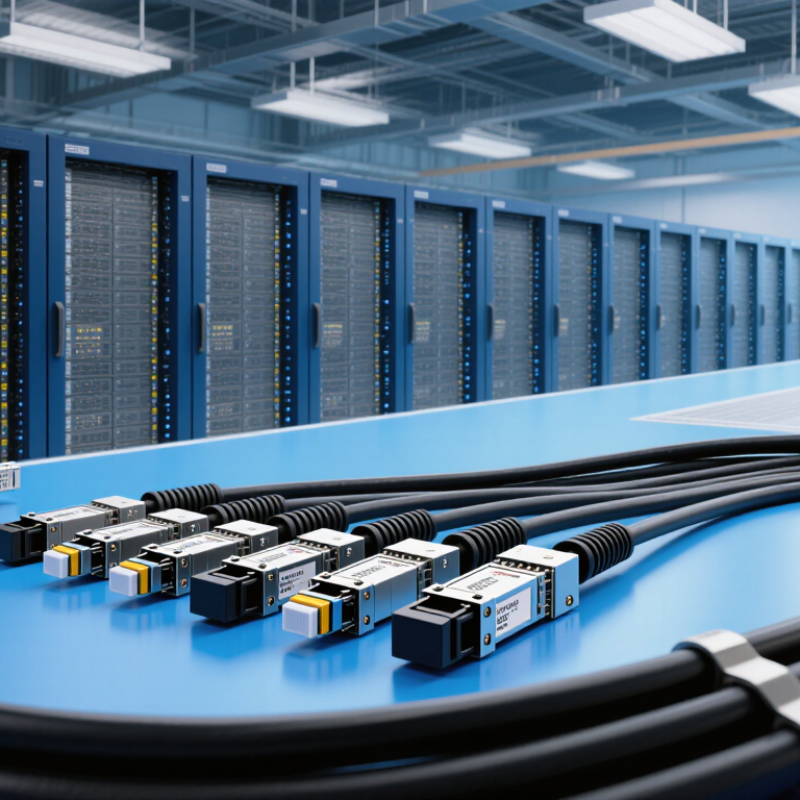
What Are the Best Direct Attach Cable Manufacturers in China?

Understanding Direct Attach Cables and Their Applications

A direct attach cable (DAC) is a factory-terminated copper assembly with transceiver-style connectors at both ends. It carries data between compatible network ports without separate optical modules. Inside a server rack, it may connect a switch to a storage array or link two servers a few meters apart. The cable is flexible, but thick bundles can crowd tight cable paths.

Passive DACs use no signal amplification and suit short links.

Active DACs include electronics that help maintain signal quality over somewhat greater distances.

Neither type fits every setup. Port speed, connector form, supported cable length, and equipment compatibility all matter. Check the device specifications before ordering; a connector that physically fits may still fail to establish a link. They are not magic.

Compared with fiber, copper DACs can be a practical choice for short rack connections, often using less power and costing less. Fiber is generally more suitable when links must travel farther or follow different routing constraints.

In real installations, small details count: bend radius, airflow, labeling, and enough slack for equipment to slide out. A cable that works on a test bench may be awkward in a crowded rack. That trade-off deserves a second look.

When evaluating a manufacturer, ask for clear compatibility data, testing details, and consistent length specifications—not just a low price.

Key Factors for Choosing Chinese DAC Manufacturers

Choosing a Chinese direct attach cable manufacturer requires more than comparing unit prices. Grand View Research estimates that the global data center networking market reached about USD 28.6 billion in 2023. It also forecasts strong growth through 2030. This expansion increases demand for reliable, short-reach connectivity. A capable manufacturer should provide clear specifications for data rate, cable length, conductor material, shielding, and operating temperature. Ask for insertion-loss curves and bit-error-rate results, not only a product brochure.

Production control matters just as much. Check whether the factory uses automated crimping, optical or electrical testing, and serial-number traceability. Request samples from different production batches. Compare connector fit, pull strength, bend recovery, and EEPROM information. The 2024 Ethernet Alliance roadmap highlights higher-speed Ethernet development, so manufacturers should show a realistic upgrade path for 100G, 200G, or 400G systems. Compatibility is often the hidden risk. A cable may pass a basic test and still fail in a dense rack.

Tips: Request a third-party test report when possible. Confirm RoHS and REACH documentation for your destination market. Review the warranty process before signing a contract. A low quotation can become expensive after field failures. I would also inspect factory records personally, if practical. This step feels old-fashioned, but photographs are not enough. Some suppliers provide excellent samples, yet their mass production varies. That weakness deserves careful questioning.

Leading Direct Attach Cable Manufacturers in China

China’s leading direct attach cable manufacturers serve data centers, server rooms, and high-speed network projects. Their capabilities may include passive copper assemblies, active cables, custom lengths, and different connector configurations. Strong suppliers explain supported data rates, cable reach, and host-device compatibility clearly. Ask how they control impedance, inspect connector alignment, and test finished cables. A neat sample helps, but documented test procedures matter more.

Tips: Request a sample matching your intended length and port type. Check the cable jacket, connector fit, and labeling. Ask for test records and confirm the stated operating conditions. Small details count.

Manufacturing capacity alone does not guarantee a suitable cable. Compare production consistency, engineering response, and the supplier’s ability to handle revisions. For example, a two-meter cable may behave differently from a short rack connection, depending on the application. Clarify qualification requirements before placing a large order. One point is easy to overlook: specifications can vary between host systems, so verify compatibility with the actual equipment. Even a good checklist may miss something; test a representative setup before deployment.

Direct Attach Cable Manufacturers in China: Ethernet Data Rates

This chart shows standardized Ethernet link rates commonly associated with direct attach cable interfaces. It illustrates available bandwidth categories, not a comparison or ranking of manufacturers; compatibility and supported rates depend on the specific cable and equipment.

Comparing Product Quality, Standards, and Customization Options

Choosing a direct attach cable manufacturer in China requires more than comparing quoted prices. Product quality starts with the details: conductor material, cable gauge, shielding, connector fit, and strain relief. Ask for test data covering signal integrity and insertion loss at the intended data rate. A cable that looks polished may still perform poorly under sustained use. Appearance is not proof.

Standards matter, but they should match the application. Request the specifications used for electrical performance, safety, and environmental testing, then confirm how compliance is documented. For data-center links, check compatibility with the equipment’s ports and supported transmission distance. Samples can reveal practical issues, such as stiff jackets that crowd a rack or connectors that are difficult to release. Small details matter. Still, a sample test cannot replace consistent production checks across batches.

Customization options help when standard lengths or configurations do not fit. Manufacturers may offer different cable lengths, wire gauges, connector orientations, jacket materials, or labeling. Share the required data rate, operating environment, and routing constraints before requesting a quote. Then compare sample results, inspection records, delivery consistency, and communication—not just the specification sheet. One caveat: custom options can add lead time, and more choices do not always improve reliability. I would verify changes with a revised sample before approving a larger order.

How to Select the Right Chinese DAC Manufacturer for Your Needs

Choosing a Chinese direct attach cable manufacturer starts with the link, not the price. Confirm the required data rate, cable length, connector type, and host compatibility. IEEE 802.3ck-2022 defines electrical interfaces for 100, 200, and 400 Gb/s operation, but that does not make every cable interchangeable. Ask for test results from the exact assembly you plan to order. Check insertion loss, crosstalk, and bit-error performance across the intended reach. Small details matter.

Demand traceable evidence. A production sample should match the final cable’s gauge, shielding, connector, and labeling. Request a test report tied to its serial or batch number, plus clear limits for operating temperature and bend radius. The 2018–2023 Annual Internet Report forecast global IP traffic at 4.8 zettabytes annually by 2022, underscoring the pressure on network capacity. It is a forecast, not a measure of DAC demand, so don’t use it as proof of a supplier’s quality. Ask how the manufacturer handles failed samples, substitutions, and repeat orders. Then test a small batch in your own switch and server setup. One awkward reality: a neat datasheet can still hide inconsistent assembly.

FAQS

What should I check when choosing a direct attach cable manufacturer in China?

Check supported data rates, cable lengths, connector types, and host-device compatibility. Ask for documented test procedures. Production capacity alone proves little.

Why is a sample cable important before a large order?

A sample shows connector fit, jacket flexibility, labeling, and release difficulty. Test the intended length and port type. A short rack cable may not represent a two-meter connection.

Which cable construction details affect product quality?

Review conductor material, cable gauge, shielding, connector alignment, and strain relief. These details influence signal stability and physical durability. Appearance is not proof.

What testing information should a supplier provide?

Request signal-integrity and insertion-loss data at the required data rate. Ask about impedance control and finished-cable inspection. Test records matter more than polished samples.

How can I confirm compatibility with actual equipment?

Share the equipment’s port type, supported transmission distance, data rate, and operating conditions. Test a representative setup before deployment. Specifications can vary between host systems.

Which customization options are commonly available?

Options may include cable length, wire gauge, connector orientation, jacket material, and labeling. Explain routing limits and environmental conditions clearly. More choices may not improve reliability.

Can custom cables affect delivery time?

Yes. Custom designs can add engineering and production time. Request a revised sample after changes. I would not approve a large order too quickly.

How should suppliers be compared beyond quoted price?

Compare sample performance, inspection records, batch consistency, delivery reliability, and engineering communication. Ask how revisions are handled. Cheap is not always efficient.

What practical problems might appear during installation?

A stiff jacket can crowd a rack. A tight connector can slow maintenance. Labels may also become difficult to read. Small issues become expensive later.

Can a checklist guarantee a suitable cable?

No checklist catches everything. Verify the actual equipment and intended setup. I might still miss a condition, so real testing remains necessary.

Conclusion

Direct Attach Cable (DAC) solutions provide a practical way to connect networking and data-center equipment over short distances, with benefits such as low latency, straightforward installation, and cost efficiency. When evaluating Chinese manufacturers, buyers should consider product performance, material quality, production capabilities, testing procedures, delivery reliability, and the manufacturer’s ability to support different cable lengths and interface requirements.

A careful comparison should also examine compliance with relevant industry standards, quality-control practices, customization options, and the clarity of technical documentation. The right manufacturer is not necessarily the one with the lowest price, but the one whose products and service match the intended application, equipment compatibility, and long-term support needs. By defining requirements in advance and assessing these factors consistently, buyers can make a more informed choice and establish a dependable supply relationship.

Isabella

Isabella

Isabella is a dedicated marketing professional with a sharp focus on driving brand growth and engagement through strategic content creation. With an extensive background in digital marketing, she combines her passion for storytelling with her keen understanding of industry trends to deliver......