How to Choose a Duplex Fiber Patch Cable?

Time:2026-09-30 Author:Mason
0%

Choosing the right Duplex Fiber Patch Cable affects network stability, signal quality, and future maintenance. A cable may look suitable on a product page, yet fail after installation. Connector type, fiber mode, polarity, length, and transmission speed must work together. Small mismatches can create expensive troubleshooting later.

This guide explains how experienced installers evaluate duplex fiber cables before purchase. It covers single-mode and multimode fiber, including OS2, OM3, and OM4 options. It also considers LC, SC, and other connector interfaces used with switches, patch panels, and optical transceivers. The cable’s jacket rating matters too, especially in server rooms, offices, or high-density cabinets. Check insertion loss, return loss, bend radius, and test documentation instead of relying only on low pricing.

Details matter.

A practical inspection should include connector cleanliness, protective caps, labeling, and correct A-B or A-A polarity. Measuring the planned route is equally important. Extra length can create messy loops, while insufficient length can strain connectors. In my experience, many purchasing mistakes come from assuming that all duplex cables are interchangeable. That assumption is convenient, but unreliable. Even professional specifications can be misunderstood when vendor terminology differs. Therefore, this guide encourages careful comparison, verified compatibility, and realistic installation planning. It does not promise a perfect choice for every network. Conditions change, and a cable selected for today’s equipment may limit tomorrow’s upgrade.
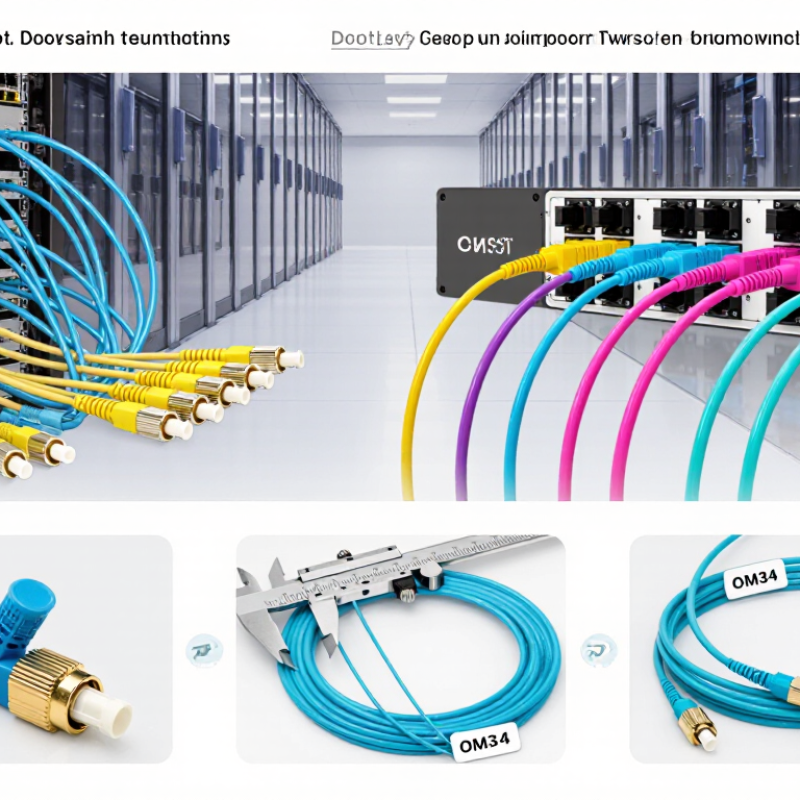
How to Choose a Duplex Fiber Patch Cable?

Identify the Network Requirements and Fiber Type

Before selecting a duplex fiber patch cable, document the link’s speed, distance, transceiver type, and connector at each end. Check the equipment labels or specifications; “duplex” only describes two fibers, usually for transmitting and receiving. It does not guarantee compatibility. Short links inside a data room may use multimode fiber, such as OM3 or OM4, while longer campus links commonly call for single-mode OS2. The transceiver determines the supported fiber type and wavelength. Match those details, not just the connector shape. Small mismatch, big headache.

Network growth makes this check practical, not theoretical. The International Telecommunication Union’s Facts and Figures 2023 estimated that 5.4 billion people were online, about 67% of the world’s population. That figure does not specify cable demand, but it illustrates the expanding network environment that infrastructure must serve. For a real link, verify the transceiver’s reach against the measured cable route, including patch panels and service loops. Confirm whether the connectors are UPC or APC; they are not interchangeable. Clean the end faces, too. Dust can degrade a link even when the cable type is correct. I would still verify the installed route rather than trust a floor plan: those are sometimes optimistic.

How to Choose a Duplex Fiber Patch Cable

Identify the network requirements and fiber type

Core diameter is a useful starting point: OM1 multimode fiber has a 62.5 µm core, while OM2 through OM5 typically use a 50 µm core. OS2 single-mode fiber has a nominal 9 µm core. Before choosing a duplex patch cable, confirm the required link distance, compatible transceivers, connector type, and equipment specifications.

Choose the Correct Connector and Polish Configuration

How to Choose a Duplex Fiber Patch Cable?

Choose the Correct Connector and Polish Configuration

Start with the equipment ports and adapter panel. LC duplex connectors are common in high-density switch ports, while SC duplex connectors have a larger push-pull body. The connector must fit the port, and the two fibers must preserve the required transmit-receive polarity. Check the device documentation; a cable that physically fits can still fail if its polarity is wrong.

Small detail. Big impact.

Then match the end-face polish to the link. UPC connectors have a flat, polished contact; APC connectors use an angled end face to reduce reflected light. The Fiber Optic Association’s reference guidance describes typical return-loss values around 50 dB for UPC and 60 dB for APC, though actual performance depends on components and measurement conditions. APC and UPC should not be mated together. Follow the interface requirements in the TIA-568.3-E cabling standard and confirm the panel’s connector type before ordering. Inspect and clean end faces, too: dust can undermine a good connection. I have seen selection guides make this sound simpler than it is; mixed legacy panels can complicate an otherwise routine replacement.

Match the Cable Length, Duplex Orientation, and Jacket Rating

Choosing the right duplex fiber patch cable starts with the actual route, not the distance between two devices. Measure along the planned path, including turns and slack for safe service loops. A cable that is too tight can pull on connectors; excess cable can crowd a rack. Avoid sharp bends, especially near the connector boots. A small amount of extra length helps, but “more” is not always better.

Check duplex orientation before ordering. The two fibers carry transmit and receive signals, so their positions must match the equipment ports. Some links need a straight-through arrangement; others require the fibers to be crossed. Connector keying and polarity labels can help, but don’t rely on color alone. Verify the port map at both ends. It takes a minute.

Then match the jacket rating to the installation space. Indoor risers, plenum spaces, and general equipment rooms may require different cable ratings. Outdoor routes may need protection against moisture, sunlight, or temperature changes. Confirm the project specification and applicable building requirements, rather than assuming one jacket suits every location. One detail is easy to miss: a suitable jacket does not make a cable crush-proof. Check the route conditions, and reconsider the choice if the pathway changes.

How to Choose a Duplex Fiber Patch Cable? - Match the Cable Length, Duplex Orientation, and Jacket Rating

Selection Factor Typical Option When to Choose It What to Verify
Cable length 0.5–2 m (1.6–6.6 ft) Short connections between equipment in the same rack or cabinet. Allow enough slack for routing and servicing, but avoid excess cable that can obstruct airflow or create a tangled bundle.
Cable length 3–10 m (9.8–32.8 ft) Connections between nearby racks or equipment areas. Measure the actual route, including vertical cable management and bends, rather than the straight-line distance.
Cable length Over 10 m (32.8 ft) Longer equipment-room or structured-cabling patch paths. Check the link budget and the fiber type supported by the transceivers. Longer patch cords add optical loss.
Duplex orientation Standard A-to-B (flipped) polarity Common duplex links where one fiber carries transmit and the other carries receive. Confirm that the transmit path at one end reaches the receive path at the other. Polarity conventions can vary by system.
Duplex orientation A-to-A (straight-through) polarity Use only when the equipment, adapters, or link design specifically calls for straight-through fiber positions. Check the end-to-end polarity plan before ordering; do not assume straight-through is interchangeable with A-to-B.
Connector arrangement LC duplex, SC duplex, or another supported duplex connector Select the connector format that fits the transceiver, adapter panel, or equipment port. Confirm connector type at both ends, polish type where applicable, and whether the connector uses a clip or a duplex housing.
Fiber type Single-mode or multimode Match the fiber to the optical transceiver and the distance and data-rate requirements of the link. Check the transceiver specification and installed cabling. Single-mode and multimode components are not generally interchangeable.
Jacket rating OFNP (plenum-rated) Use where local codes require a plenum-rated cable in environmental-air spaces. Confirm the installation location and applicable fire code. OFNP is a fire-safety rating, not a guarantee of low-smoke or halogen-free construction.
Jacket rating OFNR (riser-rated) Use for vertical runs between floors where a riser rating is permitted and required. OFNR is intended for riser applications; it should not be substituted for OFNP in a plenum space unless local code permits it.
Jacket rating LSZH (low-smoke, zero-halogen) Consider for locations where low smoke and reduced halogen emissions are specified, such as some enclosed or public areas. LSZH describes material and smoke characteristics; verify the separate fire rating required by local codes and project specifications.

Before ordering: Match the cable length, fiber type, connector format, polarity, and jacket rating to the complete link design and local installation requirements.

Verify Optical Performance and Equipment Compatibility

How to Choose a Duplex Fiber Patch Cable?

A duplex fiber patch cable should match both the network design and the connected equipment. Check whether the system uses single-mode or multimode fiber. The wrong type may produce unstable links or complete signal loss. Confirm the fiber core, connector polish, and connector shape before ordering. Compatibility is not only physical. The transceiver must support the cable’s fiber type, wavelength, and transmission distance. For example, a short multimode link may require different optics than a long single-mode connection.

Verify performance with measured data, not appearance. Review insertion loss and return loss values from the test report. Lower insertion loss usually leaves more power for the receiver. Check polarity as well. A duplex pair with reversed transmit and receive paths will not establish a link. In field work, I also inspect end faces with a fiber microscope. A tiny dust particle can cause noticeable attenuation. I still recheck clean connectors, because “clean” is sometimes only an assumption.

Tips: Confirm the equipment manual, optical budget, and required wavelength. Leave a small loss margin for future moves. Avoid tight bends near the connector boot. Label both ends before installation. Test the installed link after routing, not only before it. A perfect-looking cable can still fail under real conditions. That reminder is easy to overlook.

Compare Durability, Standards Compliance, and Total Cost

How to Choose a Duplex Fiber Patch Cable?

Compare Durability, Standards Compliance, and Total Cost

A duplex fiber patch cable should survive daily handling, not just pass a factory inspection. In practical installations, repeated bending often damages the cable near the connector boot. Choose a jacket suited to the environment, such as riser, plenum, or outdoor-rated construction. Check the minimum bend radius and pull strength before installation. A tight cabinet can punish weak designs.

Standards compliance affects compatibility and measurement accuracy. Confirm the fiber type, such as OS2, OM3, or OM4, matches the transceivers and installed backbone. Connector geometry should follow the relevant interface standard, while performance testing should include insertion loss and return loss. Polarity also matters for duplex links. A cable can fit physically yet reverse transmit and receive paths. That mistake is surprisingly common.

Look Beyond the Purchase Price

Look beyond the purchase price. A cheaper cable may require more cleaning, replacement, or troubleshooting hours. Calculate the total cost, including testing, labeling, spare stock, and technician time. Inspect the end faces before connection, even when packaging looks clean. Dust is small. Its impact is not. I have seen initial links work, then fail after careless routing and repeated reconnection. That experience makes a slightly higher-quality cable easier to justify, although expensive construction is not automatically better. Compare verified test data, warranty terms, and actual installation conditions before choosing.

FAQS

How should I measure the required duplex fiber patch cable length?

Measure the actual route, including turns, slack, and service loops. Avoid sharp bends. Too much extra cable can crowd the rack.

Why must duplex fiber polarity be checked before ordering?

The two fibers carry transmit and receive signals. Their positions must match both equipment ports. Some links need straight polarity; others need crossed polarity. Verify the port map, not color alone.

How do I choose the correct jacket rating?

Match the jacket to the installation space. Riser, plenum, indoor, and outdoor routes may need different ratings. Check moisture, sunlight, temperature, and building requirements. A suitable jacket is not crush-proof.

How can I confirm fiber compatibility with the equipment?

Confirm single-mode or multimode fiber first. Then check the core type, connector shape, polish, wavelength, and distance. The transceiver must support the cable’s optical characteristics. Physical fit is not enough.

Which performance values should I review before installation?

Review insertion loss and return loss in the test report. Lower insertion loss usually leaves more receiver power. Keep a small loss margin for future changes. Appearance proves very little.

What should I do before connecting duplex fiber cables?

Inspect connector end faces with a fiber microscope when possible. Clean them carefully, even if the package looks clean. A tiny dust particle can increase attenuation. “Clean” is sometimes only an assumption.

How can I protect the cable during routing and daily handling?

Follow the minimum bend radius and pull-strength limits. Avoid repeated bending near connector boots. Label both ends before installation. A tight cabinet can punish weak cable construction.

Should I choose the cheapest duplex fiber patch cable?

Compare total cost, not purchase price alone. Include testing, labeling, spare stock, replacement, and troubleshooting time. Verified data matters more than expensive construction. I still recheck this decision.

Conclusion

Choosing the right Duplex Fiber Patch Cable starts with understanding the network’s requirements, including transmission distance, bandwidth, data rate, and whether single-mode or multimode fiber is needed. The connector type and polish configuration must also match the ports on the connected equipment to minimize signal loss and ensure a secure connection. Cable length should be sufficient without creating unnecessary slack, while the duplex orientation should align with the required transmit-and-receive arrangement. In addition, select a jacket rating suitable for the installation environment, such as office spaces, data centers, or areas requiring additional protection.

Before purchasing, verify the cable’s optical performance, insertion loss, and return loss, as well as its compatibility with transceivers and network devices. Durability, bend resistance, manufacturing quality, and compliance with relevant industry standards are also important for long-term reliability. Finally, compare the total cost, including installation, maintenance, and potential replacement needs, rather than focusing only on the initial price.

Mason

Mason

Mason is a seasoned marketing professional with a deep expertise in the company's offerings and a passion for driving brand awareness. With a strong background in digital marketing strategies, he has an innate ability to connect with diverse audiences and effectively communicate product benefits.......