Established in 2012 in Hong Kong as a high-tech communications enterprise, Kocent Optec Limited has emerged as an authoritative industry leader in the R&D and custom manufacturing of fiber optic termination products. Over the past 13+ years, we have designed, tested, and supplied standard and custom passive and active components to telecommunications operators, hyperscale data centers, and industrial enterprises globally.
We pride ourselves on an engineering-first philosophy. By partnering closely with network architects, our ODM and OEM services are specifically customized to minimize optical insertion loss, maximize bandwidth pathways, and guarantee absolute reliability in high-density optical routing systems.

A 4 Core (or 4 Strand) Multimode fiber cable is the backbone of localized networking. Understanding core structure, dispersion characteristics, and transmission ratings is vital for maximizing system design.
The 4-core multimode configuration (comprising four independent 50/125µm glass strands inside a single jacket) provides physical path redundancy and bi-directional duplex link support within local networks. Typically utilized for vertical risers, horizontal distribution pathways, and equipment-to-equipment patching, 4-core designs allow network administrators to dedicate two cores for active Tx/Rx data transmission, leaving the remaining two cores for future bandwidth expansion or immediate failover redundancy.
By optimizing core glass geometry using high-purity silica and precise dopant concentration gradients, Kocent Optec's 4 Core cables drastically minimize modal dispersion, ensuring compatibility with Vertical-Cavity Surface-Emitting Laser (VCSEL) light sources at both 850nm and 1300nm wavelengths.
| Fiber Type / Core Grade | Light Source Type | Transmission Speed (Max) | Distance Limit (Typical) | Effective Modal Bandwidth (EMB) |
|---|---|---|---|---|
| OM1 (62.5/125µm) | LED | 1 Gbps | 275m @ 850nm | 200 MHz·km |
| OM2 (50/125µm) | LED / VCSEL | 10 Gbps | 82m @ 850nm | 500 MHz·km |
| OM3 (50/125µm Bend-Insensitive) | VCSEL (Laser Optimized) | 10G / 40G / 100G | 300m (10G) / 100m (40G/100G) | 2000 MHz·km |
| OM4 (50/125µm Low-Loss) | VCSEL (Laser Optimized) | 40G / 100G / 400G | 550m (10G) / 150m (40G/100G) | 4700 MHz·km |
Leveraging advanced 4 Core Multimode cabling profiles in commercial infrastructure, industrial manufacturing, and critical communication hubs.
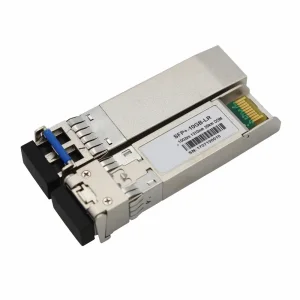
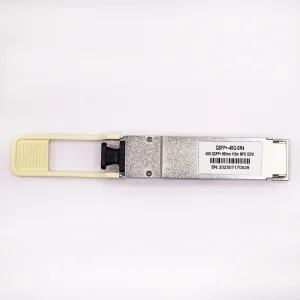
Within high-density data centers, 4 Core OM3 and OM4 cables act as critical top-of-rack (ToR) and spine-leaf linkages. They enable high-speed interconnects via transceivers to support massive virtualization pipelines without bottlenecks.
Harsh electromagnetic environments require optical isolation. Using armored 4-strand multimode fiber prevents ground loops and EMI interference in smart manufacturing cells, industrial PLCs, and SCADA control stations.
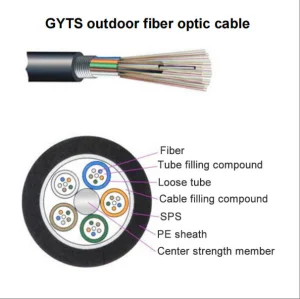
Connecting outdoor cameras and localized sensor arrays to distribution nodes. 4 Core outdoor cables provide the necessary optical conduits for simultaneous HD feed streams and system-wide telemetry telemetry data backhauls.
Procuring fiber optic infrastructure requires unwavering product compliance. As a premier ODM 4 Core Multimode Fiber Optic Cable Manufacturer, Kocent Optec ensures that our product line passes comprehensive laboratory testing before exportation.
Our manufacturing workflow relies strictly on mature scientific methods. Our factory has implemented strict quality control systems matching ISO 9001:2015 specifications. We utilize premium test benches including 3D interferometers for fiber end-face validation, JGR insertion loss testers, and EXFO optical time-domain reflectometers (OTDRs).
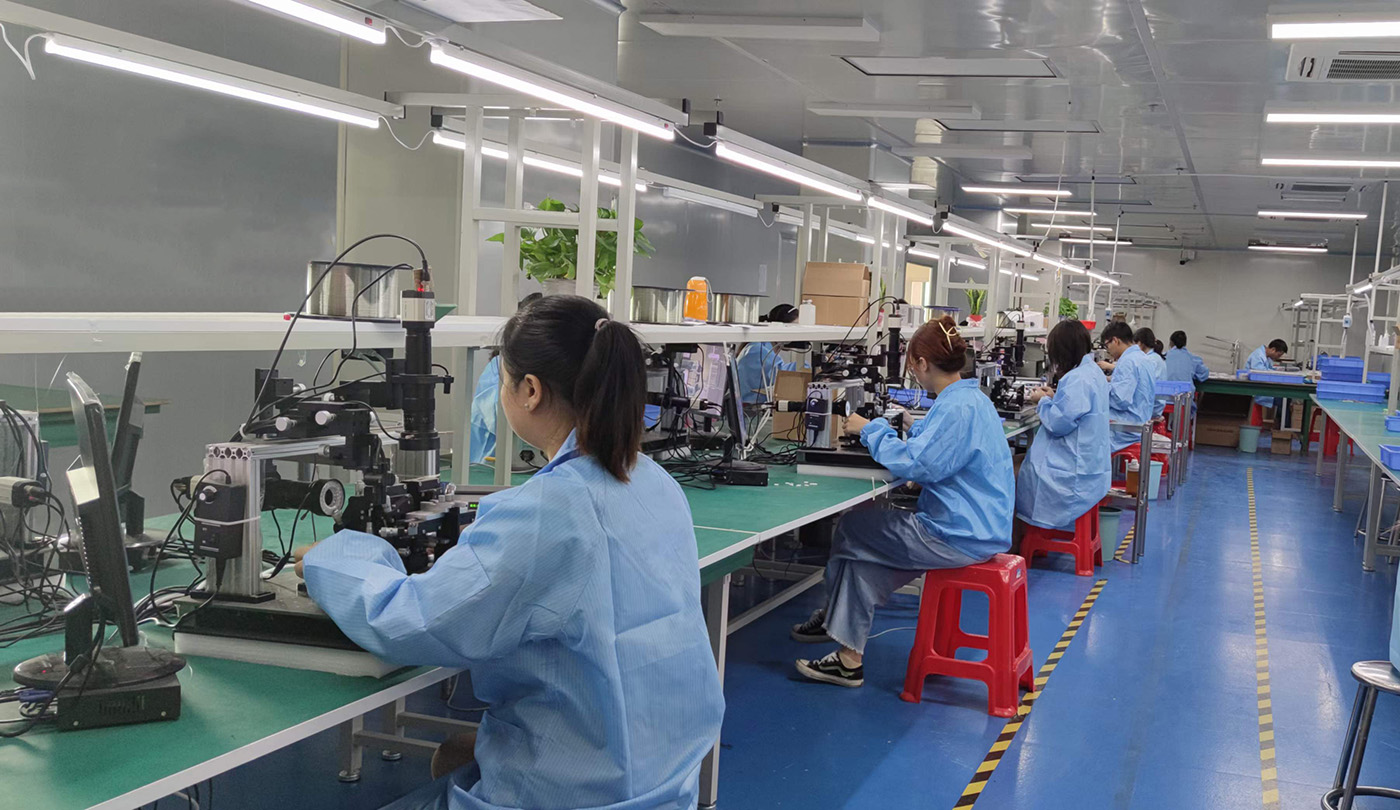
Years of service and robust sales engineering have enabled us to secure prominent operator tenders. Our ODM and OEM fiber assemblies and termination systems are deployed worldwide in major operator networks.
As requirements evolve from 10G/40G architectures to 100G, 400G, and 800G, optical systems demand superior specifications. We focus our ongoing R&D efforts on key industry directions:
By leveraging multi-wavelength VCSEL laser sources (ranging from 850nm to 940nm), 4 Core OM4/OM5 fiber structures can transmit up to 4 parallel data streams on a single physical core, scaling system capacity to 100G and 400G with minimal physical fiber footprint.
Our ODM facility is adapting to the future of Silicon Photonics (SiPh). We optimize our termination assemblies to interface seamlessly with micro-lens connectors and chip-level couplers, minimizing insertion loss to less than 0.1dB per junction.
Utilizing high-grade trench-assisted fiber cores allows us to manufacture patch cords with bend radii as low as 7.5mm. This prevents transmission degradation inside congested high-density fiber management panels.
 KOCENT OPTEC