Explore our high-performance optical interface modules, components, and termination products manufactured to meet international MSA standards.
An in-depth analysis of the technologies shaping enterprise networks, hyperscale data centers, and modern telecommunication frameworks.
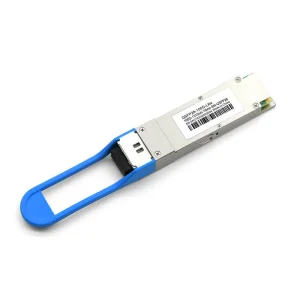
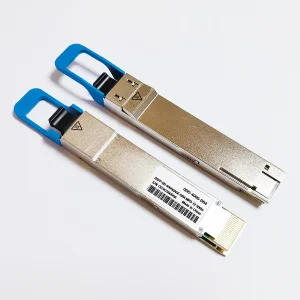
The optical networking space is undergoing a seismic shift driven by demand for cloud computing, high-performance database workloads, and AI model training. Underpinning this revolution is the 100G QSFP28 (Quad Small Form-factor Pluggable 28) transceiver. Unlike legacy systems that relied on complex, multi-layered interfaces, QSFP28 streamlines optical configurations by employing four lanes of high-speed differential signals, with data rates ranging from 25 Gbps up to 28 Gbps per lane.
Key optical modulation schemes dictate the range, power performance, and latency metrics of these transceivers:
| Transceiver Standard | Wavelength / Fiber Type | Interface Type | Reach Capability | Modulation type |
|---|---|---|---|---|
| 100G SR4 | 850nm / MMF (OM3/OM4) | MPO-12 (12-Fiber MTP/MPO) | 70m (OM3) / 100m (OM4) | NRZ (4x25G) |
| 100G CWDM4 | 1271-1331nm / SMF | Duplex LC | 2 km | NRZ (4x25G) |
| 100G LR4 | 1295-1309nm (LAN-WDM) / SMF | Duplex LC | 10 km | NRZ (4x25G) |
| 100G ER4 | 1295-1309nm (LAN-WDM) / SMF | Duplex LC | 40 km | NRZ (SOA assisted) |
| 100G DR1 (Single-Lambda) | 1310nm / SMF | Duplex LC | 500 m | PAM4 (1x100G) |
Procuring optical transceivers at a global wholesale level involves evaluating complex engineering specifications, compatibility validation, and supply chain logistics. Telecom operators and enterprise datacenter buyers look for key metrics when selecting a factory partner:
Years Manufacturing Experience
Tested and Inspected
Global Operators Tender Wins
Orphan Components Architecture
Established in 2012 in Hong Kong as a high-tech communication enterprise, Kocent Optec Limited has emerged as one of China's premier fiber optic termination product manufacturers and solution providers.
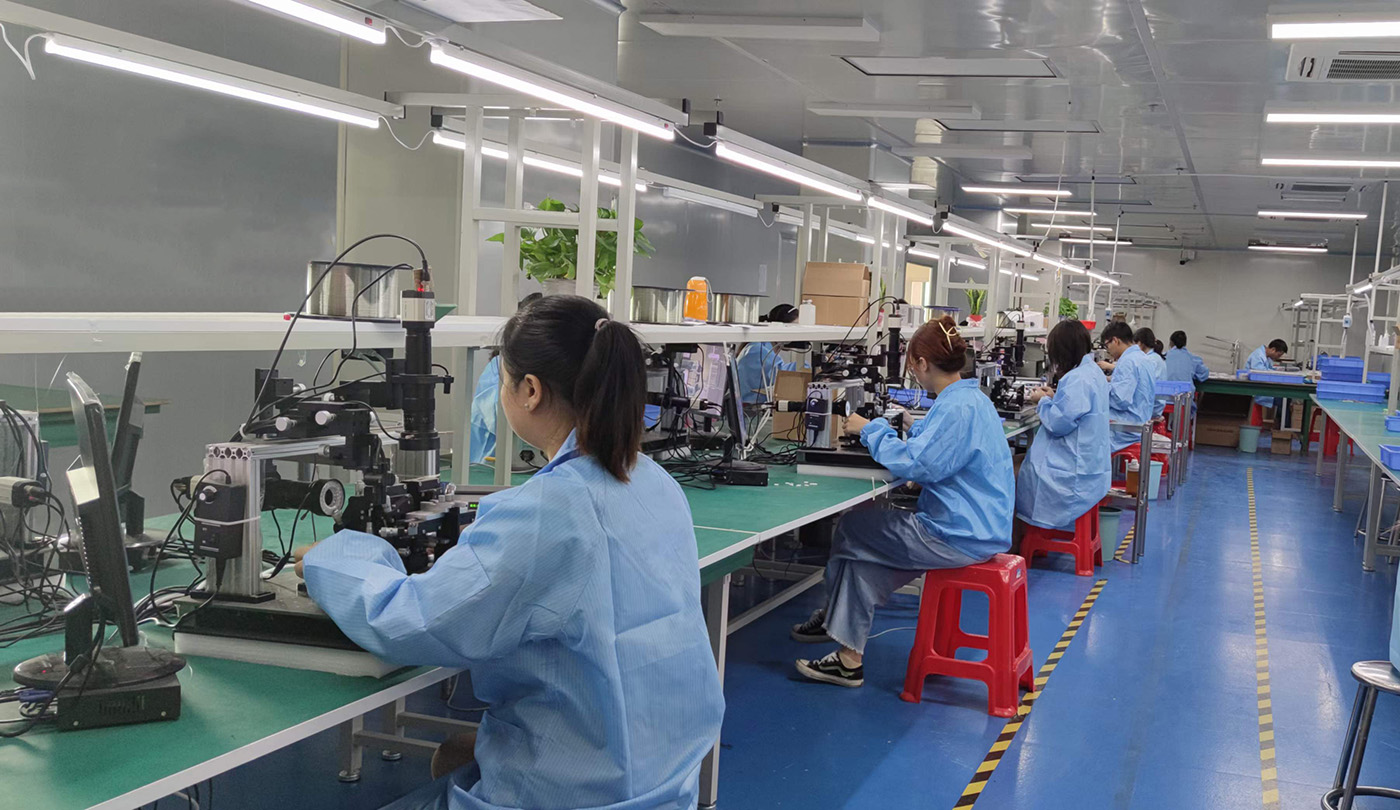
We are dedicated to developing and manufacturing fiber optic communication products ranging from passive components to active modules. Our production lines supply high-end telecommunication networks, enterprise infrastructures, and massive hyperscale data centers worldwide.
With more than 13 years of manufacturing expertise, we adhere strictly to fiber optic industry standards (IEC, Telcordia) by using mature scientific methods. We guarantee that 100% of our products undergo rigorous optical parameters testing and environmental inspection before shipment, ensuring maximum performance reliability.

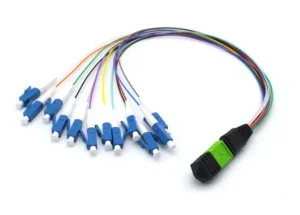
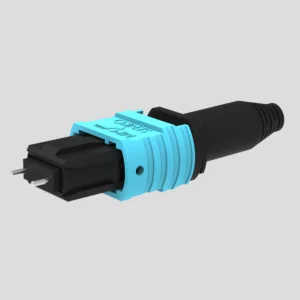
A key structural bottleneck in optical networking is link-loss budget management. An optical transceiver module is only as good as the physical fiber path connecting it. Kocent Optec's unique advantage lies in our unified production lines. We design both high-speed active transceivers (100G/200G/400G) and ultra-low-loss passive connections (such as MTP/MPO harness cables, patch cords, and distribution frames).
By controlling both components, we achieve:
• Optimal insertion loss match (less than 0.35dB for premium MPO connectors).
• Enhanced return loss (up to 60dB for APC single-mode terminations).
• Rigorous end-face quality control, eliminating contaminant risks that account for 90% of field transceiver failures.

Our commitment to win-win cooperation has built a global distribution network. Today, our products serve customers in East Asia, Southeast Asia, the Middle East, Eastern Europe, Western Europe, Northern Europe, South America, North America, North Africa, and South Africa.
Many of our OEM and ODM products have won telecom operator tenders, meeting the rigorous standards of international carriers. Our terminal telecom operator deployments include: SingTel, Vodafone, America Movil, Telefonica, Bharti Airtel, Orange, Telenor, VimpelCom, TeliaSonera, Saudi Telecom, MTN, Viettel, Bitel, VNPT, Laos Telecom, MYTEL, Telkom, Telekom, Entel, FiberTel, StarFiber, Ooredoo, Beeline, and Azercell.
How the building blocks of 100G scale to feed the next generation of high-bandwidth AI infrastructure.
The standard 4-lane NRZ 100G model is evolving. With PAM4 modulation, 100G operates on a single wavelength (Single-Lambda), enabling 400G interfaces (4x100G) on QSFP-DD form factors and paving the clear way for 800G (8x100G) high-density fabrics.
Silicon Photonics integrates optical lasers onto silicon chipsets. This drastically reduces unit costs at high volumes, lowers insertion loss variation, and provides higher resilience to thermal fluctuations in high-density datacenters.
By moving the optical conversion engine directly onto the switch ASIC substrate, CPO cuts power consumption by up to 30% compared to pluggable transceivers. This migration is key for next-generation 1.6T and 3.2T switching systems.
Expert answers regarding compatibility, compliance, factory verification, and volume procurement options.
All of our 100G transceivers are MSA (Multi-Source Agreement) compliant. To ensure 100% host system compatibility, we run a dedicated coding laboratory featuring switches and routers from Cisco, Arista, Juniper, Dell, HP, Huawei, and others. We program the EEPROM/MCU of each transceiver with target-specific firmware, ensuring correct identification, DOM readouts, and port initialization.
Our quality assurance protocol includes automated optical inspection (AOI), eye-diagram verification to measure jitter and rise/fall times, Bit Error Rate testing (BERT) over simulated distance loops, and digital diagnostics validation. Additionally, modules undergo temperature cycling chambers to guarantee performance under harsh operating conditions.
100G LR4 uses 4 channels (each at 25Gbps) over a LAN-WDM grid, optimized for up to 10km over single-mode fiber. CWDM4 uses a wider 20nm spacing grid, designed for cost-efficient 2km links. 100G DR1/FR1 utilizes PAM4 modulation to transmit the entire 100G data load on a single wavelength (Single-Lambda) over 500m/2km, reducing internal laser complexity and optical alignment costs.
Yes. As a direct manufacturer, we offer complete OEM and ODM customization services. This includes customized packaging designs, private labeling, unique EEPROM vendor serial codes, specific cable lengths for custom harness breakouts, and tailored casing configurations to meet environmental needs.
Our production procedures are ISO 9001 certified. Our active optical modules and passive cabling systems comply with CE, FCC, RoHS, and REACH international environmental and electrical safety directives, ensuring hassle-free imports and compliance audits for telecom deployments globally.
Complete active transceiver configurations, high-density patch cables, and mechanical polishing equipment for telecom operators and enterprise networks.
 KOCENT OPTEC