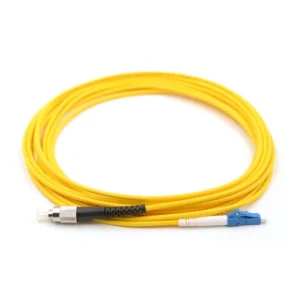
Cheap 8 cores Multimode OM3 Aqua LC Branch Out Optical Fiber Pigtail Factory, Factories

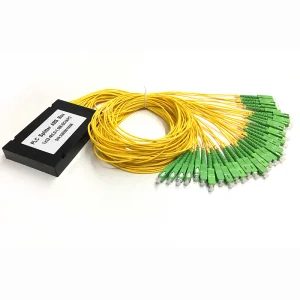
• Branch cable with sub-cable 2.0mm (or 1.8mm); • SC, LC, ST, FC, E2000, DIN, MU, D4, MTRJ, ... connector type for different options; • Single mode fiber (SM fiber) and Multimode Fiber (MM Fiber) are availabel; • Low insertion loss; • High return loss; • Various connector types available; • Easy installation; • Environmentally stable; • Many cable type are availble; • ROHS standard produce. • Support OEM service.

Product Description

Overview & Features

The optical fiber pigtails are ultra reliable components featuring low insertion loss and return loss. They come with your choice of simplex or duplex cable configuration.

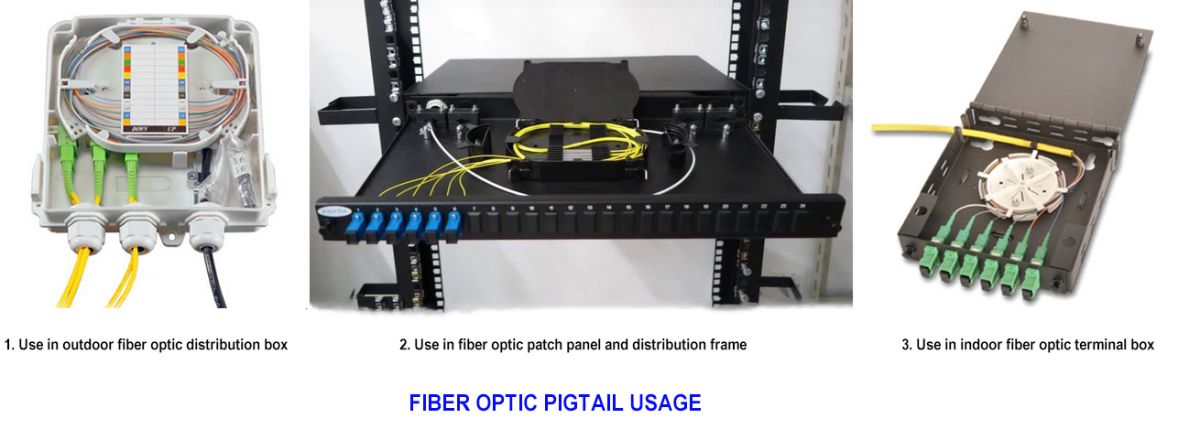
The optical fiber pigtail has fiber connector installed at only one end, and the other end is left empty.

The optical fiber pigtail is a fiber cable end with fiber optic connectors at only either side of the cable while leaving sleep issues no connectors, so the connector side could be from the equipment and the other part can be melted with optical cable fibers.

The optical fiber pigtail is a kind of optical cable terminated with an optical connector on one end and unterminated fiber on the other. Therefore the end with a connector can be linked to the equipment while the other side is melted together with another optical fiber.

The optical fiber pigtail can be considered as fiber optic patch cable since they are similar in structure, and a fiber patch cable can be divided into two pigtails.

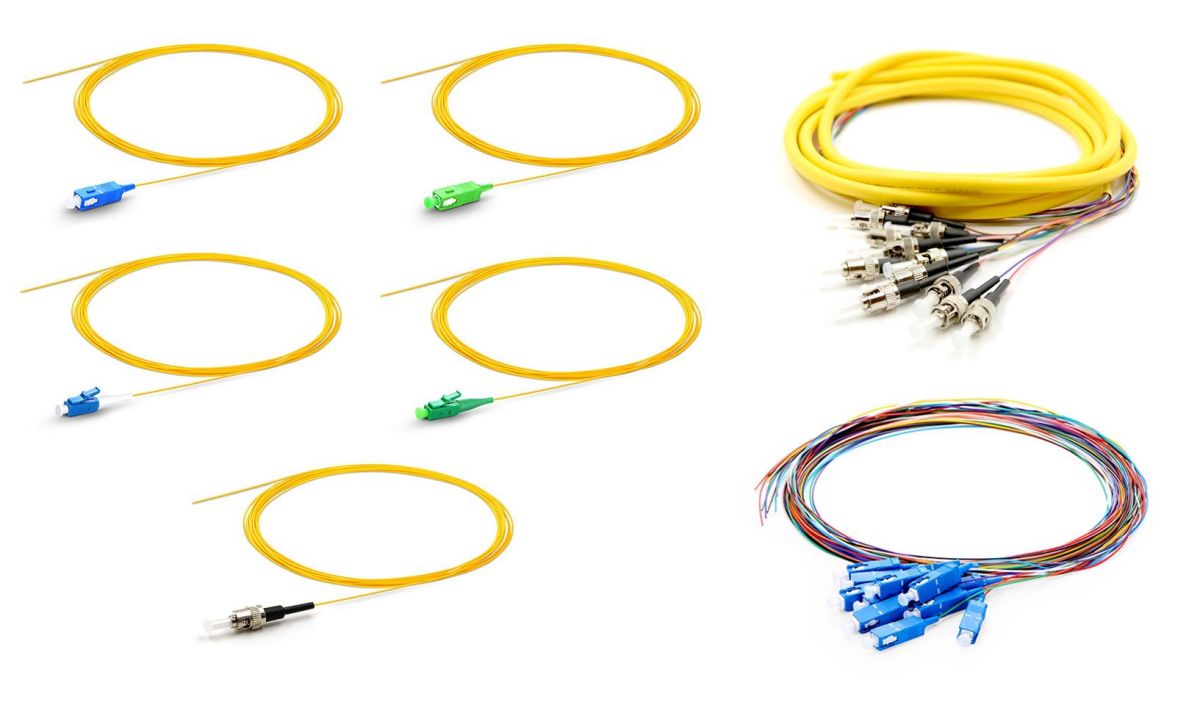
The optical fiber pigtail assembly has various different interfaces and couplers.

A optic fiber pigtail is a single, short, usually tight-buffered fiber optic cable with a factory-installed connector on one end, and un-terminated fiber on the other end.

LC Branch Out Pigtail Specifications
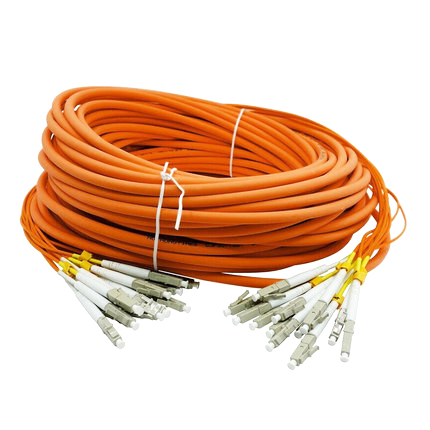
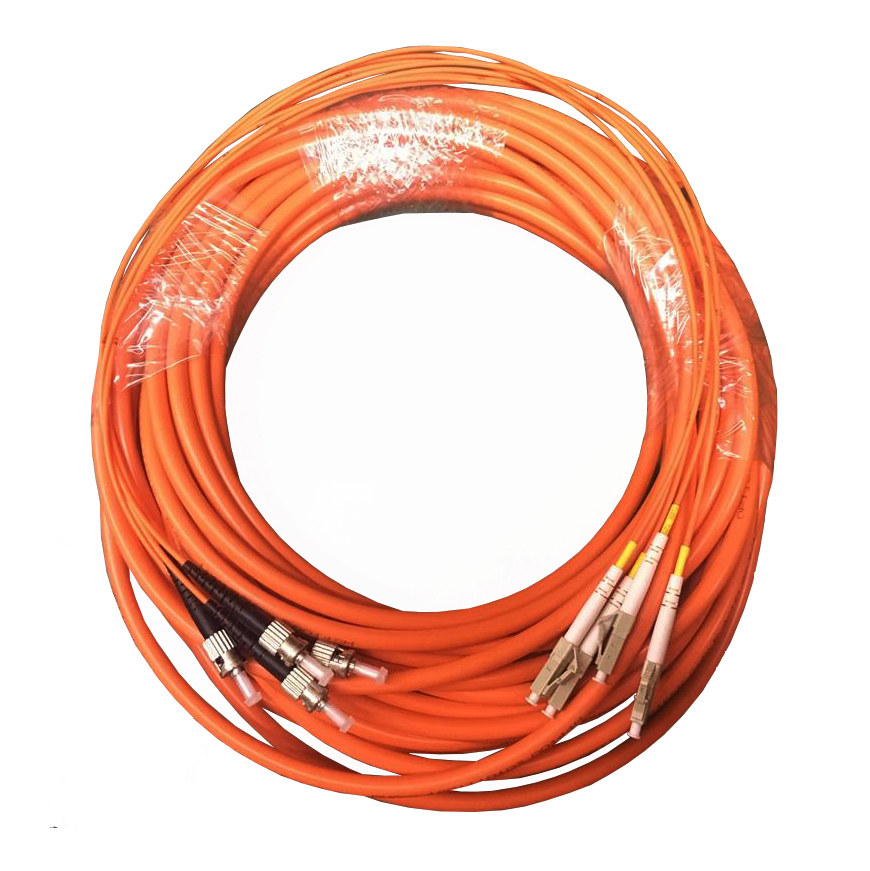
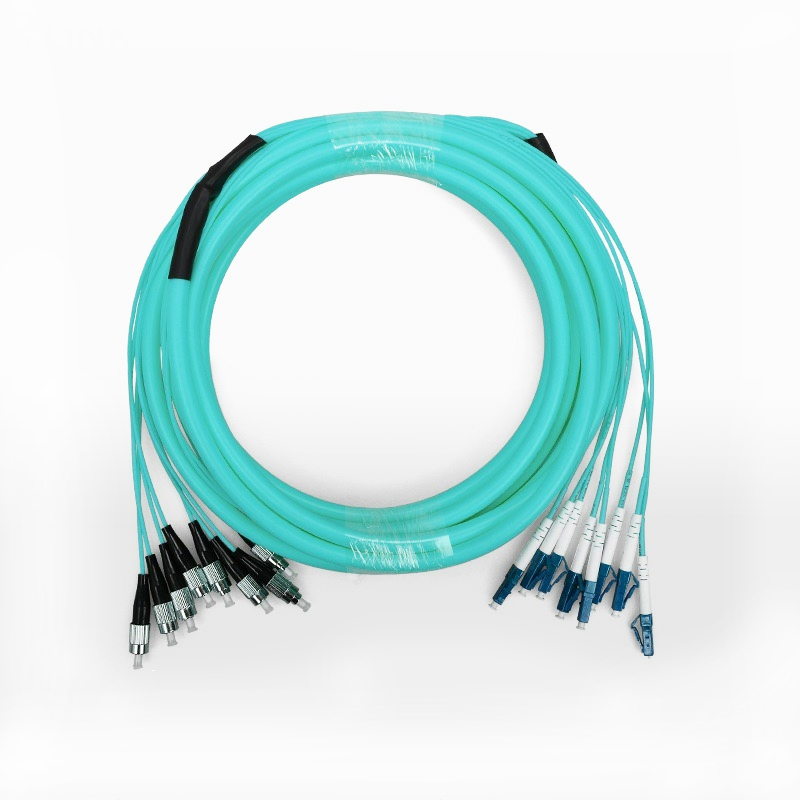
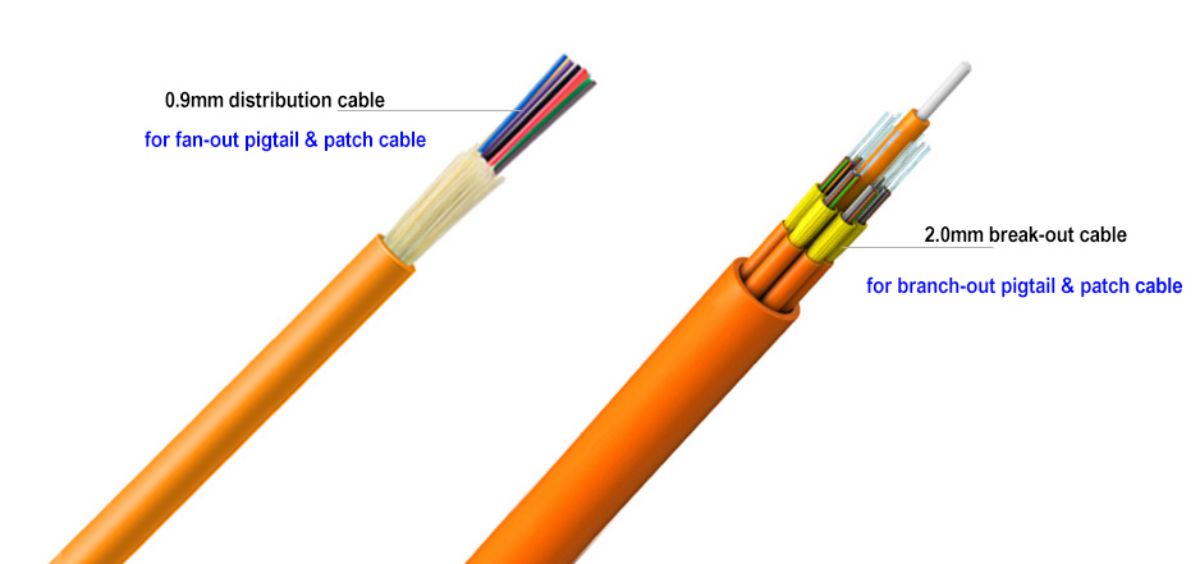
  • The LC branch out optical fiber pigtail uses multi-fiber of fanout cable with sub-cable is tight buffer 1.8mm or 2.0mm cable.
  • Normally, the LC branch out optical fiber pigtails use 2fo, 4fo, 8fo and 12fo of cable. Sometimes also use 16fo, 24fo, 48fo or more.
  • The branch out optical fiber pigtail are make by bunch out (or break out) cable. It can be Multimode OM1 (62.5/125), OM2 (50/125), OM3 (50/125) 10G, OM4 (50/125), OM5 (50/125) or also Single mode G652D, G657A1, G657A2, G657B3.
  • Technical Parameter Table
    Type Standard
    Connector type LC
    Fiber Type Multimode 50/125 OM3 10G
    Cable Type 2 cores, 4 cores, 8 cores, 12 cores, 24 cores, 48 cores, ...
    Sub-cable Diameter Φ1.6mm, Φ1.8mm, Φ2.0mm, Customized
    Cable outsheath PVC, LSZH, OFNR
    Cable length 1.0m, 1.5m, Customized
    Polishing Manner PC
    Insertion Loss ≤ 0.3dB
    Return Loss ≥ 30dB
    Repeatability ±0.1dB
    Operating temperature -40°C to 85°C
    Key Advantages
    • Low insertion loss
    • High return loss
    • Various connector types available
    • Easy installation
    • Environmentally stable
    • Many cable types are available
    • Support OEM service
    Applications
    • CATV
    • Metro
    • Test equipment
    • Telecommunication networks
    • Local area networks (LAN)
    • Wide area networks (WAN)
    • Premise installations
    • Data processing networks
    • Video and military active device termination
    Frequently Asked Questions (FAQ)
    Q1: What is the main difference between an optical fiber pigtail and a patch cable?
    A1: An optical fiber pigtail has a connector installed on only one end, while the other end is left unterminated for splicing. A patch cable has connectors on both ends. You can divide a patch cable into two pigtails by cutting it in half.
    Q2: Which fiber types and modes are available for the branch out pigtails?
    A2: They are available in Multimode OM1 (62.5/125), OM2, OM3 (10G), OM4, OM5 (50/125), and Single-mode G652D, G657A1, G657A2, G657B3.
    Q3: What are the standard core options and sub-cable diameters for LC branch out pigtails?
    A3: Standard options include 2, 4, 8, 12, 24, and 48 cores. The sub-cable diameters are typically Φ1.6mm, Φ1.8mm, or Φ2.0mm, and can be customized upon request.
    Q4: What are the insertion loss and return loss specifications for these pigtails?
    A4: The insertion loss is extremely low at ≤ 0.3dB, and the return loss is high at ≥ 30dB, ensuring high performance and reliable signal transmission.
    Q5: In what environments and applications are optical fiber pigtails commonly used?
    A5: They are widely used in CATV, Metro, Telecommunication networks, local/wide area networks (LAN/WAN), data processing networks, test equipment, and video/military active device terminations.

    Related Products