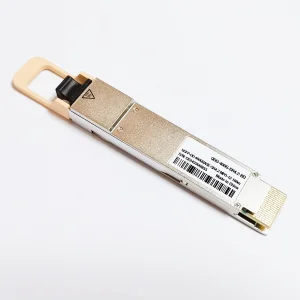
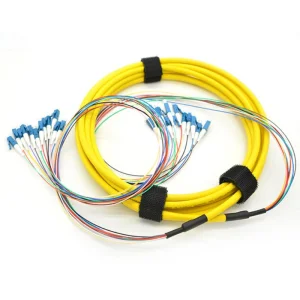
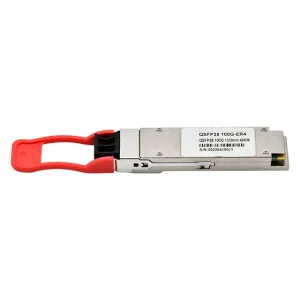
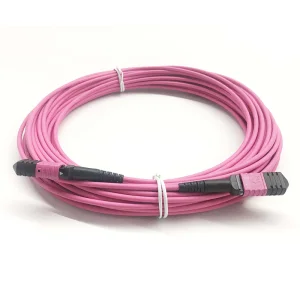
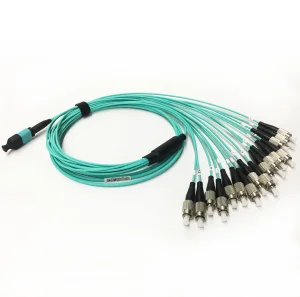
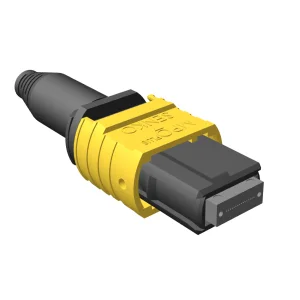
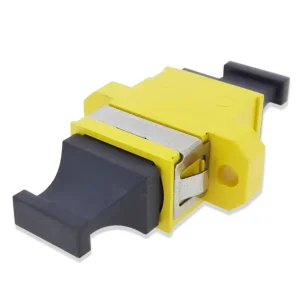
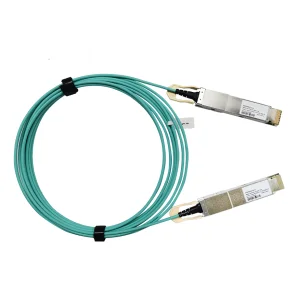
As corporate infrastructures transition from legacy 10G and 25G Ethernet topologies to accommodate hyperscale cloud services, machine learning engines, and large language models (LLMs), structural data routing systems require robust and scalable solutions. In the domain of high-speed interconnects, the term "100G SFP+" is often search-optimized terminology that maps technically to 100G QSFP28 (Quad Small Form-factor Pluggable 28) transceivers, active optical cables (AOCs), or direct-attach copper breakout architectures (QSFP28 to 4x SFP28/SFP+). The convergence of high density, reduced heat dissipation profiles, and optimal price-to-performance ratio makes China-manufactured optical assemblies highly desirable for international enterprises.
Understanding the pricing framework and strategic specifications of 100G modules requires diving deep into physical layer interfaces, wavelength divisions, and fiber medium characteristics. High-bandwidth optical solutions are not uniform commodities; they are high-precision components subject to strict industry standards (MSA agreements, IEEE 802.3bm, CE, FCC, RoHS). When sourcing 100G transceivers or interconnect assemblies, network architects must weigh multiple variables including link distances, transmission media (single-mode vs. multi-mode), diagnostic monitoring functions, and port compatibility matrices.
Procuring raw networking optical hardware directly from specialized Chinese manufacturing hubs like Shenzhen and Wuhan yields considerable capital expenditure advantages. Cost structures vary based on raw material costs (laser diodes like VCSEL, DFB, EML, and silicon photonics ICs), cleanroom testing requirements, and component packaging. Below is an indicative industry benchmark for wholesale pricelists and compatibility structures when purchasing direct from established suppliers.
| Transceiver / Interconnect Type | Form Factor & Interface | Reach & Media Spec | Key Standard Compatibility | Est. Wholesale Price (USD) |
|---|---|---|---|---|
| 100GBASE-SR4 | QSFP28 MPO-12 MMF | 100m (OM4) / 70m (OM3) | IEEE 802.3bm, Cisco, Arista | $25 - $38 |
| 100GBASE-LR4 | QSFP28 LC Duplex SMF | 10km (1310nm WDM) | IEEE 802.3ba, Huawei, Juniper | $75 - $110 |
| 100GBASE-ER4 / ER4-Lite | QSFP28 LC Duplex SMF | 40km (1310nm LAN-WDM) | IEEE 802.3ba, Telco Specs | $280 - $350 |
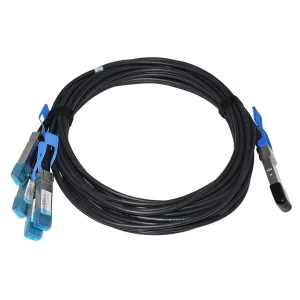
| 100G QSFP28 to 4x 25G SFP28 DAC | Copper Breakout (Passive) | 1m - 5m (Direct Attach) | SFF-8402 / SFF-8665, MSA | $15 - $28 |
| 100G QSFP28 to 4x 25G SFP28 AOC | Active Optical Breakout | 1m - 30m (MMF) | Multi-vendor EEPROM map | $45 - $80 |
Note: The quotes listed represent high-volume business-to-business (B2B) bulk orders. Unit costs fluctuate based on semiconductor component availability (specifically DSP chips and InP laser wafers), customization configurations (OEM/ODM multi-vendor compatibility coding), and raw material commodity indexing.
Established in 2012 in Hong Kong as a high-technology communication enterprise, Kocent Optec Limited has emerged as one of China's premier fiber optic termination product manufacturers and comprehensive solution providers. The enterprise is dedicated to designing, validating, and manufacturing fiber optic communication products spanning the entire spectrum of passive passive networks and active optoelectronic devices. Our portfolio serves high-capacity telecommunication networks, enterprise private clouds, and hyper-scale data centers globally.
By leveraging extensive manufacturing experience and maintaining a state-of-the-art production facility, we actively magnify structural performance outcomes for our customers. This collaborative model expands client core competencies, enabling them to navigate fast-paced market requirements and outperform competition. We place strategic emphasis on customer co-innovation, defining ourselves as a primary partner in physical layer connection solutions rather than a simple transactional supplier.


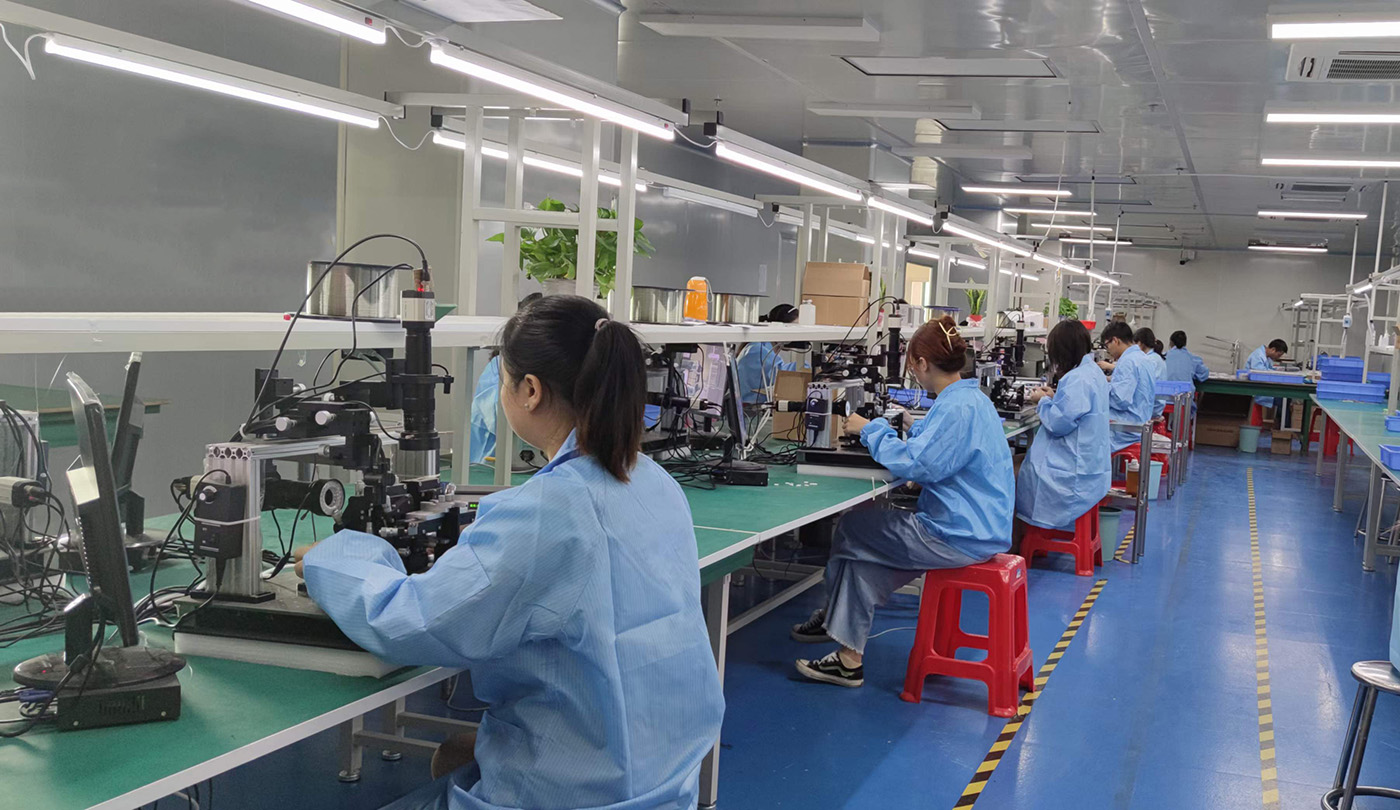
With more than 13 years of technical experience in manufacturing telecommunication-grade fiber optic products, Kocent Optec follows rigorous optical assembly standards. We deploy mature, scientific methods to optimize logistics pipelines, deliver batches on time, and ensure that 100% of finished products undergo comprehensive verification prior to dispatch.
Our validation process includes optical time-domain reflectometry (OTDR) profiling, interferometric geometric connector end-face analysis, insertion loss/return loss testing, and real-system bit error rate (BER) checks. This level of quality control guarantees seamless integration and zero-day failure rates in mission-critical client setups.
Over a decade of dedicated sales execution and continuous field support has established Kocent Optec as a trusted supplier across diverse markets. Today, our distribution networks serve system integrators, value-added resellers, and infrastructure contractors across East Asia, Southeast Asia, the Middle East, Eastern Europe, Western Europe, Northern Europe, South America, North America, North Africa, and South Africa.
Our commitment to win-win engineering cooperation underpins every contract. Many of our customizable OEM and ODM passive assemblies, optical transceivers, and high-density MTP/MPO systems have successfully won global Telecom Operator tenders, satisfying rigorous end-user criteria.
Our terminal telecommunication operator relationships include industry leaders: SingTel, Vodafone, America Movil, Telefonica, Bharti Airtel, Orange, Telenor, VimpelCom, TeliaSonera, Saudi Telecom, MTN, Viettel, Bitel, VNPT, Laos Telecom, MYTEL, Telkom, Telekom, Entel, FiberTel, StarFiber, Ooredoo, Beeline, and Azercell.
As computing requirements surge, 100G infrastructures serve as the foundation for the migration to 400G and 800G architectures. Network operators face the challenge of boosting data density while managing power usage, cooling, and space constraints. The transition from NRZ (Non-Return-to-Zero) modulation to PAM4 (Pulse Amplitude Modulation 4-Level) enables higher throughput over existing fiber pathways, minimizing physical footprint requirements.
Replacing legacy 10G SFP+ links with consolidated 100G QSFP28 nodes. Deploying 100G QSFP28 to 4x 25G SFP28 breakout configurations to achieve cost savings and maximize current rack utilization.
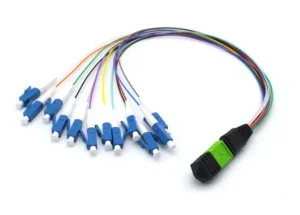
Integrating 400G QSFP-DD modules using 8x 50G PAM4 lanes. Utilizing structured MTP-16 and OM4/OM5 fiber assemblies to maintain clean, manageable physical distribution layers.
Integrating silicon photonics directly with switch ASICs to reduce electrical path loss, cut power usage by up to 30%, and support high throughput with minimal latency.
Technically, SFP+ modules are restricted to 10G (or 25G in the SFP28 variant) due to size and thermal limitations. A direct "100G SFP+" module in the standard SFP form factor does not exist in mainstream MSA standards. When clients search for "100G SFP+," they are usually seeking either a 100G QSFP28 transceiver (which utilizes four parallel 25G channels) or a QSFP28 to 4x SFP28 Breakout configuration, which connects a 100G switch port directly to four distinct 25G SFP28/SFP+ enabled host interfaces.
Yes. Our modules feature customizable EEPROM microcode, allowing compatibility with leading networking hardware manufacturers, including Cisco, Arista, Juniper, Dell, HP, Huawei, and Mellanox. We configure each order's firmware to match the target host system, ensuring correct diagnostic reads and preventing system port locking.
We test every active module and passive fiber assembly at our ISO9001-certified facility. Testing protocols cover insertion loss, return loss, optical eye-pattern verification, spectral behavior, and temperature-cycle simulations, ensuring performance matches our datasheet specifications upon installation.
Standard production lead times range from 7 to 15 business days depending on volume and customization requirements. Passive fiber patches and DACs are typically dispatched faster, while active optical modules requiring custom multi-vendor firmware configurations follow structured programming schedules to ensure accurate system compatibility.
All Kocent Optec products are manufactured to meet CE, FCC, RoHS, and REACH requirements, facilitating smooth customs clearance globally. We provide full compliance documentation with shipping manifests to help minimize import delays.
 KOCENT OPTEC