Explore our highly-compatible transceivers, active cables, and passive patch panels engineered for absolute system reliability.
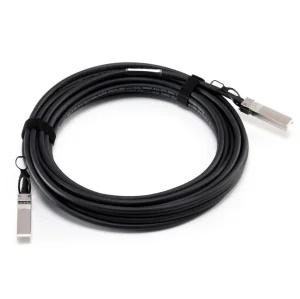
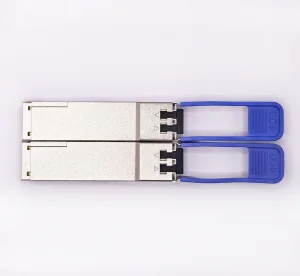
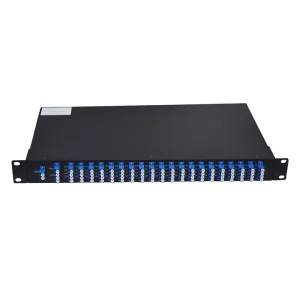
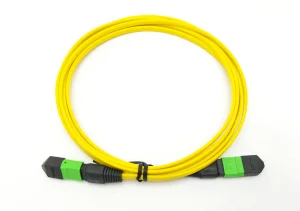
Established in 2012 in Hong Kong as a premier high-tech communication enterprise, Kocent Optec Limited has emerged as one of China's leading fiber optic termination product manufacturers and end-to-end optical solution providers. We are fundamentally dedicated to developing, engineering, and manufacturing fiber optic communication products ranging from passive components to active optical transceivers for telecommunication networks, enterprise networks, and cloud data centers.
By leveraging our extensive production experience and excellent testing capacity gained over the years, we magnify the outcome for our valuable customers, expanding their core competencies and helping them outperform competitors in high-speed transmission. We place emphasis on proactive customer collaboration, defining ourselves not just as a factory, but as your trusted partner in fiber optic connection solutions.

An authoritative guide to B2B procurement, transceiver compatibility, hardware latency, and data center scalability.
As corporate digital transformations accelerate, the demand for high-throughput, low-latency network infrastructure has shifted the base standard from 1GbE to 10GbE. At the heart of this transition is the 10G SFP Card (specifically SFP+ Network Interface Cards, or NICs). Enterprise buyers, system integrators, and network architects seek scalable, energy-efficient, and cost-effective fiber network adapters to link core servers to distribution switch systems. A typical enterprise network deployment requires high-speed interconnectivity for storage virtualization, backup operations, and high-frequency databases.
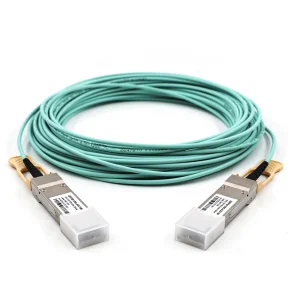
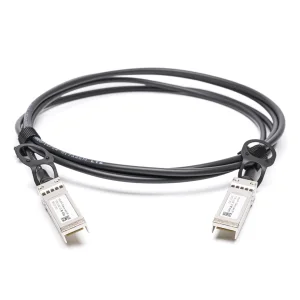
From a procurement perspective, purchasing decisions are no longer centered solely on OEM brands. Key decision-makers now focus on multi-system compatibility, multi-port density (dual-port vs. quad-port SFP+ configurations), and thermal dissipation efficiency. A premium 10G SFP card must support a broad ecosystem of transceiver modules, passive DAC (Direct Attach Copper) cables, and active optical cables (AOCs) without triggering proprietary lockout codes. Kocent Optec Limited addresses these market needs by manufacturing high-grade network components that assure plug-and-play functionality across mixed-vendor setups, drastically lowering total cost of ownership (TCO).
Integrating a 10G SFP card requires deep knowledge of physical and link-layer specifications. These cards generally interface with the system's motherboard via PCIe lanes (PCIe 2.0/3.0 x4, x8, or x16). A dual-port 10GbE PCIe network card requires at least PCIe 2.0 x8 or PCIe 3.0 x4 host interface bandwidth to avoid throughput bottlenecks. The table below outlines key technical considerations that network engineers must analyze during the design phase:
| Parameter / Metric | Copper-Based Base-T NICs | Fiber-Based SFP+ NICs | Direct Attach Twinax (DAC) |
|---|---|---|---|
| Transmission Medium | Cat6/Cat6A Copper Cables | Single-Mode (SMF) or Multi-Mode (MMF) | Twinaxial Shielded Copper Cable |
| Maximum Reach | Up to 100 meters (on Cat6A) | Up to 10km (LR), 40km (ER), 80km (ZR) | 1 to 7 meters (Passive/Active) |
| Power Consumption | High (~3W to 5W per port) | Low (~1W per port) | Ultra-Low (<0.1W per port) |
| Latency Per Port | Approx. 2.5 to 3.0 microseconds | Approx. 0.1 microseconds | Approx. 0.1 microseconds |
| Virtualization Support | SR-IOV, VMDq, VXLAN, NVGRE | SR-IOV, VMDq, VXLAN, NVGRE | SR-IOV, VMDq, VXLAN, NVGRE |
For cloud infrastructures, virtualization offloads like Single Root I/O Virtualization (SR-IOV) are critical. This allows virtual machines (VMs) to bypass the hypervisor virtual switch, interfacing directly with the 10G SFP+ controller chip, which minimizes latency and maximizes packet processing rates. Modern enterprise cards also utilize dedicated controllers (e.g., Intel 82599, X520, or X710 based architectures) to ensure drivers are natively integrated into hypervisors such as VMware ESXi, Microsoft Hyper-V, and Proxmox VE.

With more than 13 years of experience in manufacturing telecommunication fiber optic products, we strictly follow fiber optic industry standards by using mature scientific methods to deliver your products on time. We ensure that 100% of products are tested and inspected before shipment, checking insertion loss, return loss, eye diagrams, and absolute software compatibility.
Our Quality Assurance process includes testing transceivers and SFP cards on native target equipment (such as Cisco Catalysts, Juniper MX, and Arista switches) to verify EEPROM coding parameters and guarantee there are no diagnostic faults or system rejects in the field.
For multi-national enterprise projects, compliance is a non-negotiable metric. Quality-centric markets like North America and the European Union mandate certifications such as RoHS (Restriction of Hazardous Substances), CE, and FCC. Industrial systems also require robust electromagnetic interference (EMI) shielding to prevent packet loss when deployed alongside high-voltage equipment.
Kocent Optec Limited's OEM/ODM products have successfully won major Telecom Operator tenders and satisfied rigid end-user requirements across all continents. Our primary terminal telecom operators include: SingTel, Vodafone, America Movil, Telefonica, Bharti Airtel, Orange, Telenor, VimpelCom, TeliaSonera, Saudi Telecom, MTN, Viettel, Bitel, VNPT, Laos Telecom, MYTEL, Telkom, Telekom, Entel, FiberTel, StarFiber, Ooredoo, Beeline, and Azercell. This extensive list reflects our reliability and capabilities in meeting strict international engineering and telecommunication metrics.
While 10G SFP+ cards remain the primary standard for edge deployments, corporate network backbones are transitioning to higher speeds. The direct upgrade path from 10G is 25G SFP28, which uses similar electrical interfaces but delivers 2.5 times the bandwidth per lane. For core switching layers, 100G QSFP28 and the emerging 800G PAM4 technologies are becoming necessary to manage AI workloads and large-scale data aggregation.
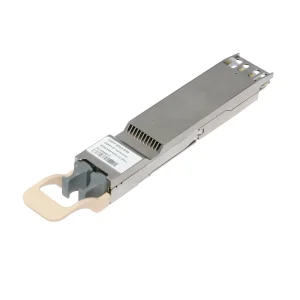
Kocent Optec Limited is strategically aligned with this technological roadmap. Our production lines manufacture compatible transceivers and passive/active assemblies ranging from basic 10G SFP+ twinax cables up to next-generation 800G OSFP optical transceiver modules. Implementing compatible fiber optic accessories from Kocent enables enterprises to upgrade their network interfaces progressively while utilizing existing rack spaces and cable trays, preserving legacy infrastructure investments.
From core R&D to delivery, we maintain a comprehensive quality assurance model.
We use premium optics, gold-plated connectors, and high-performance controller ICs to deliver reliable signal integrity and low bit error rates (BER).
We support customized designs, target-brand EEPROM coding, tailored cable lengths, and custom packaging layouts to fit specific project requests.
Our established shipping channels facilitate prompt transit and customs clearance across the Americas, Europe, the Middle East, and Asia-Pacific.
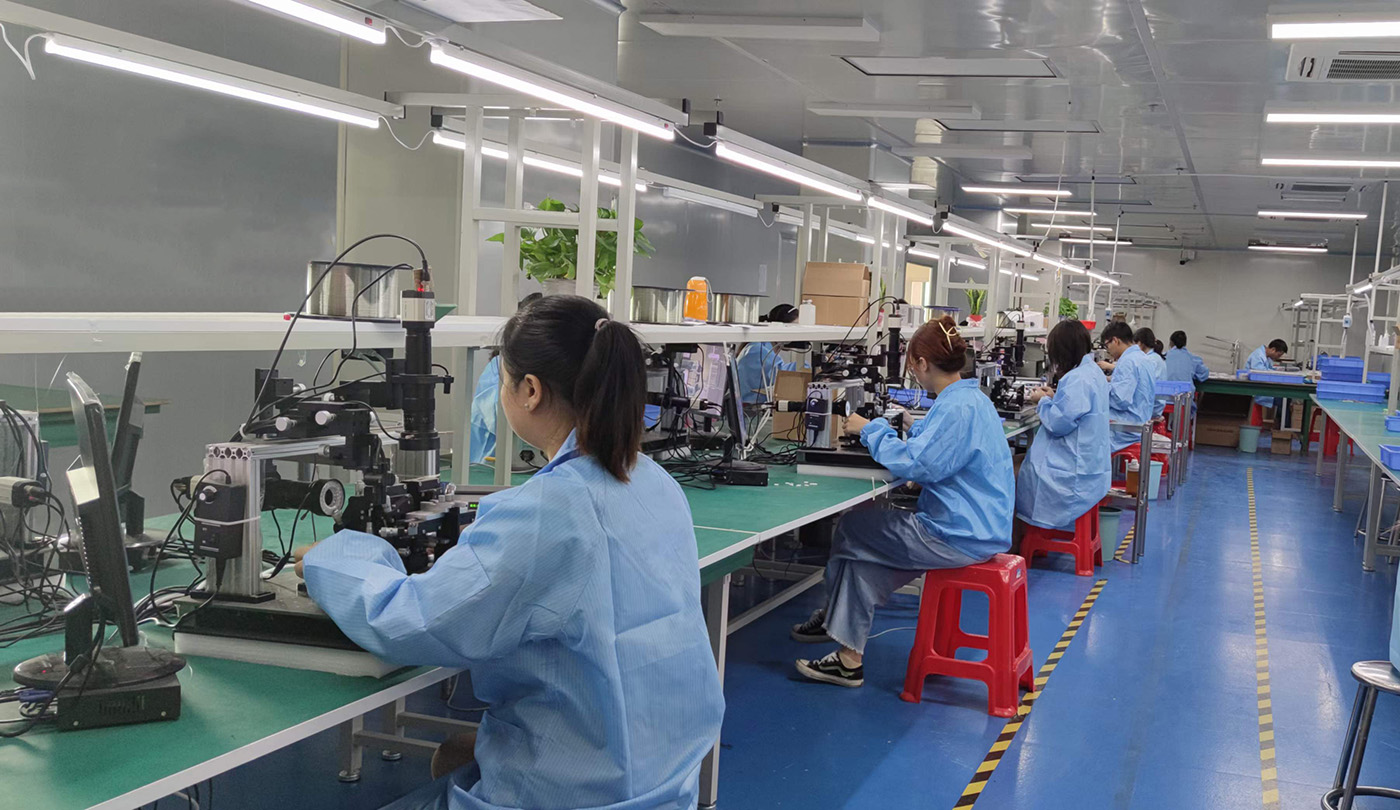
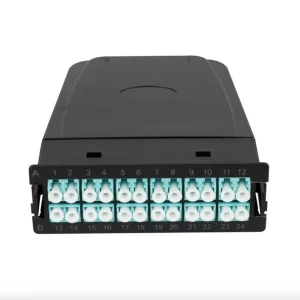
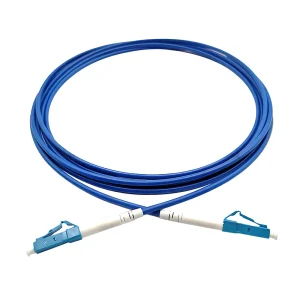
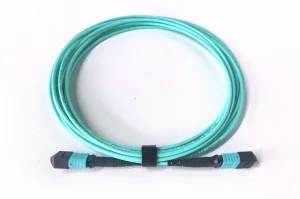
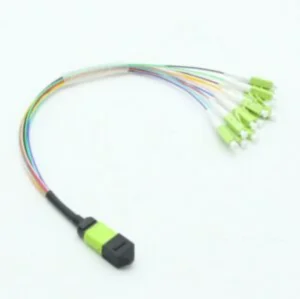
Our production base relies on modern fiber polishing, cleaning, and testing systems to construct passive trunk cables, MTP/MPO cassettes, and patch cords. Every single patch cord and trunk assembly undergoes optical parameter verification (insertion loss and return loss) and 3D interferometer testing.
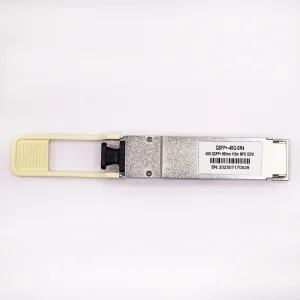
For active components like our 10G, 25G, 40G, and 100G transceivers, we conduct strict real-world testing using high-end network analyzers, validating optical eye diagrams and link stability across extended run times. This focus on reliability helps ensure our products meet the high uptime demands of telecommunications carriers and corporate data centers.
Our fiber optic products are validated under rigorous technical criteria set by leading telecom carriers worldwide:
Key information for network administrators and purchasing managers regarding 10G network cards and transceivers.
Explore additional fiber components, high-speed active modules, and patch cables for high-performance enterprise architectures.
 KOCENT OPTEC