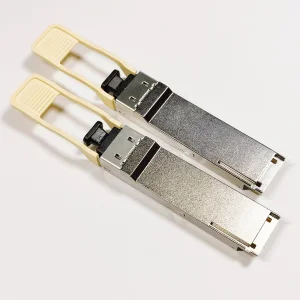
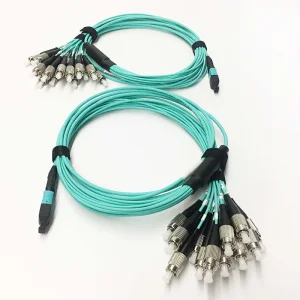
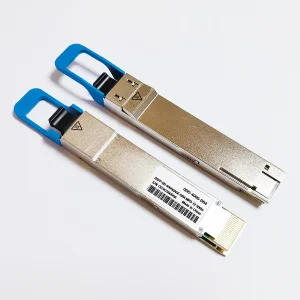
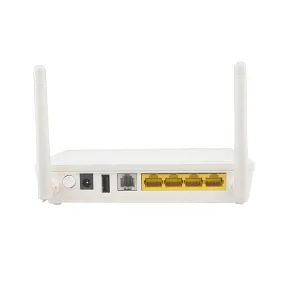
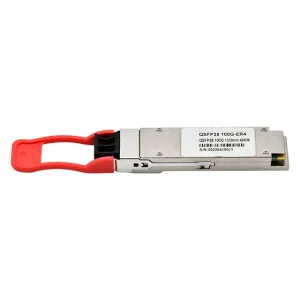
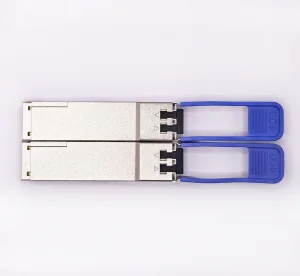
Select models for enterprise cloud environments, campus networks, and edge storage applications.
In the modern era of hyper-scale computing, containerized edge nodes, and multi-tenant cloud platforms, physical-layer architecture dictates operational profitability. Short-reach interconnects represent the highest-density wiring category within top-of-rack (ToR) and middle-of-row (MoR) network designs. Here, the choice of physical medium directly impacts power distribution, heat dissipation, latencies, and capital expenditure (CAPEX).
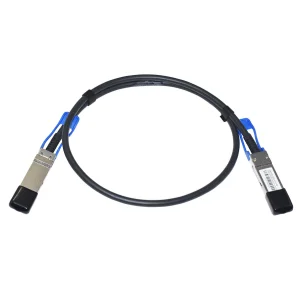
10G SFP+ Direct Attach Copper (DAC) twinax cables have emerged as the standard for links under 7 meters. By eliminating the optical transceivers' internal laser-diode circuits, DAC cables provide near-zero latency, require negligible operating power (<0.1W per port compared to 1W for SFP+ optical transceivers), and yield unparalleled mean time between failures (MTBF).
Information Gain Directive: While optical links are necessary for long-reach networks, using them for intra-rack links incurs unnecessary transceiver purchase costs, increased cooling bills, and potential failure points. Deploying high-quality OEM 10G SFP+ DACs reduces capital spend by up to 75% on short runs while lowering energy footprints.
When provisioning network infrastructure, procurement teams must look beyond raw product price tags. Total Cost of Ownership (TCO) evaluation includes cabling lifecycle, power efficiency, cooling demands, deployment speeds, and maintenance overheads.
For instance, in a data center with 10,000 active ToR ports, moving from active SFP+ transceivers to passive SFP+ DAC cables reduces energy consumption by approximately 9,000 watts. When scaled over 24/7/365 operational windows and factored with a cooling coefficient of 1.5x, this shift yields thousands of dollars in utility savings annually, advancing corporate green-computing metrics.
| Physical Layer Option | Reach Capability | Power consumption (per port) | Latency Profile | Estimated Capex Ratio |
|---|---|---|---|---|
| Passive 10G SFP+ DAC | Up to 7 meters | <0.1 Watts | <0.1 Nanoseconds (Near Zero) | 1.0x (Baseline) |
| Active SFP+ AOC | Up to 30 meters | 0.5 - 0.8 Watts | <2.0 Nanoseconds | 2.5x - 3.5x |
| 10GBASE-T RJ45 Cat6a | Up to 30 meters | 2.0 - 2.5 Watts | >2.5 Microseconds (High) | 1.8x |
| 10G SFP+ SR Optical + Fiber | Up to 300 meters | 1.0 - 1.2 Watts | <1.5 Nanoseconds | 4.0x - 6.0x |
Procurement professionals must also manage product variation. When sourcing OEM 10G SFP+ DAC cables, wire gauge size (AWG) is critical. Thicker conductors (e.g., 24 AWG) sustain signal integrity over longer spans (5-7m) but restrict bending flexibility. Conversely, thinner conductors (30 AWG) are easier to manage in high-density racks but are physically limited to short distances (0.5m - 2m).
Implementing high-grade cabling solutions supports long-term structural scalability. OEM 10G SFP+ DACs play vital roles across several industry verticals:
Direct switch-to-server interconnectivity inside top-of-rack deployments. Minimizes cable clutter while streamlining patch environments.
Critical for low-latency transmission in high-throughput iSCSI and FCoE setups, connecting high-speed SSD storage arrays to local hypervisors.
Allows reliable, low-overhead links inside compact micro-data centers, 5G Baseband Units (BBUs), and distributed IoT gateway stacks.
To maintain uptime in these application scenarios, network administrators must verify multi-vendor compatibility. Large data centers often operate in mixed-hardware environments, running switches, storage arrays, and network cards from various brands (such as Cisco, Arista, Juniper, Dell, and HPE). SFP+ transceiver modules feature EEPROM chips containing vendor-specific coding. Kocent Optec's OEM/ODM capability provides custom EEPROM coding to ensure seamless plug-and-play operation across diverse hardware ecosystems.
High-frequency data transmission over copper requires precision engineering. Passive Twinaxial cables utilize two copper conductors, each insulated with a dielectric material and wrapped in a shielding layer. SFP+ DAC performance depends on key electrical parameters:
Additionally, compliance with standard Multisource Agreements (MSAs)—including SFF-8431, SFF-8432, and SFF-8472—ensures physical dimensions, electrical interfaces, and digital monitoring meet strict industry requirements.
While 10G SFP+ remains a reliable option for enterprise networks and edge operations, physical-layer technologies continue to scale. Direct Attach Copper remains competitive across each step of this bandwidth evolution:
With the introduction of PAM4 (Pulse Amplitude Modulation 4-Level) signaling, copper cables have scaled to support 25G (SFP28), 50G (SFP56), 100G (QSFP28/DSFP), 400G (QSFP-DD/OSFP), and modern 800G standards. Even at higher bandwidth levels, copper's low power requirements and near-zero latency make it a preferred medium for short distances, alongside emerging technologies like linear-drive optics (LPO) and active copper cables (ACC).
Established in 2012 in Hong Kong as a high-tech communication enterprise, Kocent Optec Limited has become a leading Chinese manufacturer and solution provider for fiber optic termination products.
We design and manufacture a broad range of passive and active fiber optic communication products for telecommunication networks, enterprise systems, and high-density data centers.

Leveraging our manufacturing experience and production capacity, we help our customers improve deployment performance, expand their capabilities, and maintain their competitive edge. We focus on collaboration, positioning ourselves as a dedicated partner in fiber optic connectivity solutions.

With over 13 years of experience in manufacturing telecommunication products, we follow strict industry standards. Using proven scientific testing and quality control methods, we deliver orders on schedule and ensure that 100% of products are tested and inspected before shipment.
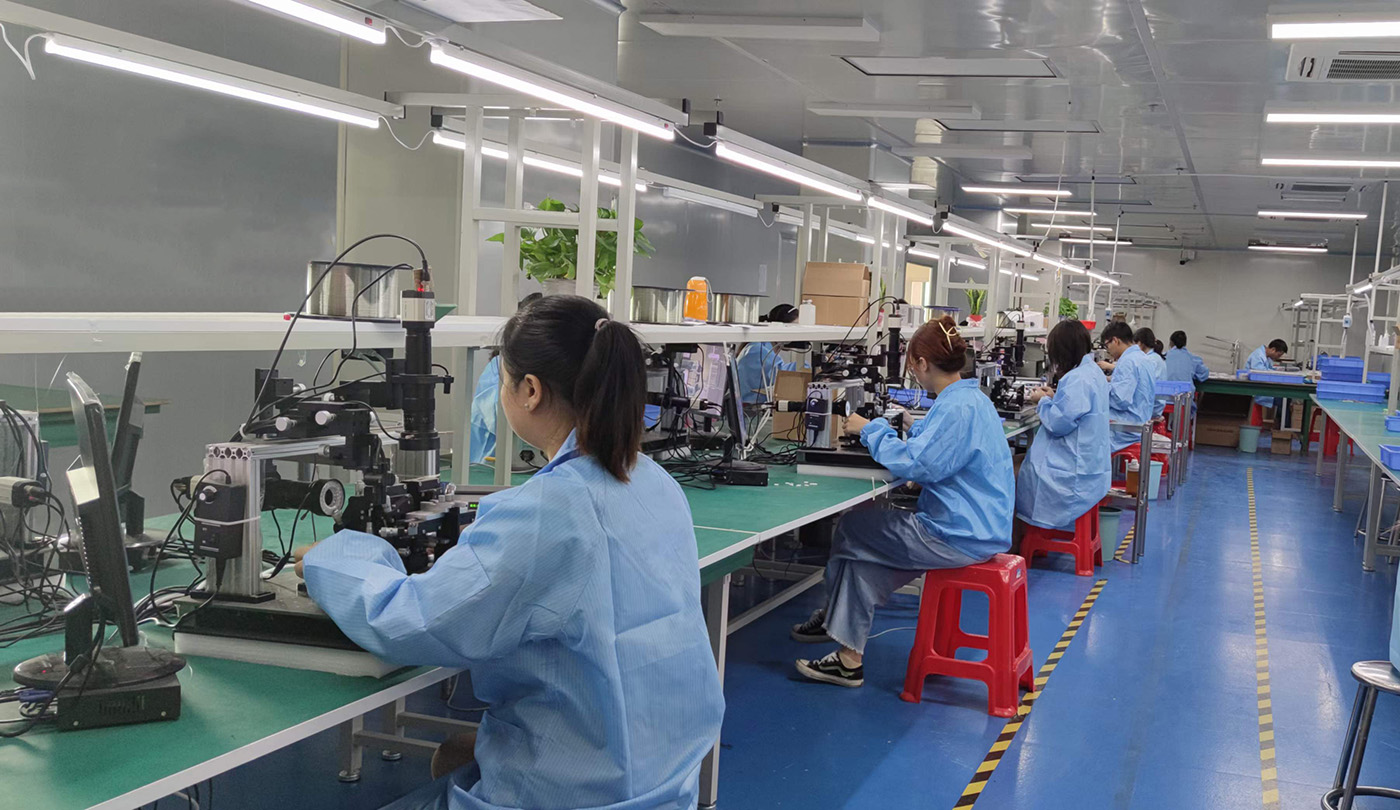
Our sales and customer service efforts have built relationships across several key markets, including East Asia, Southeast Asia, the Middle East, Eastern Europe, Western Europe, Northern Europe, South America, North America, North Africa, and South Africa.
We focus on mutual growth, and many of our OEM and ODM products have been selected in major Telecom Operator tenders to meet demanding end-user requirements.
Primary Terminal Telecom Operators Supported:
High-reliability optical components, assemblies, routers, and processing tools designed to telecommunication standards.
 KOCENT OPTEC