Your Authoritative Enterprise Partner for Premium Active & Passive Fiber Optic Solutions. Certified MSA Compliant Transceivers, Advanced Wavelength Division Multiplexing, and Resilient Global Supply Chain Integrations.
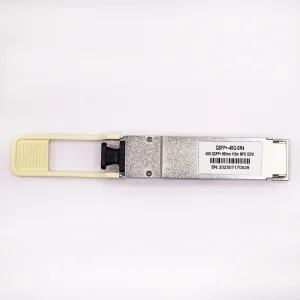
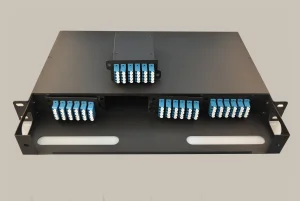
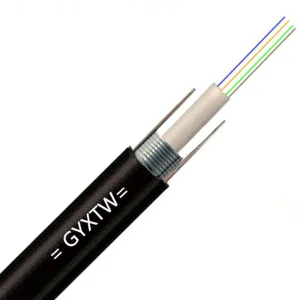
Explore our premium grade fiber optic patch panels, outdoor optical cables, and high-compatibility transceivers engineered for enterprise-grade performance.
Decoupling Gigabit networking needs, industry trends, and the strategic positioning of 1G SFP transceivers.
Even in an era dominated by 100G, 400G, and 800G optical architectures, the 1G SFP (Small Form-factor Pluggable) module remains a foundation of modern networking infrastructure. Its persistence is driven by reliability, low power consumption, cost-efficiency, and universal compatibility across legacy and contemporary switches, routers, and media converters.
Wholesale distribution networks and enterprise end-users rely on 1G SFP modules to bridge local network boundaries, run backbone copper-to-fiber transitions, and implement high-efficiency Industrial IoT (IIoT) frameworks. The modern 1G SFP module is no longer just a basic component; it is an optimized link designed for specialized wavelengths, harsh industrial environmental ranges, and high compatibility thresholds.

Sourcing 1G SFPs requires a precise understanding of the optical physical layer. Depending on the fiber media (Single-mode or Multi-mode) and the distance requirements, different optical transceivers are utilized to maintain network path efficiency:
1000BASE-SX (Short Wavelength): Operates over Multi-mode Fiber (MMF) using a nominal wavelength of 850nm. It is primarily used for short-range deployments, such as intrabuilding backbones and SAN environments, reaching up to 550 meters over OM2/OM3/OM4 fiber cabling.
1000BASE-LX/LH (Long Wavelength): Utilizes a 1310nm optical wavelength running over Single-mode Fiber (SMF) for distances up to 10km (and sometimes up to 20km). LX transceivers can also run on Multi-mode fiber via a specialized mode-conditioning patch cord, providing versatile deployment options.
1000BASE-EX and 1000BASE-ZX (Extended Distance): Designed for long-reach metropolitan applications. EX modules operate at 1310nm or 1550nm up to 40km, while ZX modules operate at 1550nm over single-mode fiber, reaching distances of 80km, 120km, or more without active optical regeneration.

A comprehensive technical comparison to guide procurement teams, network architects, and system integrators.
| Transceiver Standard | Wavelength (nm) | Fiber Type | Max Distance | Optical TX Power (dBm) | Receiver Sensitivity (dBm) |
|---|---|---|---|---|---|
| 1000BASE-SX | 850 | Multi-Mode (MMF) | 550 m (OM2/OM3) | -9.5 to -3 | < -18 |
| 1000BASE-LX/LH | 1310 | Single-Mode (SMF) | 10 km / 20 km | -9 to -3 | < -20 |
| 1000BASE-EX | 1310 / 1550 | Single-Mode (SMF) | 40 km | -5 to 0 | < -23 |
| 1000BASE-ZX | 1550 | Single-Mode (SMF) | 80 km / 120 km | 0 to +5 | < -30 |
| 1000BASE-T (Copper) | N/A (Cat5e/6) | Copper UTP | 100 m | N/A | N/A |
How state-of-the-art production environments and rigorous QA ensure reliable optical interconnect solutions.
Modern factories utilize high-precision automated optical alignment and chip bonding systems. By replacing manual sub-assembly tasks, automated packaging lines ensure consistent optical coupling efficiency, reduce internal insertion losses, and significantly lower failure rates across large manufacturing runs.
A primary failure point for generic SFP modules is software compatibility. OEM/ODM production processes address this through comprehensive coding test rigs. Each 1G SFP is written with MSA-compliant EEPROM codes and tested directly on target switches (Cisco, Juniper, HP, Huawei, Dell, etc.) to ensure seamless recognition and error-free operation.
By locating operations within advanced manufacturing clusters, factories secure direct access to high-quality optical sub-assemblies (TOSA/ROSA), precision-machined zinc alloy housings, and high-frequency PCBs. This localized ecosystem reduces lead times and insulates international procurement networks from supply chain shocks.

Established in 2012 in Hong Kong as a high-tech communication enterprise, Kocent Optec Limited has grown to become one of China's leading fiber optic termination product manufacturers and solution providers. We are dedicated to developing and manufacturing high-performance fiber optic communication products, ranging from passive components to active network transceivers.
We work closely with global clients to expand their capabilities and support network growth. By using mature scientific methods, we ensure that 100% of our products undergo rigorous testing and inspection before shipment. Our commitment to strict industry standards translates into high reliability for your optical infrastructure.
Our OEM and ODM components are field-tested and selected by major global telecom operators. Key service networks using our solutions include SingTel, Vodafone, America Movil, Telefonica, Bharti Airtel, Orange, Telenor, Saudi Telecom, MTN, Viettel, VNPT, and many others. This widespread industry adoption highlights our commitment to quality, compatibility, and supply-chain stability.
From harsh industrial automation environments to high-density modern cloud data centers.
Industrial settings expose networking hardware to extreme temperature fluctuations, high electromagnetic interference (EMI), and physical vibration. Standard commercial transceivers are prone to premature failure under these conditions.
For these applications, Industrial Grade 1G SFP modules are required. These specialized modules utilize hardened components designed to operate reliably across a wide temperature range of -40°C to 85°C. They are deployed in smart grid monitoring, railway signaling, and municipal water treatment plants to ensure continuous data transmission and prevent costly network downtime.
Fiber-to-the-Home (FTTH), Fiber-to-the-Building (FTTB), and FTTR access networks rely on cost-efficient media conversion links at the edge of the network. 1G SFP transceivers, particularly BiDi (Bidirectional) single-strand configurations, are ideal for these architectures.
BiDi SFPs double the traffic capacity of existing fiber infrastructure by transmitting and receiving signals on different wavelengths (e.g., 1310nm/1550nm or 1310nm/1490nm) over a single optical fiber. This allows telecommunication operators to optimize their cable plant and reduce fiber installation costs.
High-capacity production infrastructure engineered to support global telecommunications.
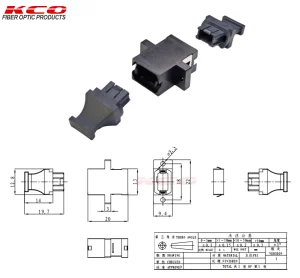
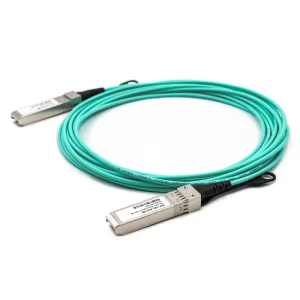
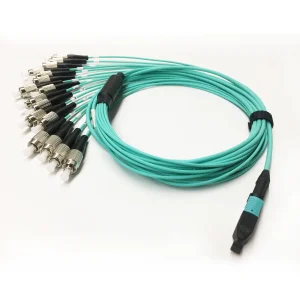
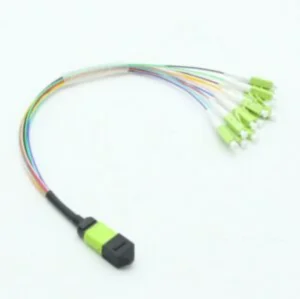
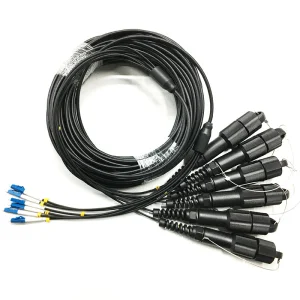
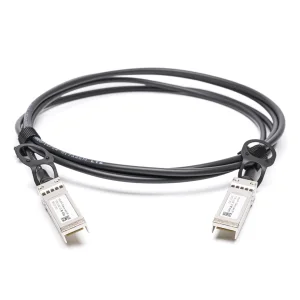
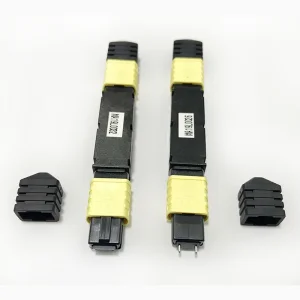
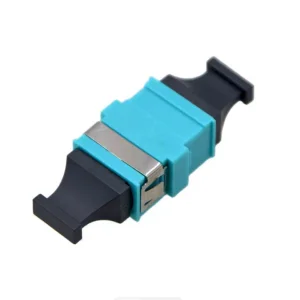
Explore our high-density optical fiber adapters, active optical cables (AOC), and custom-engineered interconnect assemblies.
Get professional answers to key technical and commercial considerations for sourcing optical transceivers.
MSA (Multi-Source Agreement) standards are voluntary industry agreements defining the physical dimensions, electrical interfaces, and optical connectors for pluggable transceivers. By following MSA guidelines, manufacturers ensure that their 1G SFP modules fit and perform reliably in ports across different network equipment brands, giving buyers more options beyond proprietary OEM components.
Digital Diagnostics Monitoring (DDM), also known as Digital Optical Monitoring (DOM), allows real-time tracking of critical operating metrics. This includes transmitter optical output power, receiver input power, module temperature, laser bias current, and transceiver voltage. These metrics help network administrators troubleshoot link issues and predict potential failures before they lead to downtime.
Yes, in most network switches. However, this depends on the switch's firmware configuration. To use a 1G module in a 10G port, the port speed must be manually set to 1Gbps (1000Base-T or 1000Base-X) through the CLI interface, as auto-negotiation may not always work automatically.
Commercial-grade transceivers are designed for temperature ranges between 0°C and 70°C, making them suitable for standard, temperature-controlled data centers and offices. Industrial-grade transceivers are built with more robust internal components to handle extreme temperatures from -40°C to 85°C, which are common in outdoor enclosures, roadside cabinets, and manufacturing plants.
BiDi SFPs use Wavelength Division Multiplexing (WDM) to transmit and receive signals over a single strand of fiber rather than two. They use two distinct wavelengths (e.g., 1310nm for TX and 1550nm for RX). This allows operators to double their capacity without installing new physical fiber, saving on cabling infrastructure costs.
Quality assurance includes automated incoming inspection of optical components (TOSA/ROSA), automated assembly under Class 100,000 cleanroom conditions, high-temperature burn-in testing, optical spectrum analysis to verify wavelengths, and host switch compatibility testing. Finally, each unit is checked for physical cleanliness and insertion loss before packaging.
 KOCENT OPTEC