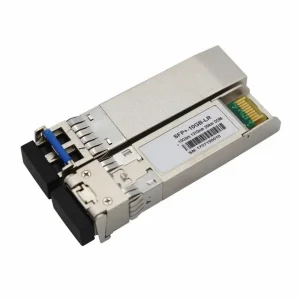
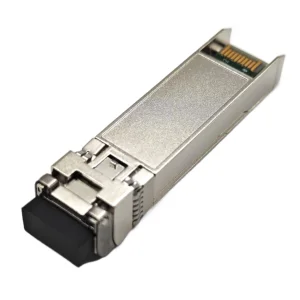
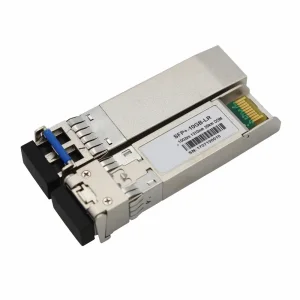
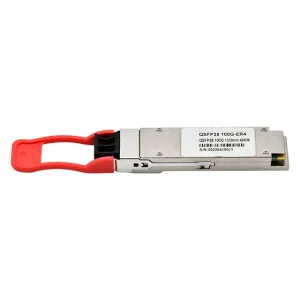
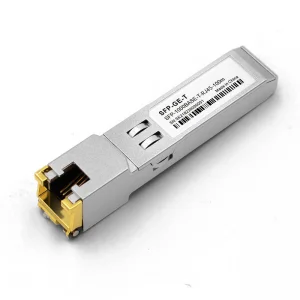
High-performance 10Gb/s transceivers engineered for immediate deployment in Maseru metropolitan rings and long-distance highland routes.
As the Kingdom of Lesotho undergoes rapid digital expansion under initiatives like the Lesotho e-Government Infrastructure Project Phase II, the demand for robust backhaul networks has never been greater. Lesotho's unique geography—highly mountainous with settlements scattered across the Maloti Highlands—places intense technical constraints on telecommunication infrastructure. Traditional copper networks are insufficient; optical fiber remains the only viable path to deliver the low-latency, high-bandwidth services required by operators such as Econet Telecom Lesotho (ETL), Vodacom Lesotho (VCL), and the Lesotho Electricity Generation Company (LEC), which leverages its Optical Ground Wire (OPGW) network.
Integrating cost-effective yet highly reliable 10G SFP+ (Small Form-factor Pluggable) transceivers is key to bridging the access network and core backbone gap. SFP+ modules represent the standard workhorse for upgrading local exchange routers and enterprise switch fabrics. Operating at 10Gb/s over optical fibers allows telecom service providers to scale up data transfer capabilities without having to replace existing optical infrastructure. From connecting cellular base stations in Quthing to establishing fiber-to-the-home (FTTH) endpoints in Maseru, 10G technology underpins Lesotho's contemporary bandwidth modernization.
In telecommunication infrastructure, minimizing energy consumption and thermal output is as crucial as maximizing throughput. 10G SFP+ transceivers require significantly lower power (typically under 1W per port for SR and LR modules) compared to legacy XFP or GBIC form factors. This thermal management advantage is critical in containerized outdoor shelters and remote telecom towers across Lesotho's rural highlands, where active cooling resources are limited.
Deploying networking equipment in Lesotho introduces challenges that are rarely encountered in low-altitude coastal regions. Maseru sits at an altitude of approximately 1,600 meters above sea level, and the eastern highlands peak at over 3,000 meters. The lower atmospheric pressure at high altitudes reduces air density, directly impacting convective heat dissipation from active networking gear. Consequently, standard commercial-grade transceivers (rated 0°C to 70°C) often suffer thermal runaway and premature optical diode degradation when deployed in high-density switches under high-altitude conditions.
To mitigate this risk, Kocent Optec Limited supplies industrial-grade and extended-temperature 10G SFP+ modules engineered to operate flawlessly from -40°C to +85°C. These transceivers feature built-in Digital Diagnostic Monitoring (DDM) or Digital Optical Monitoring (DOM) compliant with SFF-8472. This enables network administrators at VCL or ETL to monitor real-time laser bias currents, operating temperatures, and optical receiver power levels directly from their central network operations center in Maseru, facilitating predictive maintenance before a hardware failure occurs.
Why global telecom operators and internet service providers trust our factory production line.
Our transceivers undergo rigorous EEPROM coding and testing to ensure 100% compatibility with platforms from Cisco, Huawei, Juniper, MikroTik, HP, and Dell.
Each module is tested using advanced BER (Bit Error Rate) testers and optical spectrum analyzers to verify power budget, eye diagrams, and jitter margins.
Our strategic manufacturing pipeline in Shenzhen/Hong Kong guarantees prompt lead times, helping you bypass long distributor waiting periods.
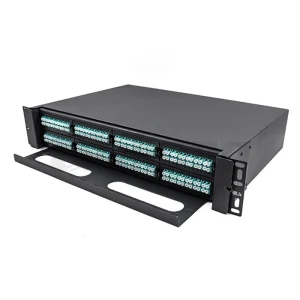
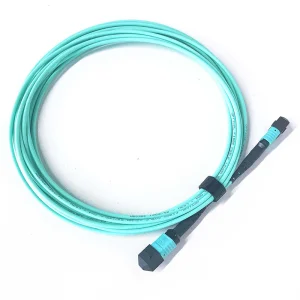
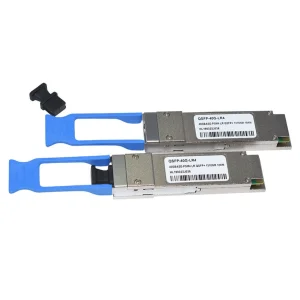
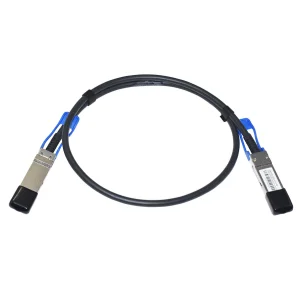
As data demands spike due to remote work, mobile banking apps like M-Pesa, and digital public portals, local ISP nodes are experiencing network congestion. The technical roadmap for Lesotho's telcos involves migrating access networks from 1G to 10G SFP+, while simultaneously upgrading core metropolitan rings to 40G QSFP+ and 100G QSFP28. Our high-density fiber passive line—including high-quality 2U 192fo MTP/MPO patch panels and OM3 trunk assemblies—forms the optical layer needed to transition smoothly from legacy rates to high-speed interfaces.
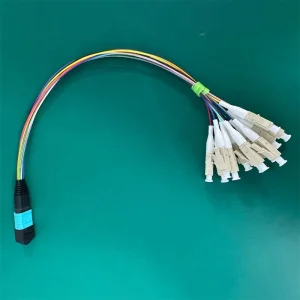
By using multi-fiber push-on (MTP/MPO) connectors, data centers in Maseru can significantly reduce their optical patch cord footprint. A single MTP trunk line can carry up to 12 or 24 fibers, allowing operators to patch high-density switch ports into structural cabling frames efficiently. This approach decreases insertion loss budgets and prepares the physical plant for 40GBASE-SR4 or 100GBASE-SR4 optical transceivers, which rely on parallel optics rather than single-duplex channels.
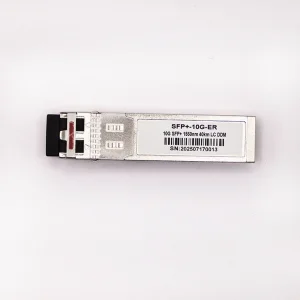
In high-altitude regions like Lesotho's highland zones, optical fiber runs can span long distances between remote villages with minimal repeaters. Deploying KCO-SFP+-10G-ER (40km) and ZR (80km) transceivers is essential. These modules utilize highly stable 1550nm DFB or EML lasers combined with high-sensitivity APD (Avalanche Photodiode) receivers, ensuring robust power budgets capable of overcoming passive fiber attenuation and splice losses across challenging mountain terrains.
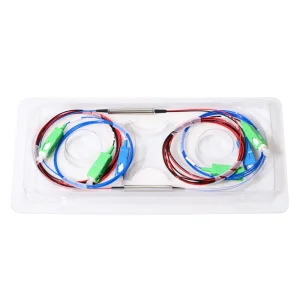
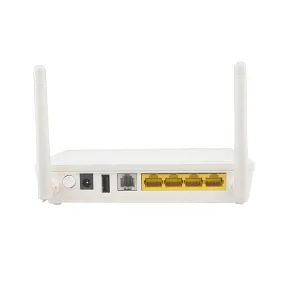
Explore our full line of passive and active fiber components for the Lesotho market, with exact specifications and compatibility profiles.
Established in 2012 in Hong Kong as a high-tech communication enterprise, Kocent Optec Limited is one of China's leading fiber optic termination product manufacturers and solution providers. We are dedicated to developing and manufacturing fiber optic communication products ranging from passive to active categories for telecommunication networks, enterprise networks, and data centers.
By leveraging our extensive experience and production capacity gained over the years, we magnify the outcome for our customers, expanding their core competencies and helping them outperform competitors. We place great emphasis on customer collaboration, defining ourselves as your partner in fiber optic connection solutions.
With more than 13 years of experience in manufacturing telecommunication fiber optic products, we strictly follow fiber optic industry standards (ISO9001, CE, RoHS, FCC) by using mature scientific methods to deliver your products on time and ensure that 100% of products are tested and inspected before shipment.

Managing the procurement of telecommunications components for the Lesotho market requires an understanding of localized shipping channels. Since Lesotho is landlocked by South Africa, shipping lines typically run through the Port of Durban or air cargo routes hubs via O.R. Tambo International Airport in Johannesburg, before entering Lesotho via the Maseru bridge or other border posts. Any delay in customs clearance or compatibility errors on site can stall multi-million-dollar infrastructure deployments.
Kocent Optec mitigates these geographic challenges by offering optimized packaging, comprehensive customs documentation, and pre-cleared logistics pathways tailored for Southern African imports. By maintaining our principal factories in Shenzhen and logistics hubs in Hong Kong, we offer immediate access to air freight networks, shortening transit times to Maseru to under 7-10 working days for stock items.
Moreover, our factory floor utilizes an automated, multi-host testing matrix. Active transceivers are tested across physical switch ports representing the specific firmware iterations of Cisco, Huawei, Juniper, and MikroTik equipment. This eliminates the risk of "transceiver locked" errors or missing DDM information upon installation. For Lesotho ISPs, this means deployments can proceed on schedule, reducing the need for costly field engineering re-visits to remote highland tower sites.
Whether you require custom length MTP/MPO fanout cables (OM3/OM4) or custom-coded 10G SFP+ transceivers to match proprietary carrier equipment, our assembly lines can accommodate tailored specifications with low minimum order quantities (MOQs).
All production batches undergo 3D interferometer testing for fiber connectors, insertion loss testing, and return loss profiling. Transceivers undergo temperature chamber stress tests to replicate environmental shifts in Lesotho's mountains.
Lesotho's economy relies heavily on mountain mining operations, notably the Letšeng Diamond Mine, one of the highest diamond mines in the world. High-altitude mining operations demand robust local network connectivity to link heavy equipment telemetry, control rooms, and onsite offices with administrative headquarters in Maseru. In these harsh mountain microclimates, fiber networks and high-performance SFP+ modules form the backbone of these operations.
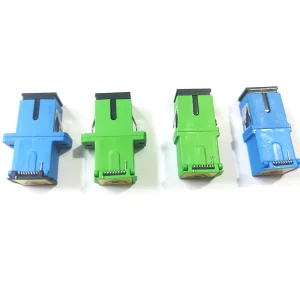
Additionally, rural broadband infrastructure projects in Lesotho rely on passive optical distribution networks (ODN). By using auto-shutter fiber optic adapters and rugged PLC splitters, local network operators can limit signal degradation caused by dust and moisture infiltration. This engineering choice is crucial for long-term network reliability in rural environments, significantly reducing maintenance overheads.
Answers to key considerations for importing, deploying, and testing fiber optic components in the Lesotho region.
 KOCENT OPTEC