High-performance passive and active transmission components optimized for data center interconnects and enterprise applications.
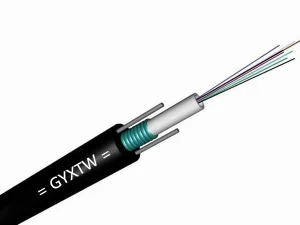
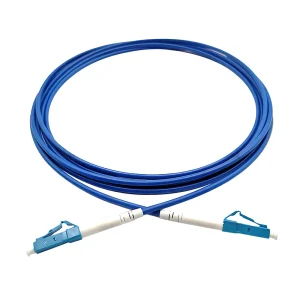
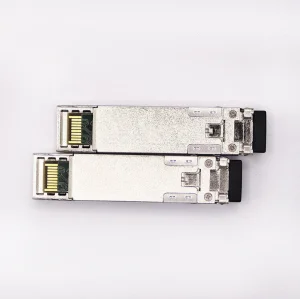
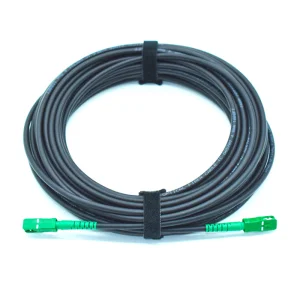
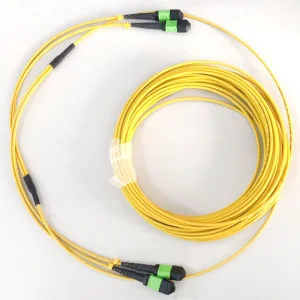
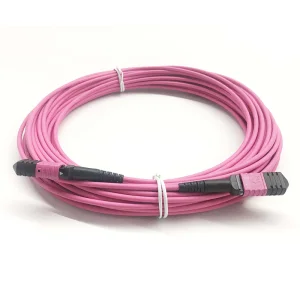
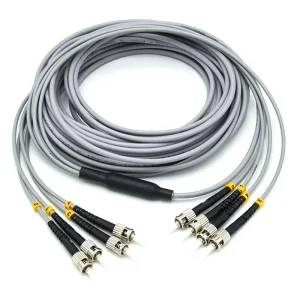
As enterprise networks and hyperscale data centers migrate from legacy 10G infrastructures toward 100G, 400G, and even 800G architectures, 40G MPO (Multi-fiber Push-On) cabling remains a vital foundation. Operating on parallel optics technology, 40G systems (such as 40GBASE-SR4) utilize 8 or 12 fibers to transmit data simultaneously over multiple lanes, replacing the traditional dual-fiber duplex transmission model.
Modern network engineering demands reduced latency, minimized optical insertion loss, and optimal space utilization. This is where high-quality 40G MPO assemblies offer distinct advantages over discrete simplex or duplex patch cords. By consolidating up to 12 fibers into a single connector, MPO systems reduce bulk within cable pathways, improve airflow through rack systems, and dramatically accelerate deployment speed during expansion or hot-swapping procedures.
Standard high-performance MPO cables feature a low-loss design with insertion loss limits under 0.35dB (and down to 0.2dB for premium components) to maintain critical optical budget margins.
Proper polarity management (Type A straight-through, Type B crossover, or Type C pair-flipped) ensures the transmit port at one end maps accurately to the receive port at the other.
Engineered for diverse environmental regulations, cables are available with OFNP (Plenum) for strict air plenum runs or LSZH (Low Smoke Zero Halogen) to satisfy global safety codes.
Global procurement teams face the complex task of minimizing deployment time while ensuring zero-defect fiber links. Pre-terminated 40G MPO trunk cables and harness breakout assemblies offer a plug-and-play architecture that eliminates field splicing, reducing on-site installation times by up to 75%. Furthermore, factory-polished terminations prevent common end-face contamination issues that typically compromise field-installed terminations.
When sourcing 40G MPO components, enterprise buyers must evaluate the underlying fiber glass chemistry. The transition from OM3 to OM4 multi-mode fiber (MMF) has allowed link lengths to extend up to 150 meters for 40G/100G configurations, while single-mode OS2 solutions satisfy longer-reach requirements (up to 10 kilometers) in campus backbones and metropolitan networks.
Established in 2012 in Hong Kong as a high-tech communication enterprise, Kocent Optec Limited has emerged as one of China's premier fiber optic termination product manufacturers and solution providers. We are dedicated to developing and manufacturing a comprehensive range of fiber optic communication products spanning passive components to active optical transceivers for modern telecommunication networks, enterprise infrastructures, and hyper-scale data centers.
By leveraging our extensive engineering experience and manufacturing capacities, we help our global customers optimize network performance, expand core operational competencies, and outperform competitors. We place a deep emphasis on collaborative partnership, defining ourselves as a trusted extension of your technical team.

Kocent Optec's state-of-the-art production facilities utilize advanced manufacturing automation (Industry 4.0 principles) to maintain cost leadership while achieving strict tolerance limits. Every single MPO patch cord and trunk assembly undergoes rigorous multi-stage testing to guarantee performance compliance under real-world operating conditions.

We utilize high-resolution 3D interferometers to measure fiber end-face geometry parameters, including radius of curvature, fiber height, and apex offset. These parameters dictate whether physical contact (PC/APC) will be maintained during connector mating, directly impacting insertion loss and return loss metrics over time.
Additionally, automatic optical microscope scanners inspect 100% of finished connector end-faces to ensure they are free of scratches, pits, or dust particles according to the IEC 61300-3-35 standard. Any microscopic surface defect can absorb light energy or reflect it back to the transmitter, causing signal degradation and data transmission errors.
With more than 13 years of manufacturing expertise, we closely follow Telcordia GR-1435-CORE standards for multi-fiber optical connectors. Our environmental test chambers cycles cables through extreme temperature ranges (-40°C to +75°C) and high humidity conditions to confirm mechanical stability. This ensures our 40g MPO cables perform reliably in hostile industrial settings and enclosed data center hot aisles.
Technical specifications to assist network architects and telecom engineers in selection and deployment planning.
| Fiber Type / Mode | Connector Type | Typical Insertion Loss | Return Loss | Jacket Options | Optimal Distance (40G) |
|---|---|---|---|---|---|
| OM3 Multimode (Aqua) | MPO / MTP Female or Male | ≤ 0.35 dB (Low Loss) | ≥ 25 dB | LSZH, OFNP, OFNR | Up to 100 Meters |
| OM4 Multimode (Magenta/Violet) | MPO / MTP Female or Male | ≤ 0.35 dB (Low Loss) | ≥ 25 dB | LSZH, OFNP, OFNR | Up to 150 Meters |
| OS2 Single-mode (Yellow) | MPO / MTP APC (8° Angle) | ≤ 0.35 dB (Standard) | ≥ 60 dB | LSZH, OFNP, Double Jacket | Up to 10 Kilometers |
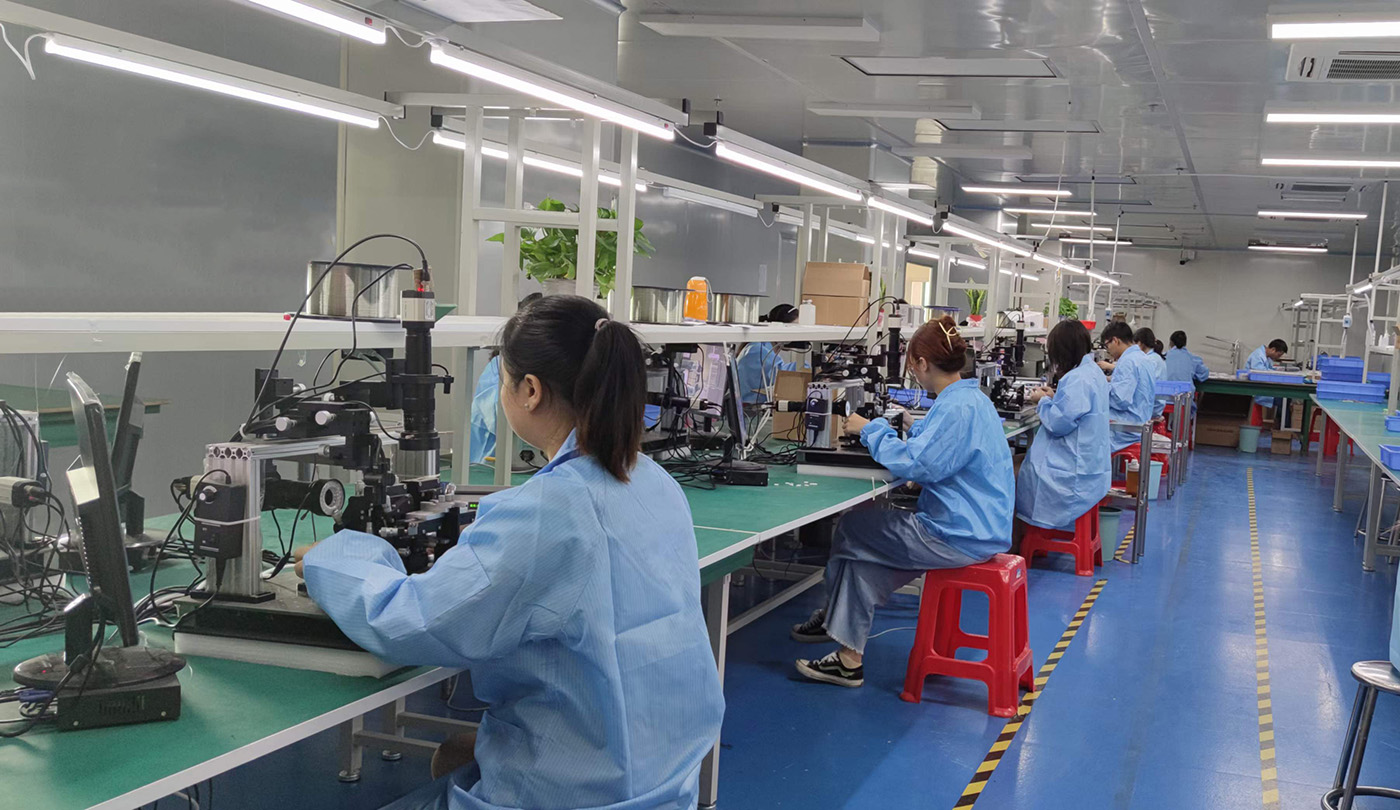
Over the years, our sales and service infrastructure has expanded to support customers across multiple continents, including East Asia, Southeast Asia, the Middle East, Europe, South America, North America, and Africa. Many of our OEM and ODM products have won competitive telecom operator tenders, meeting the strict specifications required by major Tier-1 carriers worldwide.
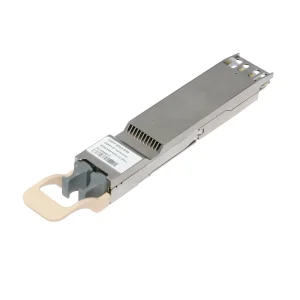
By using premium components and maintaining high quality standards, Kocent Optec ensures that our cables interface cleanly with transceiver modules from major manufacturers, preventing field link failures and avoiding costly maintenance cycles.
Technical clarifications on 40G MPO cables, polarities, and selection criteria.
Explore additional fiber optic products and accessories to complete your cabling infrastructure.
 KOCENT OPTEC