Deploy high-capacity, low-latency infrastructure with our selected collection of passive and active optical networking products optimized for telecom and enterprise grids.
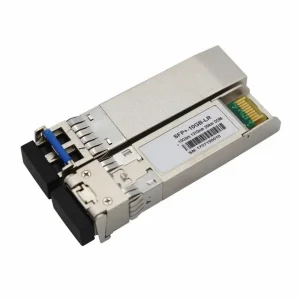
The telecommunications industry has undergone a massive structural shift from low-density legacy architectures to ultra-fast, high-density optical transceivers. Within this landscape, the 10 Gig SFP+ (Small Form-factor Pluggable Plus) module remains the foundational standard for enterprise networks, industrial controls, and metropolitan access systems. Building on the early SFP format, which supported speeds only up to 4.25 Gbps, the SFP+ standard optimizes the electrical interface—specifically moving the clock and data recovery (CDR) chips from the optical transceiver to the host board. This engineering change drastically reduces both module size and power dissipation, enabling high-density port configurations.
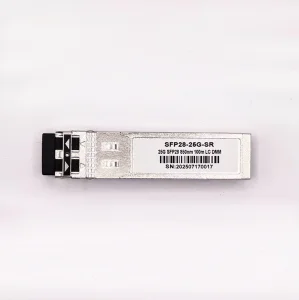
In modern optical infrastructure design, 10G SFP+ modules are deployed across diverse specifications, each matching a precise physical-layer protocol. From the Short Range (SR) applications utilizing 850nm VCSEL transmitters over multimode OM3/OM4 fibers, to Long Range (LR) configurations driven by 1310nm DFB lasers over single-mode fibers up to 10km, and Extended Range (ER/ZR) versions achieving up to 80km transmission using 1550nm EML lasers, the standard covers the full spectrum of network architectures. The integration of Digital Diagnostic Monitoring (DDM), also referred to as DOM (Digital Optical Monitoring) per SFF-8472, allows real-time telemetry tracking of essential criteria including optical output power, receiver sensitivity, operating temperature, and bias current. This telemetric feedback is essential for maintaining service level agreements (SLAs) in carrier and enterprise networks alike.
“By stripping out redundant internal circuitry and optimizing heat dissipation, modern ODM 10G SFP+ transceivers routinely achieve power consumption levels under 1.0 Watt per port, which is crucial for reducing thermal load in dense datacenter top-of-rack switches.”
For corporate purchasing agents and network engineers, the primary metric of success for 10G SFP+ deployments goes beyond simple unit cost. The core concern centers on multi-vendor compatibility and EEPROM serialization coding. Major network vendors lock their hardware to accept only transceivers carrying proprietary cryptographic signatures. A top-tier ODM supplier must offer extensive programming capabilities to write custom vendor codes onto the module’s EEPROM. This ensures seamless interoperability with platforms like Cisco, Arista, Juniper, HP, and Huawei, bypassing proprietary lockout mechanisms without violating hardware warranties.
Furthermore, procurement professionals are shifting from legacy CAPEX-heavy models to OPEX-efficient models. This transition demands high-reliability modules with minimal failure rates (expressed as low FIT - Failures in Time). In industrial deployments, failure leads to downtime that costs thousands of dollars per minute. Consequently, buyers look for suppliers that run advanced quality processes, such as thermal cycling tests, high-humidity storage, and dynamic bit error rate (BER) checks. This rigorous approach guarantees the longevity of both passive and active elements within the distribution chain.

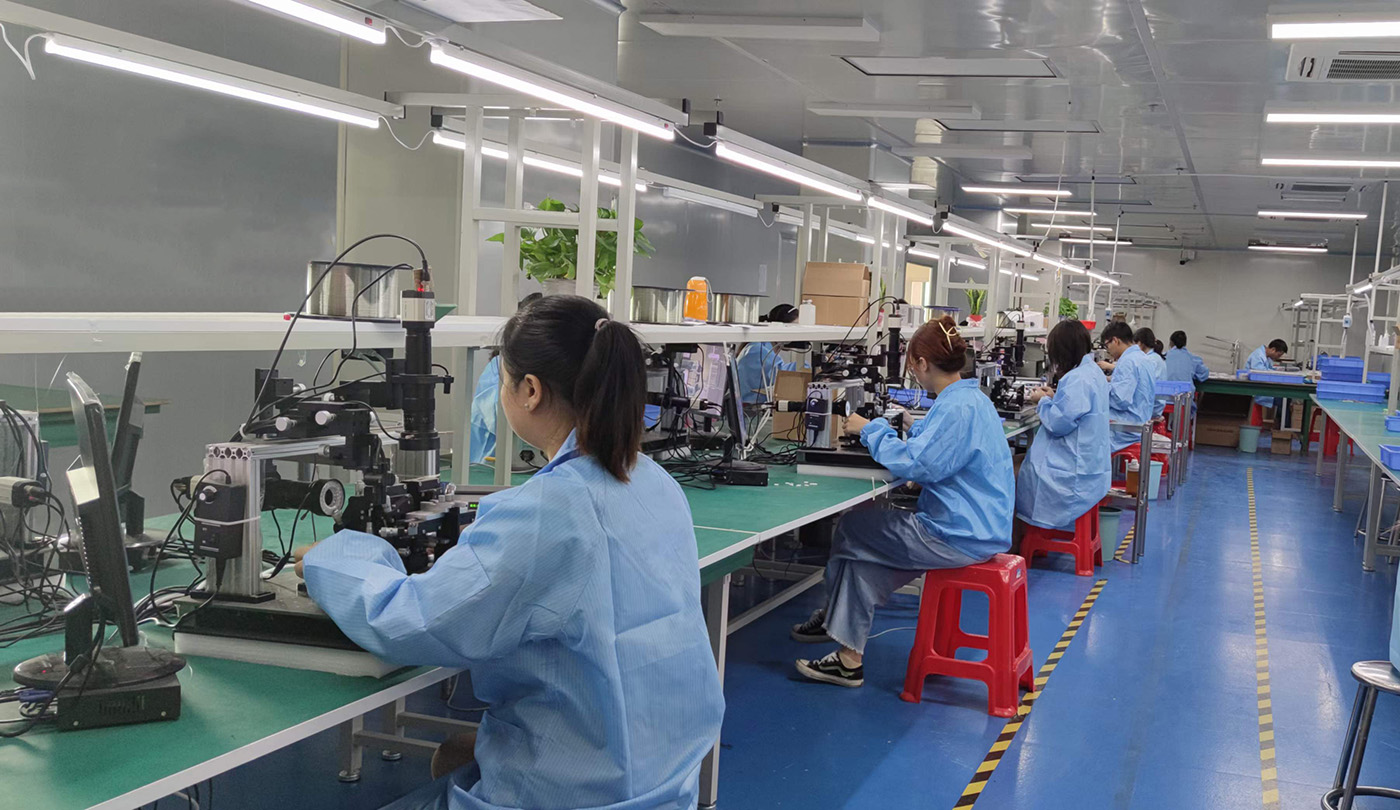
In the competitive optical component manufacturing sector, the integration of Factory 4.0 protocols has transformed how optical transceivers, patch cords, and fiber management accessories are built. Utilizing advanced automation platforms, factories are scaling production while maintaining consistent quality. For example, automated optical alignment systems for TOSA (Transmitter Optical Sub-Assembly) and ROSA (Receiver Optical Sub-Assembly) ensure sub-micron alignment accuracy. This precision directly translates to lower insertion loss, higher return loss, and excellent optical performance under harsh conditions.
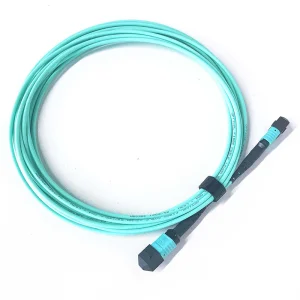
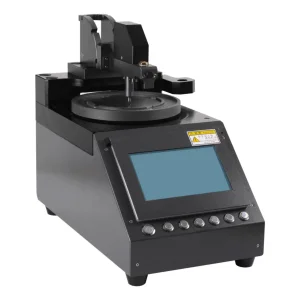
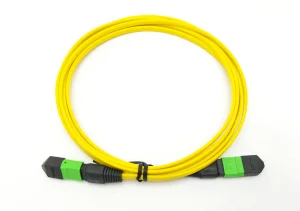
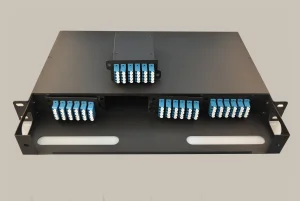
Beyond optical sub-assembly, automated manufacturing improves passive fiber termination processes. For MTP/MPO high-density ribbon cables, mechanical precision is crucial. Advanced polishing machinery, such as the KCO-PM-MPO-06 polishing system, removes human error from the polishing cycle. This machine guarantees exact physical geometry, fiber protrusion, and apex offset across all 12 or 24 fiber cores. Supported by automatic testing loops, these systems verify 3D interferometer profiles, insertion loss, and return loss on 100% of finished products. The resulting quality satisfies the requirements of demanding hyperscale datacenter applications.
Supply chain resilience is another hallmark of China's updated industrial framework. By grouping material suppliers, packaging firms, semiconductor testing facilities, and logistics centers into regional hubs, ODM manufacturers can insulate their clients from global supply shocks. This ecosystem allows companies like Kocent Optec Limited to rapidly scale up production when large telecom tenders demand short delivery times.
Optical interconnects and transceivers serve as the critical pipelines for diverse industrial and commercial environments. Below, we examine the typical deployments of these technologies in the field:
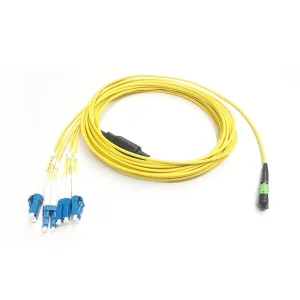
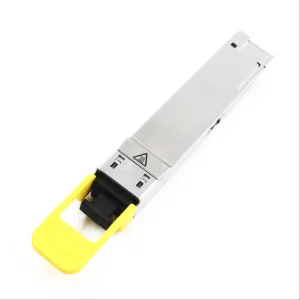
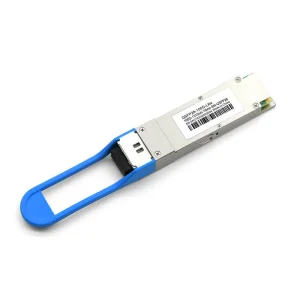
To handle massive east-west traffic, modern datacenters rely on high-density leaf-spine networks. High-speed transceivers (ranging from 10G SFP+, 25G SFP28, up to 800G OSFP/QSFP-DD) combine with MTP/MPO single-mode trunk cables to route data across server bays with minimal latency and high cabling efficiency.
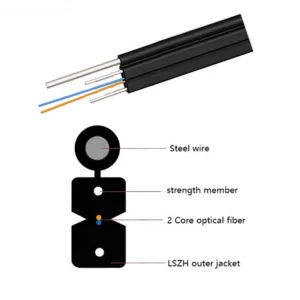
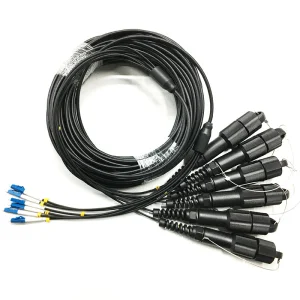
Outdoor cellular networks require equipment that can withstand extreme weather. Rugged patch cords, such as the PDLC outdoor field fiber optic patch cord, connect Baseband Units (BBUs) to Remote Radio Heads (RRHs). These links maintain signal integrity through wide temperature variations and heavy moisture exposure.
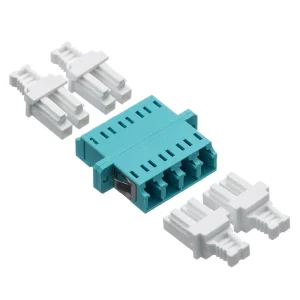
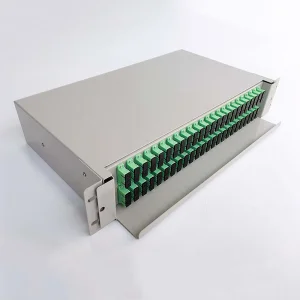
For core switches and distribution frames in corporate environments, 10G SFP+ modules provide the backbone links. These links hook into structured rack-mount patch panels, allowing quick rerouting, scaling, and testing without interrupting core services.

In metropolitan networks, localized ring topologies are often used to ensure high network availability. By deploying 10G SFP+ ER (Extended Range) or ZR (Zero Reach) modules alongside optical add-drop multiplexers (OADM), telecom operators build self-healing optical paths over spans of 40km to 80km.
Using single-mode G.652.D fiber, these metro networks carry critical utility and municipal data. The optical modules must be tuned to minimize chromatic dispersion, which can degrade signals over long distances. Using high-sensitivity APD (Avalanche Photodiode) receivers instead of standard PIN photodiodes in ER/ZR modules allows systems to operate without expensive inline optical amplifiers, reducing overall network complexity and cost.
Design Insight: When planning metro links exceeding 50km, always verify that your total link power budget (Tx Min minus Rx Sensitivity) includes at least a 3dB safety margin. This margin accounts for fiber aging, splicing losses, and patch panel attenuation.
Established in 2012 in Hong Kong as a high-tech communication enterprise, Kocent Optec Limited has grown to become one of China's leading fiber optic termination product manufacturers and solution providers.
We are dedicated to developing and manufacturing fiber optic communication products ranging from passive to active categories for telecommunication networks, enterprise networks, and data centers. By leveraging our extensive experience and excellent production capacity we gained over the years, we magnify the outcome for our valuable customers, which ultimately expands their core competencies and helps them outperform competitors. We place emphasis on customer collaboration, and we define ourselves as your valuable partner in fiber optic connection solutions. We believe our differentiators are your perceived advantages.
With more than 13 years of experience in manufacturing telecommunication fiber optic products, we follow strictly fiber optic industry standards by using mature scientific methods to deliver your products on time and ensure that 100% of products are tested and inspected before shipment.
Years of sales and service experience have enabled us to win customers from different regions. Today, we have customers from East Asia, Southeast Asia, Middle East, Eastern Europe, Western Europe, Northern Europe, South America, North America, North Africa, and South Africa. Win-win cooperation is our constant goal. Many of our OEM and ODM products have won Telecom Operator tenders and satisfy strict end-user requests.
Our core terminal telecom operator footprint includes:
Answers to key technical, compatibility, and design questions for network administrators and procurement specialists.
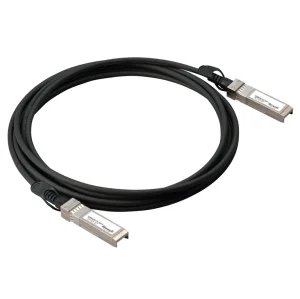
Complete your infrastructure design with high-density distribution panels, industrial terminal cabinets, and ultra-high-speed active optical interfaces.
 KOCENT OPTEC