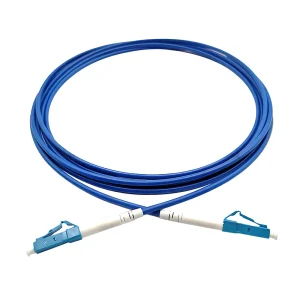
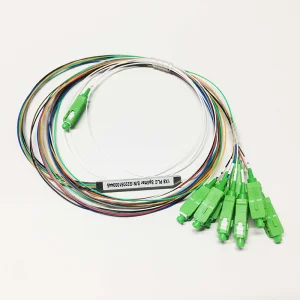
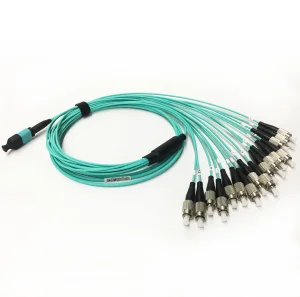
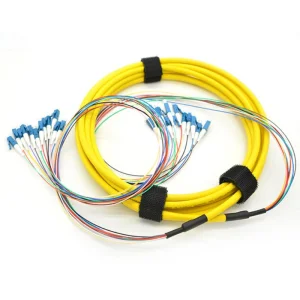
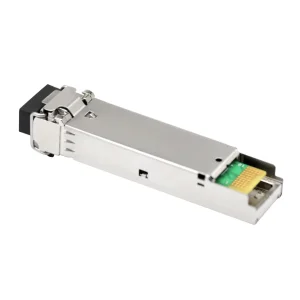
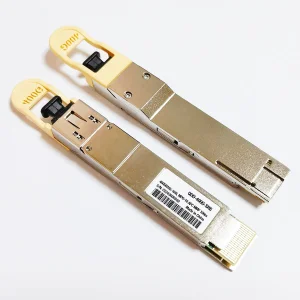
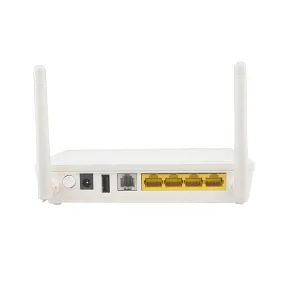
Explore our industrial-grade optical line-up, featuring highly customized, low-insertion-loss connectivity systems tested rigorously for zero-error deployments.
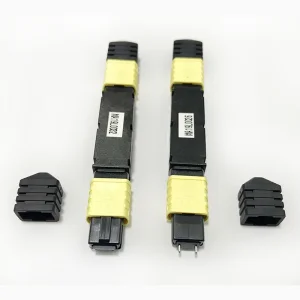
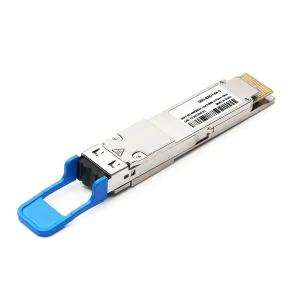
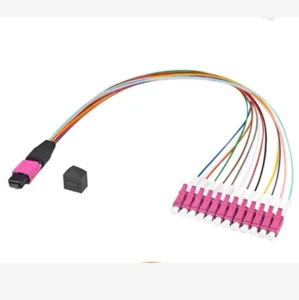
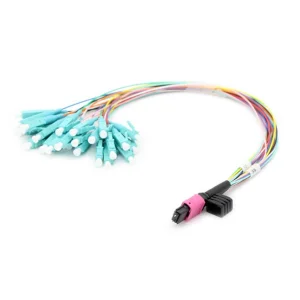
Achieving structural high reliability and scalability within next-generation networks begins with understanding the technical core of Multi-fiber Push-On (MPO) engineering.
As modern cloud computing infrastructures transition rapidly from legacy 10G/40G backbones to massive 100G, 400G, and 800G optical routes, the traditional LC duplex cabling topology creates physical bottlenecks inside server racks. 100G MPO/MTP systems resolve this physical congestion by utilizing multi-fiber array connectors, packing 8, 12, 16, or 24 optical fibers into a single compact ferrule interface.
Deploying 100G cabling requires strict adherence to alignment geometries and precise polarity mapping. Whether utilizing MPO-12 (mostly configured with 8 active fibers for SR4 transceiver applications) or MPO-24 (optimized for dual-channel trunkings), the loss budget in 100G channels is extremely tight. As an established OEM factory, Kocent Optec ensures every connector termination meets or exceeds IEC 61754-7 and TIA-604-5 standards.
Through our advanced manufacturing process, our MPO cables support Elite Grade low-loss connectors. This translates to an insertion loss of ≤ 0.35dB, significantly lower than standard connectors (0.75dB), preserving optical power budgets for longer runs and more complex patching topologies.

The global demand for high-capacity fiber trunks is driven by hyperscale expansion, machine learning clusters, and telecom backbone upgrades.

We are witnessing an unprecedented shift in global telecom networks. Market reports indicate that high-density fiber-optic infrastructure is growing at a CAGR of over 14.5%, driven largely by AI/ML cluster deployments, high-frequency trading networks, and global 5G core site infrastructure integrations.
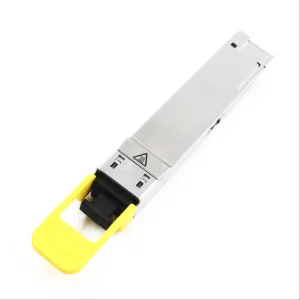
OEM factories play a vital role in this expansion by securing supply chains, lowering cost-per-port metrics, and maintaining compatibility across transceiver modules such as QSFP28, QSFP-DD, and OSFP. KOCENT OPTEC LIMITED bridges this gap by acting as both a manufacturer and a comprehensive systems integrator.
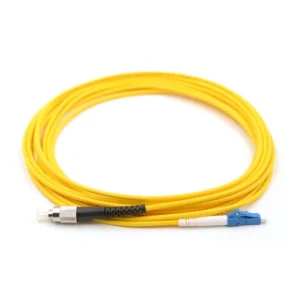
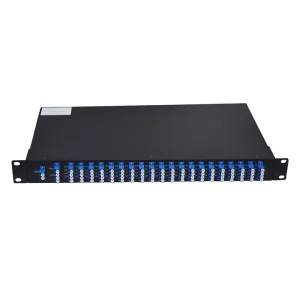
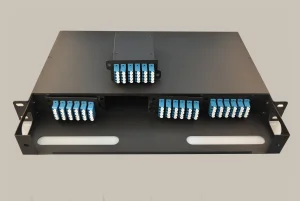
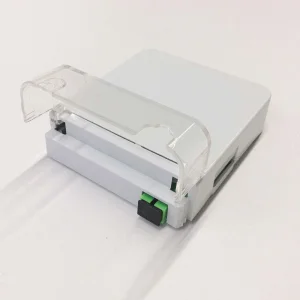
Our OEM / ODM service capabilities allow operators to acquire bespoke patch cables, fan-outs, and fiber distribution panels tailored to specialized mechanical dimensions, LSZH/OFNP jacket ratings, and precise channel length requirements.
| Fiber Type & Standard | Connector Form Factor | Typical Applications | Max Transmission Distance | Typical Attenuation (@850nm) |
|---|---|---|---|---|
| OM3 Multimode (50/125µm) | MPO-12 / MPO-24 (UPC) | 10G/40G/100G Data Centers | 100 meters (100G-SR4) | ≤ 2.8 dB/km |
| OM4 Multimode (50/125µm) | MPO-12 / MPO-24 / MPO-16 (UPC) | 100G/400G Spine-Leaf Fabric | 150 meters (100G-SR4) | ≤ 2.5 dB/km |
| OM5 Wideband Multimode | MPO-12 / MPO-16 (UPC) | Multi-Wavelength BiDi Transceivers | 150+ meters (Shortwave WDM) | ≤ 2.5 dB/km |
| OS2 Singlemode (9/125µm) | MPO-12 / MPO-24 / MPO-16 (APC 8°) | Metro Networks / Enterprise Backbone | Up to 10km (100G-PSM4) | ≤ 0.35 dB/km (@1310nm) |
A Trusted OEM/ODM Manufacturing Partner in Global High-Bandwidth Telecommunications.
Established in 2012 in Hong Kong as a high-tech communication enterprise, Kocent Optec Limited has emerged as one of China's leading fiber optic termination product manufacturers and solution providers.
We are dedicated to developing and manufacturing fiber optic communication products ranging from passive to active categories for telecommunication networks, enterprise networks, and data centers. By leveraging our extensive experience and excellent production capacity gained over the years, we magnify the outcome for our valuable customers. This ultimately expands their core competencies and helps them outperform competitors.
We place strong emphasis on customer collaboration, defining ourselves as your valuable partner in fiber optic connection solutions. We believe our differentiators are your perceived advantages.
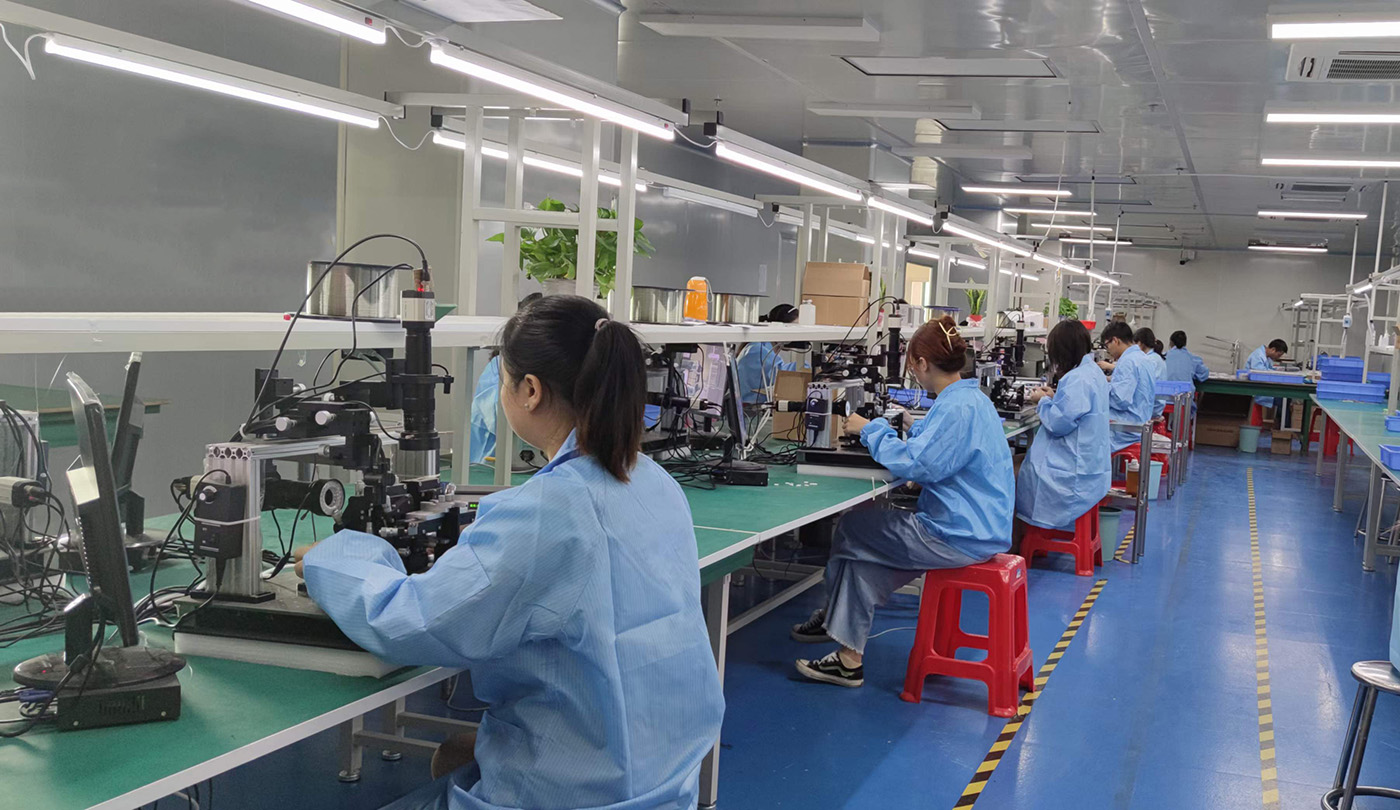
With more than 13 years of experience in manufacturing telecommunication fiber optic products, we strictly follow fiber optic industry standards by using mature, scientific methods to deliver your products on time and ensure that 100% of products are tested and inspected before shipment. This zero-defect policy covers every MPO/MTP patch cord, attenuator, fan-out kit, and transceiver module that leaves our factory.
Delivering high-reliability optical solutions that satisfy major tier-1 telecom operators and enterprise networks worldwide.
Years of dedicated sales and service experience have enabled us to win customers across multiple global regions. Today, we supply critical components to East Asia, Southeast Asia, Middle East, Eastern Europe, Western Europe, Northern Europe, South America, North America, North Africa, and South Africa.
Win-win cooperation is our constant goal. Many of our OEM and ODM products have won telecom operator tenders and satisfy end-user requirements. Our primary terminal telecom operator partner footprint includes:
Engineers strip jackets and prepare fiber glass ribbons under cleanroom conditions.
Advanced heat-cure processes secure optical cores inside the MPO/MTP ferrule.
Automated polishers achieve ideal physical contact geometry (UPC or APC 8-degree angle).
3D scanning verifies Apex Offset, Curvature Radius, and Fiber Undercut parameters.
Every channel is checked at dual wavelengths before protective packaging.
Transitioning from 100G systems to 400G, 800G, and Co-Packaged Optics (CPO) architectures.
While 100G links are standard across enterprise servers, hyperscaler core switches rely heavily on 400G and 800G networks. Upgrading from 100G (SR4/PSM4) to 400G/800G utilizes standard MPO-16, MPO-24, or dual MPO-12 configurations. Our custom OEM trunk cables are built to migrate seamlessly, preserving your routing infrastructure investments.
We supply LSZH (Low Smoke Zero Halogen), OFNP (Plenum), and OFNR (Riser) rated cable systems. Our products strictly comply with localized fire codes and structural building regulations in North America, Europe, and the APAC region, ensuring safe installations in riser paths, horizontal ducts, and plenum chambers.
By optimizing alignment mechanics, we control fiber core concentricity. This enables our elite series cables to support cascaded connections without violating total channel link budgets, making them ideal for complex, multi-patch pane setups in cloud computing architectures.
Key technical insights to guide your next network hardware configuration and procurement decision.
Complete your high-speed interconnect infrastructure with our field-proven range of transceivers, splitters, and distribution systems.
 KOCENT OPTEC