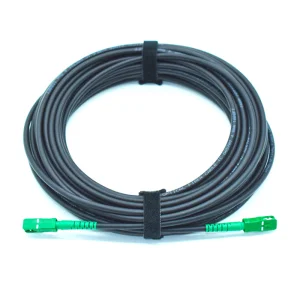
Explore our comprehensive array of optical fiber termination units, transceivers, and passive connectivity components engineered to match critical OEM specifications.
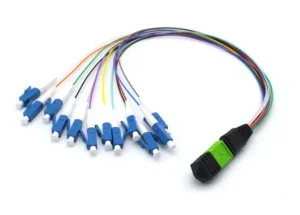
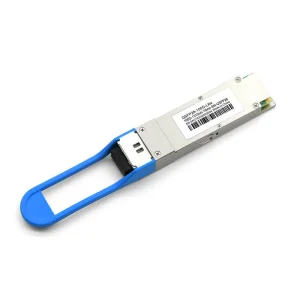
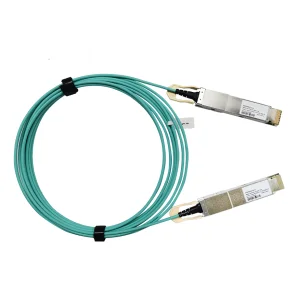
In the modern hyper-connected era, the global optical transmission market has experienced a radical structural shift. The demand for high-bandwidth, low-latency, and high-efficiency optical modules is driven by the rapid growth of high-performance computing (HPC), AI training clusters, cloud datacenters, and 5G network architectures. At the epicenter of this shift is the 100G Form Factor (QSFP28/QSFP+), which remains the workhorse of current network upgrades worldwide.
While newer standards like 400G and 800G are scaling up in hyper-scale clouds, 100G optical links continue to witness unprecedented volume expansion across enterprise core switches, regional telecom exchanges, and localized cloud nodes. This is primarily due to their optimized thermal footprint, mature supply chain, low per-port cost, and exceptional reliability. For procurement managers and system architects, partnering with a qualified OEM supplier offers a vital competitive edge.
As a premier communications provider, Kocent Optec Limited bridges the gap between state-of-the-art optical engineering and massive production reliability. By engineering customized transceiver units that strictly conform to multi-source agreements (MSA), we empower data network designers to scale capacity without incurring exorbitant capital investments.

In general optical networking nomenclature, "100G QSFP+" and "100G QSFP28" represent critical developmental phases of high-speed interconnects. While QSFP+ historically operated with 4 channels of 10Gbps (totaling 40G), the newer QSFP28 standard extends this concept to 4 channels of 25Gbps to 28Gbps, establishing the modern 100G pathway. Below, we compare the primary design pathways used by network operators.
| Standard Variant | Wavelength (nm) | Connector Type | Transmission Medium | Maximum Reach | Modulation Form |
|---|---|---|---|---|---|
| 100GBASE-SR4 | 850nm | MPO / MTP (12-Fiber) | Multimode Fiber (OM3/OM4/OM5) | 70m (OM3) / 100m (OM4) | NRZ (4x 25Gbps) |
| 100GBASE-LR4 | 1295nm - 1309nm (LAN-WDM) | LC Duplex | Singlemode Fiber (SMF G.652) | 10km | NRZ (4x 25.78Gbps) |
| 100GBASE-CWDM4 | 1271nm - 1331nm (CWDM) | LC Duplex | Singlemode Fiber (SMF) | 2km | NRZ (4x 25Gbps) |
| 100GBASE-ER4 | 1295nm - 1309nm (LAN-WDM) | LC Duplex | Singlemode Fiber (SMF) | 40km (with FEC) | NRZ (4x 25Gbps) |
| 100GBASE-ZR4 | 1295nm - 1309nm (LAN-WDM) | LC Duplex | Singlemode Fiber (SMF) | 80km (with Host FEC) | NRZ (SOA integrated) |
As network backbones move towards higher data-rate configurations, the technology stack evolves dynamically. Our roadmap shows the structural transition from legacy connectivity platforms to future-proof infrastructures.
Relying on Non-Return-to-Zero (NRZ) modulation schemes, this stage delivers simple, low-power, and robust links optimized for enterprise switching and localized cloud deployments.
Utilizing Pulse Amplitude Modulation 4-Level (PAM4) to double the data transmission rate per channel without increasing the optical bandwidth. Introduces Host FEC and advanced DSP modules.
Integration of lasers, modulators, and photodetectors directly on a single silicon chip. Extremely low-power consumption models optimized for AI workloads and massive hyperscale arrays.
Mounting optical transceivers directly on the same substrate as the main switch ASIC, dramatically cutting down electrical trace loss and maximizing power efficiency.
Established in 2012 in Hong Kong as a high-tech communication enterprise, Kocent Optec Limited has emerged as one of China's leading fiber optic termination product manufacturers and solution providers. We are dedicated to developing and manufacturing fiber optic communication products ranging from passive to active categories for modern telecommunication networks, enterprise networks, and data centers.
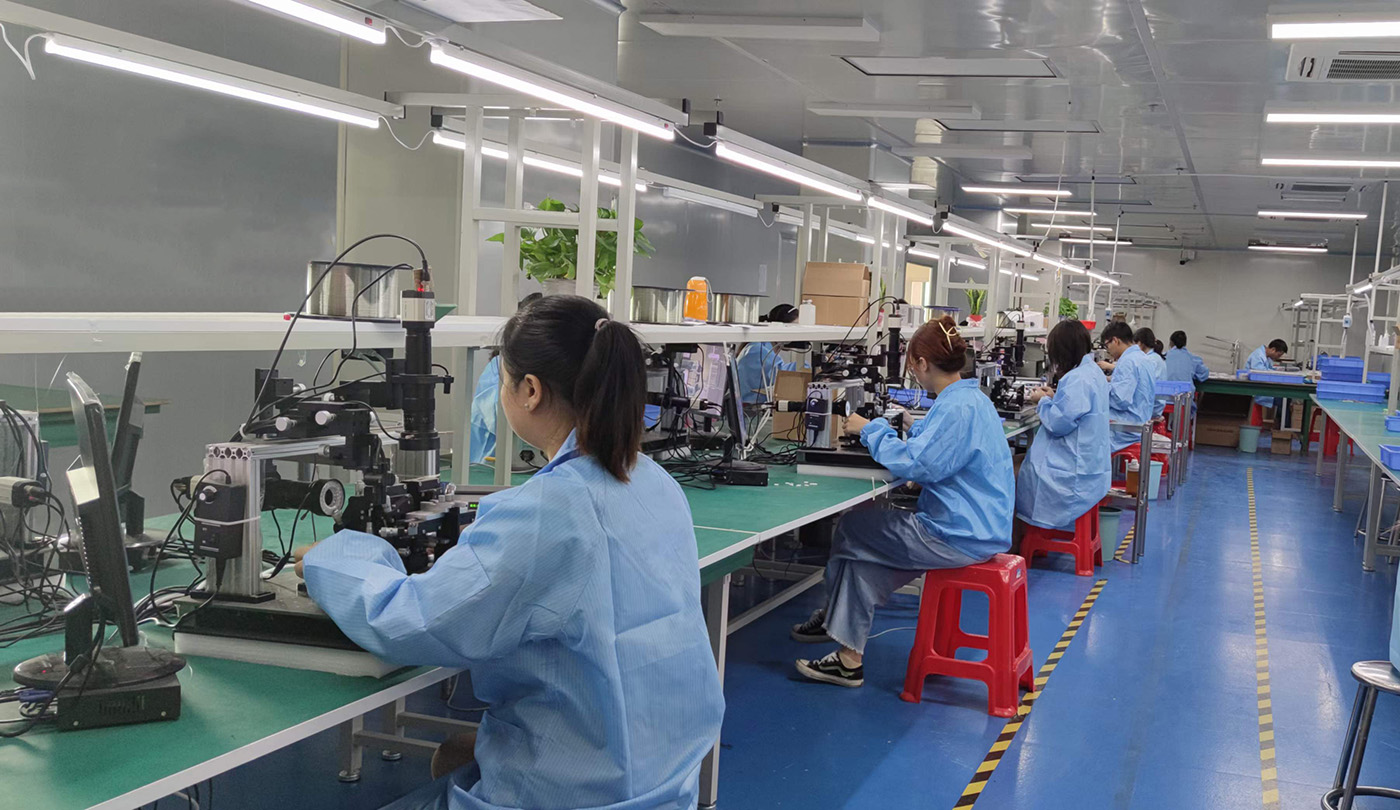
By leveraging our extensive engineering experience and excellent production capacity gained over the years, we magnify the outcome for our valuable customers. This ultimately expands their core competencies and helps them outperform competitors. We place great emphasis on close customer collaboration, defining ourselves as a strategic partner in fiber optic connection solutions.
With more than 13 years of expertise in manufacturing telecommunication fiber optic products, we strictly follow international industry standards (IEC, Telcordia GR-326-CORE, RoHS) by using mature scientific methods. We guarantee 100% testing and inspection before shipment.

Kocent Optec products are optimized to function seamlessly across a variety of customized architectures, satisfying the strict requirements of network operators worldwide.
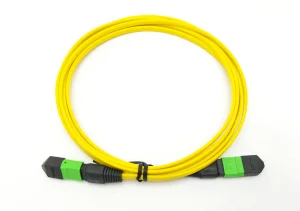
Ideal for low-latency interconnects between Top-of-Rack (ToR) switch gear and aggregate spine layers. Utilizing our high-density 100G MPO trunking cables and transceiver options keeps energy dissipation to a minimum.
Providing high-reliability, long-reach CWDM4 and LR4 optical models to connect base stations and centralized unit hubs, ensuring consistent data rates even under broad temperature fluctuations.
Supports robust physical layering for banking, higher education, and corporate campuses requiring long-reach 100G transmission paths up to 40km without signal degradation.
Years of sales and service experience have enabled us to win customers from different regions. Today, we have customers from East Asia, Southeast Asia, Middle East, Eastern Europe, Western Europe, Northern Europe, South America, North America, North Africa, and South Africa.
Win-win cooperation is our constant goal. Many of our OEM and ODM products have won Telecom Operator tenders and satisfy strict end-user requests. Our main terminal telecom operators include:
SingTel, Vodafone, America Movil, Telefonica, Bharti Airtel, Orange, Telenor, VimpelCom, TeliaSonera, Saudi Telecom, MTN, Viettel, Bitel, VNPT, Laos Telecom, MYTEL, Telkom, Telekom, Entel, FiberTel, StarFiber, Ooredoo, Beeline, Azercell.
Get detailed technical insights and recommendations on deployment, OEM customization, and hardware integration directly from our engineering team.
While both modules share the same mechanical envelope (the Quad Small Form-factor Pluggable configuration), the key difference lies in the electrical interface lanes. A standard QSFP+ module is optimized for 40G systems, running four 10Gbps electrical lanes. A QSFP28 module, on the other hand, runs four 25Gbps to 28Gbps lanes to deliver a full 100G transmission rate. QSFP28 has redesigned electrical contacts and internal structures to handle high-frequency 25Gbps signals without interference.
Compatibility depends on the EEPROM memory coding within the transceiver module. Kocent Optec maintains an on-site compatibility testing lab containing the latest switch models from leading network brands. Each transceiver is programmed with appropriate vendor-specific firmware, microcontrollers, and serial codes, and undergoes live testing to ensure plug-and-play support, proper DOM (Digital Optical Monitoring) reporting, and zero host-rejection errors.
DOM (also called DDM - Digital Diagnostic Monitoring) provides real-time telemetry from the transceiver module. Key tracked parameters include Tx optical power output, Rx optical power input, operating temperature, laser bias current, and internal supply voltage. Systems administrators use this data to predict optical link degradation, diagnose fiber cuts, and prevent unexpected network down-time.
Your choice depends on the fiber medium and link distance requirements:
• Use SR4 with MPO/MTP multimode cabling for short distances inside a datacenter rack (up to 100m).
• Use CWDM4 with duplex singlemode LC cabling for medium runs up to 2km, balancing cost and performance.
• Use LR4 with duplex singlemode LC cabling for long runs up to 10km across campus or metro networks.
Forward Error Correction (FEC) is an algorithm run by the host switch ASIC to check and correct bit errors in the received optical signal. For standards like 100GBASE-ER4 and long-reach CWDM4, enabling RS-FEC (Reed-Solomon FEC) is mandatory to extend the transmission distance. FEC improves the bit error rate (BER) threshold, allowing the transceiver to operate over higher loss budgets and longer distances.
Explore our passive distribution elements, optical polishing gear, and advanced transceivers that complete our optical network portfolio.
 KOCENT OPTEC