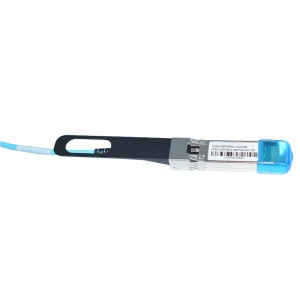
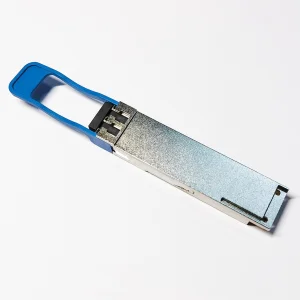
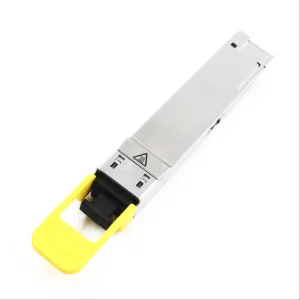
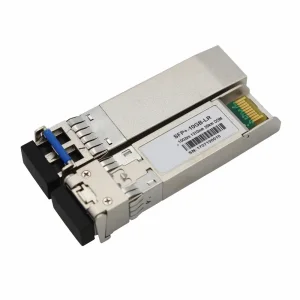
Explore our top-performing components designed for high-bandwidth modern communication architectures.
As networks scale to satisfy the massive processing requirements of AI models, complex database architectures, and distributed storage systems, the core network backbone must transition to higher bandwidth solutions. Within these high-density networks, 400G Direct Attach Copper (DAC) cables represent the primary option for short-range interconnects. Providing physical connectivity between servers and Top-of-Rack (ToR) switches, 400G DAC provides a zero-power consumption media alternative to costly optical transceivers.
Understanding the electrical constraints and manufacturing standards of 400G DAC cables is key to maintaining high signal integrity. The IEEE 802.3bs and 802.3ck standards dictate the parameters for running high-frequency electrical signals over copper media. By utilizing PAM4 (Pulse Amplitude Modulation 4-Level) signaling, 400G is achieved across 8 lanes of 50Gbps or 4 lanes of 100Gbps, drastically reducing insertion loss limits and presenting unique engineering challenges that only Tier-1 suppliers can satisfy.
"400G DAC configurations represent the physical bottleneck for intra-rack topologies. Choosing the right copper wire gauge (AWG) and shield design directly determines the bit error rate (BER) and total power budget of the rack."

A side-by-side engineering evaluation of the dominant physical form factors utilized by global 400G DAC manufacturers.
| Specification Parameter | QSFP-DD 400G Passive DAC | OSFP 400G Passive DAC | Active Copper Cable (ACC) Alternative |
|---|---|---|---|
| Physical Lane Configuration | 8x 50G PAM4 (8 Channels) | 8x 50G PAM4 or 4x 100G PAM4 | 8x 50G PAM4 / 4x 100G PAM4 with Equalizers |
| Power Consumption | 0 Watts (Passive Design) | 0 Watts (Passive Design) | < 1.5 Watts per end (Typical) |
| Max Transmission Range | Up to 3 Meters (30AWG to 26AWG) | Up to 3 Meters (Optimized Thermal Design) | Up to 5 - 7 Meters |
| Integrated Thermal Solution | Depends on Switch Cage Airflow | Integrated Cooling Fins on Module | Passive Thermal Dissipation (Heat Sink) |
| Latency Profile | Near-Zero (Electromagnetical Propagation) | Near-Zero (Electromagnetical Propagation) | < 0.5 Nanoseconds (Due to Signal Redrivers) |
| Best Application Case | ToR Switch-to-Server Interconnections | High-Performance AI & GPU Computing Nodes | Middle-of-Row (MoR) to Switch Connections |
Selecting the appropriate form factor depends heavily on the architecture of your network equipment. QSFP-DD (Quad Small Form-factor Pluggable Double Density) offers backward compatibility with older QSFP modules, making it a highly versatile choice for enterprise environments. In contrast, OSFP (Octal Small Form-factor Pluggable) is physically wider and incorporates thermal cooling fins directly into the plug, enabling more efficient thermal dissipation in high-density multi-kilowatt AI switch blocks.

Established in 2012 in Hong Kong as a high-tech communication enterprise, Kocent Optec Limited has grown into one of China's premier manufacturers and providers of optical fiber termination and high-speed electrical cable solutions. Leveraging more than 13 years of technical expertise, our manufacturing processes have evolved to handle the tight tolerances required by 400G PAM4 specifications.
Our manufacturing facility utilizes high-precision raw copper extrusion and automated solder termination processes. By controlling the exact angle and copper tension of each line, we mitigate structural return loss (SRL) and minimize skew within differential copper pairs. Our commitment to strict industry standards means that we source only high-purity, oxygen-free copper cores to ensure stable long-term attenuation characteristics, even under continuous heat load environments.
By partnering with us, you leverage a reliable supply chain system located at the core of the global electronics logistics hub. This enables us to secure high-quality components, maintain competitive pricing, and streamline global delivery times.
Our strict engineering methodologies ensure our custom 400G DAC and optical products outperform standardized OEM offerings.
Every cable assembly undergoes physical validation using Keysight/Anritsu network analyzers. We test insertion loss, return loss, and crosstalk parameters against strict IEEE limits before shipment to guarantee out-of-the-box reliability.
We provide localized coding of the internal transponder EEPROM. This allows the 400G DAC cables to bypass native hardware lockouts, ensuring compatibility with Cisco, Arista, Juniper, Mellanox, and other leading network systems.
Our OEM and ODM components comply with major telecom operator requirements. Kocent Optec products are regularly specified in projects for operators such as SingTel, Vodafone, Telefonica, Bharti Airtel, Orange, and Saudi Telecom.
With years of sales and service experience, Kocent Optec has built relationships with enterprise customers and carriers across East Asia, Southeast Asia, the Middle East, Europe, and the Americas. By maintaining strict control over our materials and processes, we ensure that every batch of cables offers consistent performance, reducing operational failure rates in high-scale network deployments.
Our products are regularly specified in infrastructure builds by global operators, including SingTel, Vodafone, America Movil, Telefonica, Bharti Airtel, Orange, Telenor, VimpelCom, TeliaSonera, Saudi Telecom, MTN, Viettel, Bitel, VNPT, Laos Telecom, MYTEL, Telkom, Telekom, Entel, FiberTel, StarFiber, Ooredoo, Beeline, and Azercell. Meeting the diverse technical standards of these major carriers has enabled us to continually refine our engineering and manufacturing processes.
We work closely with customers to support their specific architecture and routing configurations, providing specialized labeling, custom packing, and quick turnaround capabilities for large projects.

Where 400G Direct Attach Copper provides the optimal combination of signal performance, reliability, and cost efficiency.
Modern machine learning clusters require high-speed inter-node communication. Connect H100, A100, and next-generation GPU server nodes with 400G DAC to achieve high data throughput with low latency and zero transceiver power consumption.
In standard hyperscale architectures, servers are connected to Top-of-Rack switches over distances under 3 meters. Passive 400G DAC is a reliable, cost-effective solution for these short runs, helping to reduce operational expenses.
For financial systems, every nanosecond counts. The direct copper connection in 400G DAC systems transmits electrical signals without the latency overhead of optical transceivers, enabling fast, predictable data transfer.
Key factors to consider when comparing 400G Direct Attach Copper with Active Optical Cables (AOC) and optical transceivers.
When evaluating short-reach interconnects, looking beyond the initial purchase price to consider the Total Cost of Ownership (TCO) is essential. While optical transceivers can cover longer distances, they add to both your hardware budget and your ongoing power costs.
A typical 400G optical transceiver draws approximately 10 to 12 Watts of power. In a data center containing 5,000 active ports, opting for transceivers over zero-watt passive 400G DACs adds 50 to 60 kW of continuous load to the facility. When accounting for the additional cooling energy required to dissipate this heat, the choice of cabling directly affects long-term operational efficiency.
When requesting quotes from wholesale 400G DAC suppliers, we recommend providing detailed hardware specifications, including switch models, required lengths, wire gauge preferences, and compatibility requirements. At Kocent Optec, our engineering team works with procurement managers to ensure that every cable is configured to meet their specific network environment.
Answers to common technical and logistical questions regarding 400G DAC cabling systems.
A selection of patch cords, adapters, and termination components designed to support high-density network connectivity.
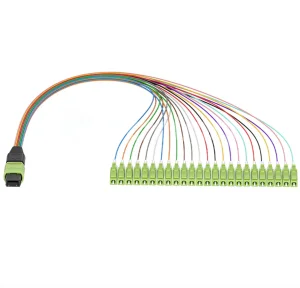
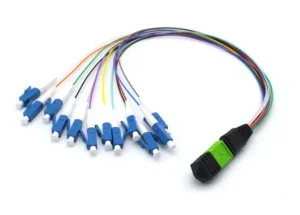
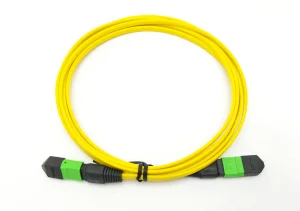
China MTP 12 / MPO 12 Single Mode 12fibers G657A1 Fiber Optic Trunk Cable Supplier, Pricelist
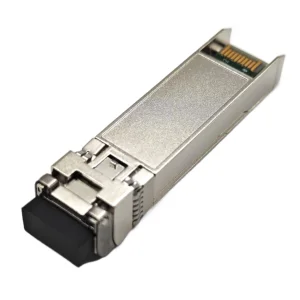
Cheap KCO-SFP+-SR 10Gb/s 850nm Multi-mode SFP+ Transceiver Suppliers, Factory
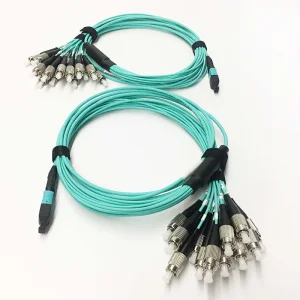
High-Quality MTP/MPO to FC OM3 16fo Fiber Optic Patch Cable Manufacturers, Quotes
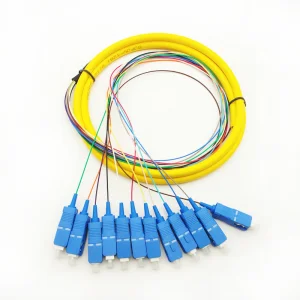
Cheap 12 cores Single Mode G652D SC/UPC Fanout Optic Fiber Pigtail Manufacturers, Factory
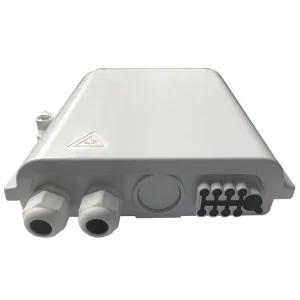
Cheap FDB-08A Outdoor Fiber Optic Distribution Box FDB-08A Product, Products
 KOCENT OPTEC