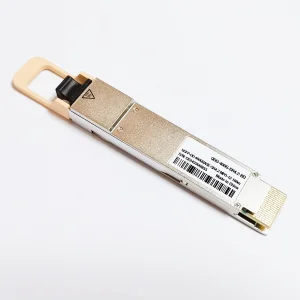
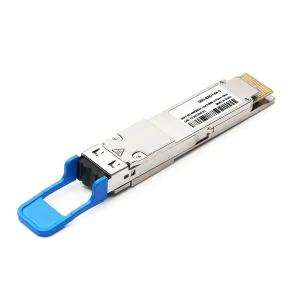
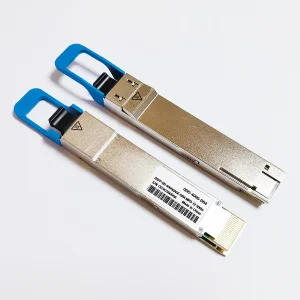
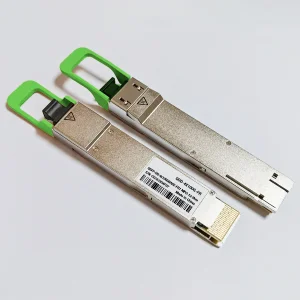
The Australian digital economy is undergoing an unprecedented expansion. With the massive migration of enterprise applications to multi-cloud architectures, combined with the rapid adoption of generative artificial intelligence (AI) and machine learning (ML), the demand for ultra-high-speed network connectivity is scaling exponentially. Major hubs in Sydney, Melbourne, Brisbane, and Perth are experiencing aggressive hyperscale datacenter deployment by global giants and domestic infrastructure providers like Equinix, NextDC, AirTrunk, and CDC.
To support latency-critical financial services, resource-heavy mining operations in Western Australia, and urban edge computing, network architects are shifting swiftly from traditional 100G networks to 400G QSFP-DD (Double Density) architectures. This transition is not merely a bandwidth upgrade; it is a fundamental shift toward PAM4 modulation schemes, enabling higher spectral efficiency, lower power-per-bit profiles, and reduced rack-space footprints essential for modern eco-efficient facility targets.
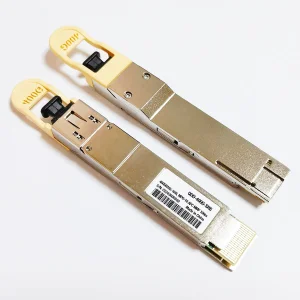
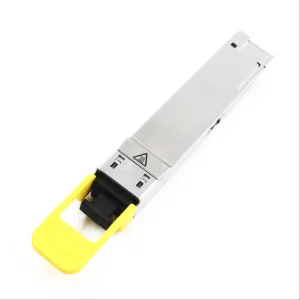
Kocent Optec Limited serves this technological turning point by supplying high-reliability, thoroughly verified 400G optical transceivers designed to integrate seamlessly into Australia's harsh climatic zones, maintaining thermal efficiency even under high-load operating windows.
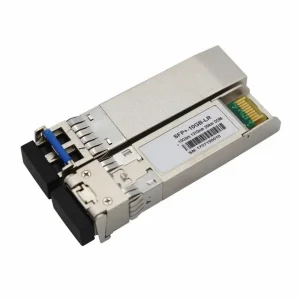
Unlike standard 100G NRZ (Non-Return-to-Zero) interfaces, 400G modules utilize 4-Level Pulse Amplitude Modulation (PAM4) at 53.125 GBd to pack double the data density per cycle. Coupled with state-of-the-art Digital Signal Processors (DSP), our transceivers optimize electrical-to-optical conversion, compensating for chromatic dispersion and channel impairments across single-mode and multi-mode links.
We strictly engineer our modules to align with the QSFP-DD MSA (Multi-Source Agreement) and IEEE 802.3bs standards. This guarantees complete compatibility, low Bit Error Rates (BER), and real-time Digital Diagnostic Monitoring (DDM) across major platforms, including Cisco, Arista, Juniper, Mellanox, and Edge-Core.
Cooling is a critical cost driver for Australian data facilities. Our modules feature advanced thermal design with lower power consumption values (e.g., under 10W for LR4, under 7.5W for DR4/FR4), reducing thermal dissipation and operational expenditures (OPEX) in density-packed telecom racks.

Established in 2012 in Hong Kong as a hi-tech communication enterprise, Kocent Optec Limited has emerged as one of China's premier fiber optic termination product manufacturers and solution providers. We specialize in developing and manufacturing passive and active fiber optic communication components for global telecommunications, enterprise campus systems, and massive cloud data centers.
By leveraging our extensive experience and scalable, high-precision production capacity, we amplify strategic outcomes for our clients, strengthening their core competencies and enabling them to outperform industry competition. We prioritize deep engineering collaboration, defining ourselves not just as a components vendor, but as a long-term partner in fiber optic connection solutions.
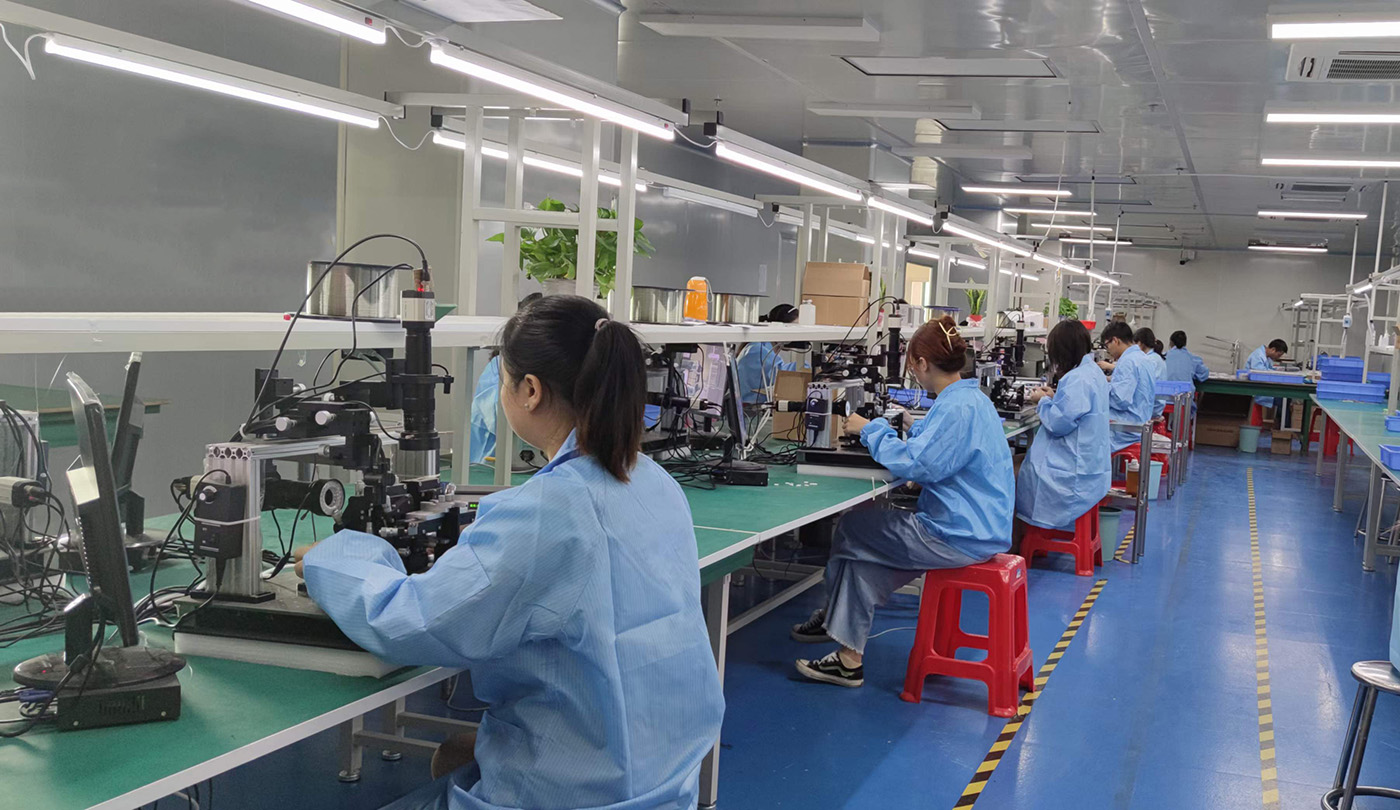
With over 13 years of rigorous manufacturing experience, we strictly enforce global standards, utilizing mature scientific verification methods. We ensure 100% of our products undergo comprehensive testing (insertion loss, eye-diagram, thermal stress, compatibility checks) before departing our factory gates to guarantee plug-and-play reliability in field deployment.
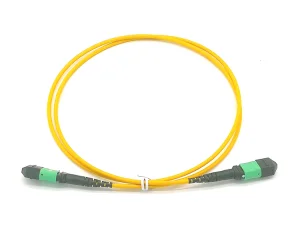
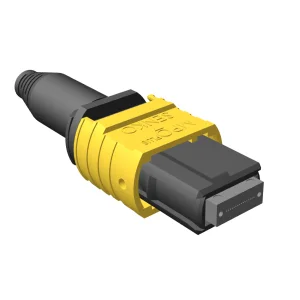
Deploying major networking gear in Australia often faces long delivery lead times. By partnering directly with Kocent Optec's Chinese manufacturing base, Australian system integrators enjoy rapid turnaround cycles. Our proximity to global component supply corridors allows us to source raw material, assemble, configure, and ship custom-built 400G transceivers and high-density MPO/MTP patch cables within fraction of standard industry timelines.
Australian network environments demand adherence to strict localized standards. All passive and active fiber devices we supply are constructed using flame-retardant materials complying with local building and telecom regulations. From low-smoke zero-halogen (LSZH) jacket structures to ACMA compliant optical emitters, we ensure seamless regulatory compliance.
Our client base spans major global operators, proving our ability to win demanding telecom tenders and service end-users dynamically. Our terminal telecom partners include:
SingTel (Optus), Vodafone, America Movil, Telefonica, Bharti Airtel, Orange, Telenor, VimpelCom, TeliaSonera, Saudi Telecom, MTN, Viettel, Bitel, VNPT, Laos Telecom, MYTEL, Telkom, Telekom, Entel, FiberTel, StarFiber, Ooredoo, Beeline, Azercell, and more.
Connecting distributed facilities across Sydney metropolitan areas (e.g., Equinix SY3 to SY5). Utilizing 400GBASE-LR4 transceivers over single-mode fiber allows high-throughput low-latency replication of enterprise databases and real-time system backups up to 10km without active amplification.
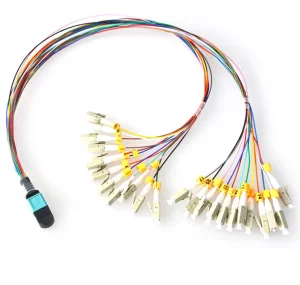
Modern machine learning nodes require hyper-dense connections. Deploying 400GBASE-SR4.2 QSFP-DD and high-performance 24-core MTP/MPO OM3/OM4 harness cables provides the physical foundation to interconnect switch fabrics inside HPC clusters, minimizing latency bottlenecks.
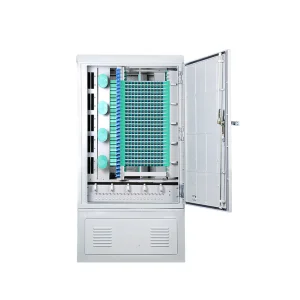
Remote mining processing plants in Western Australia depend on high-bandwidth links for automated machinery control and telemetry analysis. Standardizing on ruggedized industrial-grade fiber distribution cabinets and transceivers ensures constant uptime in high dust and temperature environments.
The primary differences lie in the optical channel layout and fiber infrastructure utilization. 400G SR4.2 utilizes 4 channels of bi-directional wavelength division multiplexing (BIDI) over multi-mode fiber (850nm and 910nm), requiring a 12-fiber MPO connector. This allows operators to reuse existing 100G/200G MPO-12 cabling structures. Conversely, 400G SR8 utilizes 8 channels operating at 850nm over a 16-fiber MPO connector, which requires upgrading to MPO-16 cabling. The choice depends on your current fiber plant configuration and migration strategies.
We maintain an advanced compatibility laboratory equipped with host switches from major brands (Cisco Nexus, Arista 7060/7280 series, Juniper PTX, Mellanox Spectrum). Each batch of 400G QSFP-DD transceivers is individually coded with vendor-specific EEPROM signatures and tested in-system to ensure error-free link-up, active DDM readings, and no diagnostic warning flags.
Typically, standard transceiver configurations are available in stock or can be produced within 3-5 working days. Shipping via premium air express carriers (DHL, FedEx, UPS) directly to Sydney, Melbourne, or Brisbane takes approximately 3 to 5 business days. For heavy passive infrastructure items like fiber cross-connection cabinets or bulk fiber patch cables, we offer ocean freight and LCL configurations directed to major Australian ports.
Yes. All of our passive fiber assemblies and active transceivers are manufactured utilizing lead-free components and flame-retardant outer jackets that satisfy RoHS and CE requirements. The materials comply with standard fire safety specifications required for commercial building datacenters and institutional telecommunication facilities throughout Australia.
Yes. As a leading manufacturer, we provide complete ODM/OEM services. We customize breakout lengths, polarity configurations (Method A, B, or C), custom colors for easy cable management, and high-density MTP/MPO fanout setups to meet the exact specifications of your rack configurations and physical layouts.
 KOCENT OPTEC