Explore our curated selection of high-performance modules, fiber trunk cables, and connectivity accessories engineered to exceed modern hyperscale benchmarks.
Analyzing architectures, electrical-to-optical components, and strategic deployment metrics.
In the era of hyper-scale expansion, artificial intelligence workloads, and edge computing nodes, data centers face the persistent challenge of scaling up bandwidth while controlling physical space, thermal footprints, and capital expenditure (CAPEX). The 100G QSFP28 Active Optical Cable (AOC) has emerged as the definitive interconnect mechanism to bridge the gap between expensive discrete transceivers and distance-limited Direct Attach Copper (DAC) cables.
Active Optical Cables are built by integrating optical transceivers directly onto a fixed length of multimode fiber ribbon cable. This configuration bypasses the optical interface entirely, avoiding the necessity of separate patch leads, MPO cleaning tools, and complex connection margins. In highly dense leaf-spine or top-of-rack (ToR) environments, this translates into zero interface contamination risk, reduced latency, and simplified system validation.
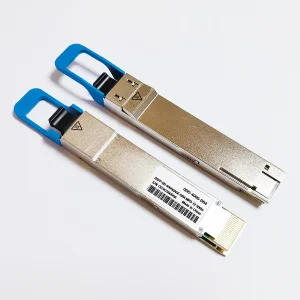
The engineering profile of a 100G QSFP28 AOC consists of a hot-pluggable QSFP28 connector on both ends, housing electrical-to-optical (E-O) and optical-to-electrical (O-E) conversion ICs. The system operates on four independent transmit and receive channels, with each lane capable of processing up to 25.78125 Gbps using NRZ (Non-Return-to-Zero) modulation.
"By removing the physical LC or MPO optical connectors within the cabling path, AOCs eliminate insertion loss issues and connector contamination, dropping potential installation-phase system failures by over 92%."
| Interconnect Type | Transmission Medium | Maximum Reach | Power Consumption | Cost Index | Flexibility & Weight |
|---|---|---|---|---|---|
| Direct Attach Copper (DAC) | Twinax Copper Cable | 3m - 5m | < 0.1W | Lowest | Heavy, stiff bend radius |
| Active Optical Cable (AOC) | Multimode Fiber (Active) | Up to 100m | < 2.5W per end | Moderate / Optimized | Lightweight, thin, highly flexible |
| Transceivers + Fiber Patch | Discrete Fiber & Transceivers | Up to 10km+ (SMF) | > 3.5W per end | Highest | Highest complexity, light weight |
Why modern IT infrastructure managers prioritize reliable bulk sourcing for QSFP28 AOCs.
Buying "cheap" in enterprise environments does not mean sacrificing quality. Buyers seek optimized production lines that deliver MSA-compliant, reliable silicon architectures at lower margins, reducing capital requirements for multi-thousand node rollouts.
Data center networks leverage hardware from diverse vendors, including Cisco, Arista, Juniper, Dell, and HPE. Procurement teams require suppliers who can write custom firmware into the EEPROM to bypass vendor lock-in protocols.
Lead times directly dictate deployment cycles. Enterprise suppliers must provide reliable logistics channels, robust raw material reserves (like VCSEL chips and premium multimode fibers), and rapid manufacturing turnaround.
Enterprise procurement managers look beyond base unit pricing. True value is derived from testing consistency, low RMA (Return Merchandise Authorization) rates, and environmental compliance certifications. Sourcing from verified manufacturing clusters in Asia, backed by centralized testing labs, enables global buyers to purchase 100G QSFP28 AOCs at a fraction of major network brand costs while securing equivalent operational guarantees.
Strategic deployment maps across cloud, edge, and high-performance computing.
In high-density Leaf-Spine architectures, QSFP28 AOCs act as the principal connection vector between Top-of-Rack switches and distribution leaf nodes, maintaining low latency and minimizing cable bulk in vertical trays.
Modern neural network training loops rely on massive parallel computing pools. 100G AOCs provide the high-throughput, low-latency inter-node communication required for InfiniBand and high-speed Ethernet fabrics.
For modular and containerized edge sites, AOCs offer a plug-and-play solution that does not require on-site optical testing tools or specialist termination technicians, accelerating regional deployments.
Combining decade-long manufacturing precision with global telecommunication standards.
Kocent Optec Limited established in 2012 in Hong Kong as a hi-tech communication enterprise, is one of China's leading fiber optic termination product manufacturers and solution providers.
We are dedicated to developing and manufacturing fiber optic communication products ranging from passive to active categories for telecommunication networks, enterprise networks, and data centers.

By leveraging our extensive experience and excellent production capacity we gained over the years, we magnify the outcome for our valuable customers, which ultimately expands their core competencies and helps them outperform competitors.
We place emphasis on customer collaboration, and we define ourselves as your valuable partner in fiber optic connection solutions. We believe our differentiators are your perceived advantages.
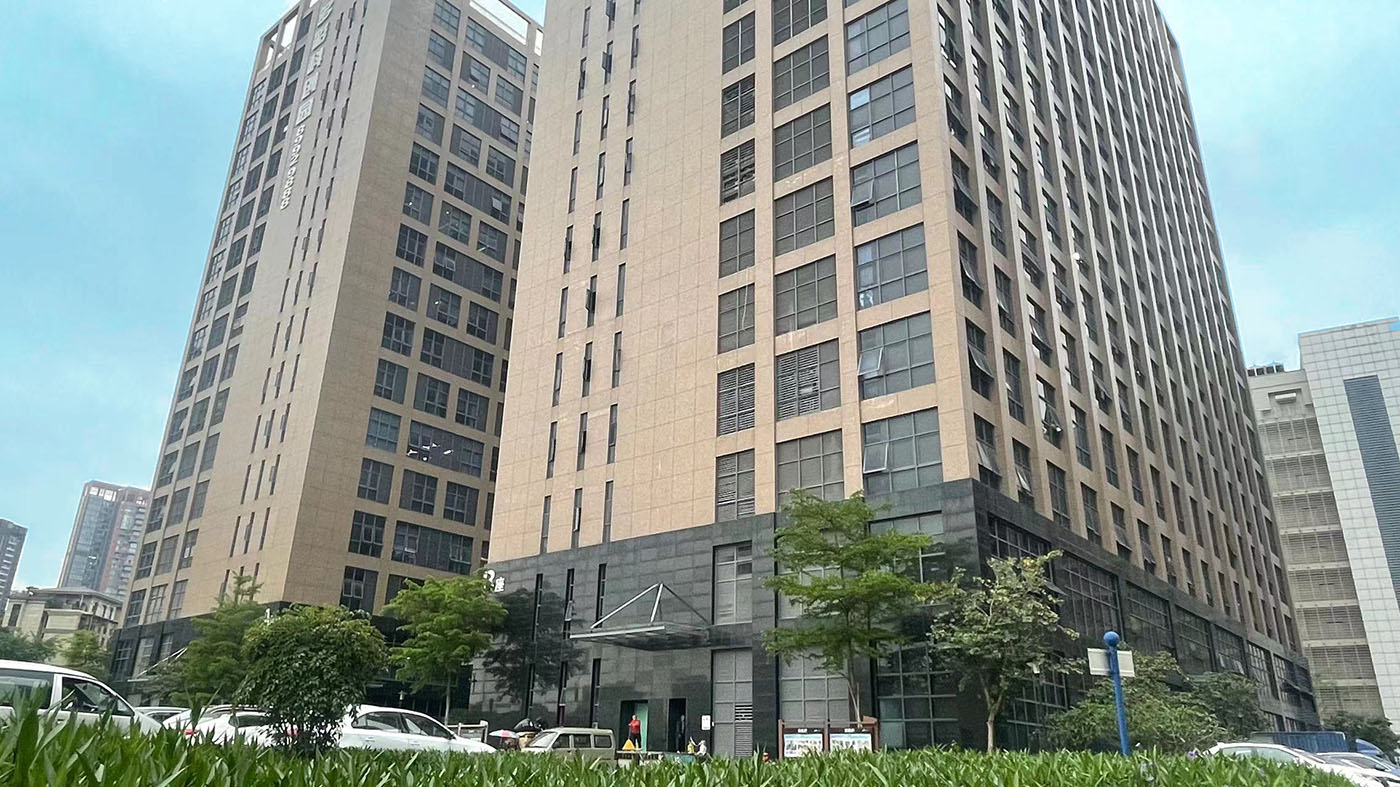
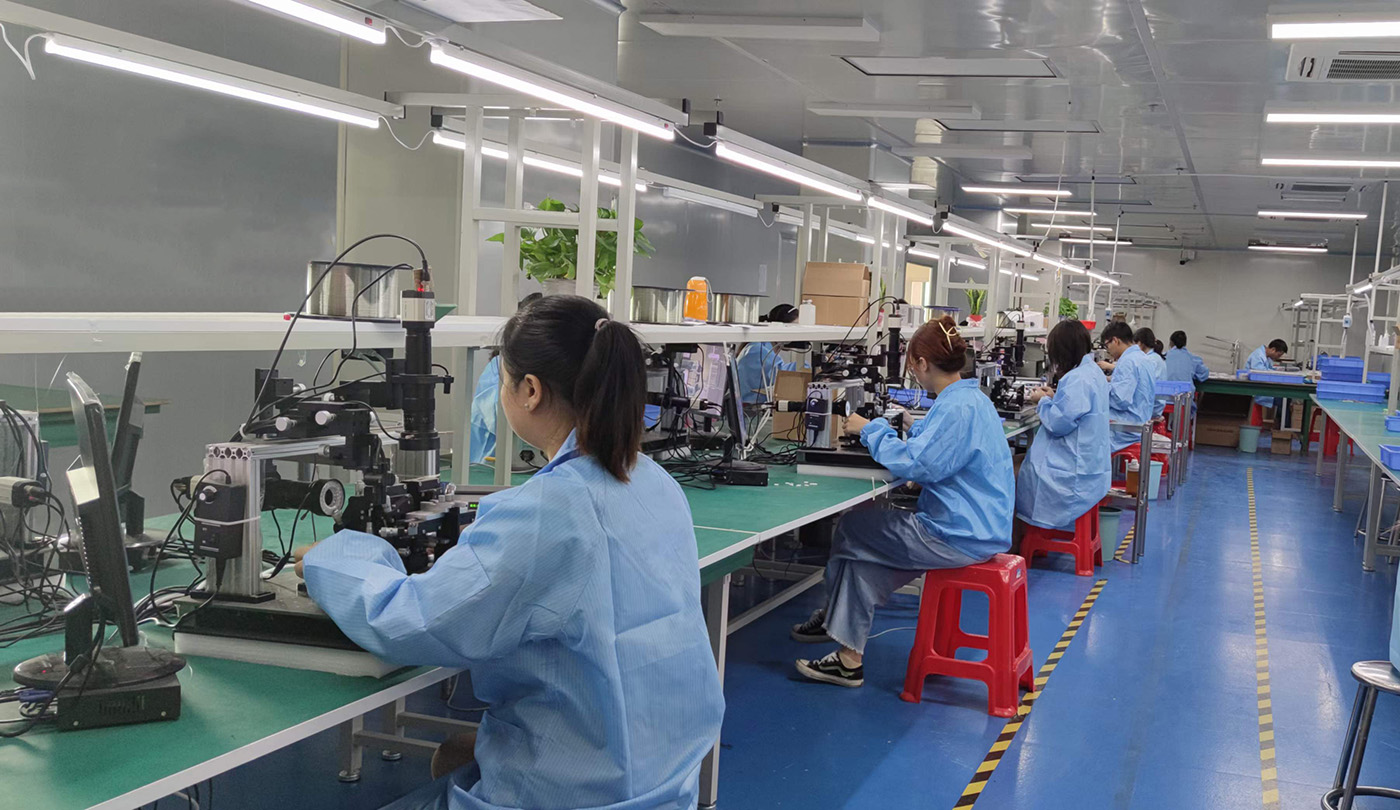
With more than 13 years of experience in manufacturing telecommunication fiber optic products, we follow strictly fiber optic industry standards by using mature scientific methods to deliver your products on time and ensure that 100% of products are tested and inspected before shipment.
Years of sales and service experience have enabled us to win customers from different regions. Today, we have customers from East Asia, Southeast Asia, Middle East, Eastern Europe, Western Europe, Northern Europe, South America, North America, North Africa, and South Africa.
How the evolution of optical modules matches physical-layer demands.
As networks evolve towards higher bandwidths, the QSFP28 form factor remains a cornerstone of 100G architectures. However, the industry's shift toward PAM4 (Pulse Amplitude Modulation 4-Level) and silicon photonics is steering the technical roadmap toward 200G, 400G, and 800G. The transitions focus on:
Addressing the common architectural and procurement questions of global networks.
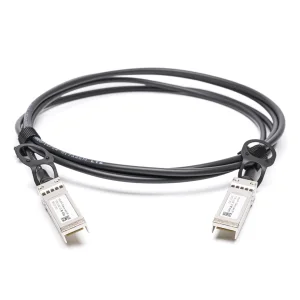
A Direct Attach Copper (DAC) cable uses copper Twinax cables to transmit electrical signals directly, limiting its reach to about 3 to 5 meters at 100G speeds. Active Optical Cables (AOC) use multimode fiber combined with optical transceivers embedded at the ends to translate electrical signals into light. This allows AOCs to reach distances up to 100 meters while being lighter, thinner, and less susceptible to electromagnetic interference (EMI).
Yes. We offer customized EEPROM coding to ensure compatibility with major switch platforms, including Cisco, Arista, Juniper, Dell, and HPE. This lets buyers deploy our cost-effective AOCs into existing multi-vendor networks without triggering hardware-incompatibility errors.
We follow strict testing protocols. Every 100G QSFP28 AOC undergoes full parametric testing, including eye-diagram checks, bit error rate (BER) analysis, and real-switch traffic simulations on major host systems.
All our manufacturing operations and optical products comply with QSFP28 MSA standards, IEEE 802.3bm, RoHS, CE, FCC, and REACH directives, ensuring safe, eco-friendly, and reliable global operations.
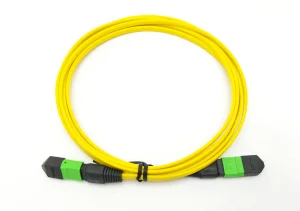
Complete your deployment with our range of rugged trunk cables, distribution hubs, and high-performance modules.
 KOCENT OPTEC