Explore our core engineering items optimized for enterprise computing, high-density distribution frameworks, and hyperscale networking environments.
How modern enterprise architecture leverages 10Gb Copper SFP+ modules to balance CAPEX, thermal limits, and existing cable infrastructures.
Utilize embedded Cat6a copper cabling systems to establish high-speed 10Gbps pipelines without the massive overhead of structural optical migration.
Multivendor MSA-compliant EEPROMs allow simple field integration alongside legacy switches from manufacturers such as Cisco, Juniper, and HPE.
Modern PHY chips consume less than 1.8 Watts per port, drastically mitigating the thermal degradation standard in earlier copper interface modules.
The global networking space has witnessed a critical convergence of speed, distance requirements, and budgetary constraints. Within modern data centers and high-density local area networks (LANs), transitioning from 1Gbps copper networks directly to fiber optics can incur steep capital expenditures (CAPEX). Optical fiber, despite its unmatched latency profiles and extended reach capabilities, requires costly optical transceivers, localized fiber termination hardware, and specialized installation teams.
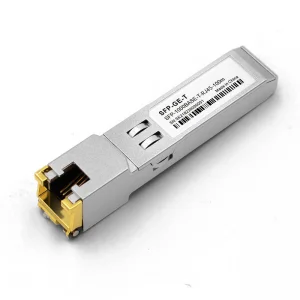
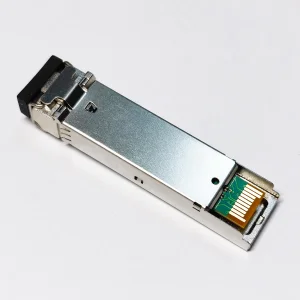
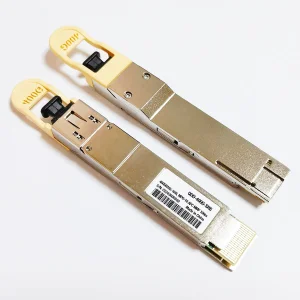
To bridge this gap, the 10GBASE-T Copper SFP+ Transceiver (SFP-10G-T) has become the interface of choice for infrastructure architects. Operating over Category 6a or Category 7 twisted-pair copper cables, these transceivers make it possible to transmit data at rates of 10 Gigabits per second over distances up to 30 meters, and in newer low-power chip configurations, up to 80 meters. These systems operate using standard RJ45 connectors, ensuring compatibility with existing patch panels and localized switch ports.
For enterprise procurement officers searching for a reliable, cheap 10gb copper sfp supplier, understanding these underlying dynamics is key. Our factory processes emphasize reducing the cost-per-port while maintaining the robust physical layers (PHY) and digital diagnostics monitoring (DDM/DOM) standards required by major international telecom regulations.
Early-generation 10G RJ45 SFP+ transceivers suffered from elevated thermal dissipation profiles, often exceeding 2.5W to 3.0W. This constrained the number of adjacent ports that could be populated without triggering structural over-temperature alarms on switches. Today, by leveraging advanced 28nm and 16nm PHY designs, Kocent Optec's 10G copper solutions operate under 1.6W, ensuring safe high-density switch configurations.
Procuring optical network equipment in bulk requires deep coordination between buyers and original manufacturers. In the current global economic landscape, raw material pricing fluctuations (specifically copper, semiconductor wafers, and gold plating for contacts) directly influence market rates. Strategic procurement agents look past standard transactional pricing to calculate the Total Cost of Ownership (TCO). A lower unit cost from an unverified source can lead to field failure rates exceeding 2%, resulting in expensive field-maintenance visits and catastrophic downtime.
Our factory locations across major optical fabrication zones in China utilize advanced lean manufacturing models. This allows us to offer pricing structures that challenge global competitors while adhering to strict quality audits. With ISO9001:2015 certification, we ensure our clients receive components that guarantee a MTBF (Mean Time Between Failures) of over 100,000 operational hours.
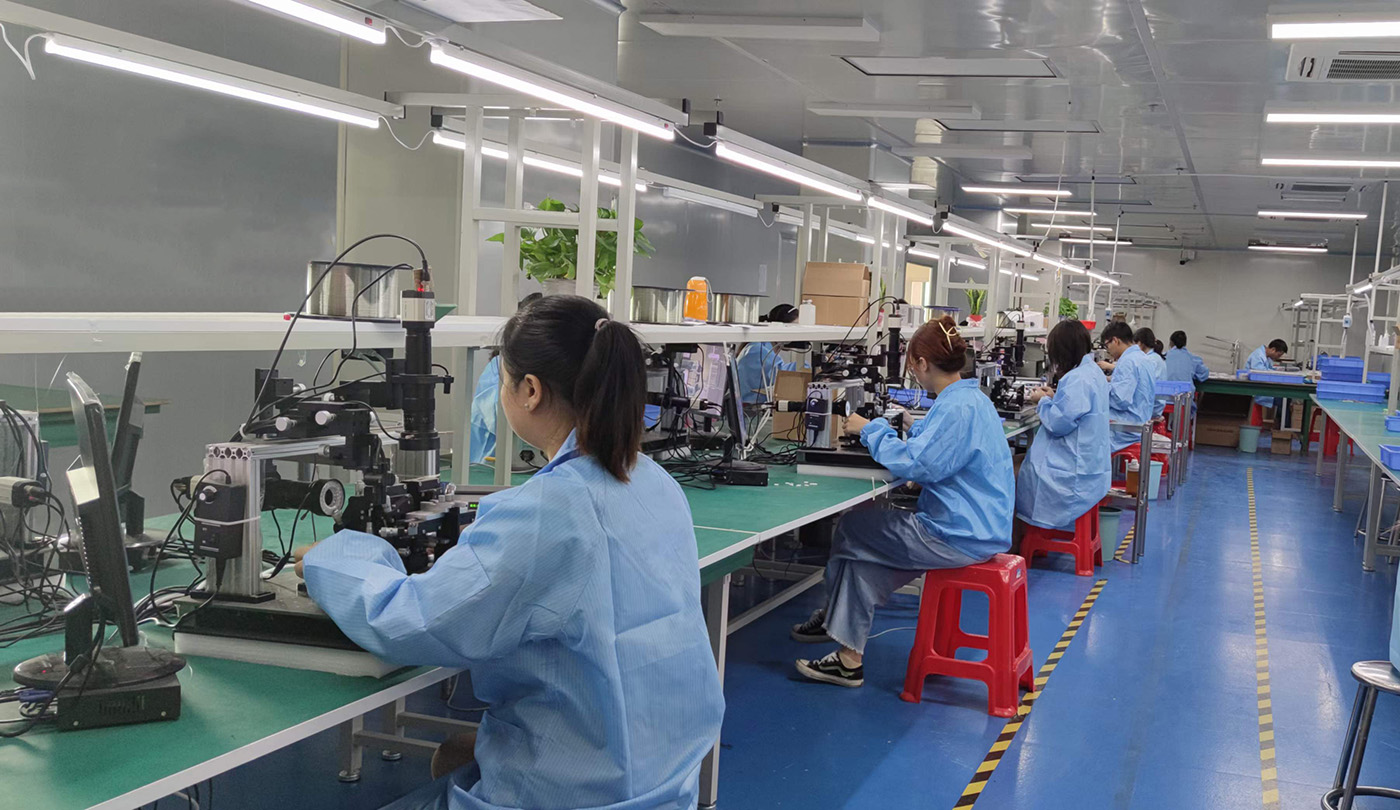
The production lines at modern Chinese telecommunication factories are transitioning from manual assembly setups to fully automated Industry 4.0 ecosystems. This change directly addresses structural issues in optical components, such as micro-soldering defects, poor alignment of internal components, and variations in optical power outputs.
By integrating automated SMT (Surface Mount Technology) assembly lines and digital test benches, Kocent Optec ensures each transceiver's physical layers are precisely built. Specialized test chambers expose the transceivers to high temperatures to filter out early component failures. In addition, real-time diagnostic software checks the EEPROM coding to confirm compatibility with major switches (including Cisco, Huawei, Juniper, Arista, and Dell) before packing.
This operational model allows our plants to maintain high capacity without compromising quality. With global supply chain challenges, this manufacturing resilience guarantees consistent lead times and steady pricing, protecting our partners from sudden market shifts.
For enterprise network design, comparing media interfaces is key to maximizing return on investment. The table below outlines the primary performance metrics for comparison:
| Metric / Feature | 10GBASE-T Copper SFP+ | 10GBASE-SR Fiber SFP+ | 10G SFP+ Active Optical Cable (AOC) |
|---|---|---|---|
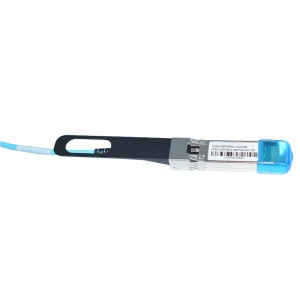
| Physical Interface | RJ45 (Copper) | LC Duplex (Fiber) | Pre-terminated module assembly | Maximum Transmission Distance | 30m (Cat6a/7) / 80m (Special Low-Power) | 300m (OM3) / 400m (OM4) | Up to 100m (dependent on fiber structure) |
| Infrastructure Cabling Cost | Extremely Low (Existing Cat6a RJ45) | Moderate to High (Requires dedicated fiber links) | Low to Moderate (Short inter-rack links) |
| Latency | ~2.5 to 3 microseconds (due to PHY encoding) | <0.1 microseconds (direct optical path) | <0.1 microseconds (direct optical path) |
| Power Consumption | 1.6W - 2.0W (Optimized designs) | <1.0W | <1.2W |
| Ideal Application Scenarios | Cross-connects, edge switches, LAN migration | Data center spine-leaf, inter-building links | Top-of-Rack (ToR) switch-to-server networks |

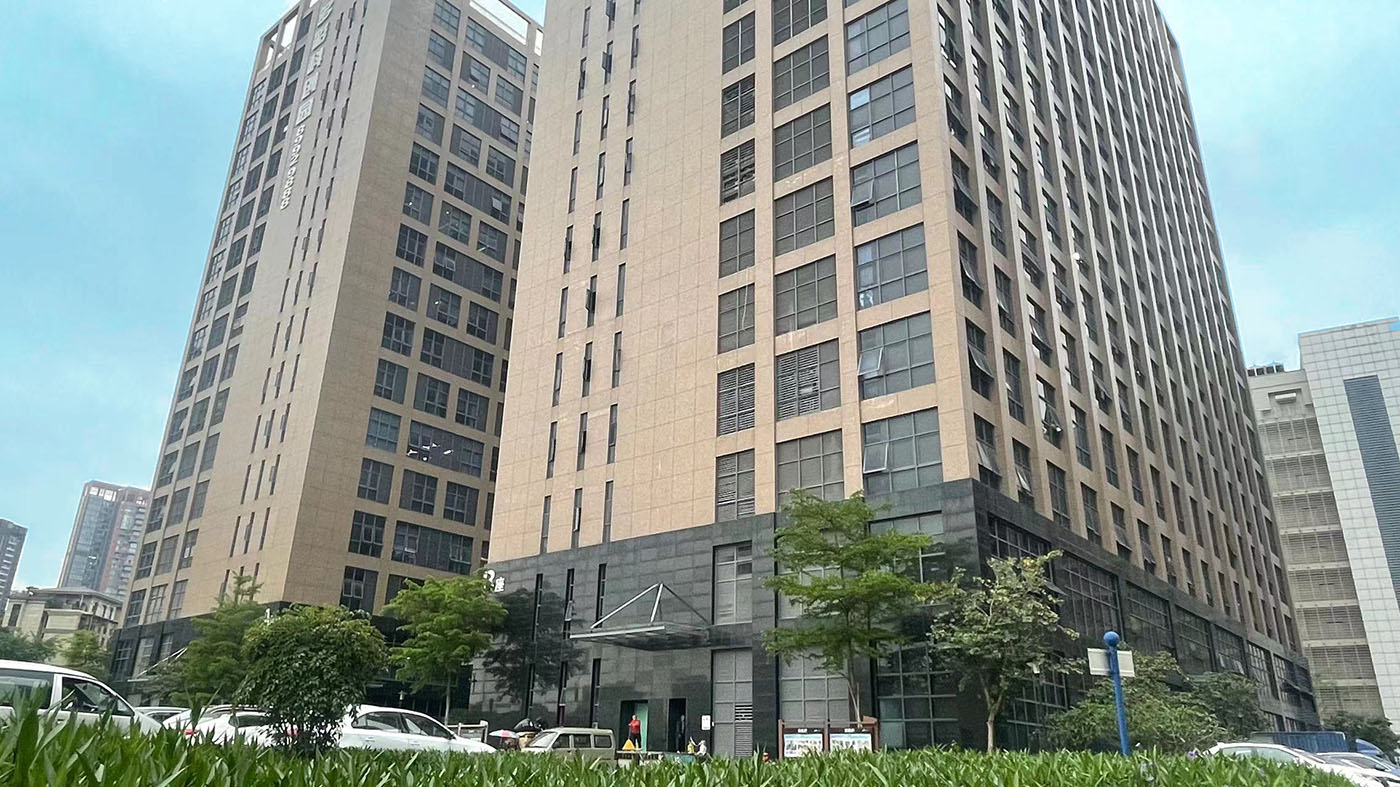
Established in 2012 in Hong Kong as a high-tech communication enterprise, Kocent Optec Limited has grown to become one of China's leading fiber optic termination product manufacturers and solution providers.
We are dedicated to developing and manufacturing high-performance fiber optic communication products. Our offerings range from passive network elements to active transceivers designed for telecommunication networks, enterprise networks, and cloud data centers worldwide.
By leveraging our extensive experience and production capacity, we help our partners expand their core competencies and outperform their competitors. We prioritize customer collaboration and view ourselves as a long-term partner in fiber optic and copper connection solutions.
With more than 13 years of experience in manufacturing telecommunication products, we follow strict industry standards. We use mature scientific methods to deliver orders on time, ensuring that 100% of our products are fully tested and inspected before shipment.
Our sales and service networks cover partners across East Asia, Southeast Asia, the Middle East, Eastern Europe, Western Europe, Northern Europe, South America, North America, North Africa, and South Africa.
Win-win cooperation is our focus. Many of our OEM and ODM products have won telecom operator tenders and met the performance demands of global end-users.
Our solutions are deployed across networks managed by operators such as: SingTel, Vodafone, America Movil, Telefonica, Bharti Airtel, Orange, Telenor, VimpelCom, TeliaSonera, Saudi Telecom, MTN, Viettel, Bitel, VNPT, Laos Telecom, MYTEL, Telkom, Telekom, Entel, FiberTel, StarFiber, Ooredoo, Beeline, and Azercell.
Answers to common technical, procurement, and deployment questions regarding 10G Copper SFP+ transceivers.
10GBASE-T transceivers must run complex digital signal processing (DSP) and PHY chips to transmit high-speed data over twisted-pair copper cables. This processing is required to overcome high levels of high-frequency attenuation, crosstalk, and electromagnetic interference (EMI) typical of copper media. Consequently, copper modules draw more current, resulting in 1.6W to 2.5W of power consumption compared to less than 1W for optical modules using simple laser drivers.
Technically, a 10GBASE-T transceiver requires the higher bandwidth and shielding characteristics of Category 6a (Cat6a) or Category 7 (Cat7) cables to operate at 10Gbps over its full specified distance. While Cat5e or standard Cat6 may work at shorter distances (under 5 or 10 meters) in clean electrical environments, it is not recommended for production deployments due to packet drops, high Bit Error Rates (BER), and interference issues.
We operate a testing laboratory stocked with switches and routers from brands like Cisco, Huawei, Juniper, Arista, HP, and Mikrotik. Every batch of 10G Copper SFP+ transceivers is flashed with firmware compatible with the target equipment. The digital diagnostics interface (DDM/DOM) is verified in real-time, ensuring compatibility and seamless integration when plugged into the switch.
If multiple high-power (2.5W+) copper transceivers are installed side-by-side, the heat buildup can exceed the switch's cooling capacity. This can lead to system shutdowns or degraded performance. Our optimized low-power modules (1.6W) help address this issue. For safety, we recommend spacing out copper transceivers with passive DAC cables or optical modules when populating high-density switches.
Standard OEM/ODM orders typically ship within 7 to 15 business days, depending on compatibility coding requirements and quantities. Because we manage our raw material supply chain directly, we maintain a safety stock of components, shielding our clients from long factory delays.
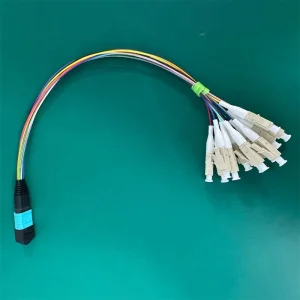
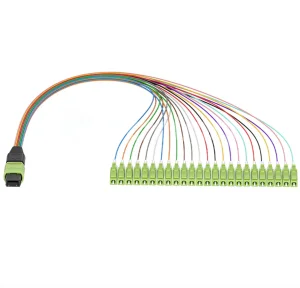
Complete your deployment with these secondary components, designed for long-haul networks and distribution hubs.
 KOCENT OPTEC