Cheap 100G DAC Cable Suppliers & Products

High-Density Data Center Interconnect Architectures, Technical Pathways, and Cost-Optimized Sourcing Guide

Product Catalog

High-Performance Interconnect Solutions (Part 1)

Explore our leading Direct Attach Copper (DAC) assemblies and optical connectivity components designed for ultra-low latency enterprise data grids.
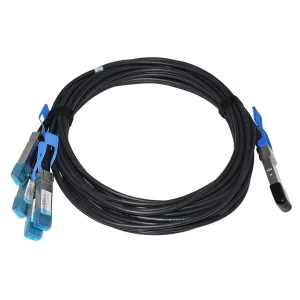
China Cisco QSFP-4SFP25G-CU1M Compatible 100G QSFP28 to 4 x 25G SFP28 Passive Direct Attach Copper Breakout Cable

China Cisco QSFP-4SFP25G-CU1M Compatible 100G QSFP28 to 4 x 25G SFP28 Passive Direct Attach Copper Breakout Cable Supplier, Products

View Details
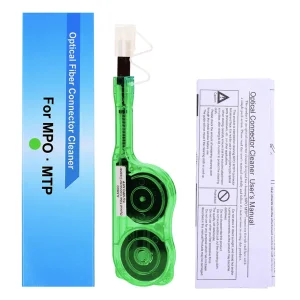
China MTP MPO fiber optic connector one-click cleaner pen

China MTP MPO fiber optic connector one-click cleaner pen Factory, Pricelist

View Details
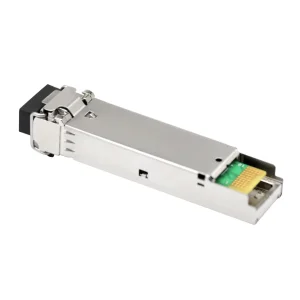
High-Quality 1.25Gb/s 850nm Multi-mode SFP Transceiver

High-Quality 1.25Gb/s 850nm Multi-mode SFP Transceiver Supplier, Quotes

View Details
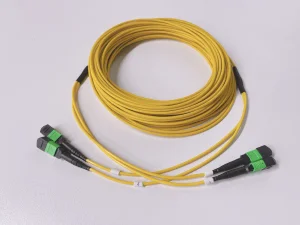
MTP-24 24fo Optical Fiber Elite Type Ultra Low Loss MTP/APC MPO/APC SM G657A1 Trunk Cable

High-Quality MTP-24 24fo Optical Fiber Elite Type Ultra Low Loss MTP/APC MPO/APC SM G657A1 Trunk Cable Suppliers, Quotes

View Details
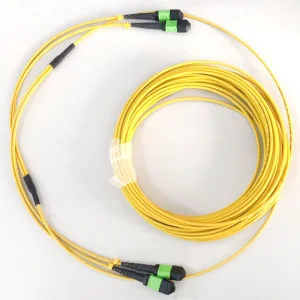
OEM MTP/MPO Single Mode Fiber Optic Patch Cable

OEM MTP/MPO Single Mode Fiber Optic Patch Cable Factory, Products

View Details
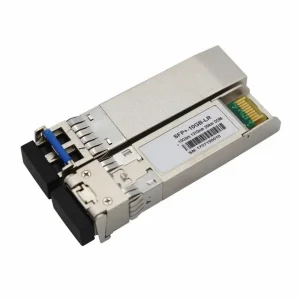
Cheap SFP+ -10G-LR Manufacturer

Cheap SFP+ -10G-LR Manufacturer, Factories

View Details
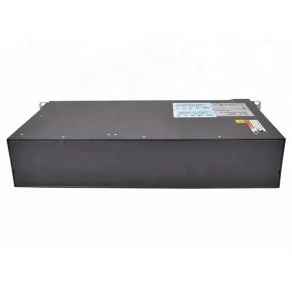
ODM 8 16 port c++ gpon 5608T OLT

ODM 8 16 port c++ gpon 5608T OLT Suppliers, Product

View Details
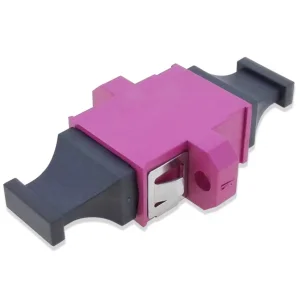
China 8F 12F 24F Multimode OM4 Violet Color MTP optical fiber coupler MPO fiber adapter

China 8F 12F 24F Multimode OM4 Violet Color MTP optical fiber coupler MPO fiber adapter Manufacturer, Factory

View Details
Industry Whitepaper
Technical Standard: IEEE 802.3bj
Reading Time: 15 Mins

1. Decoding 100G DAC Technology: Physics, Signal Integrity, and Architectures

In modern enterprise and hyperscale data center infrastructure, connectivity budgets are constantly squeezed by two competing forces: exponential traffic growth and stringent cost controls. 100G Direct Attach Copper (DAC) cables, complying with the QSFP28 Multi-Source Agreement (MSA) and IEEE 802.3bj physical layer specifications, represent the industry's default response for short-reach, high-throughput interconnections.

Unlike optical transceivers or Active Optical Cables (AOCs), a 100G passive DAC utilizes twinaxial copper cables to transmit electrical signals directly from host ASIC to host ASIC. Operating on 4 parallel channels, each pushing 25 Gbps using Non-Return-to-Zero (NRZ) modulation, this architecture bypasses the need for optical-to-electrical conversions. Consequently, latency is minimized to the speed of electromagnetic waves within copper (roughly 4.5 to 5 nanoseconds per meter), and power consumption is practically zero.

However, copper is not a perfect conductor. High-frequency signals traveling at 28 GHz experience severe physics-based limitations:

  • Skin Effect: High-frequency currents concentrate on the outer surface of the copper wire, increasing resistance and thermal losses.
  • Dielectric Loss: The insulation material absorbs signal energy, resulting in amplitude degradation (attenuation) over distance.
  • Crosstalk: Electromagnetic interference between the adjacent differential pairs inside the jacket degrades the Signal-to-Noise Ratio (SNR).

To counteract these constraints, high-quality 100G DACs require precision manufacturing, utilizing silver-plated solid copper conductors, optimized twinax geometries, and high-performance dielectric wraps. Sourcing from reputable cheap 100g dac cable suppliers ensures that even cost-optimized cables meet the strict Insertion Loss budgets defined by IEEE 802.3bj (typically under 22.48 dB at 12.89 GHz).

2. High-Density Application Architectures & Localized Deployment Scenarios

The deployment of 100G QSFP28 DAC cables is heavily defined by spatial architectures. In high-density environments, understanding where copper is viable versus where optics are necessary is critical for Total Cost of Ownership (TCO) optimization.

Top-of-Rack (ToR) Interconnects

In a standard ToR design, switches sit at the top of the server cabinet, serving 32 to 48 server chassis directly beneath them. Because the distance between the ToR switch ports and the network interface cards (NICs) on the servers rarely exceeds 3 meters, passive 100G DAC cables (such as 100G QSFP28 to 4x 25G SFP28 breakout configurations) are ideal. They form a reliable, low-cost link that requires zero port configurations, zero laser diagnostics, and operates at the absolute lowest power budget.

Spine-Leaf Deployments and Row-Level Routing

For End-of-Row (EoR) or Middle-of-Row (MoR) setups, routing distances can range from 5 to 15 meters. At these lengths, signal degradation makes passive DACs unfeasible. Active copper cables (ACCs) or AOCs must step in to rebuild the signal path using integrated retimers and equalizers. A strategic mix of local passive DACs within the rack and optical connections across the room maximizes density while keeping budgets lean.

0.1W
Power Per Port
Near-zero heat generation compared to 3.5W optical transceivers.
< 5ns
Ultra-Low Latency
Bypasses O-E-O conversion delay, essential for algorithmic trading.
60%
Capex Reduction
Significantly lower upfront costs than transceiver/fiber patch cord setups.

3. Global Commercial Realities: DAC vs. AOC vs. Optical Modules

Purchasing departments are frequently confronted with the choice: Should we deploy DAC, AOC, or discrete Transceiver modules? To build a future-proof network, one must balance cost against technical boundaries:

  • Direct Attach Copper (DAC): Maximum length is restricted to 3–5 meters for passive 100G. Cost is minimal, power usage is virtually zero, and physical durability is exceptionally high due to thick copper cores and sturdy pull tabs.
  • Active Optical Cable (AOC): Utilizes thin, lightweight optical fiber with permanently attached transceivers. Useful for runs up to 100 meters. Provides excellent bend radius and prevents EMI, but consumes up to 2.5W–3.5W per end, releasing extra heat into cooling loops.
  • Optical Transceivers + Fiber Cables: Offers modular flexibility (e.g., SR4, LR4, CWDM4) for runs from 100 meters up to 10 kilometers. However, this represents the highest cost tier and introduces more points of failure (dirty connectors, fragile glass, mismatched transceiver lasers).

For intra-cabinet links, opting for high-quality, cheap 100g dac cables keeps both Capex (acquisition cost) and Opex (cooling and electrical bills) to their absolute minimums.

4. Supply Chain Resilience & Manufacturing Advancements in China

The manufacturing ecosystem for high-speed connectivity has shifted towards automated precision. Chinese manufacturers have optimized their raw copper processing, insulation extrusion, and automated termination practices to offer world-class quality at competitive price points.

A key differentiator for reliable 100g dac cable suppliers is their capacity to run automated, real-time testing on every production line. Brands like Kocent Optec Limited utilize state-of-the-art Vector Network Analyzers (VNAs) and Bit Error Rate Tester (BERT) equipment to qualify every cable against standardized eye diagrams, checking for minimal jitter and maximum margin over the specification mask.

About Kocent Optec Limited

Established in 2012 in Hong Kong as a hi-tech communication enterprise, Kocent Optec Limited has grown into one of China's leading fiber optic termination product manufacturers and connectivity solution providers. We are dedicated to developing and manufacturing high-density fiber optic and high-speed copper communication products, serving telecommunication networks, enterprise structures, and modern cloud data centers.

Kocent Optec Production Facility

Leveraging our extensive experience and scalable production capacity, we help our partners expand their core competencies and gain critical advantages in fast-paced markets. By keeping engineering, automated testing, and supply chain logistics vertically integrated, we maintain a highly resilient component pipeline even during global raw material shortages.

5. Technological Roadmap: Squeezing Bandwidth from Copper

As data architectures migrate from 100G to 400G and 800G, copper design faces significant high-frequency challenges. Signal loss rises exponentially at higher frequencies, calling for new materials and modulation techniques to extend the lifespan of copper interconnects.

100G Era (QSFP28)
4x 25Gbps NRZ Modulation

Standardized via IEEE 802.3bj. Excellent reliability up to 5 meters using 26AWG to 30AWG copper. Thin design options allow for neat routing inside standard server racks.

200G/400G Transition
PAM4 Modulation Schemes

Uses 4-level Pulse Amplitude Modulation (PAM4) to double the bit rate per channel without doubling the physical frequency. However, this reduces the signal margin, limiting passive copper connections to 2.5–3 meters unless active amplification (ACCs) is applied.

800G & Beyond
112G and 224G SerDes Integration

By leveraging advanced digital signal processing (DSP) in the host ASIC alongside upgraded PCB connectors, passive copper maintains a key role in hyper-dense artificial intelligence clusters, showing that copper remains highly viable for short-distance routing.

6. Interoperability, Standards Compliance, and Quality Assurance Protocols

Vendor compatibility is a primary concern for network engineers. A common challenge is using third-party cables in proprietary switches, which can sometimes trigger firmware lockout warnings or cause dropped packets.

To ensure flawless integration across multi-vendor setups (such as Cisco, Arista, Juniper, Dell, and Huawei), cables must be flashed with correct EEPROM signatures matching the target host equipment's expected profiles. Quality manufacturers strictly adhere to the following processes:

"With more than 13 years of experience in manufacturing telecommunication fiber optic and high-speed copper products, we follow strict industry standards. We use proven testing methods to deliver your orders on time, ensuring that 100% of our products undergo thorough inspection and testing before shipment."

Quality Testing and Verification Lab

Through years of dedicated support and manufacturing precision, Kocent Optec has built relationships with telecommunications operators and system integrators worldwide, spanning regions from Europe, the Americas, and the Middle East, to Asia and Africa.

Our OEM and ODM components are engineered to meet the high performance benchmarks required by major global operators:
SingTel
Vodafone
America Movil
Telefonica
Bharti Airtel
Orange
Telenor
VimpelCom
TeliaSonera
Saudi Telecom
MTN
Viettel
Bitel
VNPT
Laos Telecom
MYTEL
Telkom
Telekom
Entel
FiberTel
StarFiber
Ooredoo
Beeline
Azercell
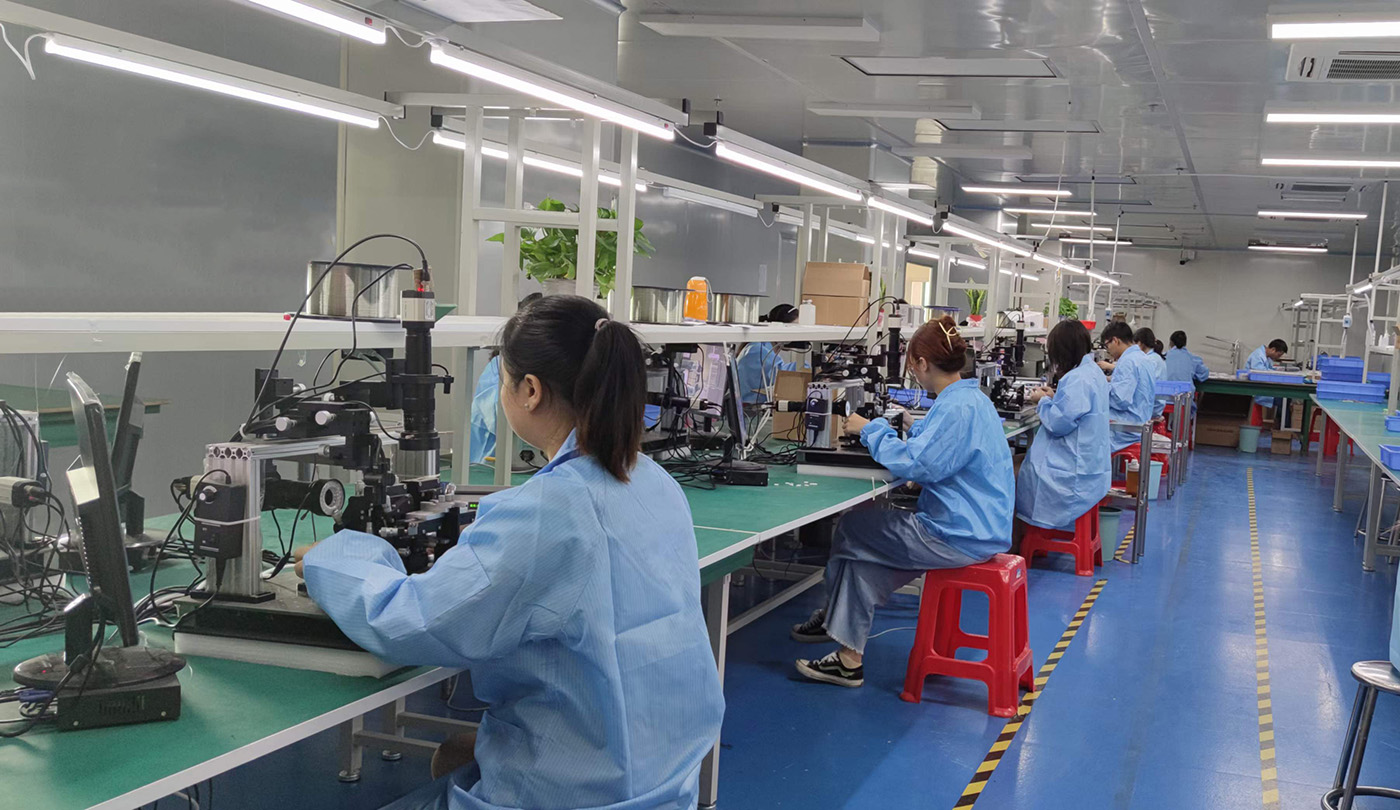
Advanced Clean Room Assembly Line
FAQ

Direct Attach Copper (DAC) Technical Q&A

What is the difference between passive and active 100G DAC cables?
Passive DAC cables do not contain signal-conditioning electronics; they transfer the raw electrical signal directly, making them cost-effective and highly reliable for lengths up to 3 or 5 meters. Active DAC cables (often called Active Copper Cables or ACCs) contain built-in IC pre-drivers and equalizers to boost the signal, enabling longer reach (typically 5 to 10 meters) over thinner copper wires.
Why is conductor wire gauge (AWG) important when sourcing 100G DAC cables?
Wire gauge (typically 30AWG, 28AWG, or 26AWG for 100G) directly impacts signal attenuation and cable flexibility. Thicker conductors (26AWG) have lower attenuation and can span longer distances (such as 3 to 5 meters) but are stiffer and heavier. Thinner wires (30AWG) are more flexible and easier to route within tight rack spacing, but are limited to shorter runs (usually under 1.5 meters) to avoid signal degradation.
Are these 100G QSFP28 breakout cables compatible with older 40G infrastructures?
No, a 100G QSFP28 to 4x 25G SFP28 breakout cable is designed specifically to divide a single 100G port into four individual 25G channels. To connect 40G ports, you must use a 40G QSFP+ to 4x 10G SFP+ breakout cable, which operates on different frequencies and link protocols.
How does Kocent Optec verify vendor compatibility across switches?
Every DAC cable is configured with firmware matching the targeted switch brand's EEPROM signature. We test our assemblies on-site using original switch platforms from Cisco, Arista, Juniper, and other major vendors. This ensures that the host hardware detects the cable immediately without throwing warning codes or blocking traffic.
Network Components

Optical Distribution & High-Speed Cabling (Part 2)

Explore our supporting range of MPO/MTP structured cabling, adapter couplings, and fiber distribution systems.
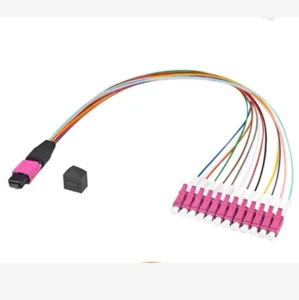
Wholesale OM4 MPO-LC MTP-LC 12fo 12fibers 12cores 0.9mm Fan-out Patch Cord

Wholesale OM4 MPO-LC MTP-LC 12fo 12fibers 12cores 0.9mm Fan-out Patch Cord Factory, Quotes

View Details
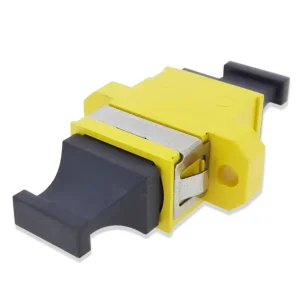
High-Quality Elite Loss Single Mode MPO optical adapter / Yellow Color SM ULL MTP fiber optic coupler

High-Quality Elite Loss Single Mode MPO optical adapter / Yellow Color SM ULL MTP fiber optic coupler Factory, Factories

View Details
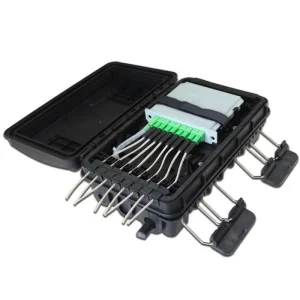
Cheap Aerial Type Fiber Optic Splitter Splice Closure Fosc-gjs22

Cheap Aerial Type Fiber Optic Splitter Splice Closure Fosc-gjs22 Manufacturers, Pricelist

View Details
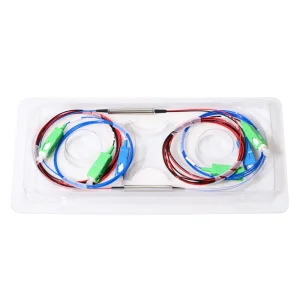
ODM FTTH 3 Ports Filter Wavelength Division Multiplexer

ODM FTTH 3 Ports Filter Wavelength Division Multiplexer 1310 1490 1550nm Fiber Optic FWDM SC/UPC SC/APC Product, Products

View Details
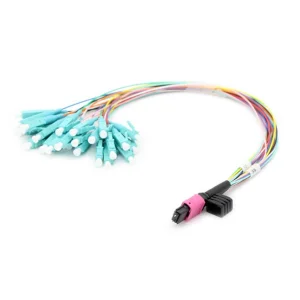
Cheap Multimode OM4 24fo 24fibers 24cores MTP-LC MPO-LC Fanout Harness Patch Cable

Cheap Multimode OM4 24fo 24fibers 24cores MTP-LC MPO-LC Fanout Harness Patch Cable Manufacturer, Manufacturers

View Details
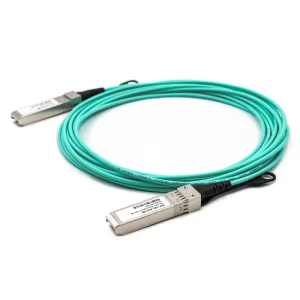
OEM 10Gb/s SFP+ Active Optical Cable

OEM 10Gb/s SFP+ Active Optical Cable Manufacturer, Pricelist

View Details
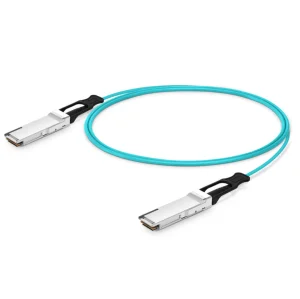
China 200G QSFP-DD Active Optical Cable OM3

China 200G QSFP-DD Active Optical Cable OM3 Suppliers, Pricelist

View Details
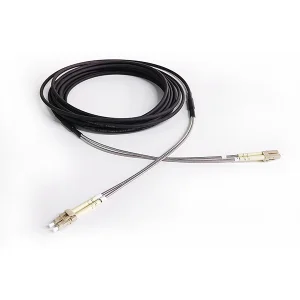
OEM 2 Core 7.0mm Tactical Field Fiber Optic Cable

OEM 2 Core 7.0mm Tactical Field Fiber Optic Cable Pricelist, Products

View Details