Explore our top-tier, carrier-grade active and passive fiber optic products. Engineered for minimal latency, high-density topologies, and absolute compatibility.
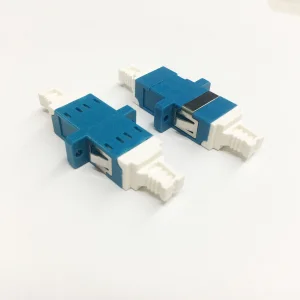
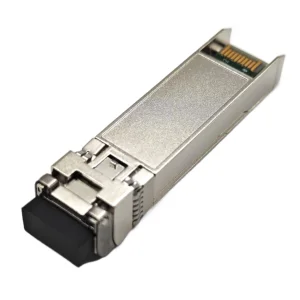
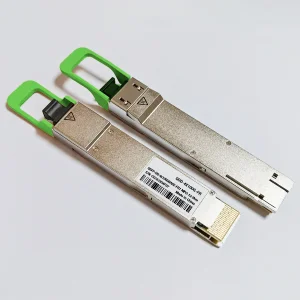
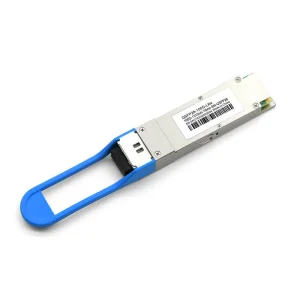
The modern digital infrastructure depends heavily on reliable and cost-effective fiber optical links. The 10 Gb SFP+ (Small Form-factor Pluggable Plus) module remains the workhorse of enterprise intranets, regional metropolitan area networks (MANs), and passive optical network (PON) backhauls. Despite the aggressive deployment of 100G, 400G, and even 800G coherent optics in hyper-scale cloud backbones, 10G SFP+ modules form the indispensable base layer for access networks, campus networks, and edge nodes.
Industrially, SFP+ optical transceivers operate under strict standardization protocols defined by the Multi-Source Agreements (MSAs). These standardization guidelines (such as SFF-8431 and SFF-8472) ensure mechanical, electrical, and optical cross-compatibility between hardware vendors. From smart grids to marine telecom arrays and municipal security backbones, the ruggedized 10G SFP+ architecture bridges the physical optical medium with highly sophisticated ASIC switching fabrics, offering dynamic hot-swappable adaptability that minimizes downtime during maintenance cycles.

China's optical component manufacturing cluster, centered heavily around major tech hubs, represents a highly optimized vertical supply chain. The efficiency of a premier factory like Kocent Optec Limited (established in 2012 in Hong Kong with robust production facilities in mainland China) lies in the local availability of sub-components: from semiconductor lasers (TOSA - Transmitter Optical Sub-Assembly) and photodiode detectors (ROSA - Receiver Optical Sub-Assembly) to high-precision PCB designs, laser welding units, and automated micro-packaging systems.
TOSA/ROSA automated active alignment minimizes insertion loss, ensuring optimal coupling between laser diodes and fibers.
EEPROM programming custom-tailored to circumvent host switch vendor locks (Cisco, Juniper, Nokia, Huawei compatibility).
100% optical verification under high-temperature cycling to eliminate infant mortality and satisfy operator standards.
By leveraging mass scale economies and advanced manufacturing execution systems (MES), Chinese factories reduce unit costs while keeping quality metrics aligned with global reliability frameworks (such as Telcordia GR-468-CORE). Kocent Optec Limited implements an rigorous testing loop comprising automated optical inspection (AOI), eye-diagram analysis, spectral width verification, and Bit Error Rate (BER) analysis before packaging, guaranteeing plug-and-play reliability at a fraction of the cost of Western OEM brands.

The applications for 10 Gb SFP+ optics are broad, demanding variations in wavelength, power budgets, and fiber classifications:
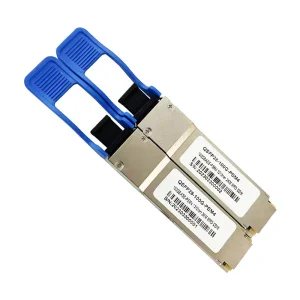
As standard enterprise traffic profiles swell, the technological trajectory shows a clear fork. While 10G SFP+ remains dominant in access networks, data center infrastructures are rapidly migrating to 100G QSFP28, 400G QSFP-DD, and 800G form factors. Kocent Optec Limited actively addresses this technological paradigm shift by designing advanced PAM4 (Pulse Amplitude Modulation 4-level) transceivers and utilizing Silicon Photonics (SiPh) platforms. Transitioning to SiPh allows for the integration of multiple laser arrays, optical modulators, and photodetectors onto a single silicon chip, drastically shrinking device footprint, power dissipation, and manufacturing complexity.
Concurrently, the transition to green, low-carbon networking architectures requires that transceivers operate under extremely strict thermal budgets. Modern 10G SFP+ modules are engineered to consume less than 1.0W of power, lowering the cumulative power draw of 48-port switches and reducing cooling costs across large-scale server halls.
For sourcing managers and network architects, vendor lock-in remains a primary risk. Many top-tier network hardware providers program custom EEPROM encryption keys onto their transceivers, forcing switches to reject third-party modules. A premium manufacturer bypasses this by reverse-engineering these signatures and coding the multi-coded EEPROM of the generic modules to match host devices seamlessly.
When selecting a manufacturing partner, verify the presence of active Digital Diagnostics Monitoring (DDM/DOM) integration. DOM allows network operators to monitor real-time parameters such as optical output power, optical input power, internal temperature, laser bias current, and transceiver supply voltage. This capability is crucial for predictive failure analysis and preventing unplanned network outages.
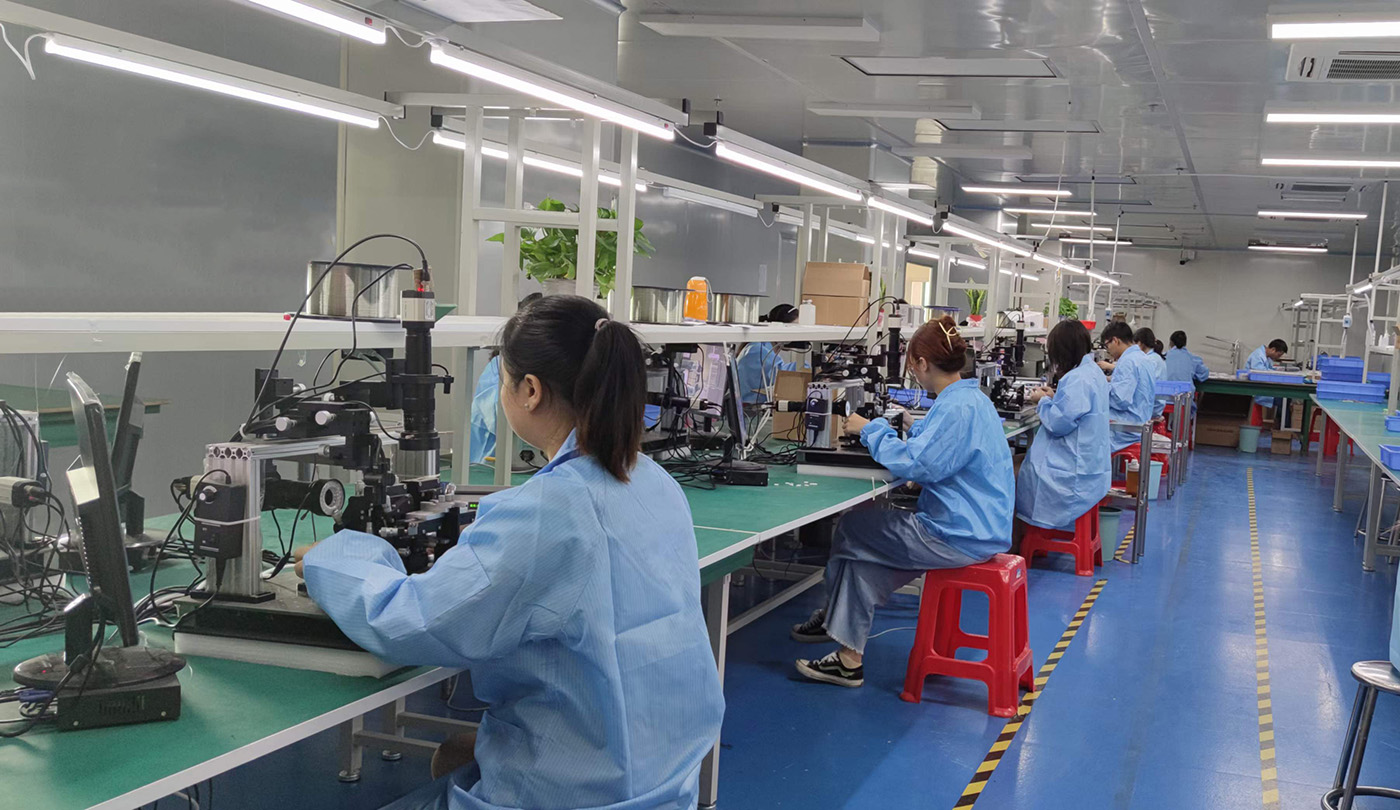
Established in 2012 in Hong Kong as a high-tech communication enterprise, Kocent Optec Limited has risen to become one of China's premier fiber optic termination product manufacturers and solution providers. We are fully dedicated to developing, manufacturing, and supplying fiber optic communication products ranging from passive terminations to active optical transceivers. Our target sectors include public telecommunication networks, enterprise LANs, and large-scale data centers.
With over 13 years of rich engineering and manufacturing experience, we operate in strict compliance with fiber optic industry standards (ISO9001, CE, RoHS, FCC). Our core philosophy centers on a scientific, data-driven approach to production: 100% of our products are comprehensively tested and inspected before dispatch. Our commitment to quality has enabled us to secure partnerships with major global Telecom Operators, satisfying rigorous public tenders and private network infrastructure builds alike.
Our OEM/ODM solutions are trusted by leading global operators, including: SingTel, Vodafone, America Movil, Telefonica, Bharti Airtel, Orange, Telenor, VimpelCom, TeliaSonera, Saudi Telecom, MTN, Viettel, Bitel, VNPT, Laos Telecom, MYTEL, Telkom, Telekom, Entel, FiberTel, StarFiber, Ooredoo, Beeline, and Azercell. By leveraging our production capacity and technological expertise, we empower our global clients to expand their capabilities and outperform their competition.
Get answers to critical technical questions regarding deployment, optical budgets, mechanical standards, and compatibility constraints.
SFP and SFP+ modules share the exact same physical dimensions and mechanical form factor. However, the internal optical and electrical components of SFP+ are engineered to handle data rates of 10 Gbps (and up to 16 Gbps for Fiber Channel), compared to standard SFP which is capped at 1.25 Gbps or 2.5 Gbps. SFP+ switches can down-rate to accept SFP modules, but standard SFP ports cannot read SFP+ modules because they lack the high-frequency processing circuitry (SFI electrical interface).
Digital Optical Monitoring (DOM) or Digital Diagnostic Monitoring (DDM) is an integrated microcontroller feature defined in SFF-8472. It permits live monitoring of essential variables: laser bias current, internal module temperature, TX launch power, RX received power, and operating voltage. When a laser begins to fail, its bias current increases to maintain output power. Network administrators can set alarms to flag these anomalies, replacing the module preemptively before a total link loss occurs.
End-face contamination (dust, skin oils, alcohol residue) is the leading cause of optical link degradation. Even microscopic dust particles blocks light, increases insertion loss, and causes back-reflections (high Return Loss) which can permanently damage the laser cavity. Before insertion into any optical adapter or transceiver, end-faces must be cleaned with specialized tools (like cassette cleaners or pen-type click cleaners) and inspected under a fiber microscope.
Single-mode fiber has a tiny core (typically 9µm) that allows only a single spatial mode of light to propagate, preventing modal dispersion. This allows it to span long distances (10km up to 80km+). Multi-mode fiber has a wider core (50µm or 62.5µm) that supports multiple optical paths. Because of modal dispersion, MMF is restricted to shorter distances (typically up to 300m using OM3 or 400m using OM4 with 10G-SR transceivers). SMF uses expensive lasers (DFB/EML), while MMF uses cheaper 850nm VCSELs.
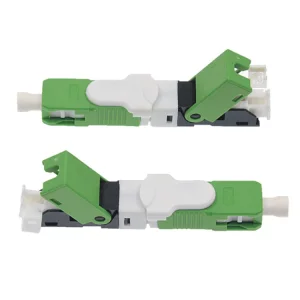
Standard SFP+ transceivers are designed with UPC interfaces (straight 0-degree polish, blue color-coded) because optical transceivers rely on a direct physical butt-joint in the receptacle. APC connectors (8-degree angle polish, green color-coded) are utilized to minimize back-reflections in high-power analog systems like CATV or dense PON networks. Connecting an APC plug into a UPC transceiver port will cause mismatched air gaps, causing high insertion loss and potentially scratching the internal transceiver ferrule.
Under recommended operating conditions, a quality 10G SFP+ module has a Mean Time Between Failures (MTBF) exceeding 100,000 hours (over 11 years). The primary degradation factor is heat: operating transceivers beyond their specified industrial temperature range (0°C to 70°C for commercial; -40°C to 85°C for industrial) accelerates semiconductor laser aging, degrading the TOSA's output power.
Yes, many dual-rate 10G/1G transceivers exist, and most SFP+ switch ports can be manually configured via command-line interface (CLI) to operate at 1Gbps. However, this is host-switch dependent. The switch's internal PHY must support the target speed, and the transceiver's internal clock data recovery (CDR) must be bypassed or adjusted via hardware control pin rate selection.
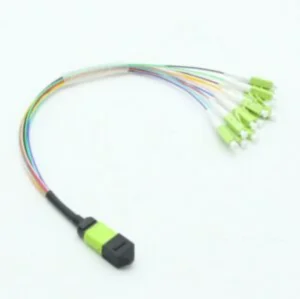
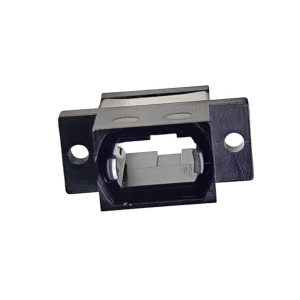
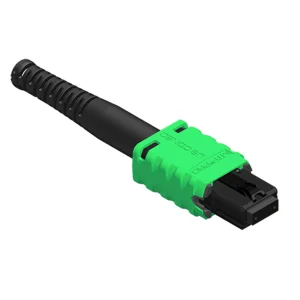
MPO/MTP connectors hold 8, 12, 16, or 24 fibers within a single compact interface, allowing multi-lane transmission (e.g., 4 lanes of 25G or 100G in parallel optics). Traditional LC duplex connectors only support a single TX/RX pair. In high-density server environments, replacing individual patch cords with MPO trunks simplifies cable management, reduces airflow restriction, and eases subsequent speed upgrades.
Standard MPO connections can exhibit insertion losses of up to 0.7dB per mating interface. "Ultra Low-Loss" variants restrict this value to below 0.35dB (and often below 0.2dB) through tighter mechanical tolerances on the alignment pins and high-grade ferrules. For multi-connection optical channels, lowering insertion loss prevents the cumulative budget from exceeding the transceiver's receiver sensitivity threshold.
Reliable manufacturers must provide evidence of ISO9001 certification for quality management, CE/FCC compliance for electromagnetic compatibility, and RoHS/REACH compliance to certify the exclusion of hazardous substances. For major telecom operators, compliance with Telcordia GR-468-CORE reliability standards ensures that the modules have passed accelerated aging, vibration, humidity, and thermal shock testing.
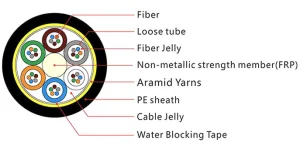
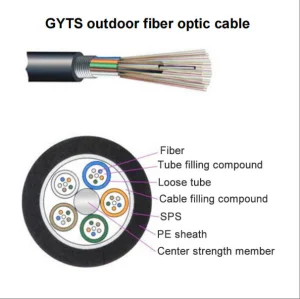
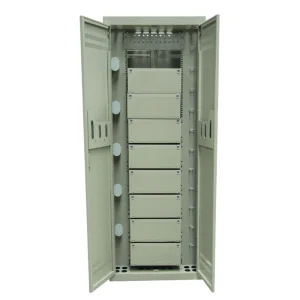
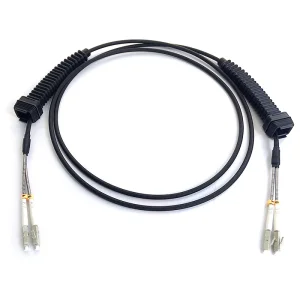
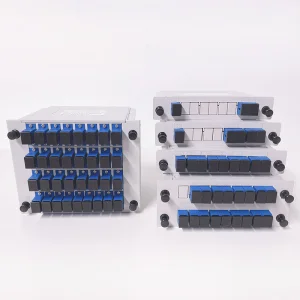
Complete your network topology design with our premium distribution frames, outdoor armored cabling, and high-precision fiber optic splitters.
 KOCENT OPTEC