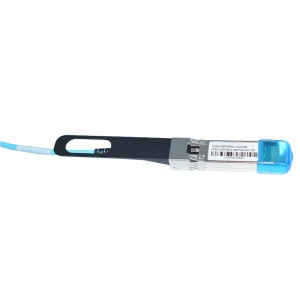
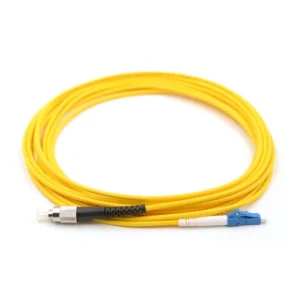
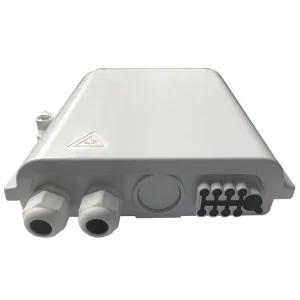
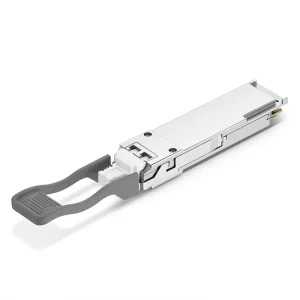
Established in 2012 in Hong Kong as a high-tech communication enterprise, Kocent Optec Limited has emerged as one of China's leading fiber optic termination product manufacturers and solution providers. We are dedicated to developing and manufacturing a comprehensive range of fiber optic communication products—spanning passive components to active optical transceivers—engineered specifically for telecom operators, enterprise networks, and hyperscale data centers.
By leveraging our extensive engineering experience and excellent production capacity built over more than a decade, we magnify the outcome for our valuable customers. This partnership ultimately expands their core competencies and helps them outperform global competitors. At Kocent Optec, we place deep emphasis on strategic customer collaboration, defining ourselves as a trusted engineering partner rather than a transactional vendor. We believe our differentiators are your perceived advantages in the optical field.

Understanding the transition from legacy 10G/40G architectures to modern 100G (QSFP28/SFP-DD) networks and the underlying technologies driving modern bandwidth requirements.
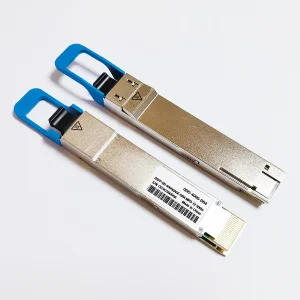
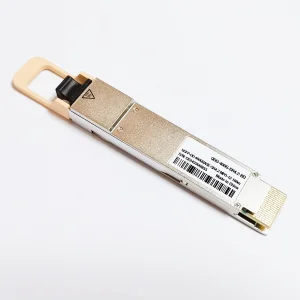
In today's digital era, the exponential surge in traffic from artificial intelligence (AI), machine learning (ML), high-definition video streaming, and rapid cloud adoption has created unprecedented demands on modern network backbones. To maintain latency thresholds and eliminate bottlenecks, the industry has standardized on 100 Gig transceivers as the baseline for leaf-spine architectures and inter-rack connectivity. The 100G form factor—chiefly represented by the QSFP28 (Quad Small Form-factor Pluggable 28)—has established itself as the global standard, delivering optimized power dissipation, footprint density, and thermal dissipation metrics compared to legacy CFP and CFP2 designs.
When selecting a 100 Gig SFP/QSFP28 supplier, sourcing managers and lead engineers must evaluate the hardware across critical metrics: electrical interfaces, optical transmitter types (VCSEL vs. DML vs. EML), and digital diagnostics monitoring (DDM/DOM). Each transceiver design is tuned for specific link-length parameters and infrastructure topologies. For instance, short-reach multi-mode configurations utilize cost-efficient 850nm VCSEL lasers over OM3/OM4 fiber, whereas long-reach single-mode layouts require advanced Distributed Feedback (DFB) or Electro-absorption Modulated Lasers (EML) operating at 1310nm or CWDM grids to maintain signal integrity over spans up to 10km and beyond.
| Specification Standard | Fiber Type | Connector Type | Reach Capacity | Laser Source | Primary Deployment Intent |
|---|---|---|---|---|---|
| 100GBASE-SR4 | Multi-mode (MMF) | MPO/MTP-12 | 100m (OM4) | 850nm VCSEL | Intra-rack, switch-to-switch data center interconnects. |
| 100GBASE-LR4 | Single-mode (SMF) | Duplex LC | 10km | 1310nm LAN-WDM DFB/EML | Metro Area Networks, enterprise backbones, long-span runs. |
| 100GBASE-CWDM4 | Single-mode (SMF) | Duplex LC | 2km | CWDM DFB | Mid-reach cloud data centers, optimizing fiber infrastructure costs. |
| 100GBASE-PSM4 | Single-mode (SMF) | MPO/MTP-12 | 500m | 1310nm DFB | Cost-effective parallel single-mode link distributions. |
| 100G SWDM4 / BiDi | Multi-mode (MMF) | Duplex LC | 100m / 150m | 850-940nm VCSEL | Upgrading 10G/40G infrastructure to 100G without changing cables. |
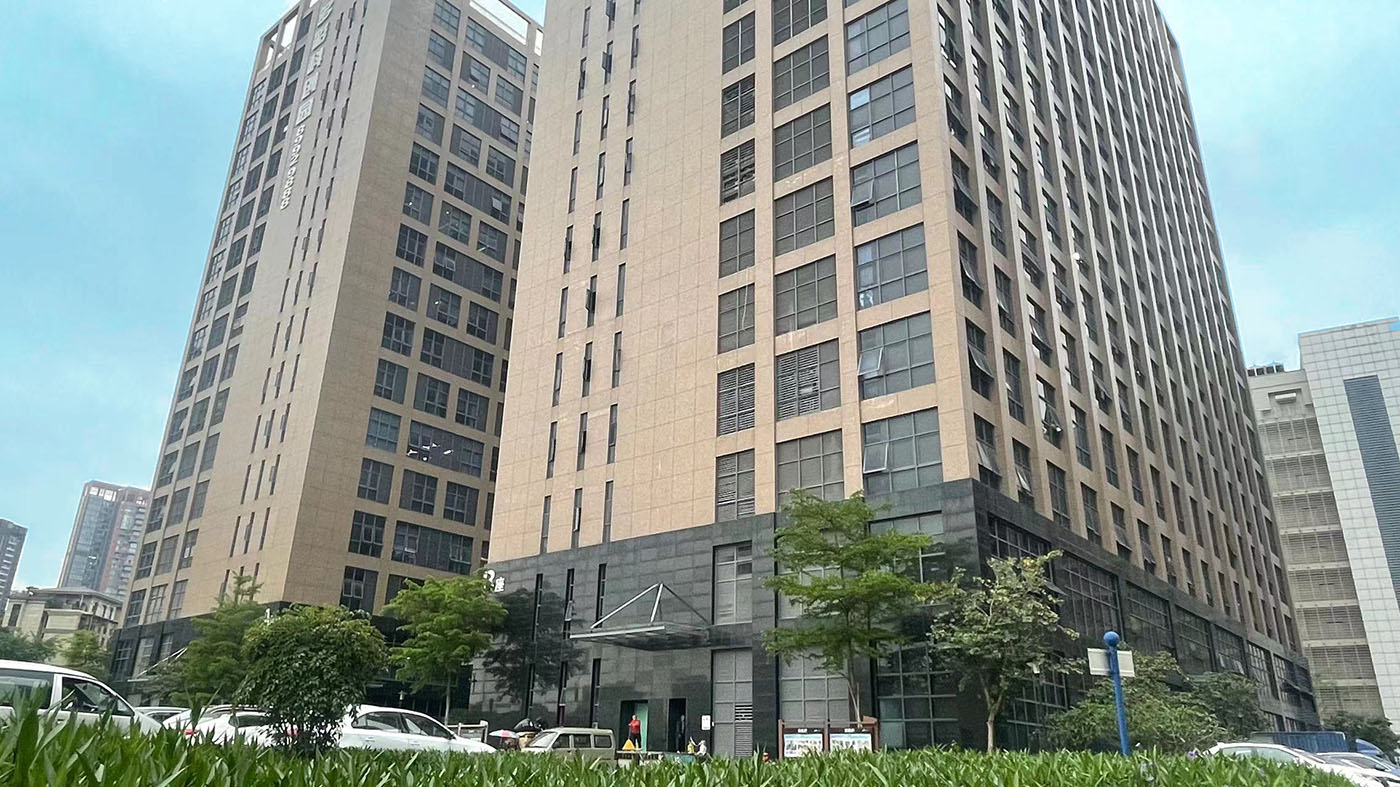
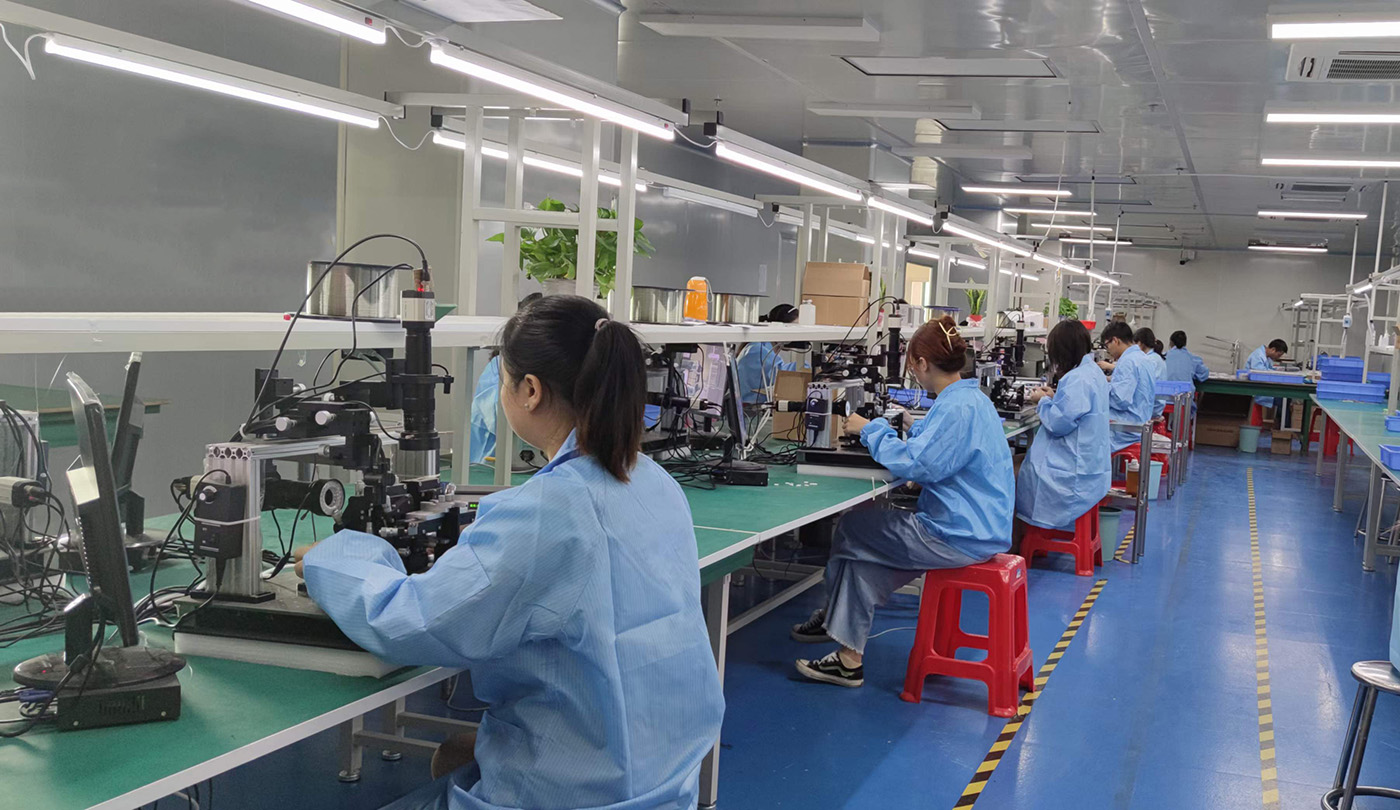
With more than 13 years of core experience in manufacturing telecommunication fiber optic products, we strictly follow international fiber optic industry standards (Telcordia GR-326-CORE, GR-468-CORE, IEC standards) using mature scientific methods. This process guarantees that 100% of our products are thoroughly tested, validated, and inspected before shipment.
Operating out of the primary industrial clusters in China, we leverage local supply chain integration—ranging from raw ceramic ferrules, plastic housings, and optoelectronic assemblies (TOSA, ROSA, BOSA) to advanced high-speed logic boards. This concentration allows us to minimize raw material lead times, execute strict quality assurance, and pass significant cost efficiencies directly to our clients through competitive volume quotes.
As networks scale, standard Non-Return-to-Zero (NRZ) modulation reaches its physical limits in processing throughput without consuming prohibitive levels of energy. The next phase of network scaling utilizes four-level Pulse Amplitude Modulation (PAM4) encoding combined with Silicon Photonics (SiPh). Silicon Photonics merges the data-processing capacity of silicon microchips with the speed of optical fiber, bringing lasers directly onto silicon chips to reduce power consumption and thermal load.
For data centers planning multi-year infrastructure upgrades, sourcing 100G QSFP28 modules that offer backward compatibility with upcoming 400G (QSFP-DD) platforms is crucial for hardware lifecycle management. By implementing modules designed with lower power thresholds (e.g., under 3.5W for 100G LR4), operators can significantly reduce cooling costs while preparing their infrastructure for 400G and 800G transitions.
Years of dedicated sales and service experience have enabled us to win customers across diverse economic regions. Today, Kocent Optec supports network infrastructures in East Asia, Southeast Asia, the Middle East, Eastern Europe, Western Europe, Northern Europe, South America, North America, North Africa, and South Africa.
Our win-win cooperation model ensures that many of our OEM and ODM optical products consistently secure Telecom Operator tenders, satisfying strict compliance demands from tier-one operators worldwide. Our main terminal telecom operator clients include: SingTel, Vodafone, America Movil, Telefonica, Bharti Airtel, Orange, Telenor, VimpelCom, TeliaSonera, Saudi Telecom, MTN, Viettel, Bitel, VNPT, Laos Telecom, MYTEL, Telkom, Telekom, Entel, FiberTel, StarFiber, Ooredoo, Beeline, and Azercell.
Essential technical answers from our engineering desk to guide your next network procurement cycle.
QSFP28 SR4 (Short Reach 4-Channels) operates over multi-mode fiber (OM3/OM4) using a 850nm VCSEL array, supporting link lengths up to 100m via MPO-12 connectors. QSFP28 LR4 (Long Reach 4-Channels) operates over single-mode fiber (SMF) using four LAN-WDM wavelengths (1295nm to 1309nm) multiplexed onto a duplex LC connector, supporting link lengths up to 10km.
Every active transceiver module is programmed using tailored firmware in our testing lab to match the specific EEPROM requirements of targeted switch brands, such as Cisco, Juniper, Arista, and HP. We perform real-world hardware verification to ensure DOM/DDM compatibility and prevent port lockout issues.
Pricing is primarily determined by the optical laser engine (EML lasers used in LR4/ER4 are more complex and expensive than VCSEL lasers in SR4), the volume of the order, and customizing parameters such as custom packaging or industrial-grade operating temperatures (-40°C to 85°C).
Standard 100G SR4 modules require MPO cabling, which can be expensive to install from scratch. 100G BiDi (using SWDM technology) transmits signals in both directions over a single duplex LC multi-mode fiber, allowing data centers to upgrade from 10G/40G to 100G without replacing their existing duplex LC cabling.
 KOCENT OPTEC