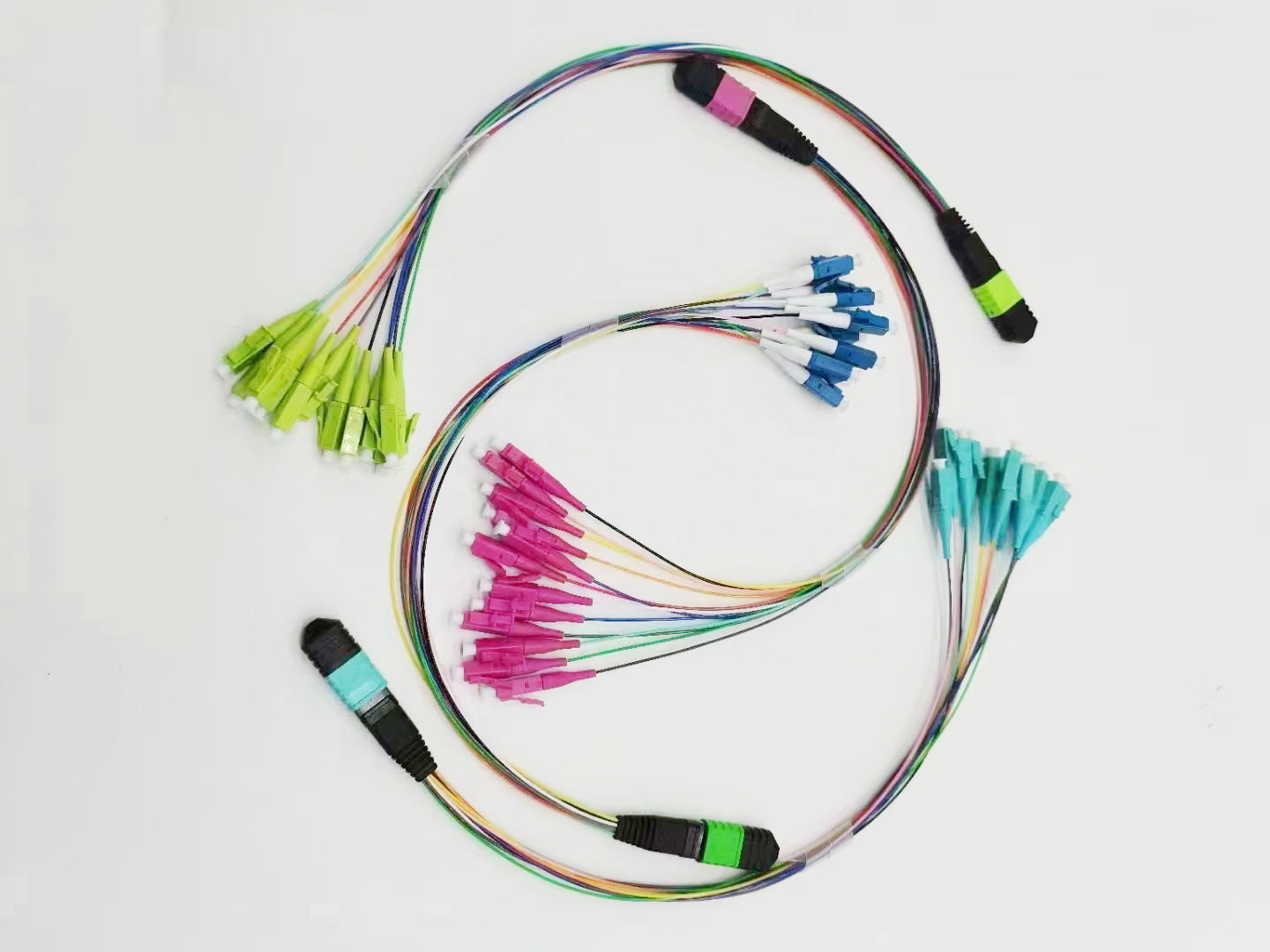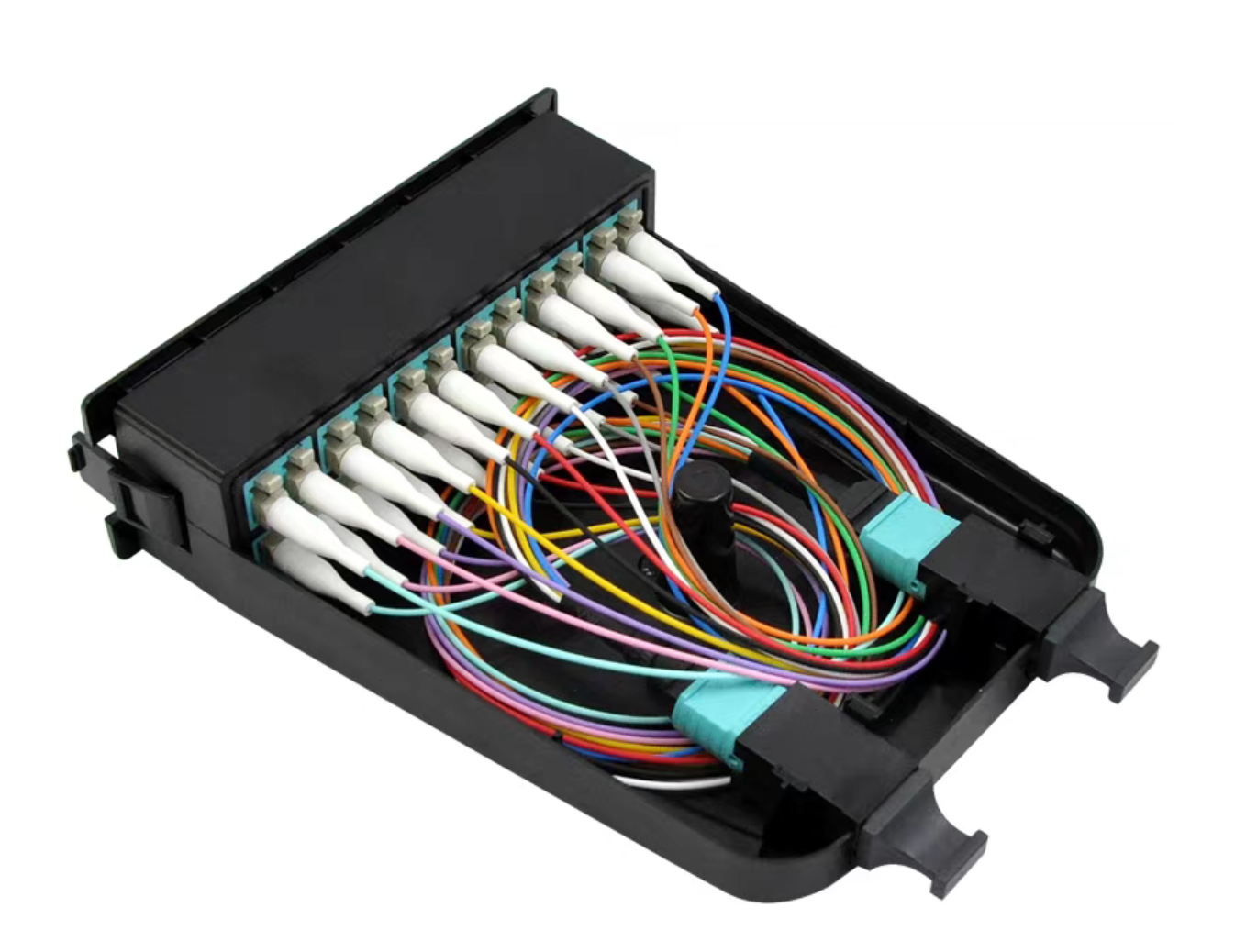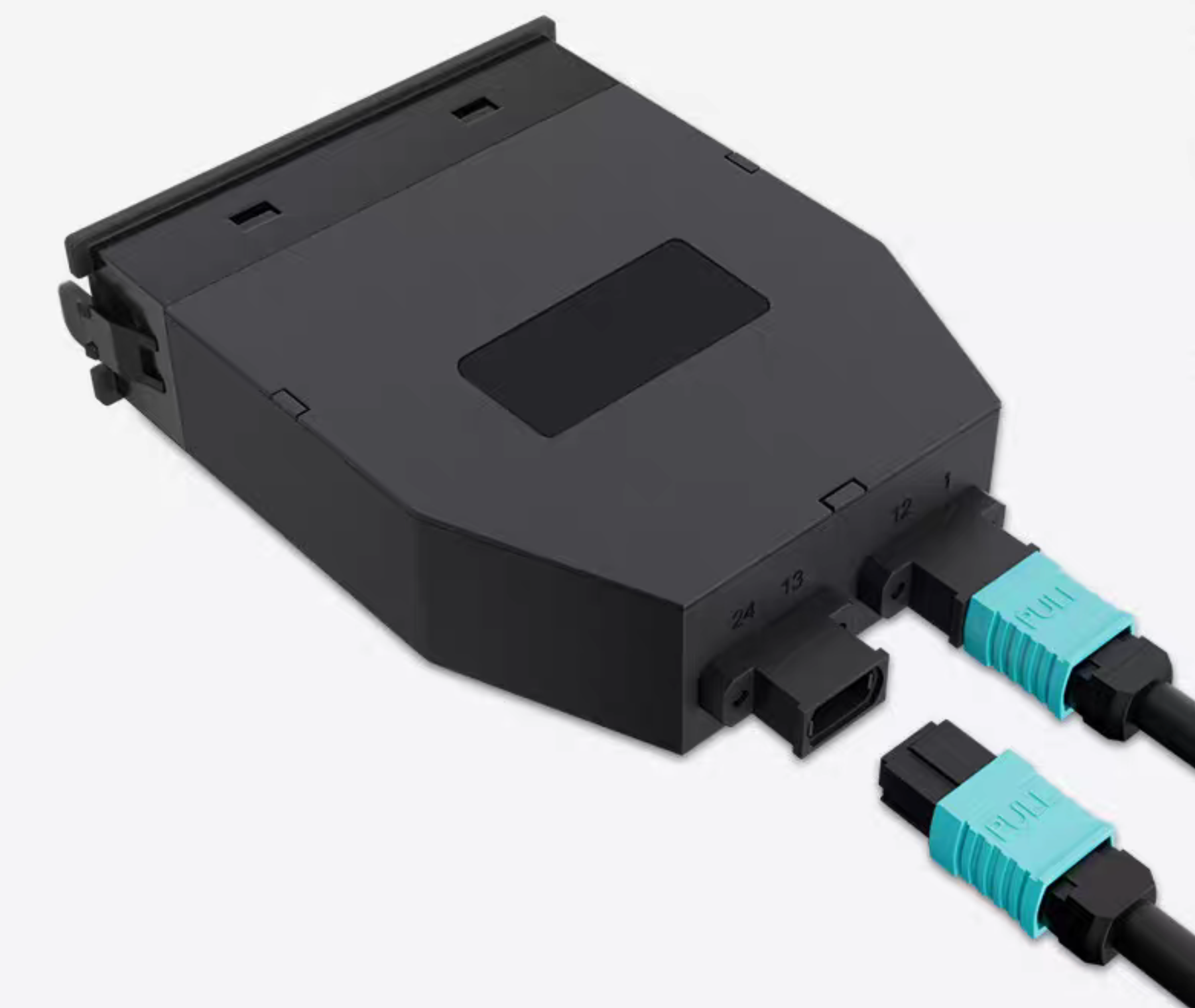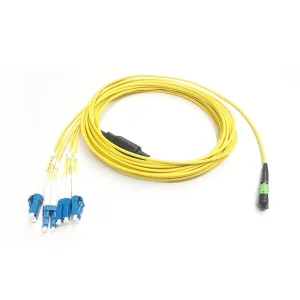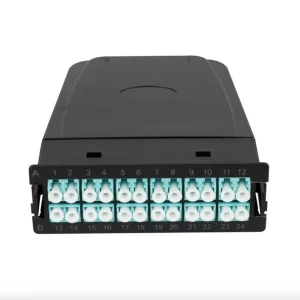
OEM MM OM5 12fo MPO To LC, 12fibers MTP to LC 0.3m Fan-out Patch Cord Manufacturers, Quotes

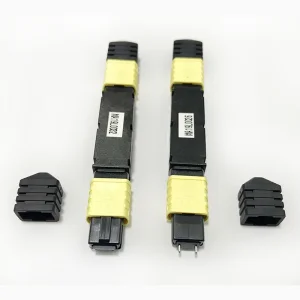
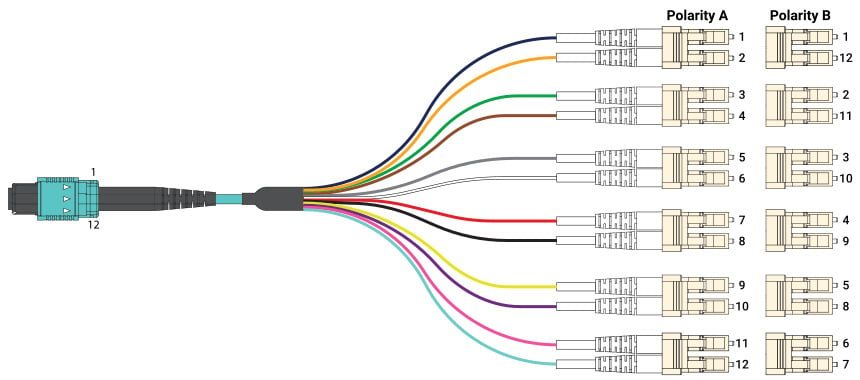
- Connector A: MPO-12 MTP-12 - Connector B: 12 * LC Multimode (Beige color other color is optional) - Fiber type: (12 color code) Multimode OM5 50/125 - Polarity: Type B (ex-work) Other optional: Type A, Type C - Cable OD: 0.9mm - Cable type: Loose tube - Fanout length: 0.3m (30cm) - IL: Ultra Low Loss (0.35dB) - RL: 35dB - Application: High density patch panel    

Product Description

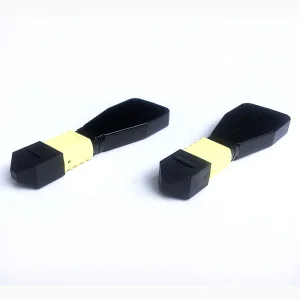
MPO to LC or MTP to LC fan-out patch cords connect high-density multi-fiber MPO/MTP network switches or transceivers directly to lower-speed, discrete LC-ports.

It consolidates space and streamlines data center migrations by splitting a single high-bandwidth backbone line into manageable individual connections.
Product Specifications
Fiber Count
12fo
Fiber Type
Multimode OM5 50/125
Connector Type
MPO Male / Female, MTP Male / Female
Polarity Type
Type-A (Straight-Through), Type-B (Rollover), Type C (Paired Cross)
Connector A Side
MPO-12, MTP-12
Connector B Side
LC, SC, ST, FC, E2000 multimode
Cable Type
0.9mm, LSZH, loose tube
Cable Length
30cm (0.3M)
Key Applications
Data Center & AI Data Center
Star Link Connectivity Center
Metro, Bank, and Enterprise Networks
Direct Device-to-Switch Connectivity
Backbone-to-Device Routing
High-Density Patching
Optical Performance Parameters
Type Single Mode (APC Polish) Single Mode (UPC Polish) Multi Mode (PC Polish)
Fiber Count 8, 12, 24 etc. 8, 12, 24 etc. 8, 12, 24 etc.
Fiber Type G652D, G657A1 etc. G652D, G657A1 etc. OM1, OM2, OM3, OM4, etc.
Max. Insertion Loss Elite Low Loss Standard Elite Low Loss Standard Elite Low Loss Standard
IL Value ≤0.35 dB ≤0.75 dB ≤0.35 dB ≤0.75 dB ≤0.35 dB ≤0.60 dB
Return Loss ≥60 dB ≥60 dB N/A
Durability ≥500 times ≥500 times ≥500 times
Operating Temperature -40℃ to +80℃ -40℃ to +80℃ -40℃ to +80℃
Test Wavelength 1310nm 1310nm 1310nm
Insert-pull Test 1000 times < 0.5 dB
Interchangeability < 0.5 dB
Anti-tensile Force 15kgf
OM5 Fiber Technology & Overview

OM5 Fiber (Wideband Multimode Fiber - WBMMF) is an advanced, lime-green optical cable designed for high-speed, next-generation data centers.

It supports multiple wavelengths (850nm to 953nm) to deliver 40G, 100G, and 400G Ethernet over a single pair of fibers, significantly reducing cable complexity and infrastructure costs.

It is primarily built for enterprise networks and cloud storage data centers needing to consolidate fiber counts. Its core/cladding size is 50/125μm, identical to OM3 and OM4, ensuring backward compatibility.

Short-Wavelength Division Multiplexing (SWDM): OM5 is the first multimode fiber designed to support SWDM, allowing it to carry at least four separate wavelengths simultaneously on a single fiber pair.

OM3 vs OM4 vs OM5 Key Comparisons
OM3 Fiber: Optimized for 10Gbps to 40Gbps over short building distances.
OM4 Fiber: Upgraded version of OM3 with higher bandwidth for longer 40G/100G links.
OM5 Fiber: Engineered specifically for SWDM transmission to reduce overall backbone cable counts.
Feature OM3-300 OM4 OM5
Jacket Color Aqua Aqua / Violet Lime Green
Core Diameter 50 μm 50 μm 50 μm
Core Cladding 125 μm 125 μm 125 μm
Wavelengths Supported 850 nm 850 nm 850 nm to 953 nm
10G Ethernet Max Distance 300 meters 550 meters 550 meters
40G / 100G Max Distance 100 meters 150 meters 150 meters
SWDM Support No No Yes (4 channels)
Frequently Asked Questions
What is the main function of MPO/MTP to LC fan-out patch cords?
They connect high-density multi-fiber switches or transceivers directly to lower-speed, discrete LC-ports. This splits a single high-bandwidth backbone line into manageable individual connections, optimizing space and streamlining migrations.
How does OM5 fiber differ from OM3 and OM4 multimode fibers?
The main differences lie in bandwidth capacity, transmission distance, and wavelength support. OM5 is specifically designed to support Short-Wavelength Division Multiplexing (SWDM), carrying multiple wavelengths (850nm to 953nm) over a single fiber pair, whereas OM3 and OM4 are optimized for 850nm.
What is the advantage of using OM5 for 40G/100G/400G networks?
By supporting SWDM technology, OM5 can transmit high-speed data using fewer fibers. This dramatically reduces the total cable counts, leading to simplified cable management and lower infrastructure costs in high-density data centers.
What polarity options are available for MPO/MTP fan-out patch cords?
These cords are available in three polarity configurations: Type-A (Straight-Through), Type-B (Rollover), and Type-C (Paired Cross), allowing compatibility with various network architecture designs.
Can OM5 fiber be integrated with existing OM3 and OM4 networks?
Yes. OM5 has a core/cladding diameter of 50/125μm, which is identical to OM3 and OM4, rendering it fully backward-compatible with legacy multimode cabling infrastructure.
What are the mechanical and thermal limitations of these assemblies?
They feature a operating temperature range of -40℃ to +80℃, durability of ≥500 mating cycles, and an anti-tensile strength rating of 15kgf.

Related Products