Discover our primary selection of enterprise-grade active transceivers, passive attenuators, and distribution infrastructure engineered to maximize network reliability.
As corporate IT departments, data centers, and hyperscale cloud providers scale workloads to support AI (Artificial Intelligence), High-Frequency Trading (HFT), and edge computing pipelines, bandwidth bottlenecks at the access and aggregation layers have prompted a massive migration. The historical reliance on 10G and 40G connections is rapidly yielding to 100G Ethernet platforms, with Short-Range (SR) optics serving as the core interconnect medium.
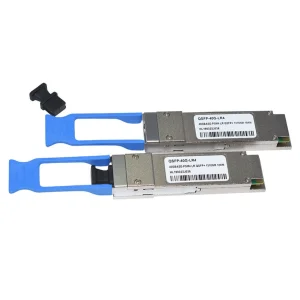
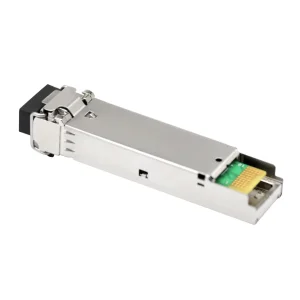
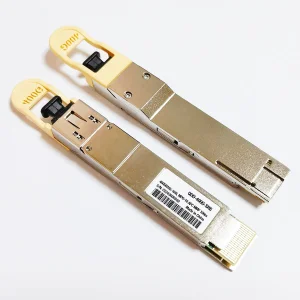
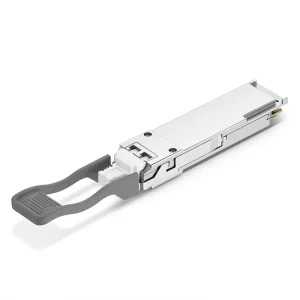
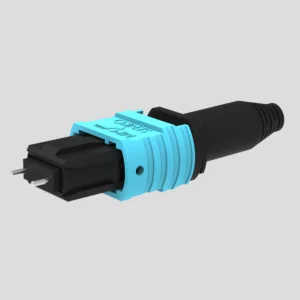
Modern short-reach architectures primarily rely on 850nm Vertical-Cavity Surface-Emitting Lasers (VCSELs) operating over multi-mode optical fiber (MMF). This paradigm offers a highly cost-effective trade-off compared to single-mode fiber (SMF) equivalents. While single-mode optics utilize sophisticated distributed feedback (DFB) lasers designed to push data over tens of kilometers, short-range transceivers such as the QSFP28 100GBASE-SR4 utilize cheaper laser chips, simplified optical coupling layouts, and standard MPO connections, resulting in a reduction in overall capital expenditure (CapEx).
Understanding the exact optical transceiver architecture is crucial when selecting fiber routing topologies. Buyers typically choose between three design approaches:
| Transceiver Standard | Connector Type | Fiber Count Required | Wavelengths (nm) | OM3 Reach (m) | OM4 Reach (m) |
|---|---|---|---|---|---|
| 100GBASE-SR4 | MPO-12 (MTP) | 8 Fibers | 850nm | 70m | 100m |
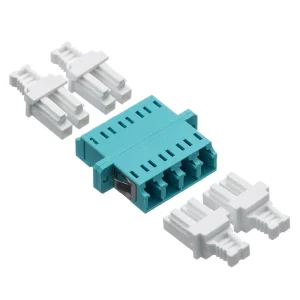
| 100G QSFP28 BiDi | Duplex LC | 2 Fibers | 850nm, 900nm | 70m | 100m |
| 100G SWDM4 | Duplex LC | 2 Fibers | 850 / 880 / 910 / 940nm | 75m | 100m (150m on OM5) |
Analyzing the scale, precision, and technological integration of Shenzhen and Wuhan based optoelectronic clusters.
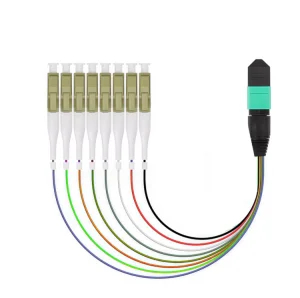
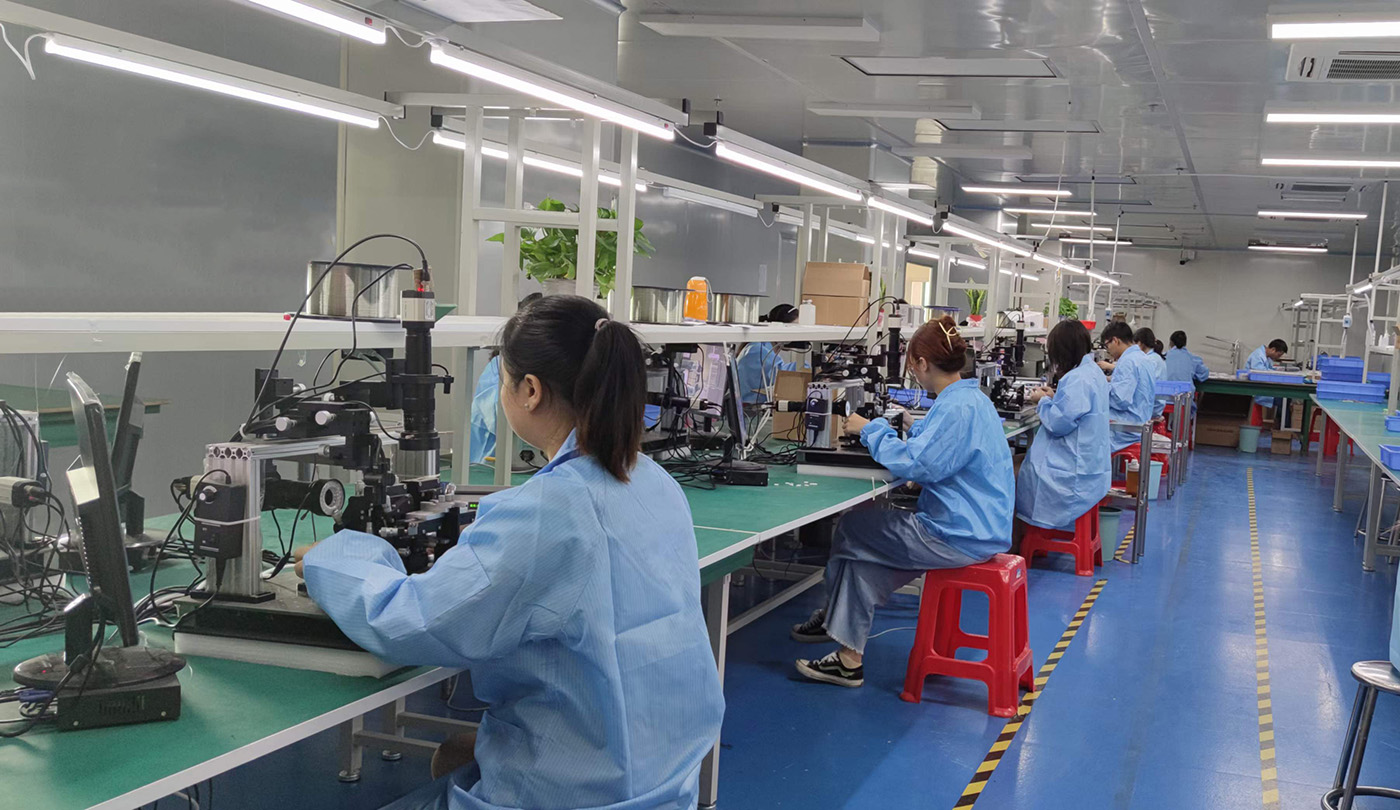
The concentration of raw material providers, sub-assembly fabricators (TOSA/ROSA), optical fiber draw towers, and packaging facilities within Chinese high-tech parks guarantees a resilient supply chain. Chinese optical factories can pivot rapidly to deliver massive orders. By combining optical design with in-house MTP/MPO patch cable fabrication, manufacturers like Kocent Optec can customize the entire link budget (transceiver to patch cord to attenuation levels) under one unified factory floor.
Modern 100G transceivers demand sub-micron component alignment accuracy during manufacturing. Historically, this step required high labor overhead. Leading Chinese optical manufacturers have invested heavily in automated alignment workstations, robotic chip-on-board (COB) wire bonders, and high-volume optical spectrum analyzers (OSAs). This transition guarantees repeatable module-to-module signal integrity and minimizes insertion losses to less than 0.15dB for optical couplers.

A core challenge in deploying third-party transceivers is vendor lock-in. Top-tier Chinese manufacturers host compatibility testing centers equipped with native switch architectures from leading brands like Cisco, Arista, Juniper, Dell, and Huawei. By custom-coding the EEPROM parameters of the transceiver module to mimic OEM characteristics, the modules achieve seamless interoperability, bypassing error codes or system link-disable protocols.
Leading factories align their validation processes with Bellcore/Telcordia GR-468-CORE specifications. Transceivers undergo thermal shock cycles (operating within -40°C to +85°C environments), damp heat exposure, mechanical shock tests, and accelerated aging procedures. This ensures reliability for applications deployed in hostile environments, such as outdoor cabinet telecom installations.
Established in 2012 in Hong Kong as a high-tech communication enterprise, Kocent Optec Limited has grown to become one of China's premier fiber optic termination product manufacturers and end-to-end optical solution providers.
We are fully dedicated to designing, developing, and manufacturing high-performance fiber optic communication products. Our portfolio spans the complete spectrum of passive termination systems and active transceivers designed for telecommunication networks, enterprise infrastructures, and next-generation cloud data centers.
By leveraging our extensive engineering experience and deep manufacturing capacities developed over a decade, we enhance network performance for our global clients, enabling them to outperform their competitors in bandwidth delivery and link reliability.

Our constant goal is mutually beneficial, win-win cooperation. Many of our custom OEM and ODM fiber systems have successfully won competitive tenders for national telecom deployments globally, satisfying strict performance and regulatory requirements.
Deploying 100G short-range systems across various architectural topologies and operating conditions.
Deploying Leaf-Spine topologies using QSFP28 100G SR4 modules connected to 12-fiber MTP trunks. This enables dynamic scalability and ultra-low latency profiles for multi-tenant cloud networks handling massive east-west data traffic.
Utilizing high-quality 100G BiDi transceivers to upgrade old 10G LC multi-mode infrastructure. Legacy physical layer cabling is reused, minimizing CapEx while enabling ultra-low transmission latency for algorithmic trading setups.
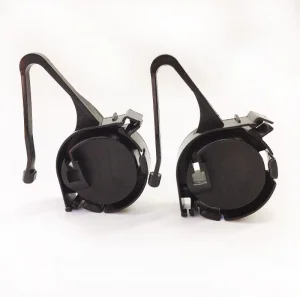
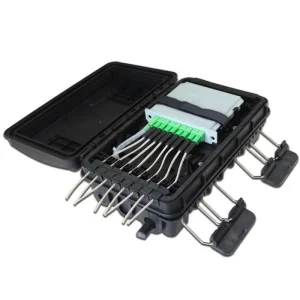
Integrating ruggedized patch cords, outdoor splitter closures, and high-speed transceivers at base stations. Highly resistant materials like PA66 Nylon FTTH drop wire clamps secure connections against environmental stresses.
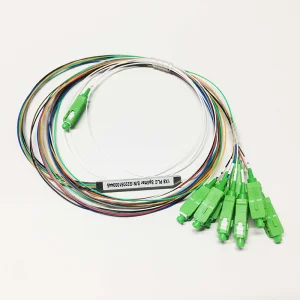
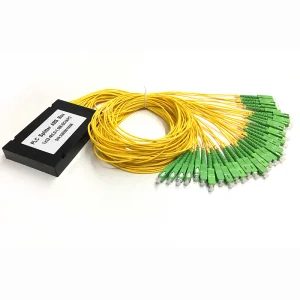
Essential components for fiber termination, signal splitting, and density routing inside local loops and distributions hubs.
Procuring raw fiber infrastructure and active modules requires careful vetting. Technical buyers should focus on these critical operational checkpoints:
Ensure all modules are shipped with Digital Optical Monitoring (DOM) enabled. This lets network managers monitor real-time operating metrics—such as optical output power, receiver sensitivity, operating temperature, and laser bias current—to preemptively address link issues.
Insertion loss is highly sensitive to connector alignment. Fiber endpoints must comply with IEC 61300-3-35 standards for geometric structure and surface scratches. Utilizing premium components like Senko connector housings ensures consistent mating performance.
All 100G QSFP28 modules must conform to the Multi-Source Agreement (MSA) SFF-8665 and SFF-8636 specifications, as well as IEEE 802.3bm 100GBASE-SR4 standards, to ensure physical, electrical, and programming interoperability.
Direct technical answers to common queries regarding 100G short-range fiber configurations, design compatibilities, and optical link performance.
 KOCENT OPTEC