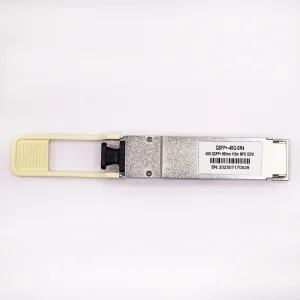
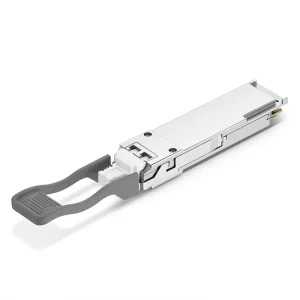
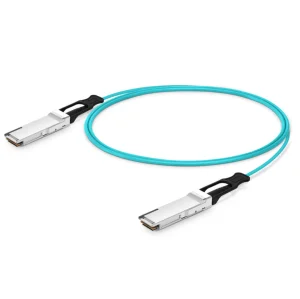
Explore our leading selection of industrial-grade active transceivers, standard optical loopbacks, breakout cables, and precision connector component assemblies.
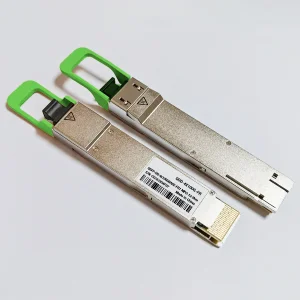
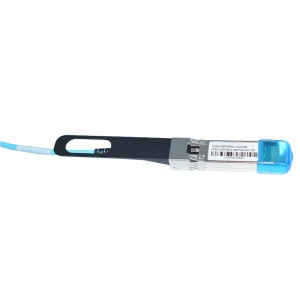
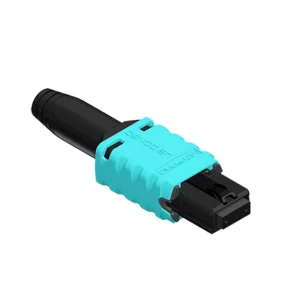
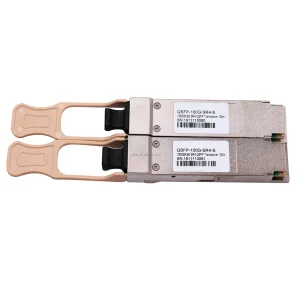
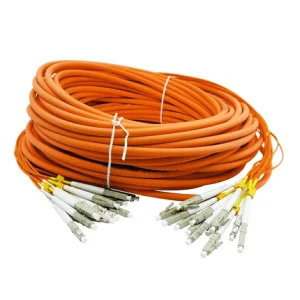
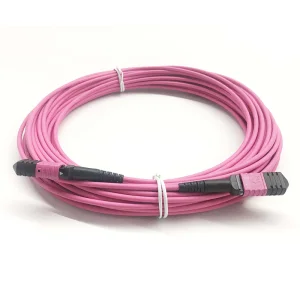
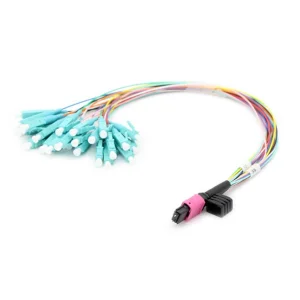
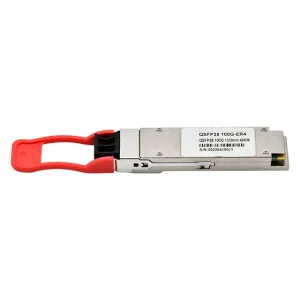
The rapid shift in computing architectures, fueled by Artificial Intelligence (AI), Machine Learning (ML), and high-performance computing (HPC) environments, has placed unprecedented demands on data center transmission rates. Conventional single-channel duplex fiber infrastructures are no longer viable for high-throughput networks. In this landscape, the MPO-12 (Multi-fiber Push-On) and MTP-12 (Mechanical Transfer Push-On) interconnect systems serve as the critical framework for ultra-high-density physical layer transmission.
Initially developed to consolidate multiple duplex connections into a singular, high-density interface, MPO-12 configurations utilize a precision-molded MT ferrule containing 12 linear fibers. This design optimizes spatial footprints in patch panels, minimizes insertion loss discrepancies, and establishes an evolutionary path toward parallel optics. It supports transitions to 40G, 100G, 400G, and 800G transmission rates, demonstrating the design efficiency of multi-fiber assemblies.
"The core architectural advantage of 12-fiber cabling is its flexibility. It integrates easily into legacy base-12 systems and interfaces seamlessly with newer Base-8 transceivers, providing network operators with a structured way to scale bandwidth as capacity demands grow."
Manufacturing ultra-high-density MPO-12 cabling requires precision engineering. Sub-micron physical alignment tolerances are necessary to ensure optimal optical coupling. Critical engineering components include:
Established in 2012 in Hong Kong as a high-tech communications enterprise, Kocent Optec Limited has grown into one of China's leading manufacturers and providers of optical fiber termination systems. We specialize in producing both passive components and active communication products, designing custom end-to-end solutions for telecommunication networks, enterprise infrastructures, and modern hyperscale data centers.
By leveraging our extensive production capacity and manufacturing experience, we help our partners optimize link performance, scale their distribution infrastructure, and maintain competitive positioning in demanding markets. We prioritize customer collaboration, acting as a dedicated engineering partner rather than a simple supplier. We ensure that our design advancements directly improve our clients' real-world network operations.

Our manufacturing practices are designed to deliver reliable performance across all high-density interconnect systems.
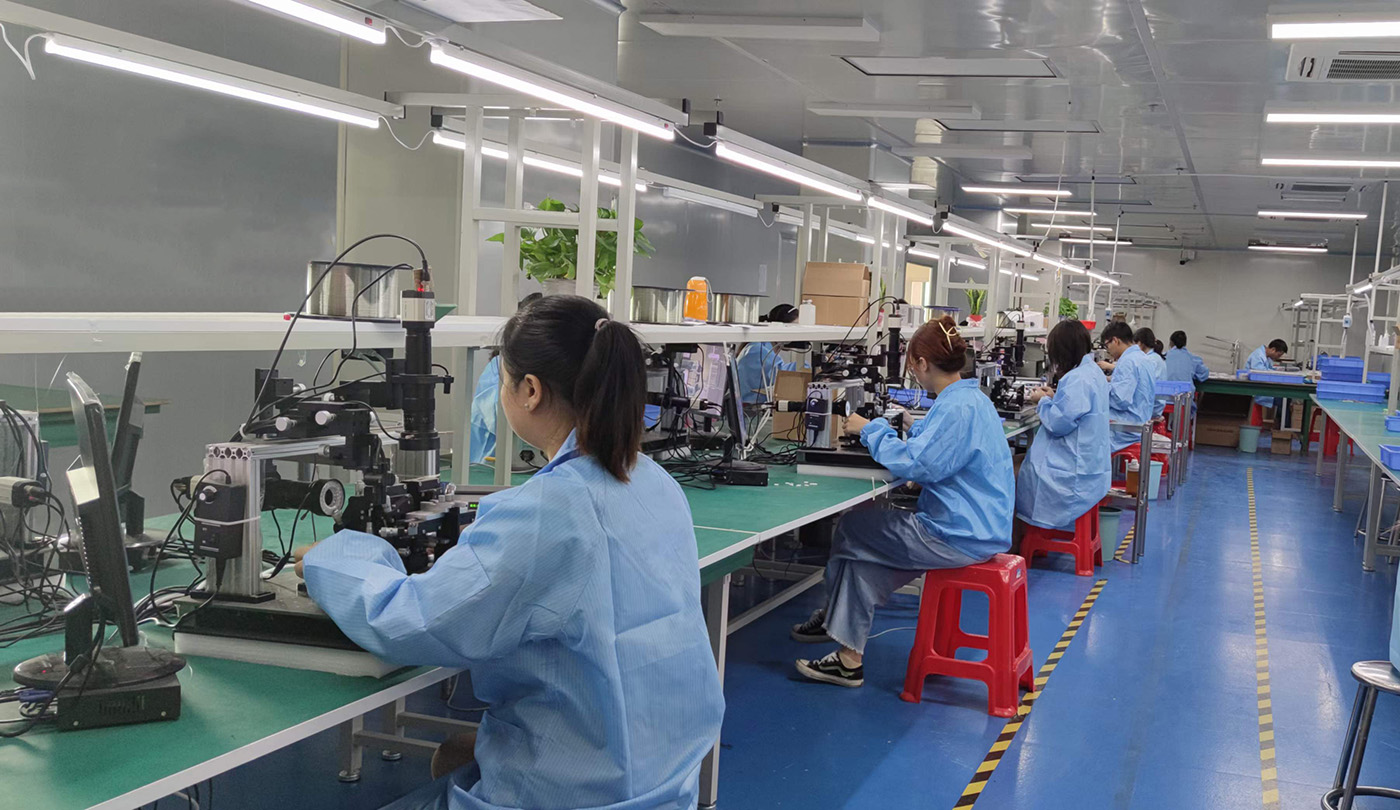
With over 13 years of specialized manufacturing experience, our production lines utilize high-precision polishing fixtures and optical alignment machinery to consistently deliver low-insertion-loss MPO/MTP products.
Every cable assembly and transceiver undergoes rigorous testing before shipment. This includes 3D interferometer verification, insertion loss and return loss measurements, and optical spectrum analysis.
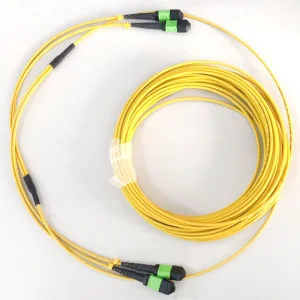
We provide tailored configurations for high-speed transceivers, fan-out assemblies, and breakout harnesses. This customization supports diverse data rates, custom lengths, and specialized boot configurations.

Operating a high-density fiber plant requires strict adherence to international optical standards. At Kocent Optec, we employ mature scientific methodologies to maintain quality control across all stages of production. Our cleanrooms are equipped with real-time test fixtures that measure geometry and optical metrics.
Our quality assurance framework utilizes automated testing systems to monitor performance. By verifying return loss parameters (exceeding 60dB for APC single-mode terminations) and insertion loss properties (averaging under 0.25dB), we provide the signal stability required for sensitive transceiver links, including high-speed PAM4 and coherent optics architectures.
Years of Manufacturing Expertise
Pre-shipment Tested & Certified
Global Telecom Operator Network Partners
Next-Generation Transmission Support
12-fiber cabling infrastructure is widely deployed in high-capacity communication frameworks, providing the baseline density required for scalable network growth. Understanding how these systems integrate into broader network topologies is critical for design engineers and network operators.
Modern cloud architectures utilize leaf-spine network designs to minimize latency and maximize east-west traffic flow. These deployments rely heavily on structured high-density fiber backbones. Our 12-fiber breakout solutions enable the migration from 10G/40G ports to 100G, 400G, and 800G switches. By using low-loss MPO trunk cables, operators can consolidate multiple duplex runs into a single connector, optimizing airflow and space utilization within cable pathways.
5G architectures demand high bandwidth and minimal latency at the network edge. This requires distributing dense fiber arrays to Remote Radio Heads (RRH) and baseband units (BBU). Deploying 12-fiber assemblies protects outdoor installations against environmental stressors while providing the fiber count needed to support multi-channel inputs and outputs (MIMO) across active antennas.
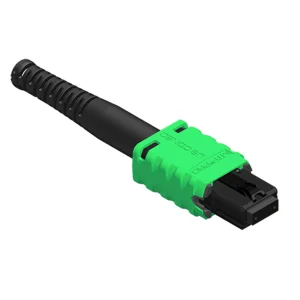
AI clusters utilize specialized, high-performance network interfaces (such as InfiniBand or ultra-fast Ethernet) that require parallel optical links. An 800G or 400G transceiver port running PAM4 modulation requires clean, reliable fiber paths to prevent packet re-transmissions. Our MPO-12 patch cords and premium US Conec connector systems are engineered to withstand the thermal and physical demands of these high-performance environments.
Over more than a decade of manufacturing and service, we have built a diverse global customer base spanning East Asia, Southeast Asia, the Middle East, Eastern Europe, Western Europe, Northern Europe, South America, North America, North Africa, and South Africa.
We focus on supply chain integration and product compliance, ensuring our OEM and ODM products regularly win tenders from major telecom operators and meet strict end-user specifications. Our systems are engineered to integrate smoothly into complex telecommunication grids, complying with international carrier requirements.
Our active and passive products are deployed across the networks of major global telecommunication carriers:
As networks scale, optical infrastructure technologies continue to evolve. System designers must plan their physical layer cabling to accommodate these future shifts in bandwidth and connector density.
While 12-fiber cabling remains a widely deployed standard for structured cabling systems, newer high-speed transceivers are increasingly using Base-8 or Base-16 optical engines. For example, 400G-DR4 systems typically use 8 fibers (4 Tx and 4 Rx). Our MPO-12 breakout systems handle these requirements by routing signals via fanout harnesses, ensuring compatibility with older Base-12 patch panels without leaving fibers unused.
To maximize patch panel density, manufacturers are adopting VSFF interfaces, such as the MDC and SN connector systems. These connectors allow multiple duplex links to fit within a standard LC footprint, providing another way to scale density alongside high-density multi-fiber MPO connectors.
As transmission rates scale toward 1.6T and beyond, traditional pluggable transceivers encounter thermal and electrical limits. Silicon photonics and co-packaged optics (CPO) relocate the optical engine closer to the host ASIC. This shift relies on ultra-low-loss fiber arrays and multi-fiber PM (Polarization Maintaining) assemblies to manage laser inputs, highlighting the importance of precision manufacturing in modern fiber networks.
Expert technical answers addressing common queries about MPO-12 configurations, performance standards, and network design.
MTP is a registered trademark of US Conec and refers to a premium MPO connector designed with enhanced mechanical and optical features. MTP connectors feature a floating ferrule that helps maintain physical contact under load, elliptical guide pins to reduce guide pin hole wear, and a removable housing that allows for field rework or polarity changes. These mechanical refinements help ensure consistent, low-insertion-loss performance across complex network paths.
Managing polarity ensures that transmit channels align correctly with receive channels. Method A (Straight-through) routes Fiber 1 to Position 1 on both ends, requiring a flip in the patch cord on one end to complete the circuit. Method B (Reversed) flips the positions completely (Fiber 1 to Position 12, Position 2 to Position 11), aligning Tx and Rx across the trunk without requiring special patch cords. Method C (Pair-flipped) flips adjacent pairs (1-2 becomes 2-1), which is typically used in duplex-based architectures. Consistent planning across the entire network is essential to avoid routing errors.
In multi-fiber connectors, minor surface anomalies can cause air gaps or misalignments, increasing insertion and return loss. 3D interferometry measures ferrule geometry, fiber protrusion, and flatness across all 12 fibers. Verifying these dimensional tolerances ensures reliable physical contact across all channels when mated, preventing signal degradation in high-speed links.
PAM4 modulation uses four signal levels to transmit twice as much data per cycle as traditional NRZ systems. However, this modulation scheme makes the signal more sensitive to optical noise and attenuation. As a result, the insertion loss budget for 400G and 800G links is much tighter—often limited to less than 1.5dB or 2.0dB for the entire channel. Using ultra-low-loss MPO connectors (averaging under 0.35dB) is critical to maintaining a healthy signal margin.
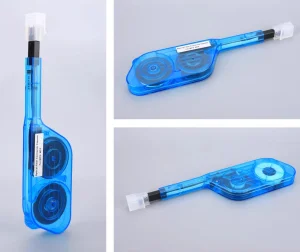
Dust and skin oils on a ferrule face can block optical signals or permanently damage mated fibers. Multi-fiber connectors should be inspected with a fiber inspection scope before mating and cleaned using dry-cleaning tools (such as One-Click clickers) or specialized cleaning cassettes. If dry cleaning does not remove the contaminant, wet-dry cleaning using optical-grade solvent should be performed.
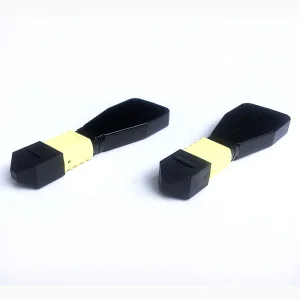
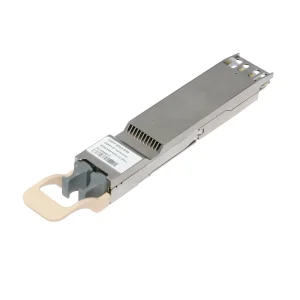
Explore our full line of loopbacks, transceivers, cable management accessories, and clean-up tools designed for modern telecom and data center deployments.
 KOCENT OPTEC