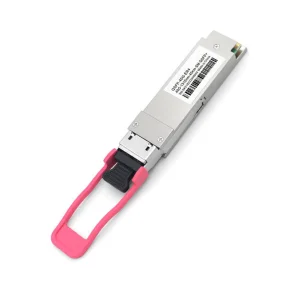
Engineered for low latency, low power consumption, and reliable bandwidth scaling
Standard Line Rate
VCSEL Wavelength
OM4 MMF Transmission Distance
Ultra-Low Power Consumption
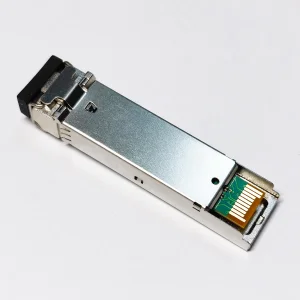
The global demand for bandwidth is experiencing an unprecedented surge, driven by artificial intelligence (AI) training clusters, cloud computing workloads, and high-frequency financial processing. At the core of this transmission revolution is the 25G SFP28 SR (Short Reach) optical transceiver module. Designed to succeed the older 10G SFP+ standard, SFP28 offers 2.5 times the bandwidth without scaling the physical spatial footprint, maintaining high-density compatibility within modern top-of-rack (ToR) switches.
Operating over Multi-Mode Fiber (MMF) at a nominal wavelength of 850nm, the 25G SFP28 SR module utilizes a Vertical-Cavity Surface-Emitting Laser (VCSEL) transmitter combined with a PIN photodetector. This cost-effective pairing guarantees robust short-range signal integrity (up to 70m on OM3 and 100m on OM4 or OM5 optical cabling), striking the perfect balance between deployment cost, cooling efficiency, and structural reliability.
Historically, enterprise networks relied heavily on 10G lanes. However, as processing units evolved to multi-core architectures, 10G links quickly became bottlenecked. The industry faced a choice: jump to 40G QSFP+ or transition to 25G SFP28. Due to the modular efficiency of single-channel architectures, the market shifted definitively toward 25G. By using a single 25Gbps physical lane, SFP28 avoids the complex 4-lane layout required by 40G. This results in simplified routing on switch motherboards, lower thermal signatures, and drastically reduced latency.
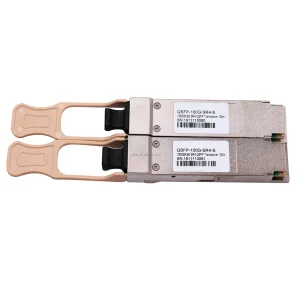
Globally, telecom providers and enterprise networks are structuring their leaf-spine networks to handle 25Gbps downlinks to servers and 100Gbps (4x25G) or 400Gbps uplinks. The 25G SFP28 SR has established itself as the ultimate standard for short-reach node-to-node routing, enabling high-performance virtualization and rapid data dissemination across cloud infrastructure platforms.
When sourcing optical transceivers from China, global procurement teams must look past simple unit pricing. Achieving a resilient, low-latency network requires strict verification of product engineering, compatibility chips, and supply chain stability. Here are the core metrics when requesting quotes:
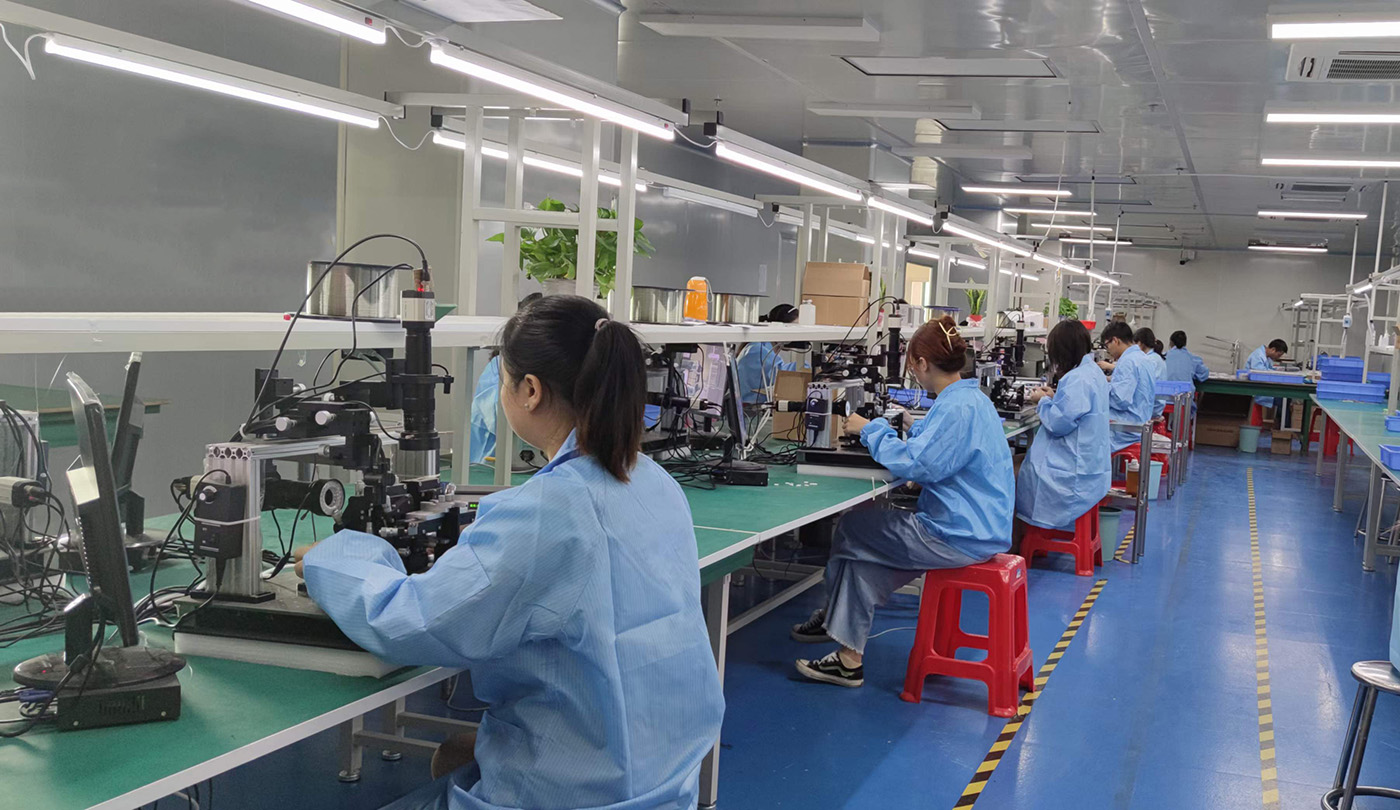
China's optical communications manufacturing ecosystem has evolved from basic assembly to high-precision, automated Smart Manufacturing (Factory 4.0). Leading facilities leverage automated robotic alignment tools, real-time MES (Manufacturing Execution Systems) tracking, and custom-programmed automatic testing rigs. This level of automation drastically minimizes human assembly error and ensures that the Bit Error Rate (BER) of every shipped unit remains below the strict 1E-12 threshold.
Furthermore, China's localized semiconductor and optics supply chain provides unmatched agility. In periods of raw material shortages, integrated factories can pivot production schedules swiftly, ensuring that lead times remain measured in days rather than months. By choosing a manufacturer with strong localized supply chain ties and rigorous quality control protocols, global enterprise buyers secure predictable shipping schedules and stable component cost architectures.
Kocent Optec Limited established in 2012 in Hongkong as a hi-tech communication enterprise, is one of China's leading fiber optic termination product manufacturer and solution provider.
We're dedicated to developing and manufacturing fiber optic communication products ranging from passive to active categories for telecommunication networks, enterprise networks and data centers.

By leveraging our extensive experience and excellent production capacity we gained over the years, we magnify the outcome for our valuable customers, which ultimately expands their core competencies and helps them outperform competitors. We place emphasis on customer collaboration, and we define ourselves as your valuable partner in fiber optic connection solutions. We believe our differentiators are your perceived advantages.

With more than 13 years of experience in manufacturing telecommunication fiber optic products, we follow strictly fiber optic industry standards by using mature scientific methods to deliver your products on time and ensure that 100% products are tested and inspected before shipment.
Years of sales and service experience have enabled us to win customers from different regions. Today, we have customers from East Asia, Southeast Asia, Middle East, Eastern Europe, Western Europe, Northern Europe, South America, North America, North Africa, and South Africa.
Win-win cooperation is our constant goal. Many our OEM and ODM products won the Telecom Operator tender and satisfy end-user request.
Our main terminal telecom operators include:
To truly understand why the 25G SFP28 SR is the preferred choice for enterprise data center applications, we must analyze its structural components. The module consists of three primary building blocks: the optoelectronic devices (transmitter optical sub-assembly - TOSA, and receiver optical sub-assembly - ROSA), the electrical interface (SFI), and the diagnostic subsystem (DDM).
The TOSA converts differential electrical signals into optical signals. It features an 850nm VCSEL. VCSELs are surface-emitting semiconductor laser diodes that emit high-power, circular, low-divergence optical beams. This optical profile matches the core of multi-mode fibers perfectly, enabling efficient coupling with minimal insertion loss. Additionally, VCSELs are highly reliable and cheap to test at the wafer level, translating to cost benefits for enterprise buyers.
On the receiver side, the ROSA converts the incoming optical pulses back into electrical current. It integrates a high-speed PIN photodiode and a Transimpedance Amplifier (TIA). The PIN diode provides fast response times to match the 25Gbps NRZ (Non-Return-to-Zero) modulation format, while the TIA amplifies the micro-amp level photodiode current into a clean differential voltage output for the host board.
A crucial factor in 25G link reliability is the host switch's Forward Error Correction (FEC) configuration. Under IEEE 802.3by standards, the 25G SFP28 SR can operate in three modes: No-FEC, Base-R FEC (CL74), or RS-FEC (CL91). Activating RS-FEC allows the link to correct single-bit errors dynamically, extending the transmission range and reliability over older fiber infrastructure, albeit introducing a few nanoseconds of processing latency.
Different industries leverage the 25G SFP28 SR transceiver in specialized ways to solve unique connectivity and computational challenges:
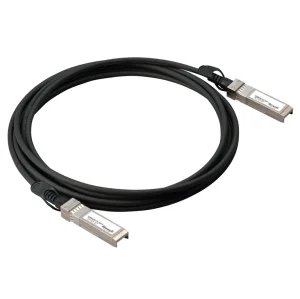
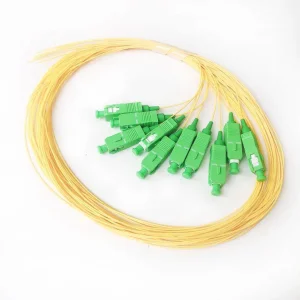
In massive hyperscale data centers, servers are organized into clusters of hundreds of thousands of nodes. The connectivity within a single rack between servers and top-of-rack (ToR) switches is primarily short-reach. While copper DACs (Direct Attach Cables) are used for very short runs (<3 meters), optical transceivers paired with OM4 patch cords are deployed for inter-rack links and high-bandwidth leaf-switch distribution, providing structural weight savings and absolute immunity to electromagnetic interference (EMI).
For financial systems, microsecond latency translates to millions of dollars. SFP28 SR modules configured with No-FEC on premium fiber pathways deliver physical layer transmission speeds with negligible packet delay, allowing financial servers to execute trades in real-time without processing bottlenecks.
In telecommunication setups, the SFP28 SR module is deployed inside distributed units (DU) and active antenna units (AAU). Operating at 25Gbps line speeds, these modules support the eCPRI (Enhanced Common Public Radio Interface) protocol, which is essential for transporting high-bandwidth wireless signals between the cell tower antenna and the base station baseband processing units.
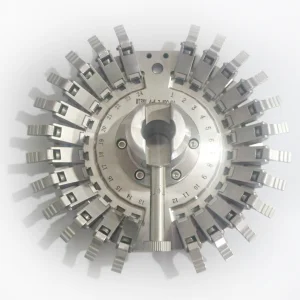
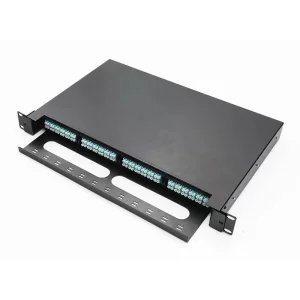
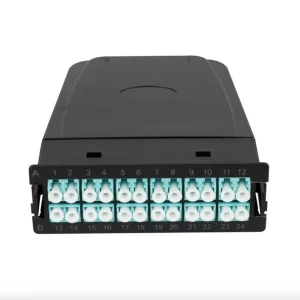
From active transceivers to passive termination panels and tools
 KOCENT OPTEC