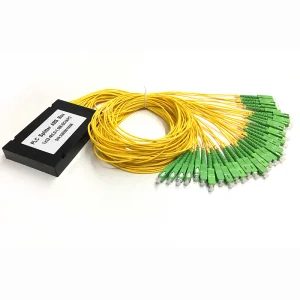
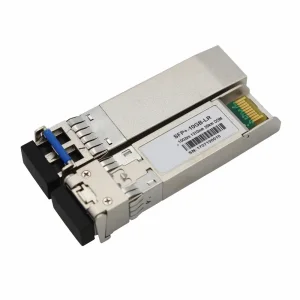
Premium components designed for high-density networks and multi-service optical infrastructure.
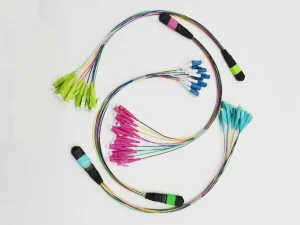
A deep engineering dive into structural mechanics, optical path configurations, and last-mile efficiency.
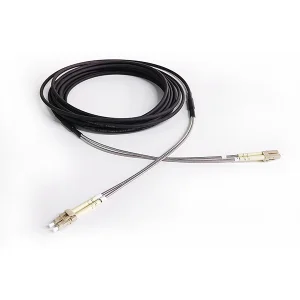
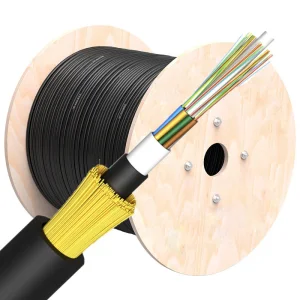
A 1 Core Fiber Optic Cable (commonly called a simplex fiber optic cable) contains a single, independent optical glass strand within its protective outer construction. Operating primarily with single-mode core properties (9/125 μm), these cables are meticulously designed to handle bi-directional traffic using wavelength division multiplexing (WDM) or uni-directional signals in high-density backbones.
Engineered using either tight-buffered or loose-tube configurations, our 1 Core cables feature advanced strength members—such as Aramid Yarn (Kevlar) or Fiber Reinforced Plastic (FRP) rods—to guarantee mechanical integrity under intense tensile stress. Covered in Low Smoke Zero Halogen (LSZH) or Polyurethane (PU) protective jackets, they provide a reliable, low-attenuation path for data transmission in the most demanding physical spaces.
For telecom service providers, system integrators, and industrial engineers, sourcing certified, low-attenuation 1 Core fiber drop cables is critical to minimizing system power budgets and ensuring physical link lifespan.

Established in 2012 in Hong Kong as a hi-tech communication enterprise, Kocent Optec Limited has grown to become one of China's leading fiber optic termination product manufacturers and solution providers.
We are dedicated to developing and manufacturing fiber optic communication products ranging from passive to active categories for telecommunication networks, enterprise networks, and cloud-scale data centers. By leveraging our extensive experience and excellent production capacity gained over the years, we magnify the outcome for our valuable customers, expanding their core competencies and helping them outperform competitors.
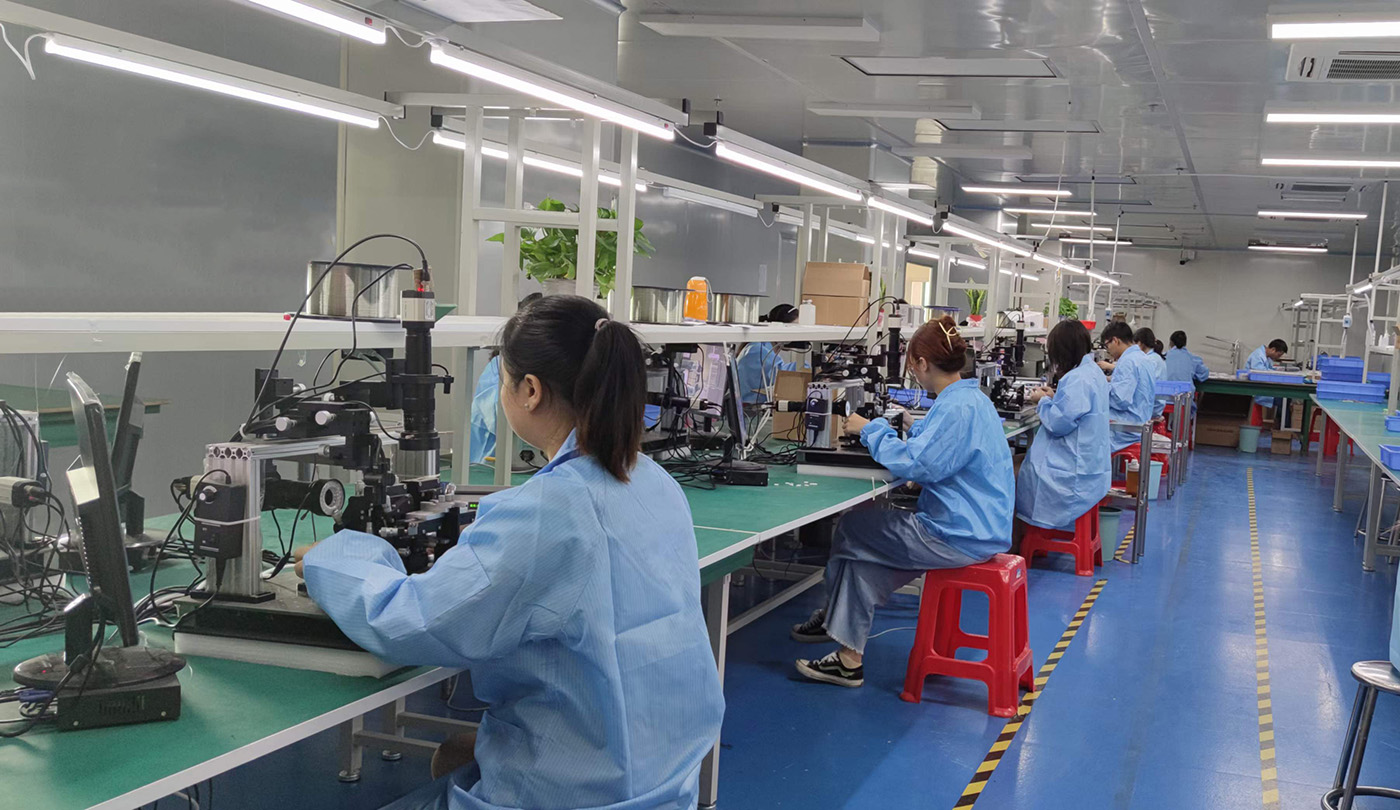
With more than 13 years of manufacturing expertise, we follow strictly fiber optic industry standards using mature scientific methods. We ensure that 100% of our products undergo rigorous testing and inspection before shipment, delivering critical consistency and reliability for global network deployments.
Every single drop cable and connectorized component is tested for insertion loss, return loss, and geometric compliance before leaving our facility.
Many of our OEM and ODM products have won telecom operator tenders, satisfying the rigorous demands of end-users worldwide.
Founded in 2012, our decades-spanning engineering team develops high-performance physical layer solutions for dynamic networks.
Providing critical optical connectivity for smart grids, municipal fiber grids, and telecommunication expansions.
As global networks scale to accommodate multi-gigabit workloads, the demands on last-mile drop configurations have increased. Our 1 Core Fiber Optic Cables are vital in several macro-industry frameworks:
Providing the ultimate optical link between distribution points (splitters) and subscriber ONTs in residential and commercial blocks.
5G Small Cell Fronthaul:Delivering dedicated, low-latency, simplex single-mode optical paths to power small-cell densification in urban centers.
Industrial IoT & Grid Monitoring:Supporting smart grid monitoring systems with non-conductive, dielectric 1 Core cables immune to EMI/RFI interference.
Trusted by global tier-1 telecom operators across multiple continents.
Years of sales and service experience have enabled us to win customers from different regions. Today, we support networks in East Asia, Southeast Asia, the Middle East, Eastern Europe, Western Europe, Northern Europe, South America, North America, North Africa, and South Africa.
Compliant with ITU-T recommendations and International Electrotechnical Commission (IEC) standards.
| Parameter / Specification | Simplex Indoor Cable (G.657.A2) | Self-Supporting Bow-type Drop Cable | Tactical Field Cable |
|---|---|---|---|
| Fiber Count | 1 Core | 1 Core | 1 or 2 Cores |
| Attenuation (at 1310nm) | ≤ 0.35 dB/km | ≤ 0.35 dB/km | ≤ 0.40 dB/km |
| Attenuation (at 1550nm) | ≤ 0.21 dB/km | ≤ 0.21 dB/km | ≤ 0.25 dB/km |
| Min. Bending Radius (Dynamic) | 15 mm | 25 mm | 20 times Outer Diameter |
| Min. Bending Radius (Static) | 7.5 mm | 10 mm | 10 times Outer Diameter |
| Tensile Strength (Long / Short Term) | 100N / 200N | 300N / 600N | 600N / 1200N |
| Jacket Compound Material | LSZH (Low Smoke Zero Halogen) | UV-Resistant HDPE / LSZH | Thermoplastic Polyurethane (TPU) |
| Standards Compliance | ITU-T G.657.A2, RoHS, REACH | ITU-T G.657.A1/A2, IEC 60794 | MIL-PRF-85045, RoHS |
Engineered to adapt to distinct physical environments, geographical conditions, and regional standards.
In high-density apartment complexes and corporate office corridors, our ultra-bend-insensitive 1 Core cables are pulled through tight conduits and curved around baseboards without signal attenuation.
Integrating a high-tensile steel wire messenger, our self-supporting bow-type 1 Core cables withstand environmental loads (wind, ice, tension) in long overhead span installations between utility poles.
Specifically engineered with low-friction, high-density jackets, our micro-cables are optimized for long-distance pneumatic air-blowing into pre-installed micro-duct paths.
Ensuring ultra-low insertion loss path connections within server rack systems, bridging cross-connect cabinets to active multiplexing devices.
Innovative developments paving the way for next-generation multi-wavelength networks.
Integrating bio-based, recyclable LSZH materials to meet strict regional carbon-reduction frameworks without compromising flame retardant ratings (CPR B2ca).
Enabling bending radii down to 5mm to facilitate easy deployment along modern building infrastructure and complex internal raceways.
Optimizing core glass structures to support zero dispersion across multi-wavelength high-speed transmission platforms.
Clear, direct technical answers regarding selection, deployment, and optical characteristics.
G.652.D is the standard single-mode fiber with a minimum bending radius of about 30 mm. G.657.A2 is a bend-insensitive single-mode fiber optimized for tight spaces, allowing a minimum bending radius of 7.5 mm with minimal bend-induced optical loss.
By utilizing Wavelength Division Multiplexing (WDM) technologies, signals can be transmitted and received on different optical wavelengths (e.g., 1310nm for upload and 1490nm for download) simultaneously through a single strand of glass.
For indoor runs, LSZH (Low Smoke Zero Halogen) is highly recommended or required by local building regulations to prevent toxic smoke emissions during fire hazards. For outdoor installations, UV-stabilized High-Density Polyethylene (HDPE) or Polyurethane (PU) jackets are ideal for resisting environmental wear.
Aramid yarn (Kevlar) provides flexible tensile strength, making the cable easier to route through tight curves. FRP (Fiber Reinforced Plastic) rods are rigid, preventing the cable from buckling and making it ideal for push/blow installations through micro-ducts.
Industry standards specify an insertion loss of ≤ 0.3dB. At Kocent Optec, our termination process yields typical insertion losses below 0.15dB, securing sufficient headroom for long-distance optical links.
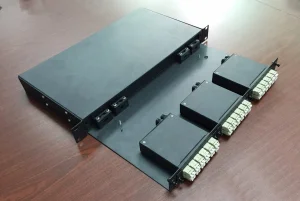
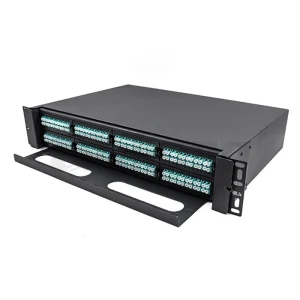
Cross-connect panels and optical enclosures built for telecom networks and datacenters.
Get in touch with Kocent Optec's engineering team for custom configurations, technical specification sheets, and fast B2B pricing quotes.
Request Technical Quote KOCENT OPTEC