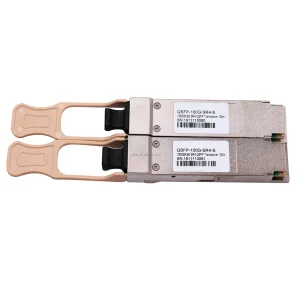
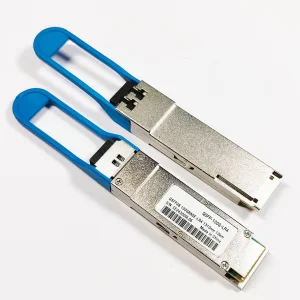
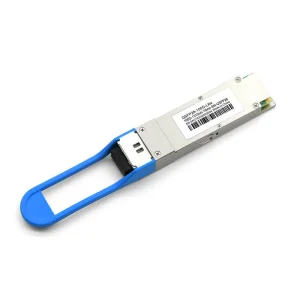
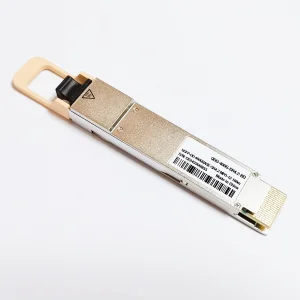
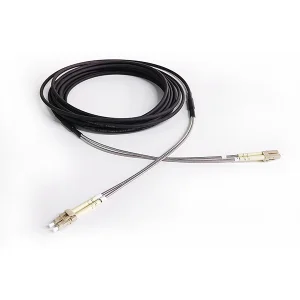
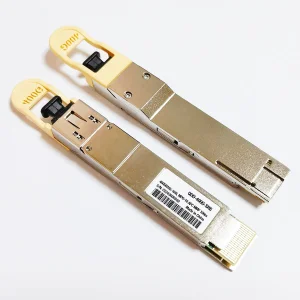
Explore our industrial-grade optical transceivers, active breakout cables, and fiber management devices engineered for mission-critical deployments.
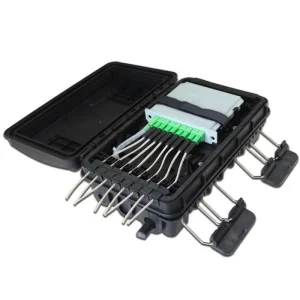
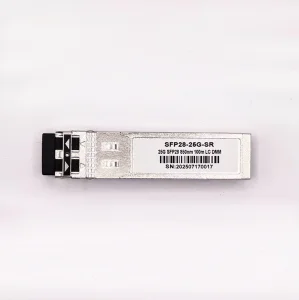
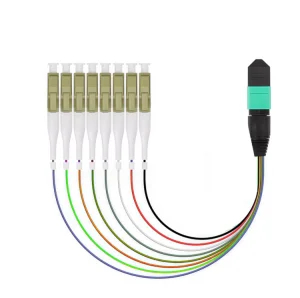
Deep-dive whitepaper detailing the current and future trends of 10 Gigabit Small Form-Factor Pluggable (SFP+) modules inside modern data centers.
As telecom infrastructure and corporate networks migrate toward high-capacity backplanes, the 10 Gigabit SFP+ (Small Form-Factor Pluggable) standard remains the baseline backbone for enterprise connectivity. Compared to legacy XFP or GBIC formats, SFP+ optimizes thermal dissipation and port density. In multi-layered architectures, SFP+ transceiver modules enable smooth migrations from Gigabit Ethernet (1G) up to 10G, laying the structural groundwork for eventual steps into 25G, 100G, and higher capacity interfaces.
Understanding the physics of SFP+ design is essential for deployment success. Modern modules utilize advanced optical components such as VCSEL (Vertical-Cavity Surface-Emitting Lasers) for short-range applications (SFP-10G-SR) and DFB (Distributed Feedback) or EML (Electro-absorption Modulated Lasers) for single-mode, long-range configurations (SFP-10G-LR, ER, and ZR). By utilizing direct-modulation mechanisms, these optical transmitters ensure minimal dispersion penalty and maintain high link margins across extended fiber lengths.

Strict conformance to the SFP Multi-Source Agreement guarantees hardware interoperability across global networking brands without lock-in issues.
Optimized zinc-diecast housings protect SFP+ components from EMI while reinforcing heat dissipation profiles in high-density rack setups.
Real-time optical diagnostic readouts prevent unscheduled downtime, allowing engineers to track optical signal degradation on the fly.
A trusted global optical partner delivering passive and active telecommunication components for operators and enterprise networks.

Established in 2012 in Hong Kong as a hi-tech communication enterprise, Kocent Optec Limited has grown into one of China's leading fiber optic termination product manufacturers and solution providers. We are dedicated to developing and manufacturing fiber optic communication products ranging from passive components to active transceivers for telecommunication networks, enterprise infrastructures, and modern data centers.
By leveraging our extensive engineering experience and manufacturing capacity built over the years, we improve performance outcomes for our customers, expanding their core competencies and helping them remain competitive. We prioritize close customer collaboration, defining ourselves as a value-adding partner in fiber optic connection solutions.
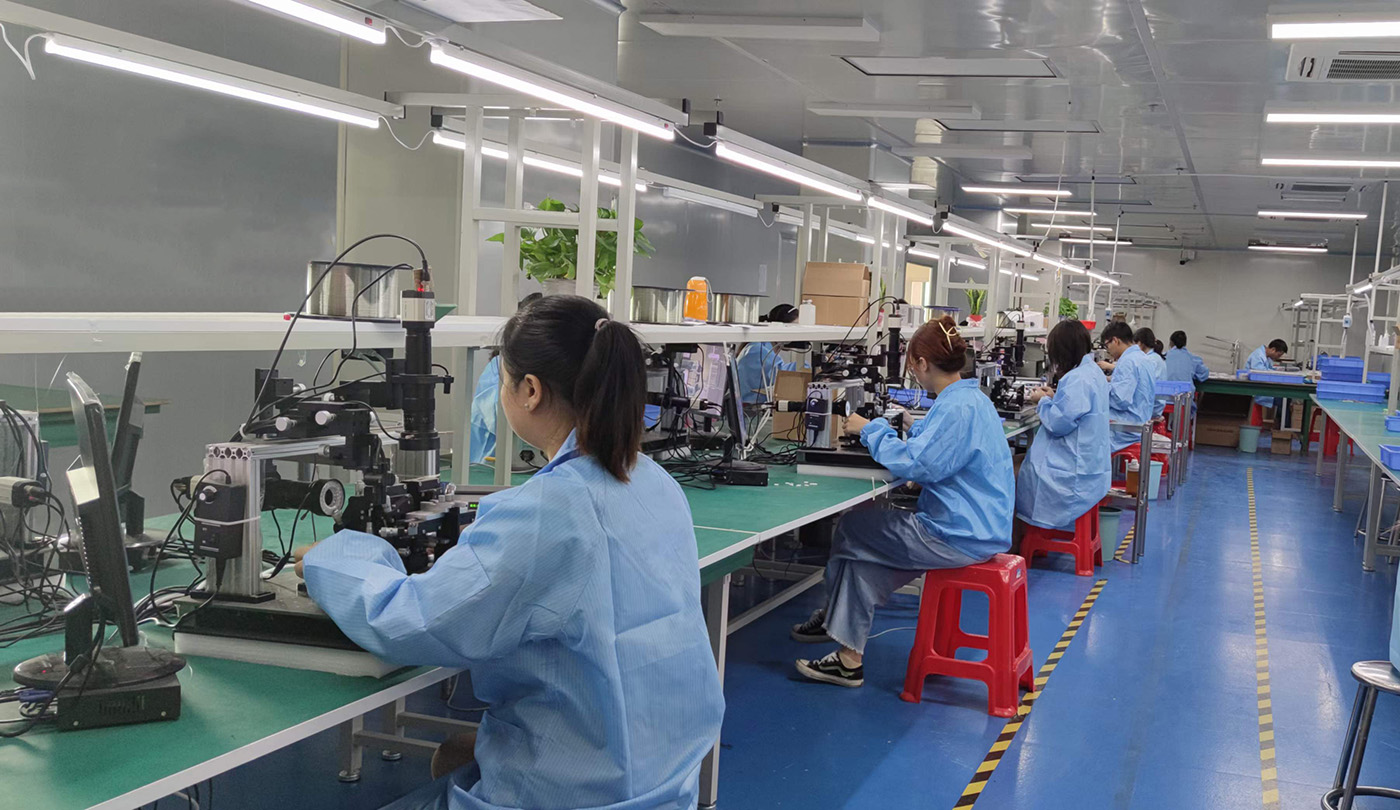
With more than 13 years of manufacturing experience, we adhere strictly to international fiber optic standards. We use mature scientific testing protocols to deliver shipments on time and guarantee that 100% of our products are tested and inspected before shipment.
Our OEM and ODM components are selected by top-tier global telecommunication operators to support critical high-bandwidth networks.
Years of sales and service experience have built deep relationships across major telecommunication regions. Today, Kocent Optec Limited supports customers in East Asia, Southeast Asia, the Middle East, Eastern Europe, Western Europe, Northern Europe, South America, North America, North Africa, and South Africa.
Our focus on win-win cooperation guides our growth. Many of our OEM and ODM products have won competitive telecom operator tenders and meet rigorous technical specifications.
Our active optical products and passive components are deployed across major telecommunication network operators, including:
A strategic overview of network evolution pathing, signal modulation changes, and structural fiber updates.
While 10G and 25G SFP architectures rely on Non-Return-to-Zero (NRZ) modulation, higher speeds like 200G and 400G transition to 4-Level Pulse Amplitude Modulation (PAM4) to double bandwidth carrying capacity.
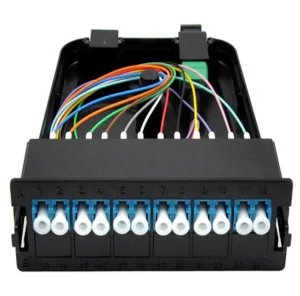
Migrating from simple duplex LC patching to high-density MPO/MTP multi-fiber systems enables multi-channel breakout setups, reducing total cable volume inside server racks.
Future optical design focuses on integrating optical engines directly onto CPU/ASIC packages, minimizing link traces, reducing signal losses, and optimizing power usage.
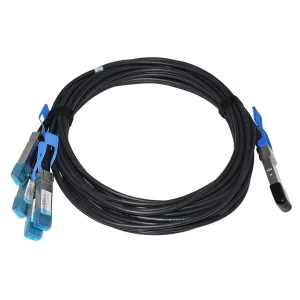
For enterprise campus systems, switching out an entire routing structure is rarely cost-effective. Legacy optical backbones built on 10G/25G SFP formats can integrate with high-speed cores through hybrid breakout systems. For instance, using QSFP28 to 4x SFP28 Passive DAC Breakout Cables lets network engineers connect 100G core switch configurations directly to legacy 25G and 10G edge servers without requiring additional active converter hardware.
Answering common engineering and procurement questions regarding 10G SFP+ compatibility, operations, and quality testing standards.
We write platform-specific configurations onto the EEPROM of our optical transceivers using dedicated coding equipment. This ensures compatibility with major networking brands such as Cisco, Juniper, Arista, Huawei, HPE, and others by using the correct vendor codes, serial numbers, and checksum configurations.
The primary differences lie in the wavelength and transmission distance. SFP-10G-SR uses an 850nm VCSEL transmitter over Multi-Mode Fiber (MMF), supporting up to 300 meters. SFP-10G-LR uses a 1310nm DFB laser over Single-Mode Fiber (SMF), supporting distances up to 10 kilometers for long-distance connectivity.
Digital Optical Monitoring (DOM) or Digital Diagnostic Monitoring (DDM) provides real-time access to operating parameters. This includes monitoring laser bias current, optical output power, receiver input power, internal temperature, and voltage, enabling predictive maintenance before a hardware failure occurs.
Yes. As a direct manufacturer, we offer comprehensive OEM and ODM options. This includes custom casing, custom EEPROM programming, custom cable lengths for Direct Attach Copper (DAC) or Active Optical Cables (AOC), and custom packaging formats to match operator specifications.
Our transceivers and fiber optic cables comply with major global environmental and safety standards. This includes RoHS, CE, FCC, REACH, and Laser Class 1 safety compliance, meeting requirements for deployment in international data centers and telecom operator facilities.
Browse our selection of active optical modules, high-density fiber enclosures, patch cords, and optical connectors for high-throughput networks.
 KOCENT OPTEC