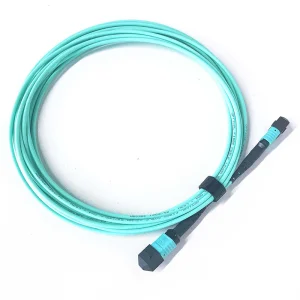
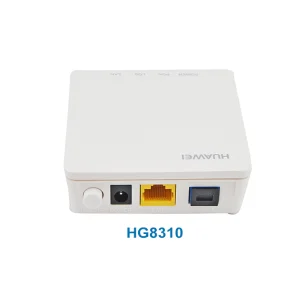
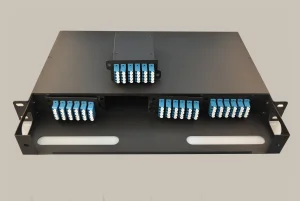
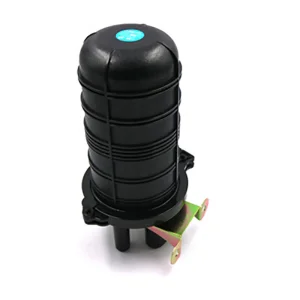
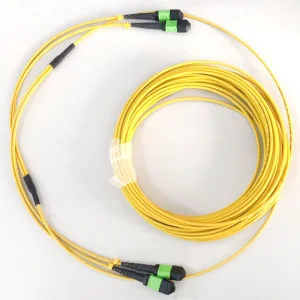
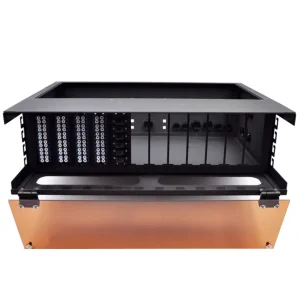
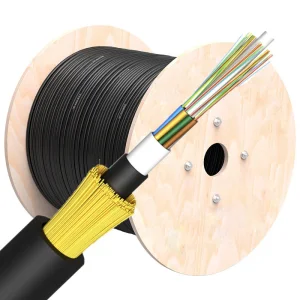
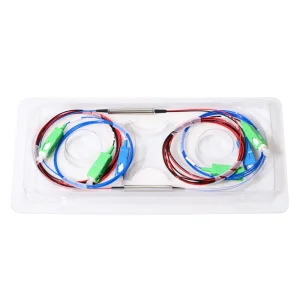
Explore our curated selection of high-reliability interconnect modules, optical splitters, and patch panels engineered for high-performance networks.
In the rapidly advancing telecommunications landscape, transitioning legacy structures to higher bandwidth demands presents critical technical and financial challenges. The 10G SFP+ to RJ45 transceiver, conforming to the IEEE 802.3an standard, has emerged as a cornerstone technology. By enabling 10Gbps transmission speeds over existing Cat6a/Cat7 structured copper cabling, it bridges the gap between optical core backplanes and legacy RJ45 edge switch ports. This allows enterprise operators to avoid cost-intensive fiber retrofitting, optimizing total cost of ownership (TCO) across data center and localized campus environments.
Integrated with advanced PHY chipsets, modern transceivers reduce power consumption levels to sub-1.6W, providing critical latency containment for data center access layers.
Early generations generated high heat dissipation. The newest architecture optimizes thermal performance to allow high-density placement on enterprise switches.
Complies strictly with SFF-8431 and SFF-8432 MSA standards, assuring seamless host-system compatibility across multi-vendor switch architectures.
Understanding physical limitations and distance tolerances is key to successfully integrating 10G SFP+ copper modules. Below is a comprehensive engineering matrix detailing performance standards based on cable category, power profiles, and distance configurations.
| Specification Parameter | Cat 6 Cabling | Cat 6A / Cat 7 Cabling | Cat 8 Cabling |
|---|---|---|---|
| Supported Bandwidth | 10 Gbps (Limited Distance) | 10 Gbps (Full Spec) | Up to 25/40 Gbps |
| Maximum Reach Range | Up to 30 Meters | Up to 80 - 100 Meters | Up to 30 Meters |
| Nominal Power Consumption | ~ 1.2W to 1.4W | ~ 1.6W to 2.0W | ~ 2.5W |
| EMI Interference Immunity | Moderate (Unshielded) | High (STP Shielded) | Excellent (Fully Shielded) |
| Connector Interface | Standard RJ45 | Standard RJ45 / GG45 | RJ45 (Category 8 Class I) |
Established in 2012 in Hong Kong as a high-tech communication enterprise, Kocent Optec Limited has positioned itself as one of China's premier fiber optic termination product manufacturers and solution providers. We are dedicated to developing and manufacturing high-performance fiber optic and copper communication products ranging from passive to active categories, supporting telecommunication networks, enterprise infrastructures, and hyper-scale data centers globally.
By leveraging our extensive engineering experience and mature production capacity gained over the years, we magnify operational efficiency for our valuable customers, ultimately expanding their core competencies and helping them outperform competitors. We place deep emphasis on customer collaboration and define ourselves as a valuable partner in high-capacity interconnection solutions.
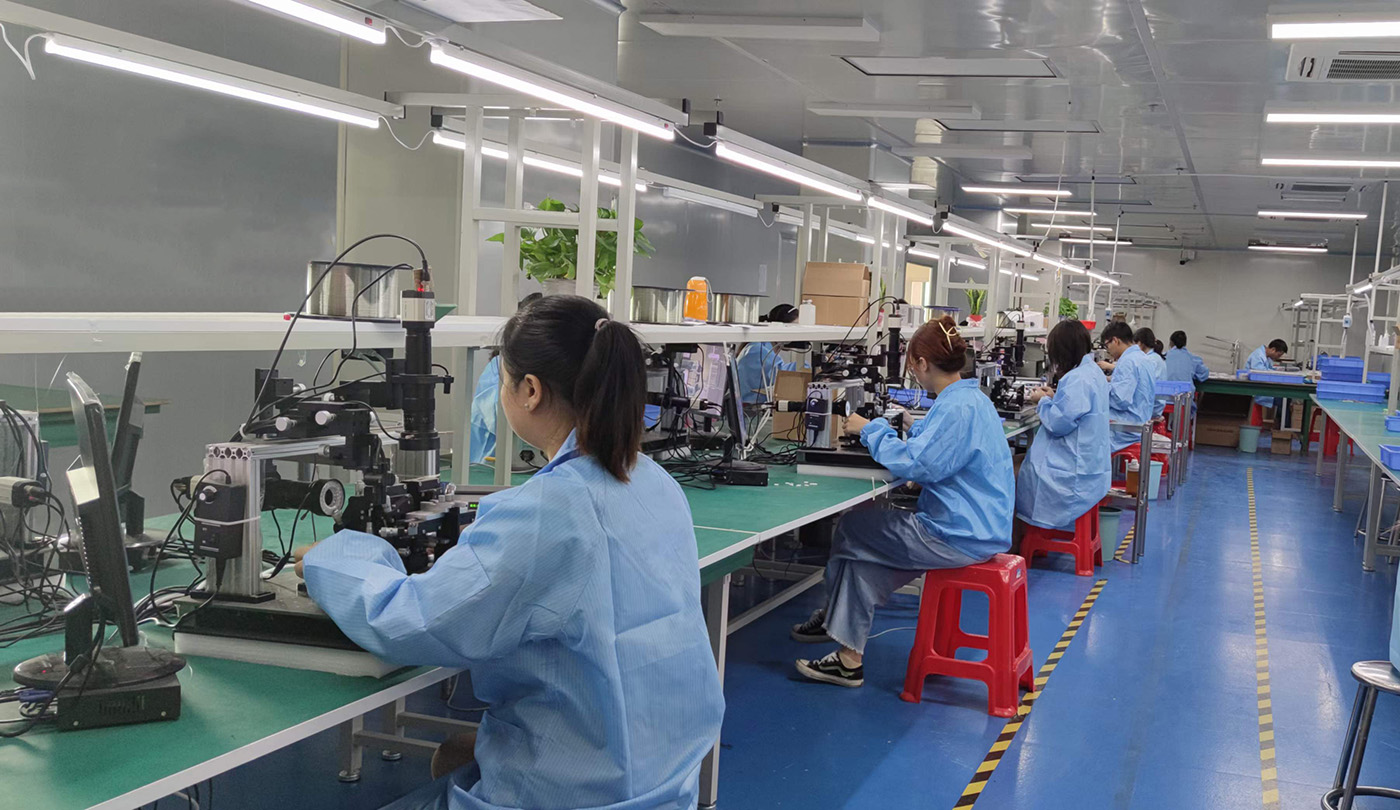
With more than 13 years of specialized manufacturing experience in telecommunication products, we adhere strictly to international industry standards using scientific methodologies. 100% of our products undergo rigorous testing and inspection before shipment, ensuring complete reliability upon field installation.


Over years of dedicated sales and service delivery, we have secured critical partnerships across diverse global regions. Today, Kocent Optec supports network deployments across East Asia, Southeast Asia, the Middle East, Eastern Europe, Western Europe, Northern Europe, South America, North America, North Africa, and South Africa.
Win-win cooperation remains our constant pursuit. Many of our OEM and ODM products have won competitive Telecom Operator tenders and continue to satisfy demanding end-user requirements.
Our OEM/ODM solutions are vetted and deployed within critical infrastructure frameworks managed by leading global carriers:
Deploying a 10G SFP+ to RJ45 transceiver requires a solid understanding of structural cabling layouts and environmental heat management. In local area networks (LANs) and edge server rooms, distances between equipment racks and core switches often exceed standard patch cord limits.
Enables high-bandwidth links between servers configured with 10GBASE-T LOM cards and standard SFP+ switches without requiring optical transceivers and structured fiber distribution steps.
Bridges remote distribution zones with core networking frames using existing Cat6a runs up to 80-100 meters, saving significant retrofitting resources.
Aggregates high-throughput telemetry streams from industrial cameras and automated PLCs in production spaces directly to control-room switches.
To ensure sustained error-free transmission rates (BER < 10^-12), our SFP+ copper modules are engineered using precision-grade components and undergo multi-step hardware and firmware verification.
Each transceiver is configured with optimized EEPROM register parameters to ensure seamless vendor compatibility (e.g., Cisco, Juniper, Arista, HPE, Huawei). In-circuit testing evaluates both signal integrity and power consumption profiles across simulated environments, keeping heat dissipation within host switch limits.
This rigorous methodology minimizes packet drop risks, improves hardware lifetimes, and maintains the signal-to-noise ratio (SNR) over long-distance links.
The copper transceiver space continues to evolve to meet rising bandwidth demands. Below is the projected developmental trajectory for copper interconnect standards:
Silicon manufacturers are refining manufacturing processes to reduce active power draws down to 1.0W for 30m links. This enables full switch density implementation without exceeding standard thermal design envelopes.
Integration of smart PHY components that automatically scale speeds down to 2.5G or 5G based on cable quality, ensuring stable connections over legacy Cat5e and older installations.
The next generation of high-speed copper interconnects targeting short-reach server connections, using Cat8 cabling to support 25Gbps over distances up to 30 meters.
We address common technical inquiries from network engineers regarding compatibility, cable types, and thermal limits.
The maximum reach limit depends on the category of copper cable used. Cat6a/7 cabling allows reach configurations of up to 80-100 meters at 10 Gbps speeds. For legacy Cat6 cabling runs, the limit is typically 30 meters. It is crucial to verify the cable specification and environmental noise levels before deployment.
Early 10GBASE-T transceivers consumed around 2.5W to 3.0W, generating significant heat. Modern designs utilize low-power PHY chips fabricated on advanced silicon nodes, lowering power draws down to 1.6W or less. This reduction enables denser deployments on switches without exceeding host system temperature envelopes.
Yes, our transceivers undergo rigorous compliance coding processes. By default, they are coded for multi-vendor compatibility. We can customize the EEPROM configuration to match proprietary host switch requirements (e.g., Cisco, HPE, Juniper, Arista) to prevent port-blocking errors.
We perform 100% inspections on all production batches. This includes testing for mechanical compliance, optical/electrical parameter validation, host system interoperability checks, thermal cycling, and Bit Error Rate (BER) assessments under load to ensure field reliability.
Explore additional network connectivity solutions designed for reliable data transmission and high scalability.
 KOCENT OPTEC