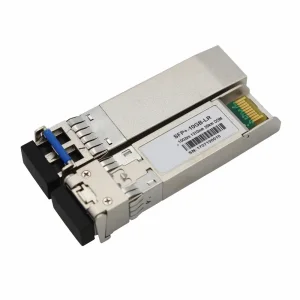
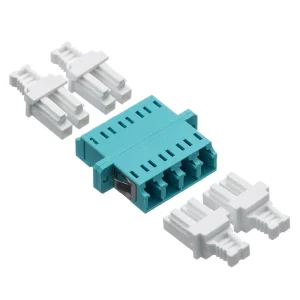
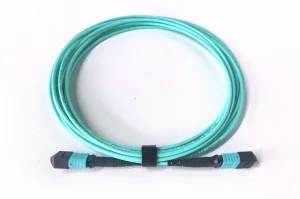
Explore our core selection of fiber optic adapters, active transceivers, and ultra-low-loss harness assemblies engineered to maximize bandwidth density.
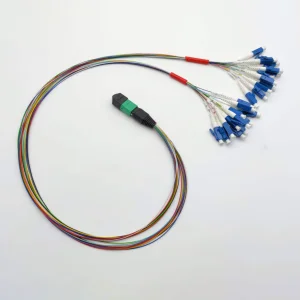
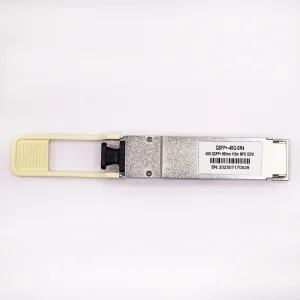
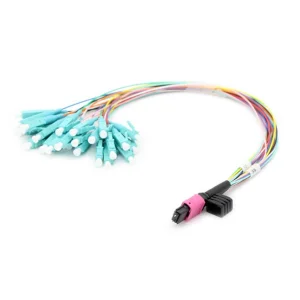
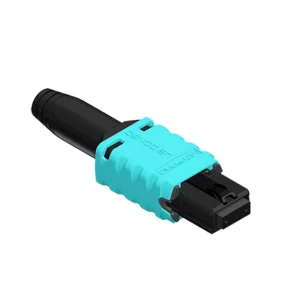
Established in 2012 in Hong Kong as a high-tech communication enterprise, Kocent Optec Limited has emerged as one of China's premier manufacturers and turnkey solution providers of high-precision fiber optic termination products. Over the past decade, our dedication to developing and manufacturing advanced, high-density optical communication subsystems has propelled us to the forefront of active and passive technology markets.
We work in lockstep with global enterprises to architect optical pipelines that mitigate signal degradation, optimize thermodynamic efficiency, and drastically lower total cost of ownership (TCO). In the highly demanding era of AI training clusters and multi-petabyte cloud databases, Kocent Optec represents an uncompromised standard of physical-layer reliability.

A deep technical breakdown of PAM4 modulation, silicon photonics integration, and physical form factors driving the 400Gbps transition.
Scaling data center architectures to 400G required a fundamental break from legacy NRZ (Non-Return-to-Zero) signaling, which could not scale beyond 28GBaud without suffering catastrophic channel loss. The optical industry resolved this bottleneck by transitioning to PAM4 (Pulse Amplitude Modulation 4-Level).
By defining four amplitude levels instead of two, PAM4 transmits two bits of data per clock cycle, doubling the spectral efficiency of the physical layer. Current 400G transceivers utilize either 8 channels of 50G PAM4 (e.g., 400G SR8 or DR8) or 4 channels of 100G PAM4 (e.g., 400G DR4 or FR4). This lane architecture reduction reduces the component count and drastically improves optical alignment tolerances.
As the industry moves toward 800G and 1.6T, the lessons learned during the 400G PAM4 optimization phase—particularly around Forward Error Correction (FEC) algorithms—serve as the foundation for modern DSP (Digital Signal Processor) chip designs.
At 400G speeds, packaging discrete components (independently housed laser diodes, modulators, and detectors) introduces significant parasitic capacitance and high assembly costs. Silicon Photonics (SiPh) resolves this constraint by integrating active and passive optical circuits onto a single silicon substrate using standard CMOS manufacturing processes.
Silicon Photonics offers notable advantages for 400G ODM manufacturing:
| MSA Specification | Wavelength (nm) | Connector Type | Max Reach | Fiber Type | Typical Power Consumption |
|---|---|---|---|---|---|
| 400G SR8 | 850nm | MPO-16 APC | 100m (OM4) | Multimode (MMF) | < 10W |
| 400G DR4 | 1310nm (Parallel) | MPO-12 APC | 500m | Singlemode (SMF) | < 12W |
| 400G FR4 | CWDM4 (1271-1331) | Duplex LC | 2km | Singlemode (SMF) | < 12.5W |
| 400G LR4 | LAN-WDM (1295-1309) | Duplex LC | 10km | Singlemode (SMF) | < 14W |
Analyzing key structural factors that procurement executives must balance when sourcing 400G optical hardware.
Every watt consumed by a transceiver directly translates to additional cooling overhead. Our design optimization targets sub-10W limits for short-reach modules, lowering long-term operating costs.
Strict adherence to Multi-Source Agreements (QSFP-DD MSA, OSFP MSA) ensures seamless integration with Cisco, Arista, and Juniper switches, preventing vendor lock-in.
Pre-FEC BER optimization ensures error-free transmission through modern DSP platforms, protecting packet delivery inside high-frequency trading and compute architectures.
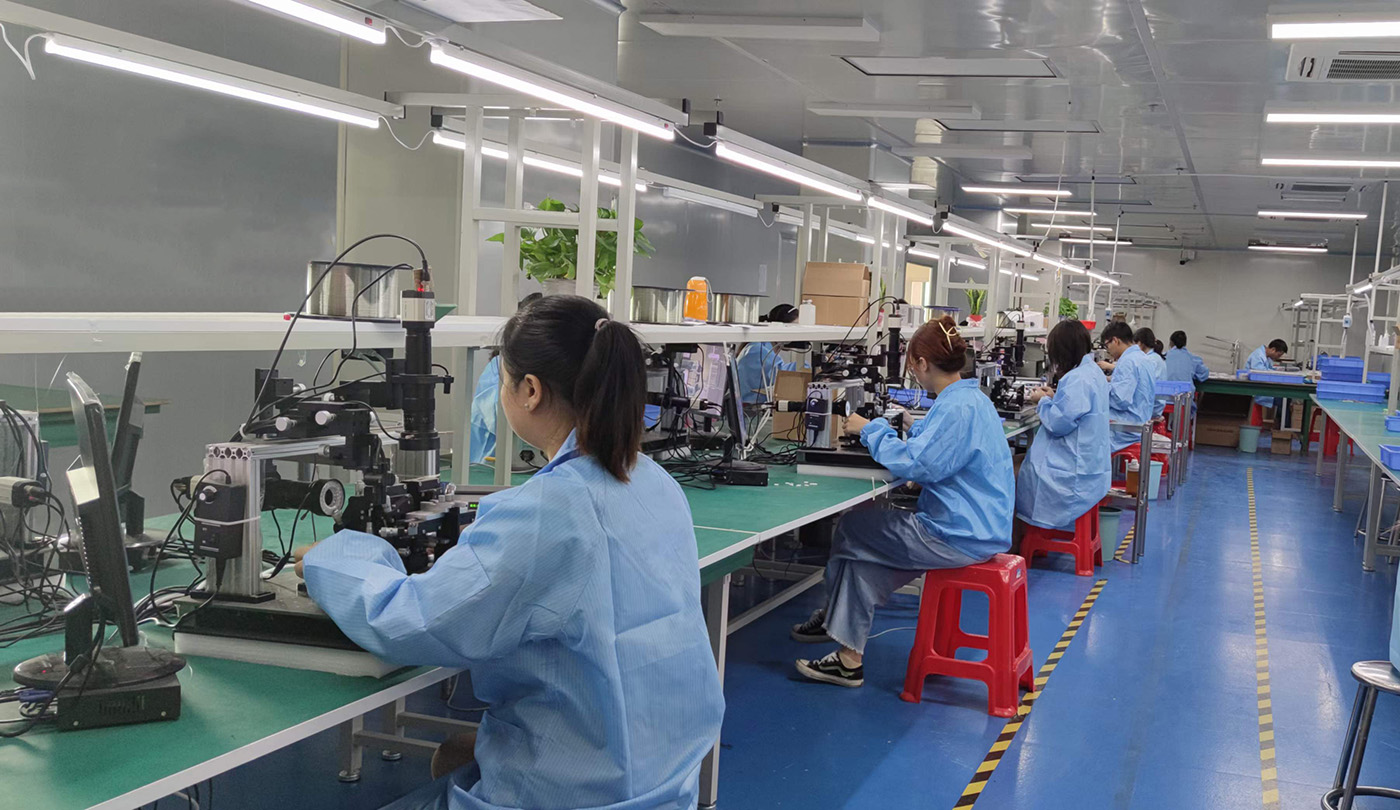
At Kocent Optec, we leverage extensive production capacity and vertical integration to manufacture high-yield optical termination and transmission hardware. Our production processes rely on highly automated assembly stages, cleanroom environments (Class 100,000 / ISO Class 8 equivalent), and rigorous physical layer screening.
Every single batch of optical patch cables, loopbacks, and transceivers undergoes 100% active geometry inspection, end-face inspection using 3D interferometers, and strict insertion loss/return loss testing. By utilizing mature, scientific methodologies, we ensure our production yields match the demanding requirements of global Tier-1 network operators.
This strict commitment to physical layer reliability is the core differentiator that enables our OEM and ODM clients to lower field failure rates to less than 0.05%, drastically reducing maintenance costs in complex, geographically dispersed fiber networks.

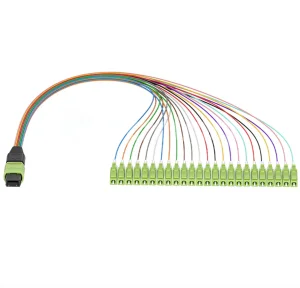
Our vertical supply chain integration allows Kocent Optec to source premium raw materials, such as genuine US Conec MTP connectors, and process them directly under our quality guidelines. This ensures low-loss and ultra-low-loss performance profiles across our entire high-density harness and breakout lines.
By leveraging deep manufacturing insights and local procurement systems, we neutralize component shortages and raw material inflation. For our clients, this ensures consistent pricing, predictable delivery dates, and reliable access to high-volume production resources.
How Kocent Optec products support the structural requirements of major international carriers and service providers.
Over our 13+ years of technical manufacturing, we have developed close design and delivery relationships with prominent telecommunications networks and internet exchange systems. Our passive structural cabling, patch assemblies, and transceiver modules are regularly deployed in telecom tenders globally, satisfying rigorous performance specifications under diverse physical environments.
We work closely with major global carriers to align our optical distribution hardware, passive DWDM nodes, and high-speed transceivers with their specific standard operating parameters. This includes compatibility with diverse carrier platforms and long-term durability in different geographical regions.
Ensuring global market access and long-term operating reliability through rigorous certification processes.
Our optical components go through systematic accelerated aging, damp-heat exposure, and mechanical vibration tests to match the long-term reliability guidelines of Telcordia standard GR-468.
We restrict hazardous chemicals and heavy metals across our product line. Our active modules and passive systems comply fully with the latest environmental rules in the EU and North America.
From design to assembly, our manufacturing plants operate under a certified ISO 9001 Quality Management System, providing full traceability for each assembly batch.
Direct answers from our senior engineering team on 400G transceivers and high-density passive connectivity solutions.
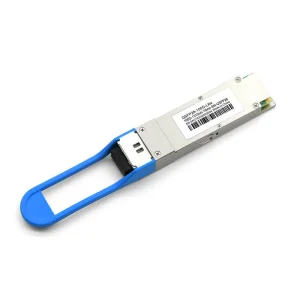
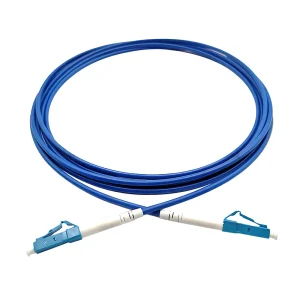
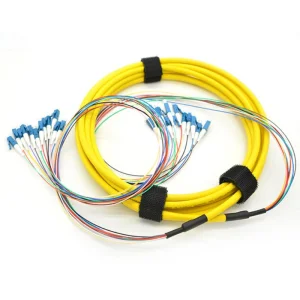
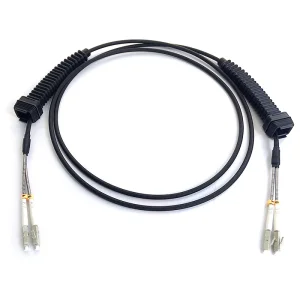
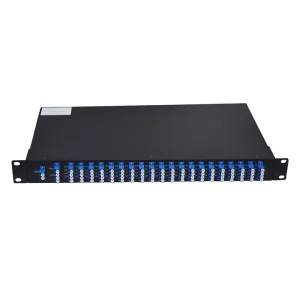
Explore our active modules, multi-core fiber patch cords, and optical passive components designed to scale system throughput.
 KOCENT OPTEC