Direct sourcing of carrier-grade, highly compatible adapters, passive attenuation modules, and active optical transceivers for data centers and telecommunications.
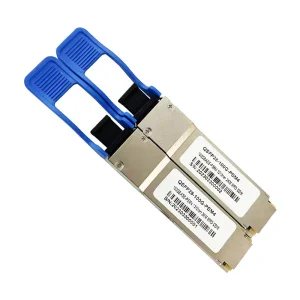
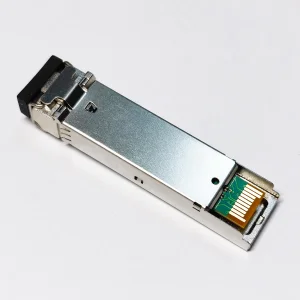
The global optical communications infrastructure relies heavily on 10G SFP+ and XFP transceivers. Although newer architectures (such as 100G, 400G, and 800G) are expanding, the 10G interface remains the absolute workhorse for enterprise LAN core switching, metropolitan access rings, and FTTx backhauls due to its unparalleled cost-to-performance ratio and lower power requirements.
Sourcing these critical parts via OEM factories in China allows operators and network administrators to achieve significant capital expenditure (CAPEX) relief. By directly integrating with the factories that manufacture subcomponents (optical sub-assemblies like TOSA and ROSA), global organizations bypass middle-tier distributors, capturing significant margin savings while retaining control over firmware customization.
OEM 10G optical modules are developed strictly to adhere to the SFF Committee Multi-Source Agreements (like SFF-8431 and SFF-8472). These protocols ensure electrical and mechanical standardization, meaning the structural housing and pinning configurations are identical across manufacturers, ensuring cross-platform physical compatibility.
While physically identical, transceivers use vendor-specific cryptographic signatures inside their internal EEPROM memory to authenticate with routers (e.g. Cisco, Juniper, Arista). Top-tier OEM factories solve this via advanced EEPROM emulation, allowing a single batch of physical modules to match diverse proprietary routing platforms.
Understanding the structural efficiencies that allow Chinese optical transceiver factories to maintain global market dominance.
Manufacturing hubs in Pearl River Delta (Shenzhen, Dongguan) provide instant access to laser diodes, silicon substrates, circuit board fabrication, and mechanical shell prototyping, slashing product development loops to days.
Top-tier optical factories utilize automated sub-micron packaging alignments and digital BER (Bit Error Rate) testing platforms to consistently achieve low failure rates, outperforming older manual alignment procedures.
Unlike large Western component aggregators, Chinese OEM factories support customizable design files, custom labeling, targeted temperature ranges (industrial vs. commercial temp), and specific coding profiles.
How modern design engineering addresses high bandwidth densities, power constraints, and spectral efficiency.
Modern networks face constant cost trade-offs between SFP+ fiber systems and 10GBASE-T RJ45 copper transceivers. SFP+ modules operating over optical fiber feature extremely low latency (~0.1 microseconds) compared to copper counterparts (~2.6 microseconds), and draw far less power (under 1.0W per SFP+ port compared to 2.5W+ for 10GBASE-T). This structural efficiency makes optical transceivers the standard for modern high-performance layouts.
To solve local fiber resource constraints, OEM factories are scaling production of 10G DWDM (Dense Wavelength Division Multiplexing) transceivers. Standardized in the C-band spectrum, these modules allow carriers to aggregate up to 80 discrete communication channels onto a single optical fiber pair. This solution prevents the costly requirement of digging and laying new fiber lines.
Under the SFF-8472 standard, modern optical modules must integrate real-time diagnostic capabilities. The DDM/DOM interface reports parameters such as:
How different telecommunication frameworks apply 10G transceivers and high-performance cabling assemblies.
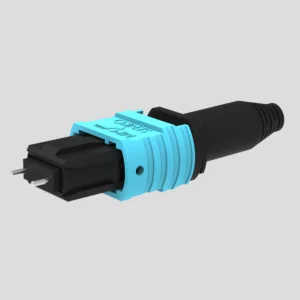
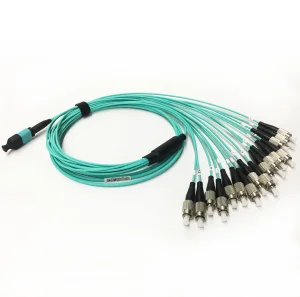
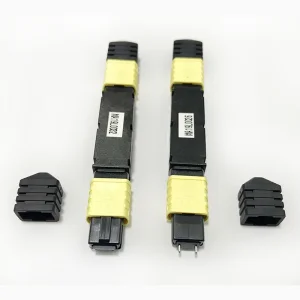
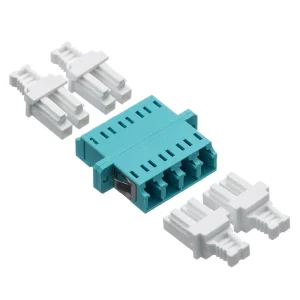
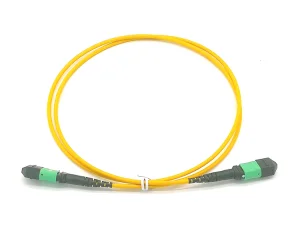
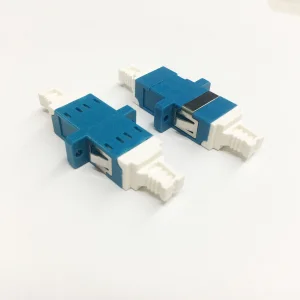
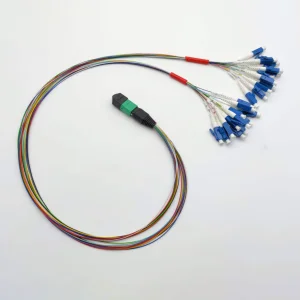
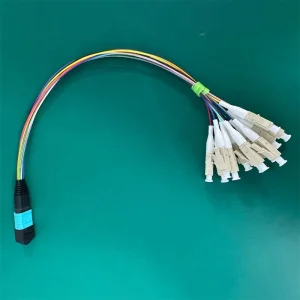
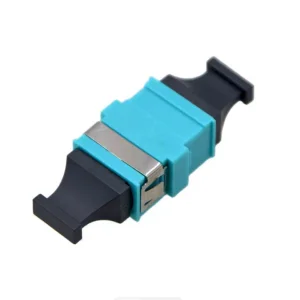
Deploying SFP+ modules for Leaf-Spine topology interconnections. High density is achieved by using MTP/MPO fan-out harnesses and high-density fiber couplers, matching low latency and high bandwidth needs.
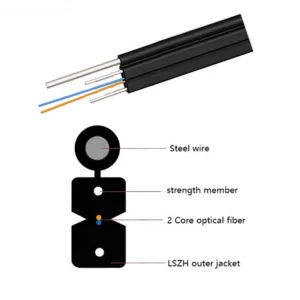
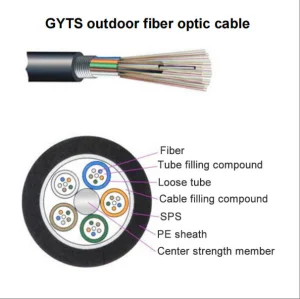
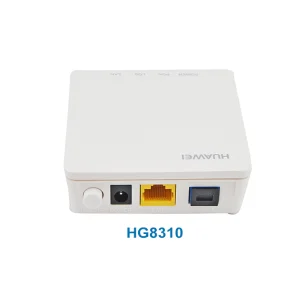
Integrating active terminal endpoints (GPON/EPON ONU ONT) with passive infrastructure elements (Outdoor FTTH Drop Cables) to enable high-speed gigabit internet delivery across metropolitan markets.
Leveraging 10G SFP+ ER/ZR variants utilizing single-mode fibers (1310nm/1550nm lasers) to span links of up to 40km or 80km without using optical amplifier relays.
Sourcing passive network equipment and active transceiver modules demands strict validation protocols to ensure compatibility and reliability:
To safeguard operational reliability, professional OEM transceivers must utilize stable semiconductor components. This includes sourcing high-speed photodiode matrices and reliable driver chips (from top-tier suppliers like Broadcom, Macom, or Inphi) to prevent signal loss during continuous operation.
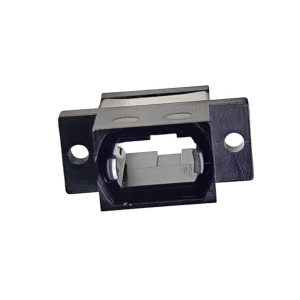
Furthermore, physical connectivity elements—such as adapter housings and connector latch structures—must feature precise mechanical designs. This reduces physical alignment drift over cycles of repeated mechanical insertion.
One of China's leading fiber optic termination product manufacturers and solution providers.
Establish in 2012 in Hongkong as a hi-tech communication enterprise, Kocent Optec Limited is dedicated to developing and manufacturing fiber optic communication products ranging from passive to active categories for telecommunication networks, enterprise networks, and data centers.
By leveraging our extensive experience and excellent production capacity we gained over the years, we magnify the outcome for our valuable customers, which ultimately expands their core competencies and helps them outperform competitors. We place emphasis on customer collaboration, and we define ourselves as your valuable partner in fiber optic connection solutions. We believe our differentiators are your perceived advantages.
With more than 13 years of experience in manufacturing telecommunication fiber optic products, we follow strictly fiber optic industry standards by using mature scientific methods to deliver your products on time and ensure that 100% products are tested and inspected before shipment.


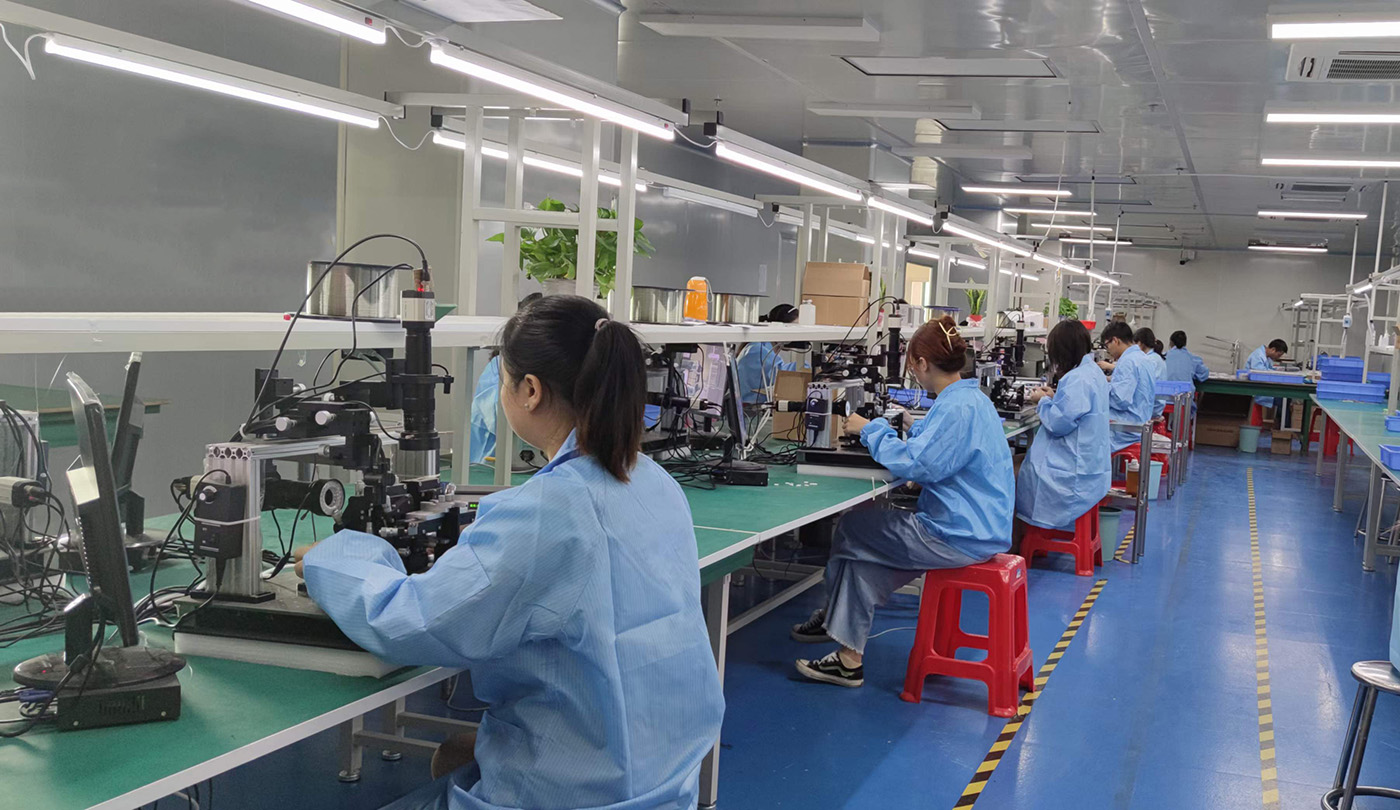
Years of sales and service experience have enabled us to win customers from East Asia, Southeast Asia, Middle East, Eastern Europe, Western Europe, Northern Europe, South America, North America, North Africa, and South Africa.
Carrier Tenders & End-User Implementations:
Many of our OEM and ODM products have won Telecom Operator tenders and satisfy strict end-user requests. Our main terminal telecom operators include:
High-density fiber optic patch cables, clean-up tools, adapters, and splitters for telecom operator structures.

Detailed technical and commercial answers addressing common considerations for enterprise IT procurement managers.
 KOCENT OPTEC