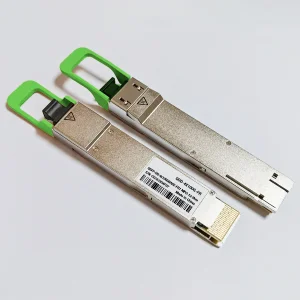
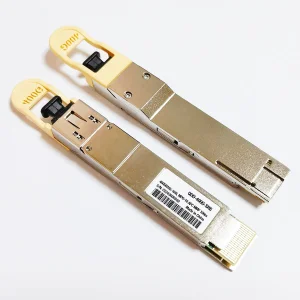
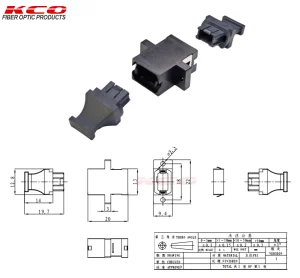
Direct availability of top-tier 400G QSFP-DD form factors optimized for hyperscale interconnects and financial networks.
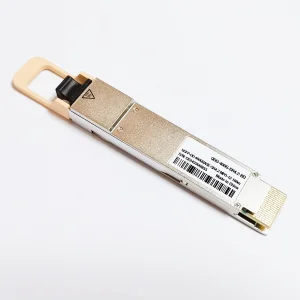
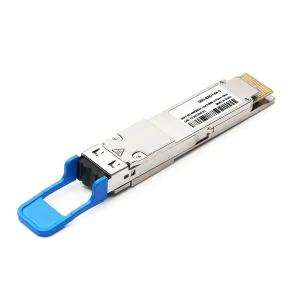
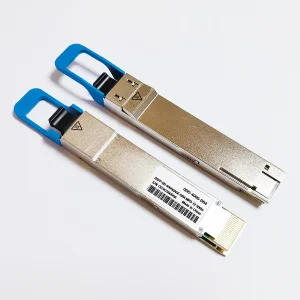
The metropolitan area of Chicago has long served as a key neurological node for North American telecommunications and financial infrastructure. Fueled by developments in Elk Grove Village, downtown data centers like 350 East Cermak, and the broader Illinois technological corridor, network architects are facing unprecedented throughput demands. High-frequency trading (HFT) firms, edge-computing topologies, and hybrid-cloud infrastructures are necessitating a massive structural migration from legacy 100G configurations to highly optimized, high-density 400G QSFP-DD (Quad Small Form-factor Pluggable Double Density) interfaces.
As the third-largest data center market in the United States, Chicago offers unique advantages and constraints. The local market demand is heavily structured around two distinct operational archetypes: ultra-low latency interconnectivity for Chicago Board Options Exchange (CBOE) and CME group trading systems, and colossal throughput capacity for hyperscalers like Microsoft, Google, and Meta establishing massive data campus centers in northern Illinois.
400G QSFP-DD transceivers are critical to addressing these distinct requirements. For financial trading desks, optimizing latency on single-mode optical paths between Aurora and downtown Chicago requires precise chromatic dispersion compensation and transceivers like the 400GBASE-LR4 that support up to 10km links without introducing structural delays. Conversely, massive multi-tenant data centers (MTDCs) in Elk Grove Village prioritize port density and energy efficiency, leveraging 400GBASE-SR8 and 400GBASE-DR4 architectures to keep operational expenditure (OpEx) low and cooling profiles manageable.
On a global scale, the optical communications industry has shifted completely to PAM4 (Pulse Amplitude Modulation 4-Level) signal encoding. While traditional 100G systems relied heavily on NRZ (Non-Return-to-Zero) modulations, 400G requires PAM4 to double the transmission rate within the same optical bandwidth. The QSFP-DD form factor achieves its high density by utilizing an 8-lane electrical interface, doubling the density of standard QSFP architectures.
A constant debate in global network engineering centers is the selection of the correct transceiver footprint. While OSFP (Octal Small Form-factor Pluggable) modules offer integrated heatsinks and are designed for heat dissipation up to 15W or higher, the QSFP-DD footprint has secured massive global adoption due to its backwards compatibility with legacy QSFP28 (100G) and QSFP+ (40) interfaces. This enables network operators in Chicago to execute rolling upgrades on their existing Arista, Cisco, or Juniper platforms without requiring complete linecard replacements.
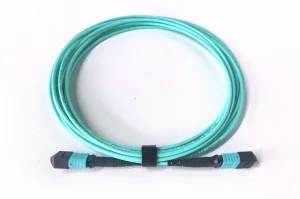
Managing 400G bandwidth requires a complete reconsideration of physical structured cabling. Deployments of 400GBASE-SR8 necessitate MPO-16 connection schemes, while 400GBASE-DR4 modules break out to 4 x 100G configurations using MPO-12/APC (Angled Physical Contact) configurations. These high-density optical interfaces require elite loss connectors (attenuations < 0.15dB) to guarantee the optical loss budget is maintained across the data center path. Failure to control insertion loss at the connection point can degrade PAM4 signals, leading to high pre-FEC (Forward Error Correction) bit error rates.
Established in 2012 in Hong Kong as a high-tech communication enterprise, Kocent Optec Limited has grown into one of China's leading fiber optic termination product manufacturers and solution providers. We are dedicated to developing and manufacturing optical communication products ranging from passive to active categories for telecommunication networks, enterprise networks, and next-generation data centers.
By leveraging our extensive engineering experience and state-of-the-art production capacity accumulated over the years, we magnify the operational outcome for our clients. We define ourselves not just as a manufacturer, but as your active strategic partner in global fiber connection solutions.

With more than 13 years of rigorous manufacturing experience in telecommunication fiber optics, we strictly adhere to international and domestic industry standards (including Telcordia, ISO9001, and CE). We implement mature scientific testing methods to deliver your orders on time and ensure that 100% of our products undergo comprehensive programmatic testing and physical inspection before shipping.
Our active products, including our 400G QSFP-DD transceiver family, are coded and validated on multiple host switches (Cisco, Arista, Juniper, Dell, Mellanox) to ensure seamless hardware integration and flawless Digital Optical Monitoring (DOM) readout performance.
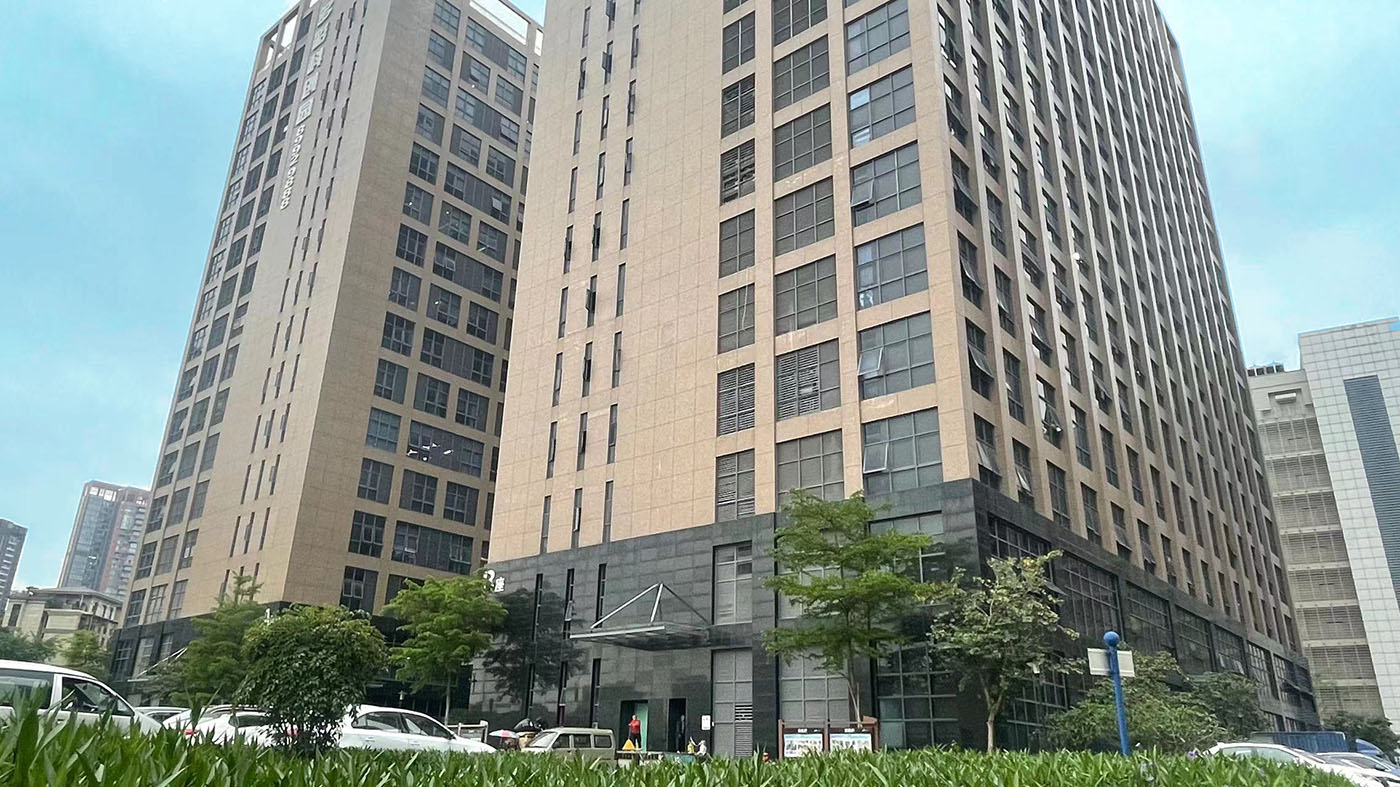
For multi-site cloud networks in Northern Chicago, bridging facilities without latency degradation is paramount. Using single-mode transceivers like the 400GBASE-FR4 (2km) and 400GBASE-LR4 (10km), enterprises can construct zero-latency synchronous replication layers. Kocent's high-purity optical components ensure that optical return losses are minimized, keeping packet transmission rates flat.
In HFT systems, fractional microsecond delays determine profitability. Pluggable transceivers must exhibit absolute thermal stability and minimal power jitter. Our 400G optical solutions offer low typical power consumption profiles (under 10W per port), preventing heat spots in network switches and stabilizing transit latencies during peak trading volumes.
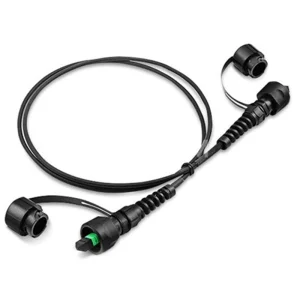
Connecting 400G host interfaces to legacy infrastructure requires robust fanout and breakout strategies. We deliver complete structured cabling systems featuring ODVA MPO IP67 outdoor trunk lines for rugged site environments, and premium SENKO MPO-PLUS premium connectors for maximum physical density inside central office distribution frames.

Determining the cost of a 400G upgrade requires evaluating several variables beyond the transceiver unit price. The total cost of ownership (TCO) is influenced by the optical reach, laser technologies (EML vs. Silicon Photonics), structural volume requirements, and specific vendor compatibility coding requirements. Below is a structured reference framework for calculating active quotes:
| Product / Interface Type | Wavelength / Fiber Media | Max Reach | Primary Chicago Applications | Pricing Matrix Tier |
|---|---|---|---|---|
| 400GBASE-SR8 / SR4.2 | 850nm / Multimode OM4 | 100m | Intra-rack, switch-to-switch data paths | Entry (Highly Cost-Effective) |
| 400GBASE-DR4 | 1310nm / Single Mode G.652 | 500m | Structured cabling distributions & breakouts | Mid Tier |
| 400GBASE-FR4 | 1310nm / Single Mode G.652 | 2km | Inter-building cloud fabrics (Elk Grove Village) | Mid-to-High Tier |
| 400GBASE-LR4 | 1310nm / Single Mode G.652 | 10km | Metro Interconnects (350 E Cermak to suburban hubs) | Premium (Laser Grade EML) |
For projects based in Chicago, Kocent Optec provides customizable quotes that include bulk volume pricing discounts, compatibility guarantees, and local logistics solutions. Because we control the manufacturing process from optical assembly to final packaging, we eliminate standard middleman markup, saving our clients up to 40% compared to traditional vendor prices.
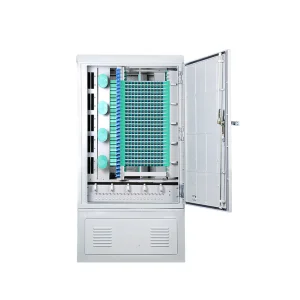
Complementary active transceivers and high-density passive products required for complete 400G optical path integration.
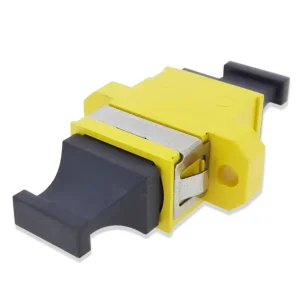
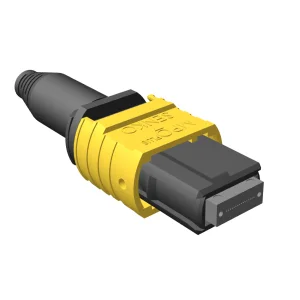
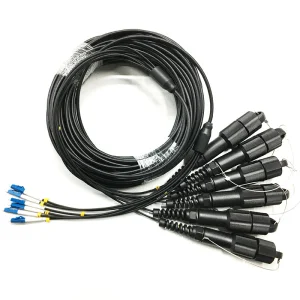
Years of sales and service experience have enabled us to win customers across different global regions. Today, we supply critical active and passive infrastructure components to major telecom hubs throughout East Asia, Southeast Asia, the Middle East, Eastern Europe, Western Europe, Northern Europe, South America, North America, North Africa, and South Africa.
Mutually beneficial cooperation is our constant goal. Many of our OEM and ODM products have won Telecom Operator tenders and continue to satisfy demanding end-user requirements. Our primary terminal telecom operators and partners include:
Trusted by Global Networks & Systems:
The difference lies in optical mapping and physical fibers. 400GBASE-SR8 uses 8 lanes of multi-mode fiber operating in parallel at 850nm, requiring a 16-fiber MPO interface (MPO-16). 400GBASE-SR4.2 uses bi-directional wavelength division multiplexing (BiDi) on 4 fiber lanes, transmitting at both 850nm and 910nm. This allows it to run over a standard 12-fiber MPO-12/UPC connector, helping Chicago operators reuse existing 12-fiber MMF structured cabling without replacing patch panels.
All our transceivers undergo a strict multi-step validation process. We run real-time hardware compatibility testing in our production facilities. The EEPROM microcode is programmed to match specific system requirements (such as Cisco, Arista, Juniper, or Mellanox systems). This guarantees that the host operating system recognizes the transceiver and displays precise DOM metrics (optical power input/output, temp, voltage, and current) without triggering software lockout flags.
Single-mode PAM4 signals are highly sensitive to back reflection (Return Loss). APC connectors have an 8-degree angled end-face, which directs reflected light out of the optical core and into the fiber cladding. This results in a return loss of >60dB, compared to ~50dB for UPC. Directing reflections away from the laser prevents optical feedback noise, keeping pre-FEC error rates low and ensuring link stability.
Standard lead times for custom or bulk orders are 7-10 business days from our manufacturing line to delivery in Chicago. We offer tiered volume pricing. For exact quotes, engineering drawings, or to request evaluation samples, please use our dedicated inquiry portal at /contact/.
Standard 32-port 400G switches can draw considerable power just for transceivers if thermal profiles are not optimized. Our 400G QSFP-DD modules feature a low thermal design (typically <10W on short-reach and <12W on long-reach links). Lower power consumption reduces localized heat buildup, allowing data centers in Elk Grove and downtown Chicago to lower their power usage effectiveness (PUE) and reduce overall cooling costs.
Speak directly with Kocent Optec's optical engineering team. Receive custom price sheets, compatibility validations, and logistics support tailored to your project requirements.
Send Inquiry Now KOCENT OPTEC