Factory-direct optical transceivers compliant with Canadian telecom standards, featuring full Cisco, Juniper, and Ciena interoperability.
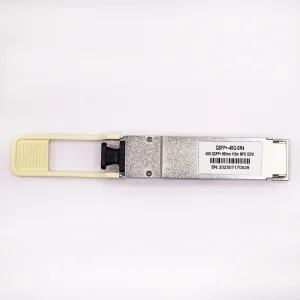
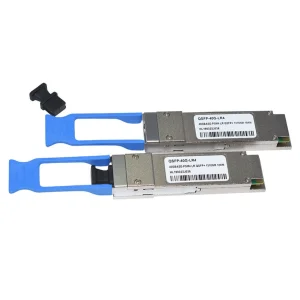
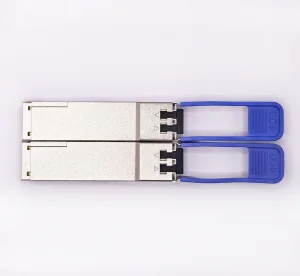
Get factory-direct pricing for 40G transceivers programmed for compatibility with Bell, Rogers, Telus, and tier-1 networking hardware.
Request Bulk PricelistUnderstanding the technical specifications, regional deployment metrics, and supply dynamics of 40G QSFP+ modules in Canada's harsh climatic zones.
Canada's unique geographical expanse presents profound challenges and opportunities for telecommunications networks, utilities, and high-frequency data center rings. From the dense carrier networks in the Toronto-Waterloo tech corridor to the harsh, remote industrial deployments in northern Alberta and Saskatchewan, robust optical links are the bedrock of modern connectivity.
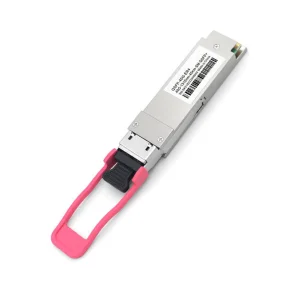
The 40G QSFP+ (Quad Small Form-factor Pluggable Plus) standard remains an essential technological transition and anchor protocol. While 100G and 800G optical architectures scale rapidly within core hyperscale clusters, 40G QSFP+ components offer optimal cost-to-performance metrics for regional rings, backhaul towers, oil and gas field telemetry, and distributed enterprise storage area networks (SANs).

A comparative overview of transmission technologies (SR4, LR4, ER4, PSM4) designed for telecommunications architects and datacenter operators.
| Transceiver Type | Connector Type | Fiber Type | Max Distance | Wavelength (nm) | Primary Canadian Use Cases |
|---|---|---|---|---|---|
| 40GBASE-SR4 | MPO / MTP | Multi-Mode (OM3/OM4) | 100m (OM3) / 150m (OM4) | 850nm | Intra-rack data center switching, high-speed campus LAN distribution. |
| 40GBASE-LR4 | LC Duplex | Single-Mode (OS2) | 10km | 1271, 1291, 1311, 1331 (CWDM) | Inter-building campus backbones, metro networks, carrier distribution centers. |
| 40GBASE-PSM4 | MPO / MTP | Single-Mode (OS2) | 2km / 10km (PLR4) | 1310nm | Parallel single-mode breakouts, structured datacenter cabling systems. |
| 40GBASE-ER4 | LC Duplex | Single-Mode (OS2) | 40km | CWDM Channels (1271-1331nm) | Long-haul regional backhaul, municipal networks, remote utilities distribution. |
Track transmitter (TX) and receiver (RX) power level variances to predict and isolate fiber link degradations before connection drops occur.
Monitors internal laser bias levels, a critical KPI indicating component aging, allowing proactive hardware replacement cycles.
Guards against local environmental power spikes and thermal runaway common within overcrowded cabinet arrays.
Empowering Global Telecom Operators and Canadian Systems Integrators with High-Reliability Fiber Connectivity since 2012.

Established in 2012 in Hong Kong as a high-tech communication enterprise, Kocent Optec Limited is one of China’s leading fiber optic termination product manufacturers and solution providers. We are fully dedicated to developing and manufacturing state-of-the-art fiber optic communication products, ranging from passive to active categories, for telecommunication networks, enterprise structures, and modern high-speed data centers.
By leveraging our extensive engineering experience and massive production capacity gained over the years, we magnify positive operational outcomes for our valuable customers. This ultimately expands their core competencies and helps them outperform global market competitors. We place a deep emphasis on collaborative partnership, defining ourselves as a trusted engineer in optical transceiver technology.
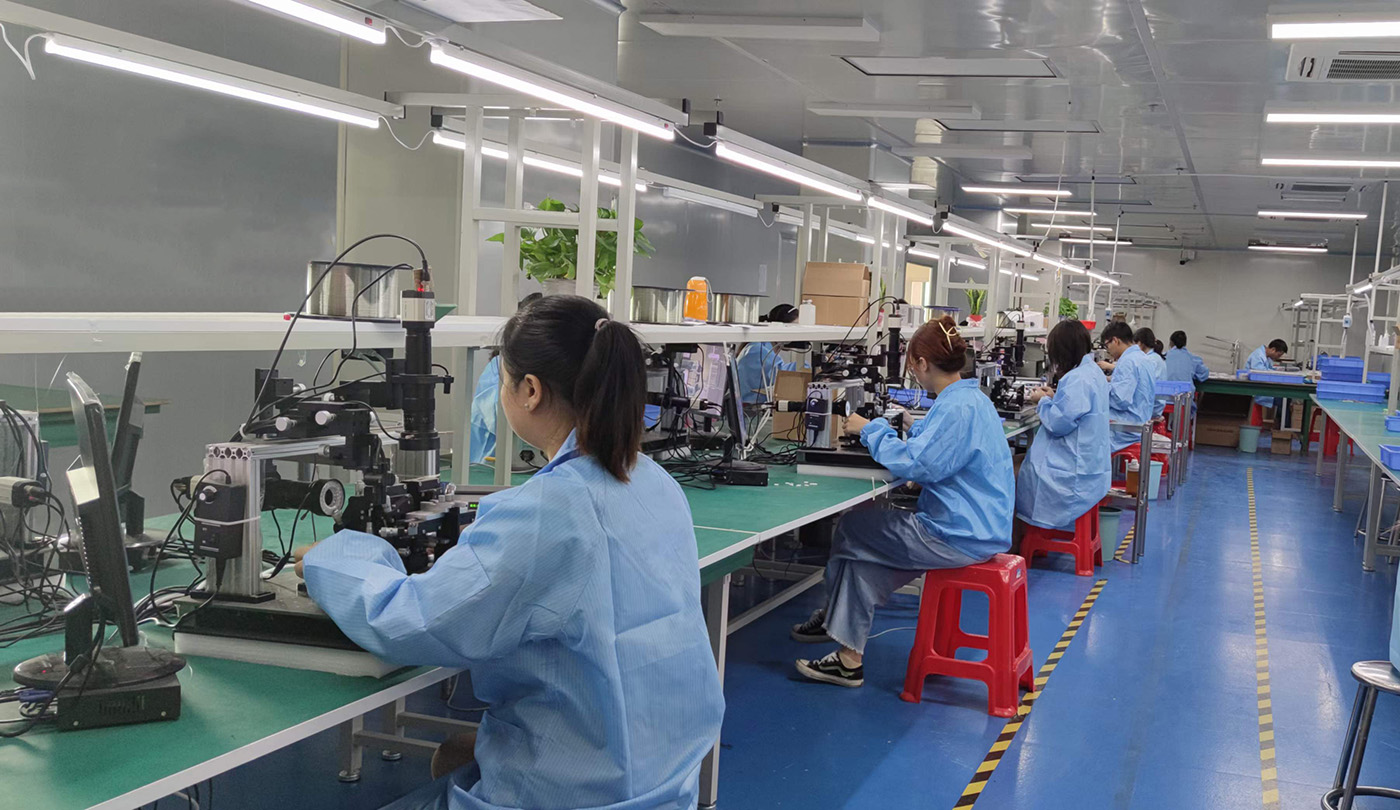
With more than 13 years of rigorous experience manufacturing telecommunication fiber optic systems, we strictly adhere to international quality benchmarks. By using mature scientific methods, we ensure your products arrive on schedule and guarantee that 100% of our products are thoroughly tested, calibrated, and inspected before final shipment.
Our sales and customer service teams support clients across various continents. Today, our footprint spans East Asia, Southeast Asia, the Middle East, Eastern and Western Europe, South America, North America, and South Africa. Win-win cooperation remains our driving mission. Many of our OEM and ODM assemblies have successfully won high-volume Telecom Operator tenders worldwide, consistently meeting demanding customer requirements.
Understanding the import landscape for high-tech optical transceivers in major Canadian business zones.
All active optical components destined for Canadian networks must adhere to safety and environmental guidelines. Our transceivers comply with RoHS (Restriction of Hazardous Substances) to prevent environmental contamination, as well as UL 94 V-0 flammability ratings. Electromagnetic compatibility is verified in accordance with FCC Class B and Industry Canada (IC) requirements to avoid interferences with local microwave networks and wireless base stations.
One of the most complex issues facing B2B network hardware purchasing is manufacturer compatibility lock-in. Before shipping to distribution centers in Vancouver, Calgary, Montreal, or Toronto, we custom-program our EEPROMs. We load specific firmware profiles for major switches including Cisco Catalyst & Nexus, Juniper MX/PTX, Ciena Waveserver, Arista, and Alcatel-Lucent, eliminating OEM hardware blocks.
Factory-direct cabling systems, polishing systems, and fast connector kits optimized for FTTH installations and fiber termination nodes in Canada.
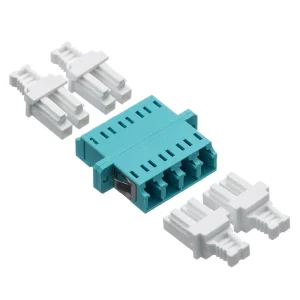
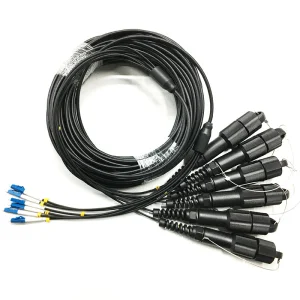
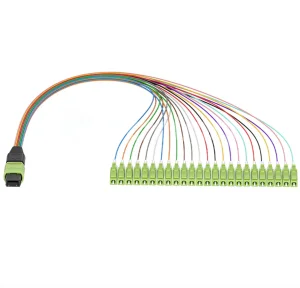
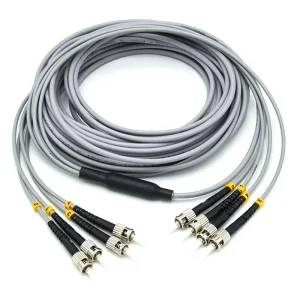
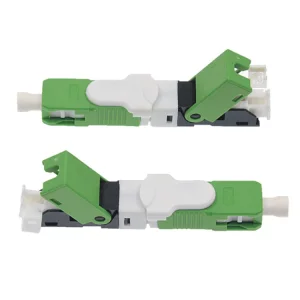
Ensuring legacy telecom and fiber systems integrate smoothly with next-generation single-mode networks.
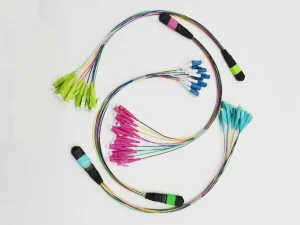
One of the primary benefits of 40G QSFP+ architecture is the ability to break out a single 40G port into four separate 10G SFP+ channels. This is accomplished using MPO-to-LC fan-out patch cables (e.g., our 24f MPO-LC OM5 or OM4 cables). This breakout capability enables gradual hardware upgrades without needing to swap out all terminal servers at once.
A similar path allows 100G QSFP28 interfaces to split into four 25G links, and 400G modules to subdivide into four 100G channels. Standardizing your fiber backbone on clean, high-performance MPO/MTP structured cabling layouts ensures compatibility with future module designs.
For core aggregation nodes, the transition to 100G and 400G is accelerating. Technologies such as 100G QSFP28 Single-Mode LR4 and 400G/800G PAM4 technologies enable higher density per rack space, significantly dropping power consumption per gigabit transferred.
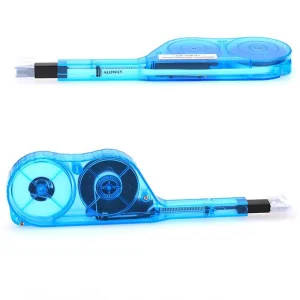
Kocent Optec supports this entire evolutionary roadmap, manufacturing everything from standard fiber cleaning pens and outdoor-rated patch cords to wholesale high-speed optical transceivers. We ensure your systems can scale smoothly.
Expert technical insights regarding sourcing, operational parameters, compatibility, and international import logistics.
Get in touch with Kocent Optec for bulk pricelists, custom programming validation configurations, and shipping updates to Canada.
 KOCENT OPTEC