High-performance transceivers, active optical cables, and fiber management assemblies optimized for low-latency, high-bandwidth applications.
A deep technical analysis of 850nm Short Reach optical communication, link-budget optimization, and protocol compliance.
The term 10GBASE-SR represents the industry standard for 10 Gigabit Ethernet transmission over multi-mode optical fiber (MMF), utilizing a nominal wavelength of 850nm. Defined under the IEEE 802.3ae standard, "SR" designates "Short Reach," representing the dominant optical interconnect interface inside the enterprise data center. This system relies on Vertical-Cavity Surface-Emitting Laser (VCSEL) transmitters, offering high modulation bandwidth, low power consumption, and excellent cost efficiency compared to long-wavelength single-mode alternatives.
Technical Insight: Unlike legacy light-emitting diodes (LEDs) used in older optical systems, the 850nm VCSEL operates as a semiconductor laser diode, emitting a coherent, narrow optical beam. This enables precise data mapping at 10.3125 Gbps over optimized multi-mode fibers such as OM3 and OM4, significantly mitigating modal dispersion challenges.
The reach of a 10GBASE-SR connection is fundamentally determined by the modal bandwidth of the physical layer fiber. Over standard OM1 (62.5µm) fiber, the reach is capped at 33 meters. OM2 (50µm) extends the reach to 82 meters. However, modern enterprise layouts utilize Laser-Optimized Multimode Fiber (LOMMF). OM3 pushes the reach to 300 meters, while high-grade OM4 optical systems easily support up to 400 meters of continuous link length without signal regeneration.
Modern 10G Base-SR products are engineered primarily in the Small Form-factor Pluggable Plus (SFP+) package. The SFP+ module standard optimizes spatial layout, discarding internal Clock and Data Recovery (CDR) circuits historically found in XFP transceivers. By shifting these tasks to the host board's PHY chip, SFP+ modules reduce operating power levels below 1 Watt per port, which directly translates to lowered cooling costs inside high-density server racks.
Real-time telemetry diagnostic tools are standard in high-end China 10G Base-SR transceivers. SFF-8472 compliance guarantees diagnostic access to supply voltage, laser bias current, internal operating temperature, received optical power, and transmitted optical power. Network managers can preemptively predict link failures and isolate problematic fibers before they disrupt service-level agreements (SLAs).
Established in 2012 in Hong Kong as a high-tech communications enterprise, Kocent Optec Limited has emerged as one of China’s leading fiber optic termination product manufacturers and solution providers. We are dedicated to developing and manufacturing a comprehensive range of fiber optic communication products spanning both passive and active categories, engineered to meet the demands of telecommunication networks, enterprise infrastructures, and hyper-scale data centers worldwide.
By leveraging our extensive engineering experience and mature production capacities, we optimize performance outcomes for our global clientele. This ultimately expands their core competencies and aids them in outperforming market competitors. We prioritize close customer collaboration, defining ourselves not just as a manufacturer, but as your trusted partner in fiber optic connection solutions.
With more than 13 years of expertise in manufacturing optical fiber telecommunication products, we follow strict industrial standards. Using mature, scientifically verified quality control methodologies, we ensure that 100% of our products are thoroughly tested, verified, and inspected before shipment, guaranteeing on-time delivery without performance compromises.

Examining why Tier-1 system integrators and telecommunication operators deploy China 10G Base-SR products at scale.
Global demand for optical transceivers and high-density MTP/MPO systems is fueled by the rise of artificial intelligence, high-frequency financial trading, and edge computing deployments. Modern procurement officers look beyond basic unit cost, prioritizing lifetime reliability, low insertion loss coefficients, and system compatibility. Here is an overview of the key macro industries deploying 10G Base-SR solutions:

How our manufacturing lines guarantee performance, high durability, and absolute zero-packet-drop operation.
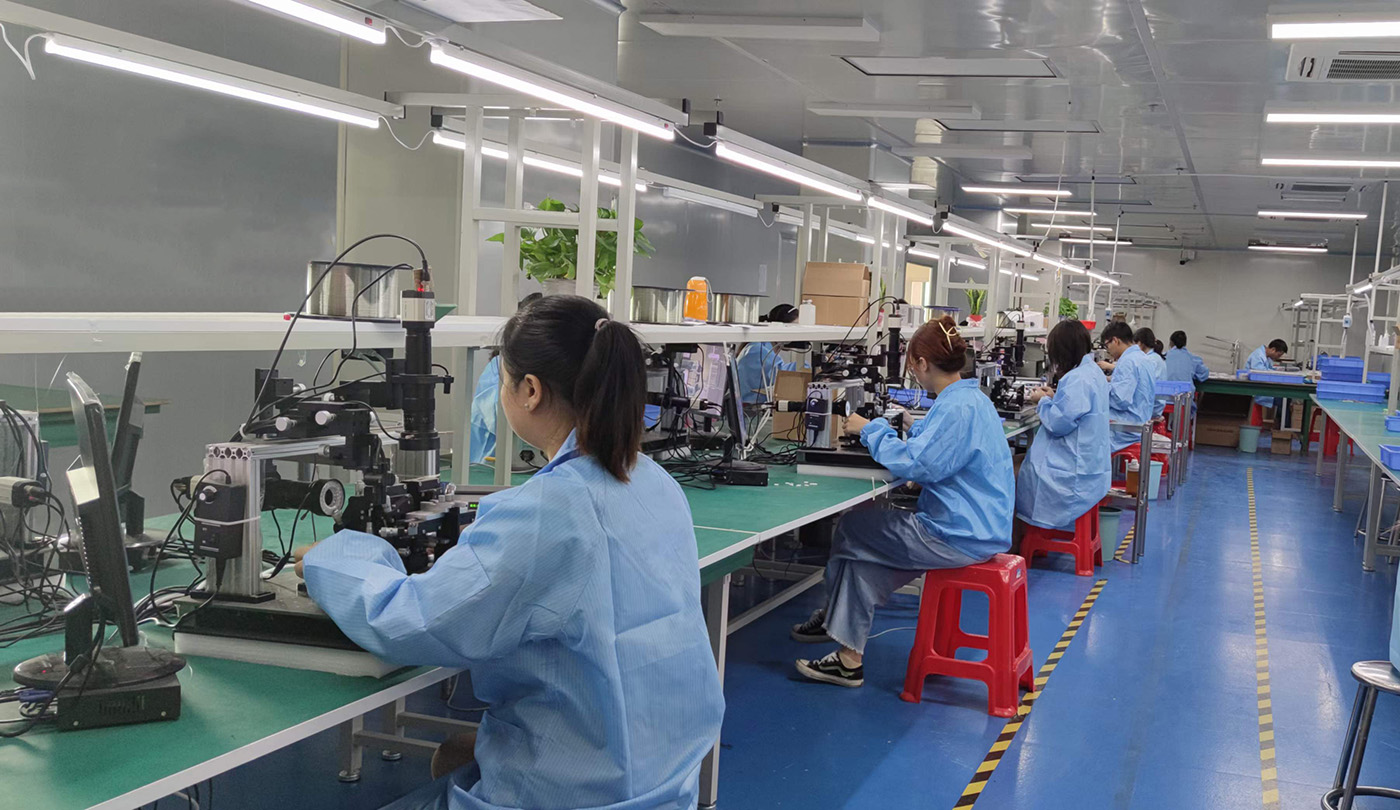
Quality assurance is the core pillar of Kocent Optec Limited’s manufacturing philosophy. Standardized optical assembly lines use state-of-the-art diagnostic instruments to check every single component against strict criteria:
Every active laser module undergoes spectroscopic analysis to ensure the center wavelength remains strictly within the 840nm–860nm envelope. Spectral width (RMS) is kept below 0.85nm to minimize chromatic dispersion over maximum length OM3/OM4 links.
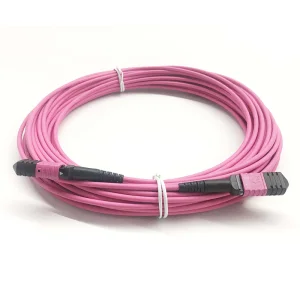
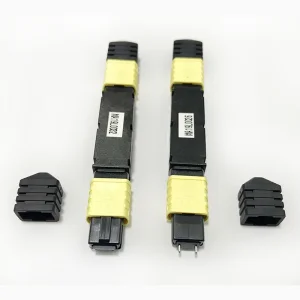
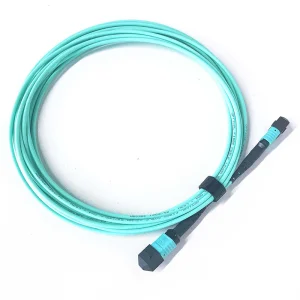
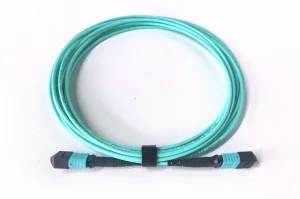
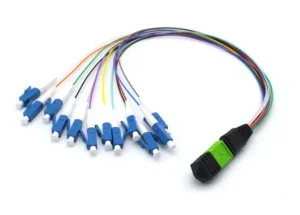
For passive products, including our high-density MTP-24 and MPO optical fiber trunks, three-dimensional geometric parameters (radius of curvature, fiber undercut, and apex offset) are tested using automated phase-shifting interferometers to guarantee reliable physical connection surfaces.
To verify structural reliability in rugged applications, batch samples are subjected to thermal shock profiles, cycling from -40°C to +85°C. This ensures the structural integrity of both the adhesive interfaces and optical alignments.
Years of refined distribution and field support have earned us a global network of partners. Today, our high-quality OEM/ODM solutions are trusted by telecom operators and enterprise networks throughout East Asia, Southeast Asia, the Middle East, Europe, North and South America, and Africa. Many of our core products have won competitive telecom tenders and meet demanding end-user quality standards.
Our main terminal telecom operator network includes: SingTel, Vodafone, America Movil, Telefonica, Bharti Airtel, Orange, Telenor, VimpelCom, TeliaSonera, Saudi Telecom, MTN, Viettel, Bitel, VNPT, Laos Telecom, MYTEL, Telkom, Telekom, Entel, FiberTel, StarFiber, Ooredoo, Beeline, and Azercell.
Structuring infrastructure design to preserve optical capital investments during high-speed bandwidth upgrades.
As enterprise networks face growing data demands from artificial intelligence and machine learning workloads, migrating from 10G networks is a key priority. Designing infrastructure with future scalability in mind helps prevent expensive, disruptive cable replacements.
By leveraging similar physical connector footprints, upgrading from 10G SFP+ to 25G SFP28 is direct. 25G SFP28 uses a higher modulation rate (25.78 Gbps) over the same OM3/OM4 multimode fiber runs, maximizing the lifespan of structured cabling.
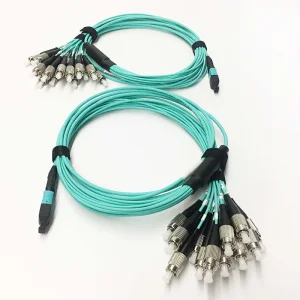
By grouping four 25Gbps lanes together via MPO/MTP interfaces, networks can transition to 100G SR4. This highlights the importance of installing high-density MTP-24 and MPO backbones today, enabling seamless upgrades without pulling new cable.
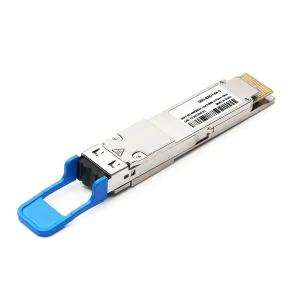
Modern data centers are scaling to 400G using QSFP-DD form factors. These modules utilize advanced PAM4 modulation scheme over 8 or 16 multimode fiber channels, requiring high-precision couplers, attenuators, and low-loss connector interfaces.
Answers to common technical, design, and integration questions from network engineers and procurement managers.
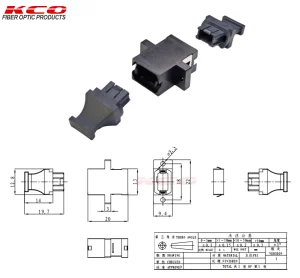
High-precision passive components, fiber adapters, and attenuators designed to maintain signal integrity in modern optical networks.
 KOCENT OPTEC