The 10G SFP+ LR (Long Reach) transceiver remains the absolute backbone of metropolitan, data center, and enterprise networking. Operating over single-mode fiber (SMF) at a nominal wavelength of 1310nm, the LR standard is designed to transmit up to 10 kilometers. Despite the rise of 100G, 400G, and even 800G optical architectures, 10G SFP+ LR transceivers continue to see exponential demand globally due to their cost-effectiveness, reliability, and low power dissipation.
From an enterprise and industrial procurement standpoint, purchasing 10G SFP+ LR modules from China offers a significant margin benefit. However, navigating the price landscape requires a thorough understanding of component costs (such as DFB lasers, PIN receivers, and CDR chipsets), manufacturing yields, compliance standards, and multi-vendor compatibility engineering.
To get an accurate price quote, global procurement managers must evaluate the core optical and electrical properties of SFP+ LR modules.
| Parameter | Standard Specification | Impact on Pricelist & Quotes |
|---|---|---|
| Wavelength | 1310 nm (Single-mode) | Industry standard; pricing is highly optimized due to volume production. |
| Laser Type | DFB (Distributed Feedback Laser) | Highly stable wavelength control. Costs slightly more than VCSEL (SR) but far cheaper than EML (ER/ZR). |
| Receiver Type | PIN Photodiode | Reliable detection up to 10km. High-yield component with stabilized market price. |
| Data Rate | 8.5 Gb/s to 10.3125 Gb/s | Compliant with 10G Ethernet (10GBASE-LR) and 10G Fiber Channel standards. |
| Max Reach | 10 km (over G.652 SMF) | Longer distances (20km, 40km, 80km) require higher-spec lasers and command a premium. |
| DDM / DOM | Supported (Digital Diagnostics Monitoring) | Enables real-time tracking of temperature, power, and voltage. A standard feature in premium quotes. |
| Operating Temp | Commercial (0~70°C) / Industrial (-40~85°C) | Industrial temp SFP+ LR modules cost 30-50% more due to hermetic packaging requirements. |
Modules are engineered strictly in accordance with SFF-8431, SFF-8432, and IEEE 802.3ae specifications. This ensures physical and electrical interchangeability across all compatible switch chassis.
Compatibility coding is flashed directly onto the internal microcontroller. We support major vendors like Cisco, Juniper, Arista, Huawei, Nokia, and HP, reducing deployment barriers and CAPEX.
We test every module inside target switch hardware under real-world traffic scenarios. This rigid quality control avoids early-life failure and maintains an industry-leading MTBF.

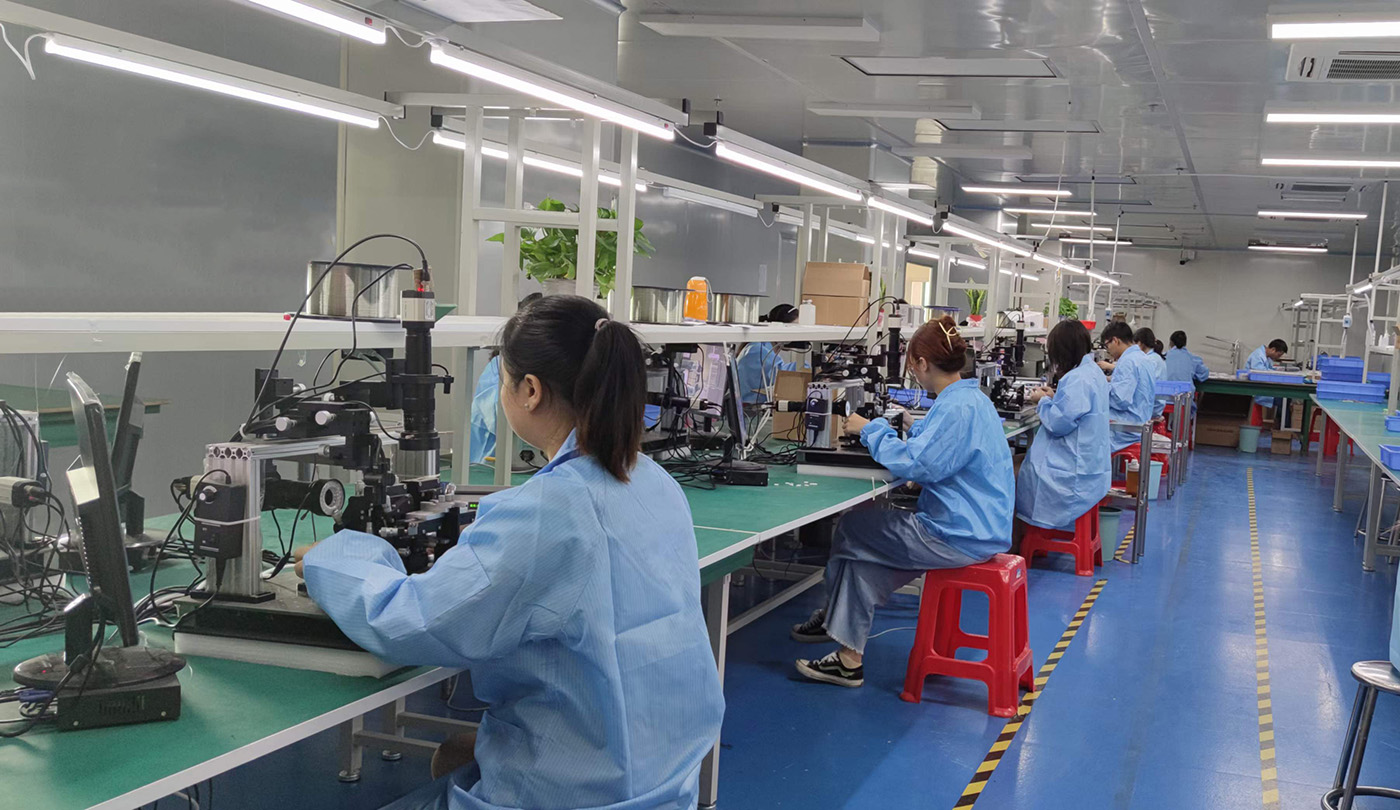
Kocent Optec Limited, established in 2012 in Hong Kong as a high-tech communication enterprise, is one of China's leading fiber optic termination product manufacturers and solution providers. We are dedicated to developing and manufacturing fiber optic communication products ranging from passive to active categories for telecommunication networks, enterprise networks, and data centers.
By leveraging our extensive experience and excellent production capacity gained over the years, we magnify the outcome for our valuable customers, which ultimately expands their core competencies and helps them outperform competitors. We place emphasis on customer collaboration, and we define ourselves as your valuable partner in fiber optic connection solutions. We believe our differentiators are your perceived advantages.
With more than 13 years of experience in manufacturing telecommunication fiber optic products, we follow strictly fiber optic industry standards by using mature scientific methods to deliver your products on time and ensure that 100% products are tested and inspected before shipment. Years of sales and service experience have enabled us to win customers from different regions. Today, we have customers from East Asia, Southeast Asia, Middle East, Eastern Europe, Western Europe, Northern Europe, South America, North America, North Africa, and South Africa.
Win-win cooperation is our constant goal. Many of our OEM and ODM products won the Telecom Operator tenders and satisfied end-user requests.
Navigating China's optical transceiver ecosystem requires an understanding of how manufacturers structure their quotes.
The DFB laser diode accounts for over 45% of the total component cost. Sourcing lasers from tier-1 global chipmakers yields higher reliability but increases the baseline quote. In contrast, locally fabricated laser chips offer substantial cost-efficiencies for budget-sensitive metro networks.
High-speed SFP+ electrical interfaces use gold plating to guarantee robust signal integrity and prevent oxidation in humid data center environments. Standard commercial designs specify 15µ" to 30µ" thickness, whereas operator-grade components request 50µ" plating.
The time spent on automated test equipment (ATE) is a critical pricing driver. Reliable manufacturers test every module for Bit Error Rate (BERT), Optical Eye Diagrams, Temperature Cycling, and switch-specific compatibility. Cheaper suppliers may bypass these rigorous testing steps.
How 10G SFP+ LR transceivers function as the primary interface in real-world networking topologies.
Connecting core enterprise switches to edge switches across campuses. Over short distances (under 300 meters), MM fiber (SR) is sufficient. However, for building-to-building links, 10G SFP+ LR is the default standard, allowing long-distance connections over single-mode fiber infrastructure without high attenuation.
Connecting Optical Line Terminals (OLTs) in central offices to distributed nodes. During 4G and 5G network build-outs, 10G LR modules are heavily used to link remote radio units (RRUs) to baseband units (BBUs), maintaining stable optical links over varying outdoor temperatures.
Serving as the core link for Leaf-Spine architectures in mega data centers. While servers use 10G DAC or 25G SR transceivers for short rack links, long links connecting distinct datarooms or separate buildings rely on the 10km range of 10G SFP+ LR transceivers.
Expert answers to common engineering and procurement queries regarding 10G SFP+ LR optical modules.
 KOCENT OPTEC