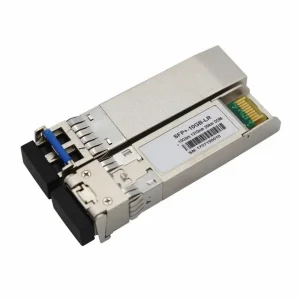
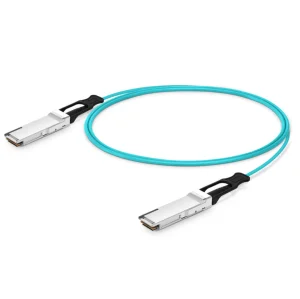
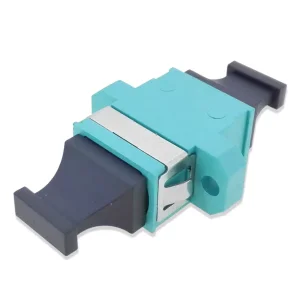
High-performance interconnect solutions engineered for low latency, minimized loss, and multi-vendor compatibility.

Established in 2012 in Hong Kong as a high-tech telecommunication enterprise, Kocent Optec Limited has emerged as one of China's premier manufacturers and design authorities for fiber optic termination systems and active transceiver architectures.
We dedicate ourselves to the end-to-end design, development, and vertical fabrication of active and passive optical communication components. Serving global telecom operators, hyperscale data centers, and enterprise systems integration partners, Kocent Optec bridges the gap between raw hardware fabrication and customized systems engineering.
Our operational framework values mutual technological progression. By maintaining comprehensive ownership of product lifecycles—from wafer-level packaging and TO-can subassembly to complete firmware coding—we provide solutions that enhance our clients' structural capacity and infrastructure margins.

Standard duplex optical transceivers operate by transmitting light over one dedicated fiber strand and receiving signals on a separate strand. While robust, this deployment scheme requires double the cabling infrastructure. Bidirectional (BiDi) SFP transceivers solve this resource bottleneck by executing bidirectional transmission over a single strand of optical fiber (Simplex LC).
This optimization is achieved through Wavelength Division Multiplexing (WDM). By using distinct transmission (TX) and reception (RX) wavelengths, a single optical core can carry upstream and downstream channels concurrently without signal collisions.
BiDi transceivers employ an internal WDM diplexer designed to route the incoming and outgoing light waves based on their specific frequencies, keeping crosstalk to negligible levels.
To establish a functional link, BiDi transceivers must be deployed in complementary pairs. Unit A (e.g., TX1270nm/RX1330nm) must face Unit B (e.g., TX1330nm/RX1270nm).
By routing TX and RX through a single port, network operators reduce their physical fiber count by half, optimizing existing infrastructure density and lowering operational costs.
| Transceiver Class | Standard Form Factor | TX Wavelength (A Unit) | RX Wavelength (A Unit) | Supported Distances | Optimal Link Budget |
|---|---|---|---|---|---|
| 1G BiDi SFP | SFP (INF-8074i) | 1310 nm / 1490 nm | 1490 nm / 1310 nm | 10 km - 80 km | 12 dB - 24 dB |
| 10G BiDi SFP+ | SFP+ (SFF-8431) | 1270 nm / 1330 nm | 1330 nm / 1270 nm | 10 km - 60 km | 14 dB - 20 dB |
| 25G BiDi SFP28 | SFP28 (SFF-8402) | 1270 nm / 1330 nm | 1330 nm / 1270 nm | 10 km - 40 km | 12 dB - 18 dB |
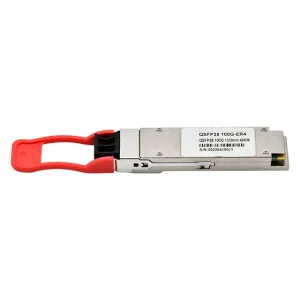
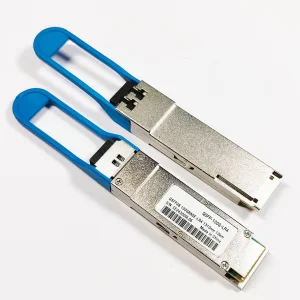
| 100G PAM4 BiDi QSFP28 | QSFP28 (SFF-8665) | 1270-1310 nm (BIDI Array) | 1330-1370 nm (BIDI Array) | 2 km - 10 km | 8.5 dB - 11 dB |
At Kocent Optec, reliability is verified through strict data protocols. Our testing architecture ensures every active and passive module satisfies international telecom standards before delivery.
We implement a strict multi-tier quality control protocol across our fabrication lines. Active transceiver production requires assembly in a Class 100,000 cleanroom to protect optoelectronic components from microscopic particulate contamination. Automated laser-welding machines and active optical alignment systems stabilize the coupling efficiency of our Transmit Optical Sub-Assemblies (TOSA) and Receive Optical Sub-Assemblies (ROSA).
Each BiDi SFP module undergoes automated environmental stress screening, including thermal cycling chambers testing from -40°C to +85°C for industrial-grade applications. Post-assembly, transceivers are integrated into compatibility testing loops. Using automated firmware writing setups, we verify DOM (Digital Optical Monitoring) parameters and compatibility profiles across major routing and switching architectures.

Modern telecommunication demands high-capacity physical infrastructures. BiDi SFP transceivers solve spatial and economic bottlenecks in several key network architectures:
As networks scale to 400G and 800G, the physical limitations of single-wavelength Direct Detection architectures require new modulation technologies. Kocent Optec is advancing its active transceiver development by integrating PAM4 (Pulse Amplitude Modulation 4-Level) and Coherent technologies into our single-fiber BiDi portfolio.
While NRZ (Non-Return-to-Zero) remains standard for 10G and 25G links, our newer 50G and 100G modules utilize PAM4 DSPs to double the transmission density over identical optical components. For long-haul links, we are engineering coherent BiDi modules that use phase modulation and advanced digital signal processing. This allows long-distance links to operate over 80km to 120km without needing inline dispersion compensation hardware.

Operating a global telecom network requires hardware that works seamlessly across multi-vendor system architectures. Kocent Optec maintains an active compatibility lab, housing routing and switching systems from major global networking brands. This allows us to customize and test firmware configurations to prevent system lockout errors on major network operating systems.
Our transceivers are built according to Multi-Source Agreement (MSA) standards, ensuring mechanical form-factor consistency and electrical pin-out compliance across all network slots.
All active modules conform to key international safety and environmental regulations, carrying CE, FCC, RoHS, and FDA laser safety certifications.
We provide full hardware customization options, including specialized internal wavelengths, specific EEPROM coding, customized optical power budgets, and custom branding.
Kocent Optec products are regularly specified in projects for major telecommunications operators worldwide. Our transceivers and active/passive hardware are qualified in environments running equipment from: SingTel, Vodafone, America Movil, Telefonica, Bharti Airtel, Orange, Telenor, VimpelCom, TeliaSonera, Saudi Telecom, MTN, Viettel, Bitel, VNPT, Laos Telecom, MYTEL, Telkom, Telekom, Entel, FiberTel, StarFiber, Ooredoo, Beeline, and Azercell.
Answers to key engineering questions regarding single-fiber BiDi transceivers and global supply chains.
High-performance modules, passive assemblies, and deployment tools designed for global telecom standards.
 KOCENT OPTEC