In modern hyper-scale data centers, enterprise networks, and metropolitan storage area networks (SANs), physical layer transmission media determine the latency, thermal efficiency, and overall reliability limits of the system. The 10G Active Optical Cable (AOC) has emerged as the definitive medium-range interconnect standard, replacing traditional Direct Attach Copper (DAC) cables and discrete optical transceivers for links ranging from 1 meter up to 100 meters.
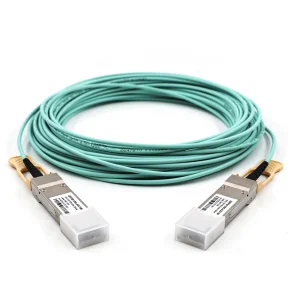
Unlike passive copper links which suffer from severe high-frequency attenuation and electromagnetic interference (EMI) at distances beyond 5 meters, AOCs integrate active optoelectronic components within their transceiver connector shells. An SFP+ AOC utilizes electrical-to-optical (E-O) conversion at the transmitter end and optical-to-electrical (O-E) conversion at the receiver end. The light is guided through an OM3 or OM4 multimode fiber (MMF), offering virtually lossless data transmission with zero electromagnetic emission, extremely small bend radiuses, and minimal physical weight.
"From a total cost of ownership (TCO) perspective, deploying high-quality 10G SFP+ AOCs significantly reduces power consumption, simplifies cable routing due to a 75% reduction in cable diameter compared to copper, and eliminates insertion loss failures associated with field-terminated optical connectors."
An active optical cable consists of three key architectural blocks:
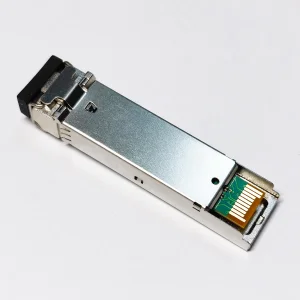
Features low-power VCSEL (Vertical-Cavity Surface-Emitting Laser) arrays operating at 850nm and high-responsivity PIN photodetector arrays integrated into SFP+ MSA-compliant shells.
Incorporates OM3 or OM4 laser-optimized fiber cores protected by LSZH (Low Smoke Zero Halogen) or PVC jackets, delivering superior tensile strength and bend tolerance.
Equipped with EEPROMs that write DDM (Digital Diagnostic Monitoring) variables, reporting real-time parameters like temperature, voltage, and laser bias current.
The global high-speed interconnect market is undergoing rapid evolution. While 100G, 400G, and 800G AOC modules (such as our 800GBASE OSFP PAM4 transceiver range) capture headlines for backbone operations, 10G networks remain the undisputed workhorse of localized enterprise applications. Standard enterprise storage systems, distributed network switches, edge cloud nodes, and telecom central office systems rely heavily on 10G infrastructure due to its excellent balance of cost, thermal output, and mature compatibility.
In terms of regional demand, North America and Europe continue to drive substantial volume for 10G AOC cables as legacy data centers upgrade from legacy copper Cat6A cabling to optical structures. Concurrently, rapid industrialization in Asia-Pacific, Latin America, and Africa has triggered massive greenfield telecom deployments. In these regions, network operators rely on cost-efficient, factory-terminated optical assemblies to bypass the high labor costs and environmental risks associated with manual splicing in harsh outdoor environments.
| Interconnect Type | Maximum Distance | Power Consumption (per end) | EMI Susceptibility | Physical Flexibility / Weight |
|---|---|---|---|---|
| 10G SFP+ Active Optical Cable (AOC) | Up to 100m | < 0.6W to 1.0W | Zero Susceptibility | Extremely High / Lightweight |
| 10G SFP+ Direct Attach Copper (DAC) | 7m - 10m | < 0.1W | Moderate to High | Low / Heavy & Rigid |
| 10G Transceivers + Patch Cord | Up to 300m (SR) / 10km (LR) | < 1.5W | Zero Susceptibility | High / Lightweight |
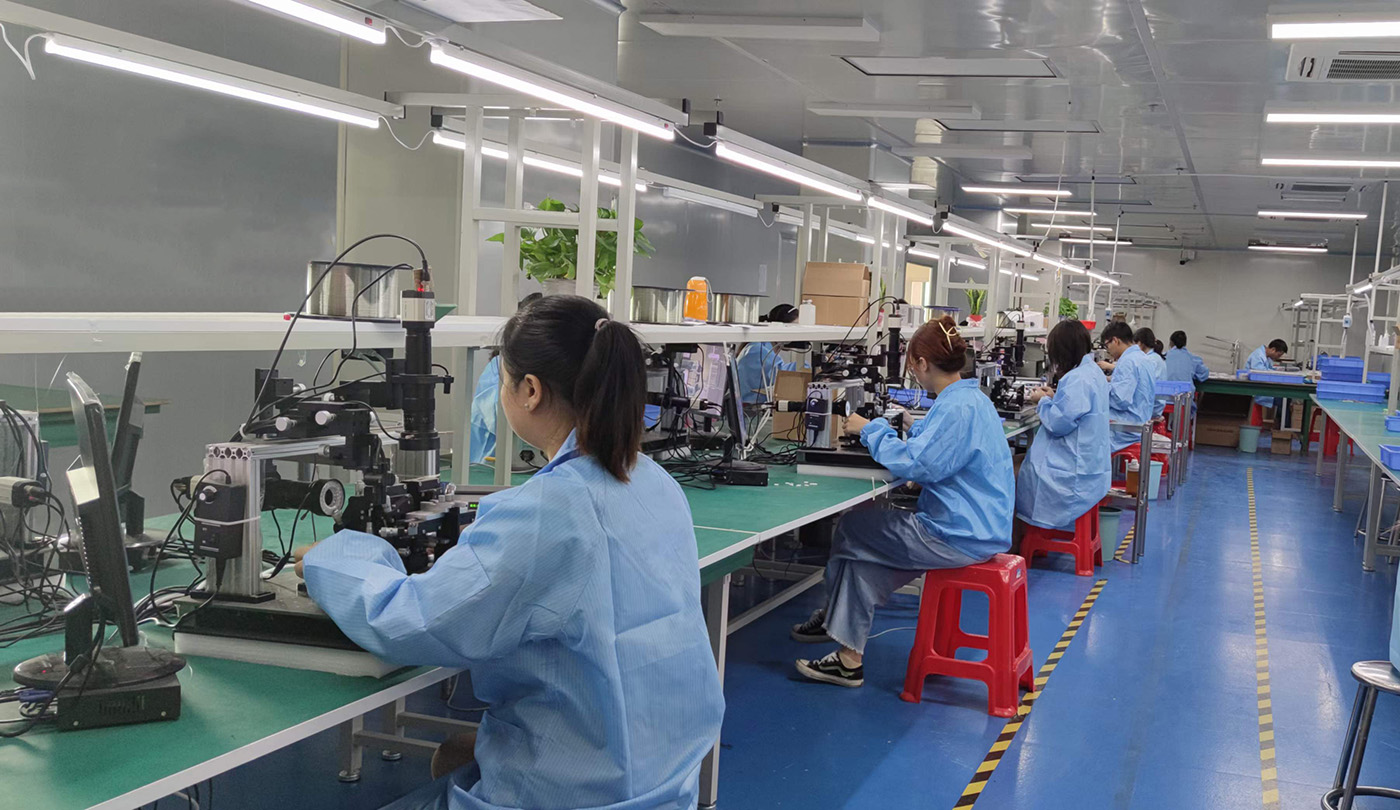
The manufacturing of high-performance optical equipment demands strict precision. As a hub of optical manufacturing, Chinese factories leverage an integrated supply chain that delivers significant advantages in quality control, scale, and customization. Chinese production facilities possess deep ecosystems in structural housing casting, high-precision laser array die-bonding, and automated optical testing.
At Kocent Optec Limited, our production plant integrates advanced fabrication methodologies that guarantee high-yield rates:
Deploying high-quality 10G AOC cables is not a one-size-fits-all endeavor. Different industries pose distinct environmental and performance challenges:
Within high-density server cabinets, 10G SFP+ AOCs are deployed to connect servers to access switches. Because they are thin and light, they do not restrict airflow, reducing cooling power costs and avoiding the cable-routing congestion common with thick, copper DAC configurations.
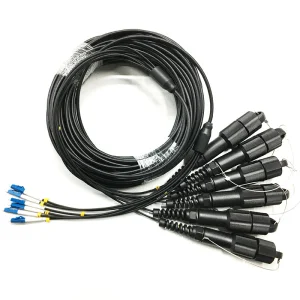
In modern 5G distributed RAN networks, reliable high-speed data transmission must extend from Baseband Units (BBUs) to Remote Radio Heads (RRHs). This requires optical fibers designed for extreme weather conditions. For these applications, we supply ruggedized assemblies such as the OEM PDLC Outdoor Field Fiber Optic Patch Cord. They are specifically engineered to withstand moisture, UV radiation, and broad temperature fluctuations.
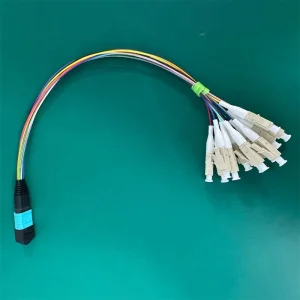
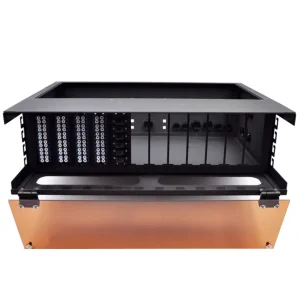
For enterprise network closets and telecommunication hubs requiring compact patching, our OEM Standard 19inch 288 Cores High Density Chassis Rack Mountable Patch Panel provides clean routing. It integrates seamlessly with OM3/OM4 LC fanout patch cables to convert multi-fiber trunk cables (such as MTP-24 Trunk Cables) down to discrete 10G channels.
The telecommunications industry is characterized by continuous bandwidth expansion. While 10G AOC is the preferred choice for edge and access-layer connections, the core network layers are transitioning to higher speeds. Silicon photonics and PAM4 (Pulse Amplitude Modulation) signaling are pushing speeds up to 100G, 400G, and 800G.
To meet these demanding data throughput needs, Kocent Optec has developed products like our 800GBASE 2xDR4/DR8 OSFP Finned Top PAM4 Transceiver Module. Our engineering team leverages high-speed VCSEL technology, advanced optical packaging, and robust manufacturing standards to deliver reliability across all performance tiers. This systematic approach ensures that as your network scales from 10G up to 800G, you maintain consistent reliability and operational efficiency.
Kocent Optec Limited, established in 2012 in Hong Kong as a high-tech communication enterprise, is one of China's leading fiber optic termination product manufacturers and solution providers.
We are dedicated to developing and manufacturing fiber optic communication products ranging from passive to active categories for telecommunication networks, enterprise networks, and data centers.


By leveraging our extensive experience and production capacity gained over the years, we maximize outcomes for our customers, expanding their core competencies and supporting their market position.
We emphasize close customer collaboration and define ourselves as a committed partner in fiber optic connection solutions. We believe our differentiators are your key advantages in a competitive market.
With more than 13 years of experience in manufacturing telecommunication fiber optic products, we strictly follow fiber optic industry standards. We use mature scientific methods to deliver your products on time and ensure that 100% of products are tested and inspected before shipment.
Years of sales and service experience have enabled us to build partnerships with customers worldwide. Today, we support clients in East Asia, Southeast Asia, the Middle East, Eastern Europe, Western Europe, Northern Europe, South America, North America, North Africa, and South Africa.
Proven OEM/ODM Telecom Tender Performance: Our OEM/ODM fiber optic products have won multiple Telecom Operator tenders, satisfying strict compliance tests and field reliability standards.
Our primary terminal telecom operator clients include: SingTel, Vodafone, America Movil, Telefonica, Bharti Airtel, Orange, Telenor, VimpelCom, TeliaSonera, Saudi Telecom, MTN, Viettel, Bitel, VNPT, Laos Telecom, MYTEL, Telkom, Telekom, Entel, FiberTel, StarFiber, Ooredoo, Beeline, and Azercell.
 KOCENT OPTEC
![ODM [SENKO] Optical Fiber MPO-PLUS](https://site.cdnfile.io/bb9ef4f37853297884c815b5d6cf2132300_300.webp)
![Cheap [SENKO] Optical Fiber MPO-PLUS Mini Connector](https://site.cdnfile.io/59c8deaa9fdec6072c4782dc4754000c300_300.webp)