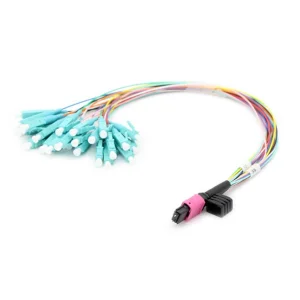
Select from our premium tier of optical components designed, verified, and shipped under strict quality tolerances.
The global optical communications infrastructure relies heavily on stable, low-loss interconnect components. Within legacy networks, test environments, high-vibration industrial sectors, and evolving telecommunication hubs, the FC (Ferrule Connector) to SC (Subscriber Connector) patch cord acts as a crucial bridging device. While newer data center designs favor high-density connectors like MTP/MPO or LC, the FC to SC format maintains a strong market share due to its specific mechanical advantages.
FC connectors, featuring threaded metallic couplings, are highly valued in environments subjected to physical vibration—such as defense systems, transport sensors, and high-precision testing laboratories. In contrast, SC connectors leverage a push-pull plastic latching system that offers rapid, tool-less insertion and extraction, widely adopted in Fiber-To-The-Home (FTTH) networks, central offices, and general CATV systems. Combining these two standards into a single hybrid jumper facilitates seamless operations when linking rugged testing equipment or legacy distribution hubs to modern high-density hardware.
| Connector Type | Coupling Mechanism | Ferrule Material | Ideal Application Environments | Typical Insertion Loss |
|---|---|---|---|---|
| FC (Ferrule Connector) | Threaded / Screw-on Metal Nut | Zirconia Ceramic (High Precision) | Laboratory Instrumentation, CATV, High-Vibration Systems | ≤ 0.20 dB |
| SC (Subscriber Connector) | Push-Pull Snap-in Plastic Housing | Zirconia Ceramic (Standard / APC) | Enterprise LAN, FTTH, Telecom Central Offices | ≤ 0.20 dB |
From an engineering standpoint, the quality of a fiber patch cord depends directly on three critical components: the ceramic ferrule tolerance, the concentricity of the core fiber, and the polishing geometry. High-performance FC and SC assemblies manufactured under international standards conform to strict geometrical parameters including radius of curvature, apex offset, and fiber height.
We source ultra-pure zirconium dioxide (ZrO2) ceramic ferrules. These raw parts maintain inner diameter tolerances of less than 0.5 μm, ensuring the optical fiber core is centered with sub-micron precision to minimize lateral offset insertion losses.
Every single patch cord is put through 3D non-contact interferometry testing. This validates that the fiber's end-face geometry exhibits a precise radius of curvature (10 to 25 mm for UPC connectors) to prevent physical micro-gaps that degrade signal integrity.
Our standard manufacturing line achieves average Insertion Loss (IL) ≤ 0.15 dB (maximum 0.20 dB limit) and Return Loss (RL) ≥ 55 dB for UPC (Ultra Physical Contact) and ≥ 65 dB for APC (Angled Physical Contact) components.
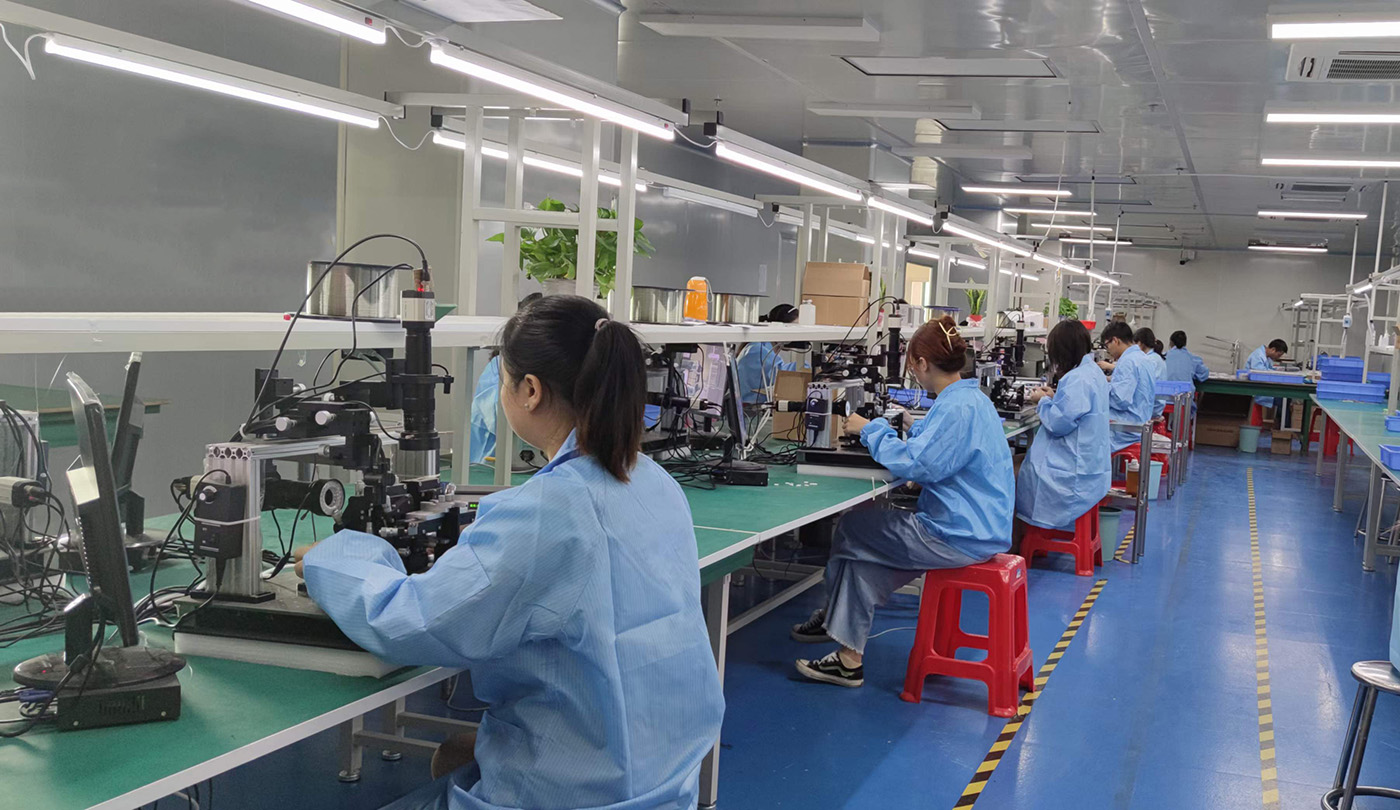
Sourcing optical patch cords directly from qualified Chinese factories offers global network operators and distributors structural competitive advantages. The concentrated ecosystem in manufacturing hubs like Shenzhen, Ningbo, and Wuhan integrates raw materials processing, precision metal machining, optical drawing, and high-volume automated testing in close proximity.
This geographic integration reduces logistical lead times and material costs. Chinese manufacturers utilize advanced automated polishing lines, digital inspection benches, and mass production setups to produce custom patch cords at scale. Consequently, they achieve unit costs that are 30% to 50% lower than regional western assemblies, while keeping production quality consistent with international standards such as Telcordia GR-326-CORE.
Established in 2012 in Hong Kong as a high-tech telecommunications enterprise, Kocent Optec Limited has grown into one of China's premier manufacturers and turnkey solution providers for fiber optic termination products. We develop, engineer, and manufacture passive and active fiber optic components tailored for modern telecommunication systems, enterprise cabling, and demanding data center infrastructures.
By combining our production experience with strict quality management systems, we help our global client base maintain robust networks and optimize their overall deployment costs. Our focus remains on deep technical collaboration; we act as a long-term engineering partner rather than a transactional vendor. We believe that our material and quality testing standards directly translate into performance advantages for our clients' networks.
Our OEM and ODM solutions are designed to satisfy international network operators. Our manufacturing lines support projects for some of the world's largest telecom organizations, including:

While standard patch cords connect consumer network appliances, industrial-grade FC-SC assemblies are deployed in specialized system architectures. Understanding these application scenarios helps procurement officers specify correct jacket configurations and fiber types:
Estimating project costs for large-scale fiber optic deployments requires an understanding of how component choices affect unit prices. Sourcing generic patch cords might seem budget-friendly initially, but choosing components designed for your specific deployment conditions avoids costly field issues. The primary factors that influence our OEM pricing structure include:
We source authentic glass from top-tier producers (such as Corning or YoFC). G.657.A1/A2 bend-insensitive fibers command a slight price premium over standard G.652.D single-mode fibers, but they significantly reduce macro-bending losses in compact terminal boxes.
PVC jackets are suitable for basic patching. However, projects calling for fire-resistant materials require LSZH (Low Smoke Zero Halogen), OFNR (Riser-rated), or OFNP (Plenum-rated) jackets. Plenums use specialized fluoropolymers that increase the overall material cost.
APC connectors (slanted at an 8° angle) require precise, multi-stage polishing steps compared to standard UPC connectors. This added processing is reflected in the unit price but is necessary for return-loss sensitive networks.
Complement your installations with our tested, carrier-grade active and passive components.
 KOCENT OPTEC