Modern telecommunications networks are increasingly pushed to their physical boundaries. Whether deployed in heavy industrial environments, direct-buried outdoor conduits, or overhead installations subject to severe wind loads and rodent attacks, optical fibers require robust protection that standard PVC/LSZH jackets cannot guarantee.
Armored Optical Cables solve these engineering challenges. By integrating metallic or dielectric protective layers directly into the cable's structural cross-section, these cables present unparalleled crush resistance, high tensile strength, and absolute security against mechanical stresses, moisture penetration, and rodent damage.

Armored optical cables are complex, multi-layered assemblies engineered to protect delicate silica glass fibers from harsh external stresses. Below is a breakdown of the standard layers that constitute a premium optical cable.
This serves as the primary barrier against mechanical impact and rodent chewing. Corrugated steel tape provides moisture resistance and radial strength, while interlocking aluminum or steel armor delivers exceptional flexibility for indoor installations.
High-tensile Aramid yarn (Kevlar) or Fiber Reinforced Plastic (FRP) rods are placed alongside the core. They absorb the longitudinal tensile force, preventing the glass cores from stretching during installation and operation.
Depending on the deployment scenario (indoor, outdoor, plenum, or riser), the outer jacket is formulated to resist UV light, chemical exposure, or to conform to low-smoke zero-halogen (LSZH) flame retardancy codes.
| Armor Material Type | Common Application | Crush Resistance (N/100mm) | Bending Radius (Static/Dynamic) | Primary Physical Benefit |
|---|---|---|---|---|
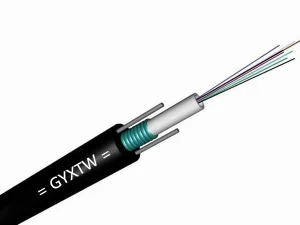
| Corrugated Steel Tape (e.g. GYXTW) | Outdoor Direct Buried & Duct | ≥ 3000 N | 10D / 20D | Absolute rodent protection, water blocking, high crush resistance |
| Interlocking Aluminum/Steel | Indoor Riser, Plenum, Data Centers | ≥ 1500 N | 15D / 30D | High flexibility, eliminates the need for inner conduit/ducts |
| Steel Wire Armored (SWA) | Subsea, Shafts, Extreme Heavy Industry | ≥ 5000 N | 20D / 40D | Extreme tensile loading capacity, heavy axial stress resistance |
| Dielectric Armor (FRP/Glass Yarn) | High-voltage areas, Lightning-prone sites | ≥ 1000 N | 10D / 20D | Non-conductive, electromagnetic interference (EMI) immune |
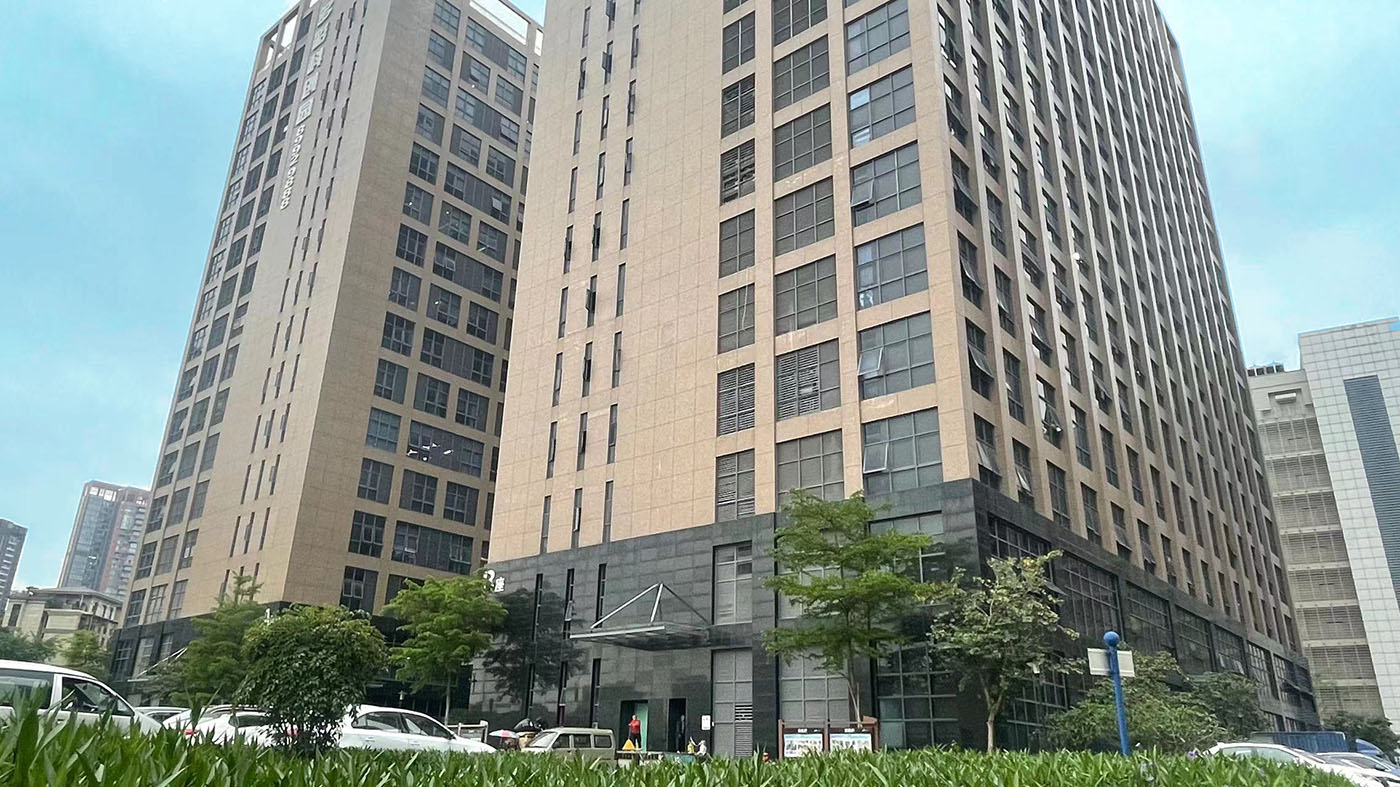
Kocent Optec Limited, established in 2012 in Hong Kong as a high-tech communication enterprise, is one of China's leading fiber optic termination product manufacturers and solution providers. We are dedicated to developing and manufacturing fiber optic communication products ranging from passive to active categories for telecommunication networks, enterprise networks, and data centers.
By leveraging our extensive experience and excellent production capacity gained over the years, we magnify the outcomes for our valued customers. This ultimately expands their core competencies and helps them outperform competitors. We place emphasis on customer collaboration, and we define ourselves as your valuable partner in fiber optic connection solutions.
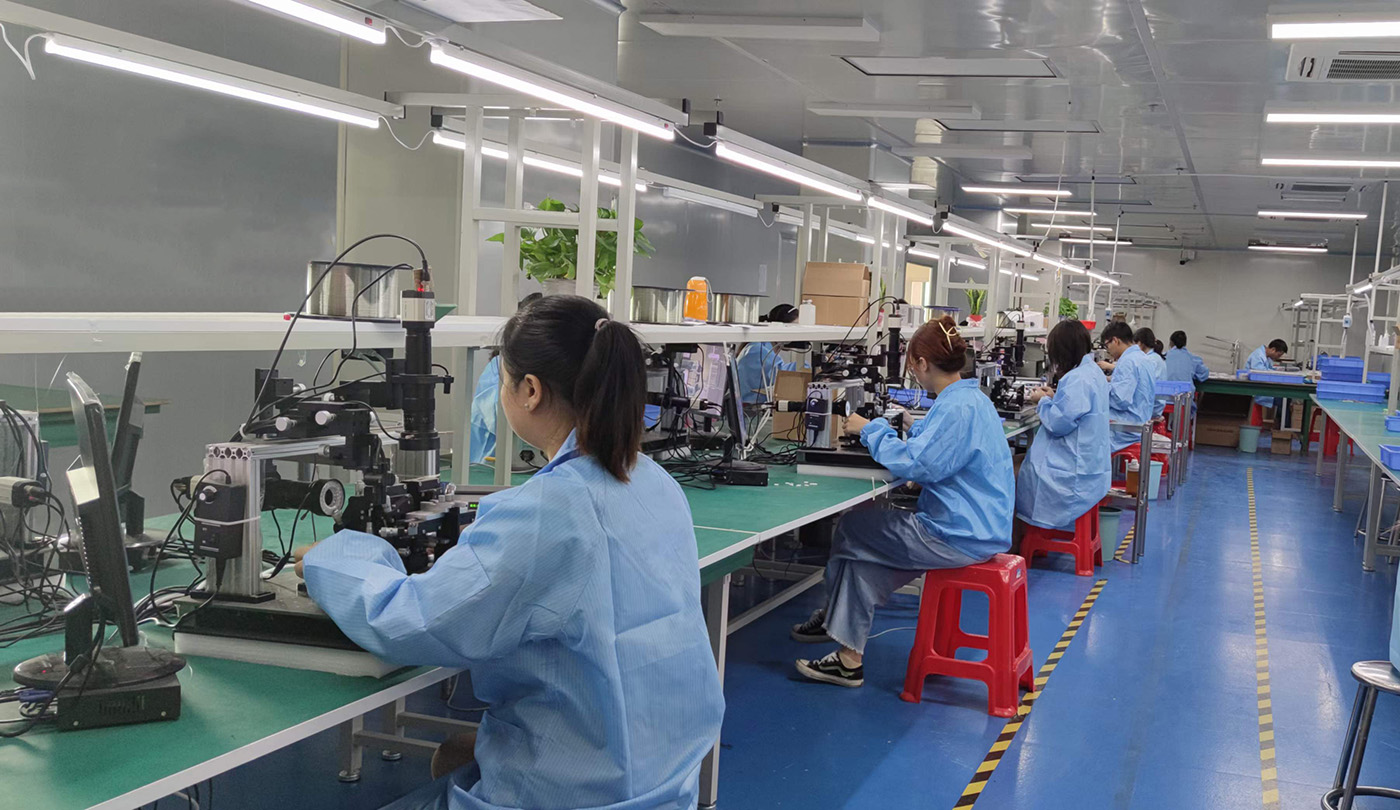
With more than 13 years of manufacturing telecommunication fiber optic products, we strictly follow fiber optic industry standards by using mature scientific methods. We ensure 100% of products are tested and inspected before shipment.
We source only high-grade silica glass fiber (Corning, Yangtze Optical Fibre, etc.), robust aramid yarns, and top-tier polymers to guarantee long-term performance stability and structural integrity.
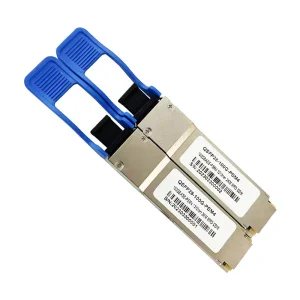
All fiber patch cords, optical cables, and transceivers undergo rigorous insertion loss (IL), return loss (RL), tensile strength, and temperature cycle chamber testing prior to shipment.
Located in the heart of China's telecom production hub, Kocent Optec optimizes production costs through scale efficiencies, offering competitive pricing without compromising on technical quality.
Global enterprises require full compliance with localized construction codes and electrical rules. We align our manufacturing to meet major international standards.
Years of sales and service experience have enabled us to win customers from East Asia, Southeast Asia, Middle East, Eastern Europe, Western Europe, Northern Europe, South America, North America, North Africa, and South Africa. Our OEM and ODM products have won multiple Telecom Operator tenders, satisfying strict end-user requests.
High-density, OM3/OM4/OM5 multicore armored patch cables provide protection against accidental pinching and severe bending within congested vertical cable ladders and horizontal underfloor trays.
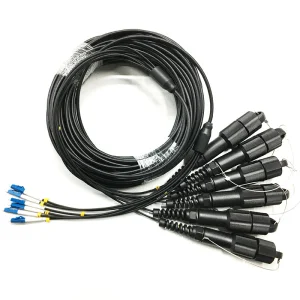
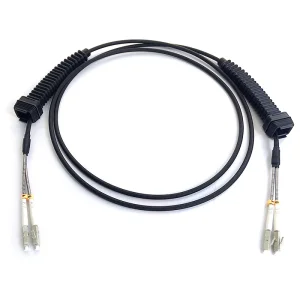
Cables like the PDLC Outdoor Patch Cord link baseband units (BBUs) to remote radio heads (RRH) at tower tops. Armored protection survives intense UV, icing, wind strain, and physical friction.
Heavy machinery and high-voltage pipelines introduce structural vibrations and electromagnetic interference. Metallic armored cables isolate physical strain and ground environmental noises.
1. Transition to Higher Core Densities: Deploying 144, 288, and 864-core micro-armored cables is becoming the standard for urban duct layouts to maximize path space utilization.
2. Emergence of OM5 Multimode Fiber: Essential for Short Wavelength Division Multiplexing (SWDM) in high-speed enterprise centers, helping scale bandwidth from 100G to 400G and 800G efficiently.
3. Anti-Rodent non-metallic designs: Using glass-yarn-reinforced dielectric armor to discourage wildlife tampering without introducing metallic properties into high-voltage utility paths.
Armored optical cables feature an integrated layer of metal tape, metal wire, or glass yarn inside the outer sheath to provide high resistance against mechanical crushing, pulling, and rodent damage. Unarmored cables rely solely on standard plastic sheaths and internal yarn, leaving them susceptible to damage in direct-buried, heavy outdoor, or conduit-shared scenarios.
No, the armoring is strictly structural. The fiber cores (such as G.652.D or OM4) are housed inside gel-filled buffer tubes or tight buffers, isolating them from physical forces. Properly designed armored cables maintain the same insertion loss, attenuation, and dispersion ratings as unarmored alternatives.
Corrugated steel tape armor is best suited for outdoor, direct-buried, or underground duct installations because of its outstanding moisture resistance and rodent defense. Interlocking armor (aluminum or steel) is primarily used indoors for risers and plenums since it provides high structural strength while remaining highly flexible and easier to pull through tight building corners.
Yes, all Kocent Optec products are manufactured under rigorous QA systems. Our products are fully tested and conform to IEC standards. Depending on project demands, we provide compliance documents for RoHS, REACH, and CPR classifications, ensuring seamless integration into public tenders and large enterprise networks.
 KOCENT OPTEC