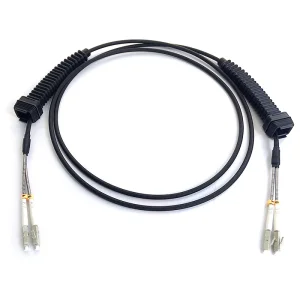
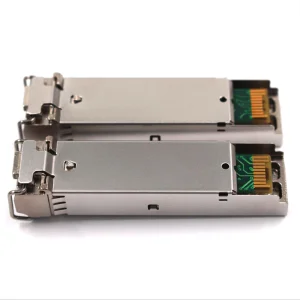
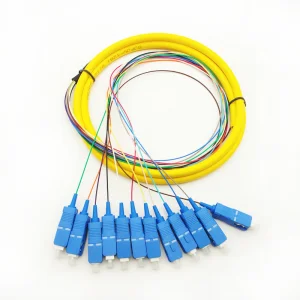
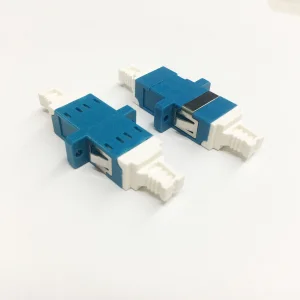
High-performance custom fiber components designed to lower link latency and maximize infrastructure throughput.
The telecommunications and enterprise networking landscape is undergoing a massive shift as bandwidth requirements swell. At the center of this transition sits the 10 Gbit SFP (SFP+) module. Once considered premium hardware for flagship enterprise data centers, 10G optical links have now transitioned to the fundamental baseline for modern local area networks (LANs), metropolitan area networks (MANs), and campus environments.
Industrially, the 10 Gbit SFP module is no longer a localized high-performance luxury. It represents the global standard for high-bandwidth uplinks. Today, manufacturers and network architects face structural pressures to reduce capital expenditures (CapEx) while scaling physical deployments. As a result, seeking out cheap 10 Gbit SFP suppliers is no longer just a purchasing department initiative—it is a critical optimization vector for network engineers designing scalable infrastructure.
The Evolution of MSA Standards: The standardization governed by Multi-Source Agreements (MSA)—such as SFF-8431 and SFF-8472—has commoditized 10G optical modules. This technical synchronization allows third-party suppliers to offer direct-compatible modules matching the exact performance profile of original brand equipment, at a fraction of the cost.
In developing markets across Southeast Asia, Eastern Europe, and South America, telecom infrastructure expansion relies heavily on these cost-optimized modules to roll out FTTH (Fiber-to-the-Home) networks and aggregate edge switching systems. The demand for bulk 10G SFP+ quotes continues to grow as system design shifts from traditional copper cabling to robust single-mode and multi-mode fiber networks.
Understating the macro economics and technical shifts that impact SFP+ pricing and procurement strategies.
Silicon photonics and mature manufacturing processes have pushed laser yields close to 99%. This technical peak allows independent manufacturers to maintain extremely low production costs without compromising optical power budgets.
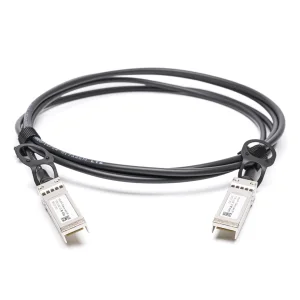
For short-reach rack-to-rack interconnects (under 10 meters), Direct Attach Copper (DAC) cables and Active Optical Cables (AOC) have emerged as highly cost-efficient alternatives, saving up to 60% on total port deployment cost.
Modern Network Operating Systems (NOS) are increasingly adopting "open-source-friendly" architectures. This shift allows administrators to bypass restrictive vendor locks, opening the door to massive third-party SFP+ integration projects.
When requesting quotes for 10 Gbit SFP transceivers, understanding the underlying laser taxonomy is critical for long-term network durability. The 10G SFP+ form factor employs three primary laser technologies, each matching specific deployment reaches and physical topologies:
As single-mode fiber deployment costs rise, network engineers are moving away from traditional dual-fiber systems. BiDirectional (BiDi) 10G SFP+ modules utilize Wavelength Division Multiplexing to transmit and receive data over a single fiber strand using split wavelengths (e.g., 1270nm TX / 1330nm RX). This doubles existing fiber capacity instantly without laying new cable, representing a massive CapEx conservation strategy for modern enterprises.
Established in 2012 in Hong Kong as a hi-tech communication enterprise, Kocent Optec Limited has grown to become one of China's leading fiber optic termination product manufacturers and complete solution providers.
We are dedicated to developing and manufacturing a wide variety of fiber optic communication products ranging from passive to active categories. Our specialized solutions cater directly to telecommunication networks, enterprise networks, and cloud data centers globally.
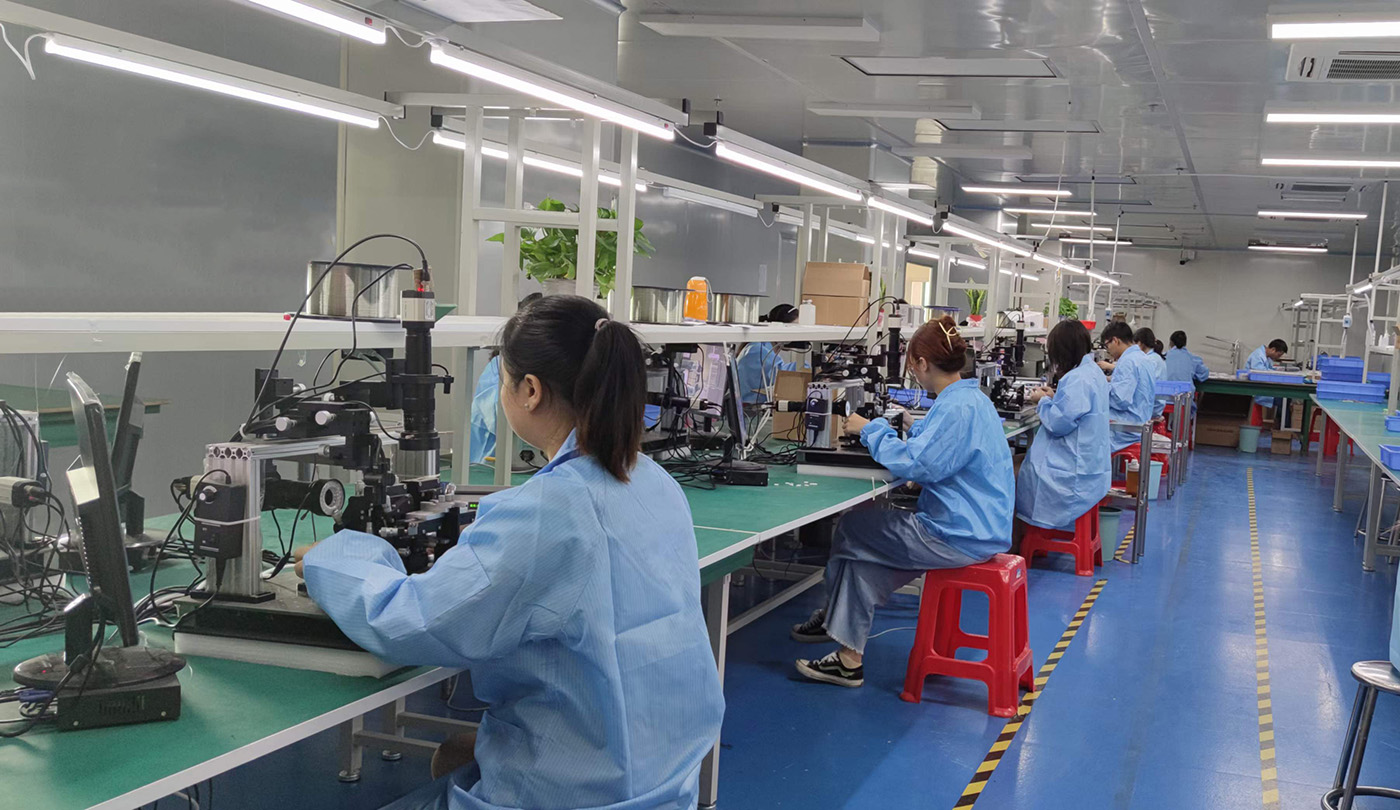
With more than 13 years of experience in manufacturing telecommunication fiber optic products, we strictly adhere to rigorous industry standards. By utilizing mature scientific testing methods, we deliver your orders on time and guarantee that 100% of our products are fully tested and inspected prior to shipment.

Aligning physical hardware specifications to industrial deployment topologies.
Designing high-density leaf-spine network architectures requires reliable, low-latency links. Combining 10G SFP+ Active Optical Cables (AOC) at the top of the rack with 10G SR modules in the core provides a low-cost, low-power connection system that scales bandwidth efficiently.
For carrier environments connecting millions of users, GPON and OLT aggregations rely on industrial-grade 10G SFP+ modules. Operating reliably in non-temperature-controlled environments, these components ensure consistent uptimes for outer metropolitan networks.
Connecting separate buildings across campus networks requires long-range fiber paths. Implementing 10G SFP+ LR transceivers over single-mode cabling builds a high-capacity trunk network that bypasses electromagnetic interference over long distances.

By leveraging our extensive production capacity and the deep manufacturing experience we have accumulated over the years, we focus on maximizing performance for our clients. Our goals are to help expand your core competencies, control infrastructural costs, and outperform competitors.
At Kocent Optec, we define ourselves as your trusted manufacturing partner for optical fiber connections. We focus on customer collaboration, believing that our production differentiators translate directly into your technical and economic advantages in the marketplace.
Strict Quality Controls: Every single batch of transceivers, passive splitters, and patch cords goes through comprehensive insertion loss, return loss, and environmental stress tests to ensure compliance with international telecom standards.
Years of international sales and technical service have allowed Kocent Optec to build long-term relationships across multiple continents. Today, our products serve telecommunication systems and corporate networks in East Asia, Southeast Asia, the Middle East, Eastern Europe, Western Europe, Northern Europe, South America, North America, North Africa, and South Africa.
Win-win cooperation is our constant goal. Many of our custom OEM and ODM products have won major Telecom Operator tenders, satisfying strict end-user quality mandates under rigorous operating conditions.
Our main terminal telecom operators include:
SingTel, Vodafone, America Movil, Telefonica, Bharti Airtel, Orange, Telenor, VimpelCom, TeliaSonera, Saudi Telecom, MTN, Viettel, Bitel, VNPT, Laos Telecom, MYTEL, Telkom, Telekom, Entel, FiberTel, StarFiber, Ooredoo, Beeline, Azercell.
Technical and procurement answers designed to streamline your 10G SFP+ purchasing choices.
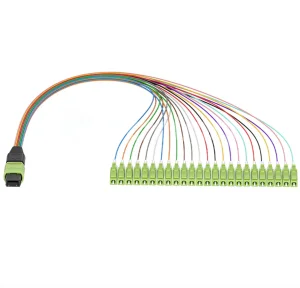
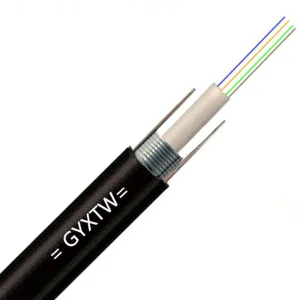
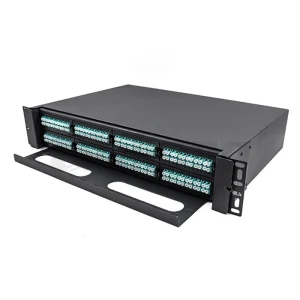
Ensure stable connection performance with our verified, factory-tested fiber accessories.
 KOCENT OPTEC