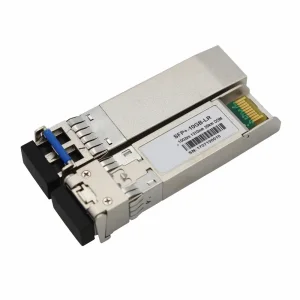
"In the era of hyper-scale cloud computing, edge computing architectures, and 5G network densification, the 10 Gigabit SFP+ optical module remains the cornerstone of modern data transmission, balancing cost-efficiency with high-speed performance."
The global telecommunications and network infrastructure market is experiencing a profound paradigm shift. As corporate enterprises, hyper-scale data centers, and regional telecom operators migrate toward high-capacity topologies, the demand for 10 Gigabit SFP+ (Small Form-factor Pluggable Plus) technology has solidified. No longer just a high-end luxury, 10G SFP+ transceivers represent the mainstream utility interface across modern Local Area Networks (LANs), Metropolitan Area Networks (MANs), and Storage Area Networks (SANs).
While faster standards like 25G, 100G, and 400G are rapidly scaling in core data center spines, 10G SFP+ maintains its dominance at the access layer and network edge. The reasons are economic as much as technical. Upgrading access networks to 10G offers a massive bandwidth multiplier over legacy Gigabit Ethernet without requiring a complete overhaul of existing physical layer cabling. This makes high-quality 10G SFP+ suppliers critical partners for telecom infrastructure deployments globally.
Today, the industrial focus is intensely trained on reliability and environmental tolerance. Industrial 10G SFP+ transceivers are engineered to operate in extreme temperature ranges (from -40°C to +85°C), finding placement in outdoor cell towers, Smart City sensors, and remote utility grids. The convergence of IoT (Internet of Things) and broadband expansion has generated a steady, high-volume requirement for hot-pluggable 10G interfaces capable of handling the packet load of thousands of endpoint nodes.
Optical transmission relies on precise laser architectures. For standard short-range deployments (up to 300 meters), Multi-mode Fiber (MMF) paired with 850nm VCSEL (Vertical-Cavity Surface-Emitting Laser) light sources is preferred due to lower module cost. However, for metropolitan links, enterprise backbones, and large campus distributions exceeding several hundred meters, Single-mode Fiber (SMF) using 1310nm DFB (Distributed Feedback) transmitters and PIN photodiodes is the industry benchmark. This specific configuration achieves high signal integrity over distances up to 10 kilometers with minimal insertion loss and negligible chromatic dispersion.
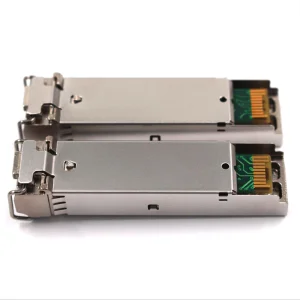
Seamlessly hot-swappable form factor allows modular upgrades and real-time maintenance without shutting down system power or disrupting packet routing operations.
Real-time telemetry tracking laser temperature, transmit power, receive optical power, and supply voltage, enabling predictive maintenance schedules.
Strict conformance to MSA standard SFF-8431 ensures cross-brand compatibility with major enterprise switches, routers, and host network interface cards (NICs).
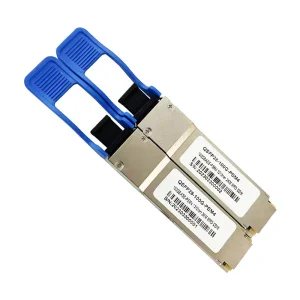
As networks face unprecedented data volume surges, the technical roadmap of transceivers focuses heavily on footprint optimization, reduced power consumption, and thermal management. The 10G SFP+ form factor paved the way for QSFP (Quad SFP) architectures that aggregate multiple 10G/25G channels into 40G and 100G lanes. Current technological research indicates that while high-speed links adopt PAM4 (Pulse Amplitude Modulation) and coherent optics for long-haul transmission, 10G SFP+ continues to evolve with lower power envelopes, drop-in compatibility, and specialized wavelength profiles like DWDM (Dense Wavelength Division Multiplexing) to multiply capacity over existing fiber routes.
Every networking environment presents distinct physical challenges, distance limitations, and bandwidth profiles. To yield the best performance metrics, network architects rely on structured solutions combining transceivers, low-loss trunk cables, and robust distribution hardware.
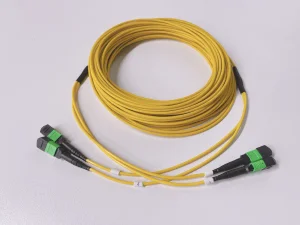
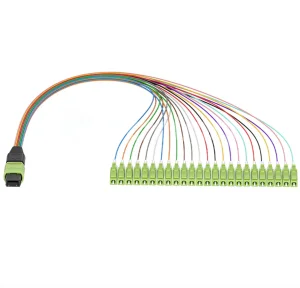
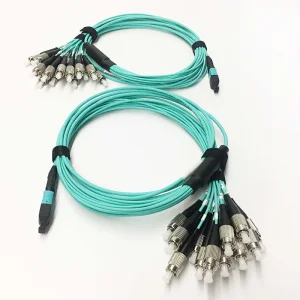
Modern cloud architecture demands high throughput and minimal round-trip latency. In high-density data centers, optical link budgeting is strict. Here, MTP-24 ultra-low loss trunk cables serve as the network backplane, routing massive amounts of parallel data lines from core servers directly to distribution patches. Working in tandem with 10G SFP+ transceivers, this enables seamless routing of multi-terabit workloads across network racks, reducing floor space footprints while improving structural airflow and cooling mechanics.
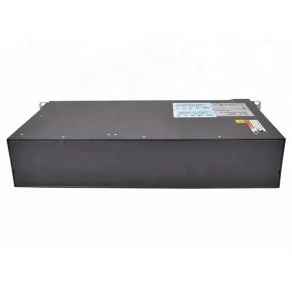
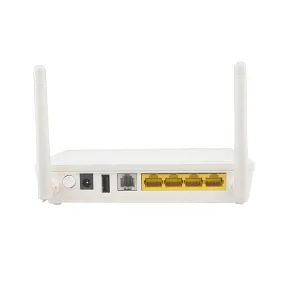
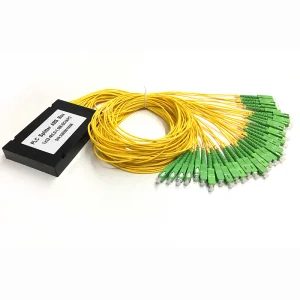
Telecom operators looking to bridge the last mile utilize GPON (Gigabit Passive Optical Network) architectures. High-capacity OLT (Optical Line Terminals) deployed at central offices receive upstream data pipelines via high-speed 10G SFP+ ports. The optical signal is then distributed downstream through ABS box PLC splitters to end-user GPON ONUs (Optical Network Units) at homes or commercial premises. This multi-layered ecosystem requires strict compatibility and standardized interfaces to maintain service availability levels exceeding 99.999%.
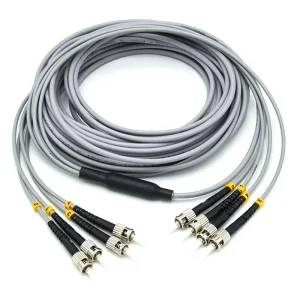
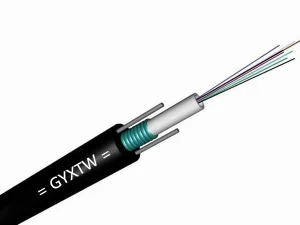
For municipal surveillance, traffic monitoring systems, and outdoor campus distributions, optical cables are exposed to physical stresses, moisture, and temperature swings. Deploying standard indoor patch cords in these scenarios is a recipe for system failure. Industrial planners utilize GYXTW armored outdoor optical cables featuring central loose tubes filled with water-blocking compounds and corrugated steel tape armor. These rugged outdoor cables connect to regional node stations, terminating at 10G SFP+ ports to guarantee high-bandwidth backhaul regardless of outdoor climate fluctuations.
Kocent Optec Limited, established in 2012 in Hong Kong as a hi-tech communication enterprise, is one of China's leading fiber optic termination product manufacturers and solution providers. We are dedicated to developing and manufacturing fiber optic communication products ranging from passive to active categories for telecommunication networks, enterprise networks, and data centers.
By leveraging our extensive experience and excellent production capacity gained over the years, we magnify the outcome for our valuable customers. This ultimately expands their core competencies and helps them outperform competitors. We place emphasis on customer collaboration, defining ourselves as your valuable partner in fiber optic connection solutions. We believe our differentiators are your perceived advantages.

With more than 13 years of experience in manufacturing telecommunication fiber optic products, we follow strictly fiber optic industry standards by using mature scientific methods to deliver your products on time. We ensure that 100% of our products are tested and inspected before shipment. Our state-of-the-art laboratory performs optical parameter testing, mechanical stress testing, and environmental simulation to guarantee every module meets or exceeds target thresholds.
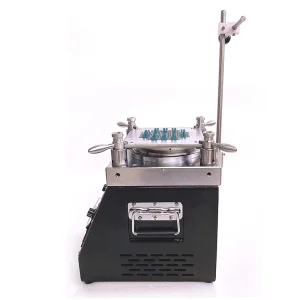
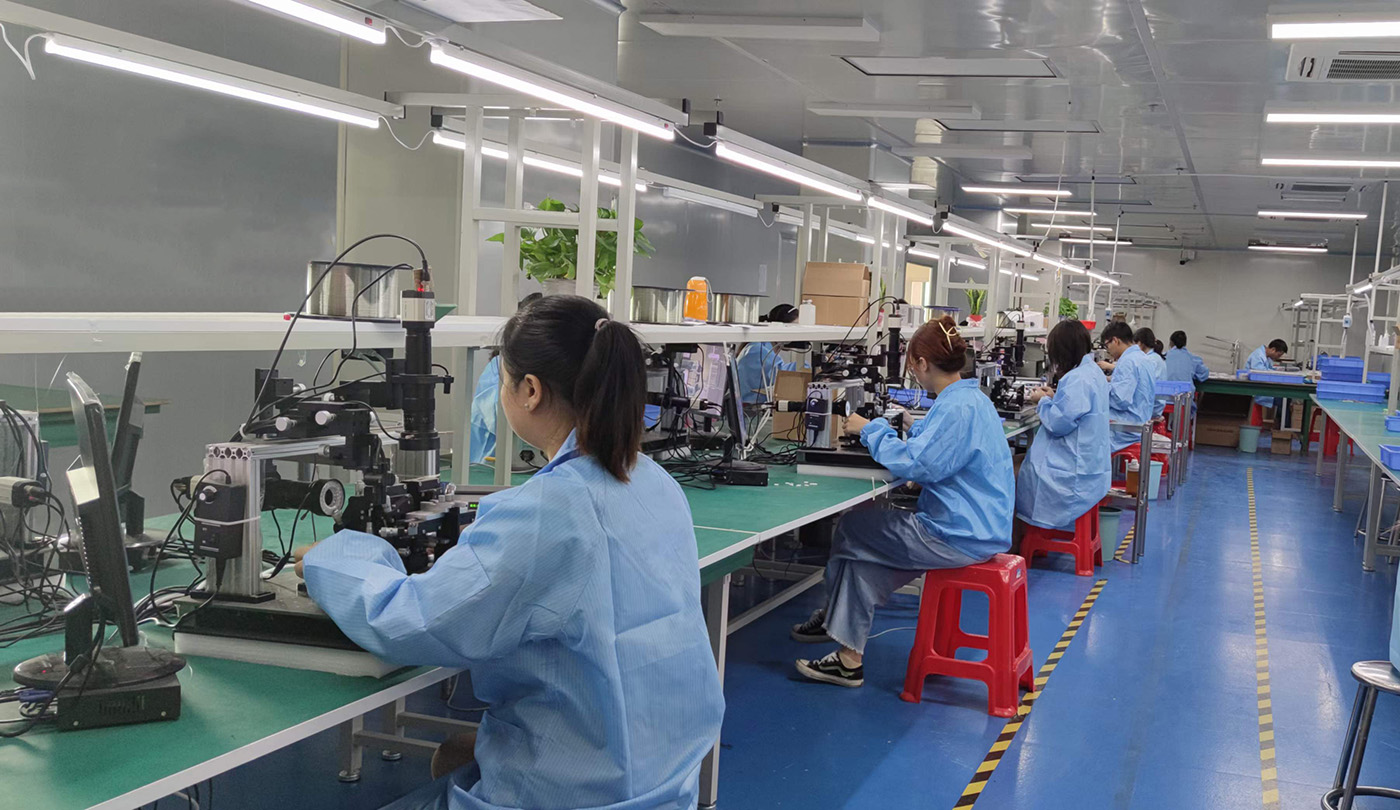
Our comprehensive production line handles fiber optic assemblies, active transceiver programming, polishing machines (such as our four-corner pressurization PM3600), and passive splitting components. This vertically integrated control ensures KOCENT OPTEC solutions maintain reliability under the most demanding enterprise workloads.

Years of sales and service experience have enabled us to win customers from different regions. Today, we have customers from East Asia, Southeast Asia, Middle East, Eastern Europe, Western Europe, Northern Europe, South America, North America, North Africa, and South Africa.
Win-win cooperation is our constant goal. Many of our OEM and ODM products have won Telecom Operator tenders and satisfy strict end-user requests. Our main terminal telecom operators include:
SingTel, Vodafone, America Movil, Telefonica, Bharti Airtel, Orange, Telenor, VimpelCom, TeliaSonera, Saudi Telecom, MTN, Viettel, Bitel, VNPT, Laos Telecom, MYTEL, Telkom, Telekom, Entel, FiberTel, StarFiber, Ooredoo, Beeline, Azercell.
 KOCENT OPTEC