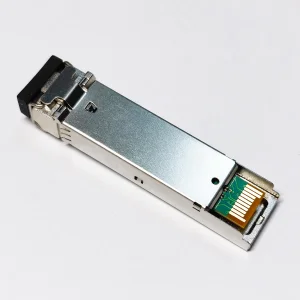
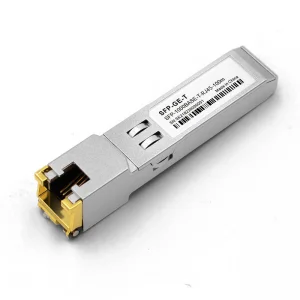
Modern telecommunication networks require reliable, high-speed connection architectures. The 10G LR SFP+ (Long Range Small Form-factor Pluggable) optical transceiver represents a vital building block in bridging enterprise local access connections to regional backhaul nodes.Operating on a nominal wavelength of 1310nm over single-mode fiber (SMF), these modules are critical for backbone routing, access rings, and regional high-speed networking.
In large-scale metropolitan area networks (MANs) and cellular backhaul structures, 10G LR modules function as the standard solution for 10km link budgets. Due to their optimized power consumption (typically under 1W) and high thermal tolerance, network design engineers deploy them extensively in multi-vendor edge routing nodes and aggregation switches. When combined with dense wavelength division multiplexing (DWDM) solutions or active/passive configurations, they allow service providers to scale bandwidth seamlessly without undergoing expensive infrastructure overhauls.
Enables zero-latency link configurations for core municipal switches, connecting localized enterprise hubs to central offices up to 10km away.
Provides reliable links between remote Baseband Units (BBUs) and Remote Radio Heads (RRHs) in LTE Advanced and 5G cellular network segments.
Bridges high-capacity switches inside corporate offices to offsite cloud resource servers using single-mode fiber pathways.
The transceiver market is experiencing steady structural growth due to global digitization initiatives, FTTH deployments, and industrial edge computing. While ultra-high-speed transceivers (400G and 800G) occupy center stage in mega-scale hyper-scale data centers, the 10G SFP+ LR remains the absolute workhorse for enterprise networking and standard telecom access links. This sustained demand is driven by the cost efficiency, reliability, and robust design of 10G optical hardware.
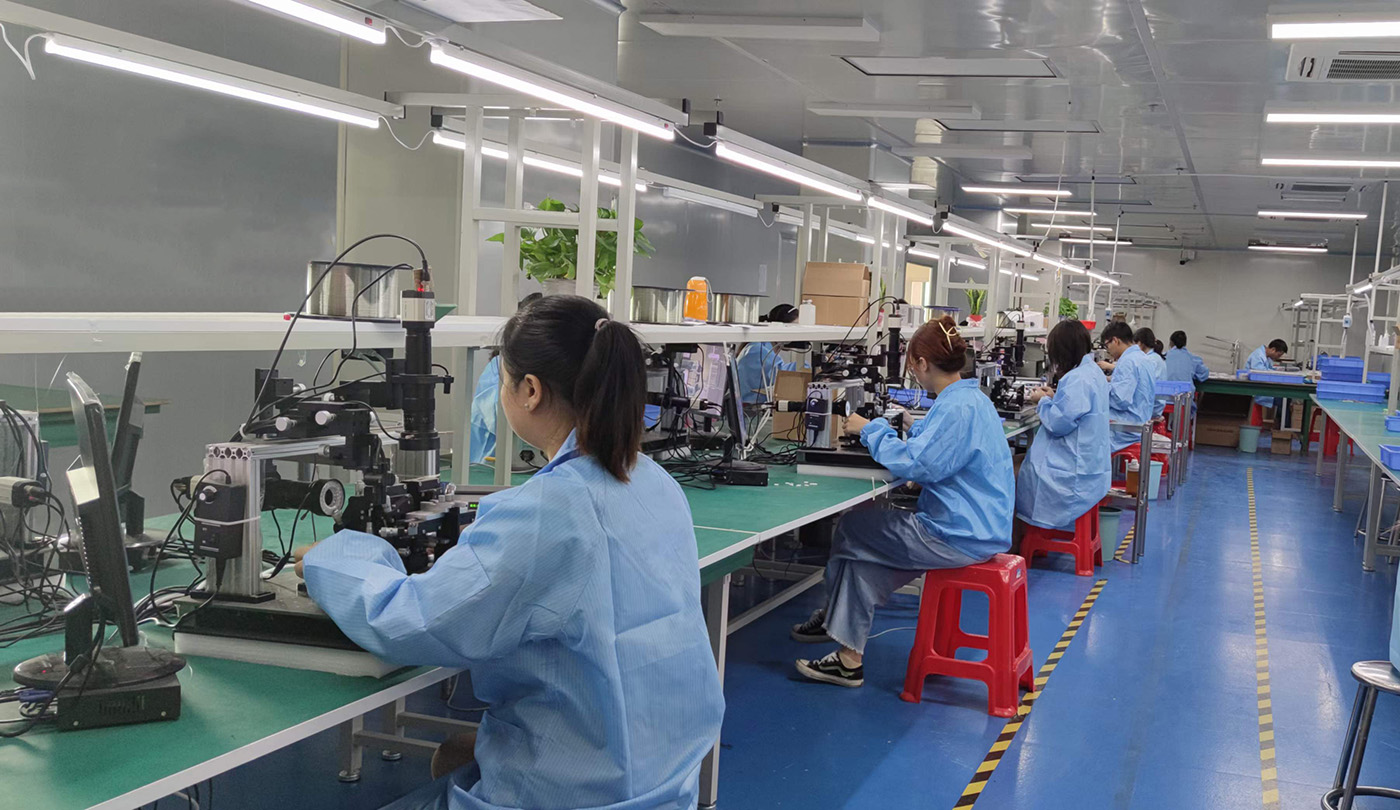
Today's B2B procurement landscape for optical network components relies heavily on certified OEM factories that offer strict compatibility verification and long-term warranties. As network operators face ongoing operating expense constraints, direct-from-factory sourcing models have become the preferred route to bypass standard retail markup channels. Consequently, manufacturers that integrate advanced automated optical coupling systems and rigorous cleanroom processing lines occupy a commanding position in the global supply chain.
The design architecture of an OEM 10G LR SFP+ transceiver revolves around the Multi-Source Agreement (MSA) standards, specifically SFF-8431 and SFF-8472. These standards dictate both the mechanical footprint and the optical/electrical interfaces to guarantee multi-platform plug-and-play capability.
| Parameter / Metric | Specification Detail | Standards Baseline |
|---|---|---|
| Wavelength | 1310 nm DFB Laser transmitter | IEEE 802.3ae 10GBASE-LR |
| Fiber Type | Single-mode Fiber (SMF) G.652 | ITU-T G.652.D compliant |
| Max Transmission Distance | 10 kilometers (6.2 miles) | IEEE 802.3ae Link budgets |
| Data Rate Support | 8.5 Gbps to 10.3125 Gbps (Optionally 11.3 Gbps) | 10G Ethernet / 10G Fiber Channel |
| Interface Port | Duplex LC Optical Connector | SFF-8432 Physical dimensions |
| Receiver Type | PIN Photodiode | High Sensitivity ROSA assemblies |
| Diagnostic Monitoring | DOM / DDMI Real-Time Support | SFF-8472 Register Address 0xA2 |
Every high-performance module incorporates a DFB (Distributed Feedback) laser diode inside its TOSA (Transmitter Optical Sub-Assembly) and a PIN receiver inside its ROSA (Receiver Optical Sub-Assembly). The DOM/DDMI feature allows systems administrators to monitor parameters such as internal operational temperatures, laser bias currents, supply voltage levels, and transacted optical power levels directly from terminal operating software.
Kocent Optec Limited, established in 2012 in Hong Kong as a hi-tech communication enterprise, is one of China's leading fiber optic termination product manufacturers and solution providers.
We are dedicated to developing and manufacturing fiber optic communication products ranging from passive to active categories for telecommunication networks, enterprise networks, and data centers.
By leveraging our extensive experience and excellent production capacity we gained over the years, we magnify the outcome for our valuable customers, which ultimately expands their core competencies and helps them outperform competitors.

Navigating foreign regulatory frameworks and compliance standards is a critical challenge for global technology purchasers. Premium OEM factories implement strict quality control protocols to ensure compatibility with international standards like CE, FCC, RoHS, and REACH. In addition, optical modules must undergo environmental testing according to Telcordia GR-468-CORE parameters. This guarantees that components can withstand harsh operating environments without suffering signal degradation.
Moreover, partnering with factories that support regionalized distribution networks reduces freight lead times. In-country testing laboratories help solve localized system integration issues, allowing engineers to verify host-switch compatibility (with brands like Cisco, Huawei, Nokia, and Juniper) before shipping orders.
Every module undergoes physical switch testing to guarantee error-free performance and correct DOM identification on standard host platforms.
Strict adherence to RoHS and REACH parameters guarantees that no hazardous substances are used during product assembly.
Products feature CE and FCC marks, ensuring compliance with electromagnetic interference and safety regulations across European and North American networks.

We place emphasis on customer collaboration, and we define ourselves as your valuable partner in fiber optic connection solutions. We believe our differentiators are your perceived advantages.
With more than 13 years of experience in manufacturing telecommunication fiber optic products, we follow strictly fiber optic industry standards by using mature scientific methods to deliver your products on time and ensure that 100% of products are tested and inspected before shipment.
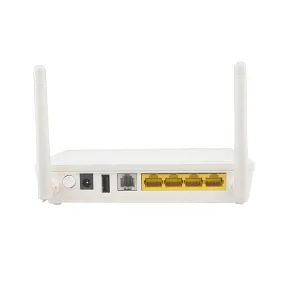
In deployment scenarios, 10G LR SFP+ modules are commonly used alongside other passive optical elements. For instance, when constructing high-density FTTH (Fiber-to-the-Home) networks, engineers use GPON ONUs (such as the Huawei HG8546M) alongside central distribution nodes. These central nodes aggregate upstream connections using high-capacity Mux Demux DWDM platforms and 10G SFP+ modules to manage long-distance traffic backhaul.
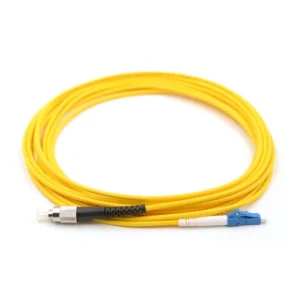
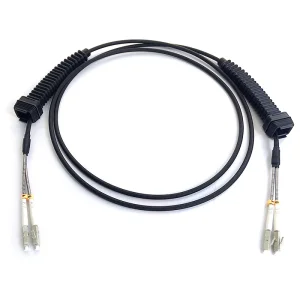
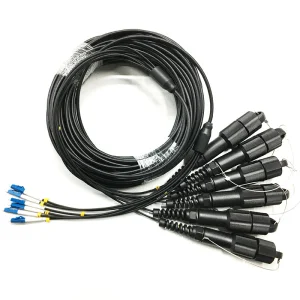
In cellular base stations, outdoor field environments present temperature challenges. OEM base-station connections often use specialized physical connections, such as PDLC outdoor field patch cords, to link central BBUs to RRH equipment. In these setups, industrial-grade 10G LR SFP+ modules (operating from -40°C to 85°C) are deployed to handle outdoor thermal variations while maintaining a stable 10Gbps optical connection.
Protects performance in remote base station enclosures by pairing industrial temperature-rated 10G transceivers with PDLC water-resistant connectors.
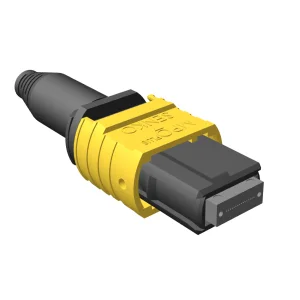
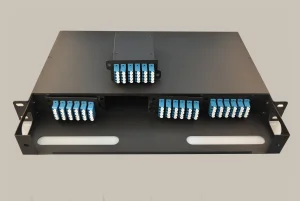
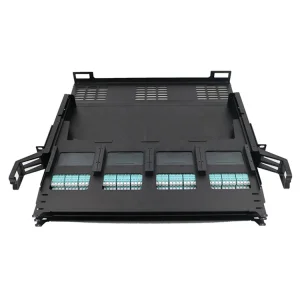
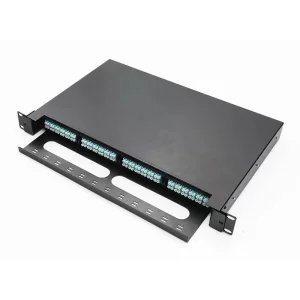
Utilizes 144fo and 96fo MPO patch panels to manage patch cords running from high-density switch ports equipped with 10G LR transceivers.
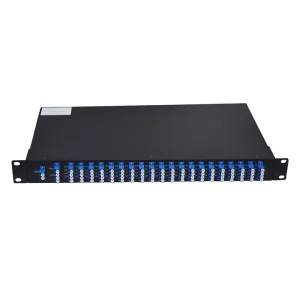
Connects corporate headquarters to remote branch locations by running single-mode patch cables through 19-inch rackmount optical chassis.
Years of sales and service experience have enabled us to win customers from different regions. Today, we have customers from East Asia, Southeast Asia, Middle East, Eastern Europe, Western Europe, Northern Europe, South America, North America, North Africa, and South Africa.
Win-win cooperation is our constant goal. Many of our OEM and ODM products have won Telecom Operator tenders and satisfy end-user requests.
Our main terminal telecom operators include: SingTel, Vodafone, America Movil, Telefonica, Bharti Airtel, Orange, Telenor, VimpelCom, TeliaSonera, Saudi Telecom, MTN, Viettel, Bitel, VNPT, Laos Telecom, MYTEL, Telkom, Telekom, Entel, FiberTel, StarFiber, Ooredoo, Beeline, Azercell.
The demand for bandwidth continues to push technology forward. While 10Gbps links remain standard for local loop, metro edge, and access network layers, the industry is preparing for higher speed transitions. High-capacity aggregation routers are shifting toward 25G SFP28 and 50G PAM4 technologies, which use similar optical spacing frameworks to keep migration paths cost-effective.
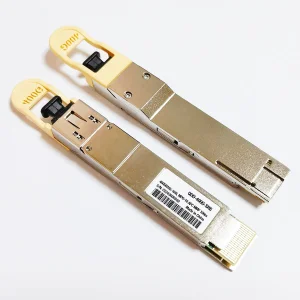
In high-density datacenters, multi-lane architectures (such as 400G and 800G modules using MPO interfaces) are standard for high-bandwidth core switching. However, the 10G LR SFP+ remains a reliable, long-lifecycle option for edge devices, access terminals, and localized enterprise links. Development efforts continue to focus on reducing manufacturing costs, improving silicon photonics integration, and lowering power consumption (aiming for sub-0.5W limits) to optimize overall network operating costs.
Typically, 10G LR SFP+ modules are designed for G.652 single-mode fiber (SMF). Running them over multi-mode fiber (MMF) is not standard practice and can cause optical dispersion issues. For short-distance MMF setups, a mode-conditioning patch cable or a dedicated 10G SR transceiver is recommended to avoid packet loss.
DFB (Distributed Feedback) lasers operate at longer wavelengths (like 1310nm or 1550nm) and produce a narrower spectral profile, making them suitable for long-range links (10km to 40km). VCSEL (Vertical-Cavity Surface-Emitting Laser) transmitters operate at 850nm and are designed for short-range, cost-sensitive multimode links (typically up to 300m).
Digital Optical Monitoring (DOM) provides real-time tracking of parameters such as temperature, TX/RX optical power, and laser bias current. This data helps network administrators identify issues like deteriorating lasers or dirty fiber connections before a complete link failure occurs.
Many switch manufacturers program their hardware to reject third-party transceivers that lack the correct vendor identification code in their EEPROM (SFF-8472 register). Premium OEM factories program each transceiver's firmware to match the host switch's required signature, ensuring plug-and-play compatibility.
Industrial-grade modules are tested under Telcordia GR-468 requirements, which include temperature cycling from -40°C to +85°C, damp heat exposure, mechanical shock, vibration tests, and accelerated aging. This ensures they remain reliable when deployed in unconditioned outdoor cabinets.
We perform 100% inspection on all components, including insertion loss, return loss, and face cleanliness testing. Every transceiver undergoes bit-error rate testing and compatibility checks on host switches before packaging and shipment.
 KOCENT OPTEC