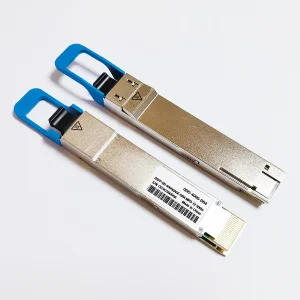
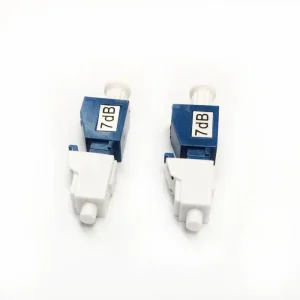
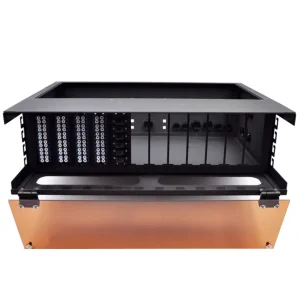
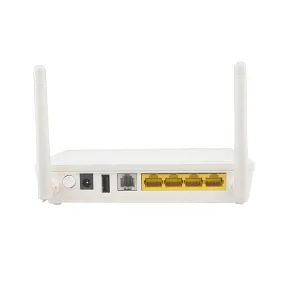
Browse our top-tier active and passive transmission media, optical components, and precision fiber patches designed to support high-bandwidth throughput.
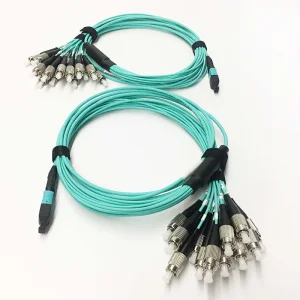
High-Quality MTP/MPO to FC OM3 16fo Fiber Optic Patch Cable Manufacturers, Quotes
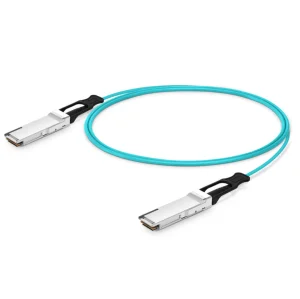
China 200G QSFP-DD Active Optical Cable OM3 Suppliers, Pricelist
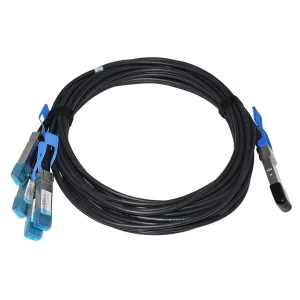
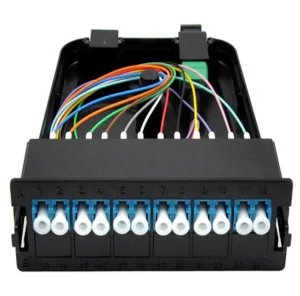
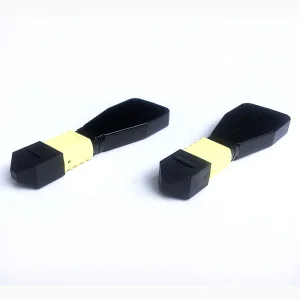
High-Quality Single mode 12 Cores MPO MTP Optical Fiber Loopback Supplier, Pricelist
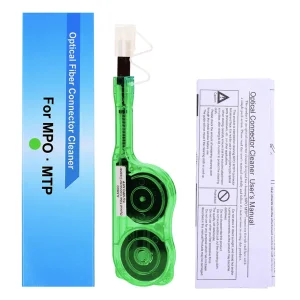
China MTP MPO fiber optic connector one-click cleaner pen Factory, Pricelist
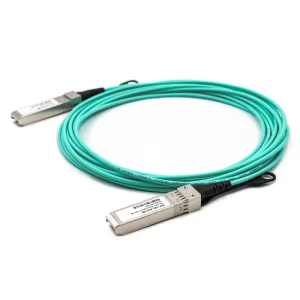
OEM 10Gb/s SFP+ Active Optical Cable Manufacturer, Pricelist
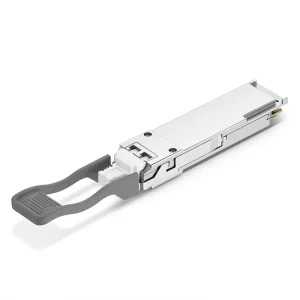
As global data consumption surges driven by artificial intelligence (AI), edge virtualization, cloud computing, and high-frequency transactions, the demand for stable, low-latency, and cost-effective physical networking infrastructures has reached unprecedented levels. At the core of local server networks and enterprise storage area networks (SANs) lies the 10G SFP+ (Small Form-factor Pluggable Plus) interface.
While next-generation data centers are deploying 400G and 800G fabrics for their spine-and-leaf backbone, 10G SFP+ cables (including Direct Attach Copper - DAC and Active Optical Cables - AOC) remain the undisputed standard for Top-of-Rack (ToR) switches to server NIC downlinks. The global manufacturing capacity for SFP+ systems continues to expand to meet this robust hybrid networking paradigm.
Integrating robust physical protection, optimized shielding, and precision-engineered transceivers ensures that our interconnect modules comply fully with SFF-8431, SFF-8432, and SFF-8472 industry multi-source agreements (MSAs).
Understanding the electrical, physical, and performance criteria of SFP+ cabling systems is critical for minimizing capital expenditures (CapEx) and operational costs (OpEx).
Utilizes passive twinaxial copper conductors. Operating distance is limited to 1-7 meters, making it highly suited for within-rack connections. Extremely energy-efficient with almost zero heat generation and negligible latency.
Embeds active optical transceivers into both ends of a multimode fiber cable. Capable of reaching up to 100 meters. Thin, lightweight, and completely immune to electromagnetic interference (EMI), ideal for multi-rack patching.
Uses independent optical transceivers (such as 10G-SR or 10G-LR) coupled with discrete MPO, LC, or FC fiber patch cables. Provides ultimate configuration flexibility over distances ranging from 300m up to 10km and beyond.
| Feature Parameter | 10G SFP+ Passive DAC | 10G SFP+ Active Optical Cable (AOC) | 10G SFP+ Transceiver + Patch Cable |
|---|---|---|---|
| Transmission Medium | Copper Twinaxial Cable (AWG30/AWG24) | Multimode Fiber (OM3/OM4) | Singlemode/Multimode Optical Fiber |
| Maximum Reach | Up to 7 Meters | Up to 100 Meters | Up to 10km (LR) / 40km (ER) |
| Power Consumption | < 0.1 Watts (Passive) | < 1.0 Watts (Per Terminus) | 1.0 Watts - 1.5 Watts (Per module) |
| Bending Radius | Moderate (Relatively stiff copper wire) | Excellent (Flexible optical fiber cores) | Highly Flexible (Requires bend-insensitive fiber) |
| EMI Immunity | Shielded, but susceptible to extreme EMI | 100% Galvanically Isolated & Immune | 100% Galvanically Isolated & Immune |
| Primary Deployment | Top-of-Rack (ToR) Switch to Server | Inter-rack connection, Mid-row Switches | Structured Cabling, Core/Aggregation Uplinks |
Partnering with a globally verified manufacturer to secure your physical layer transmission reliability.
Kocent Optec Limited established in 2012 in Hongkong as a hi-tech communication enterprise, is one of China's leading fiber optic termination product manufacturer and solution provider.
We're dedicated to developing and manufacturing fiber optic communication products ranging from passive to active categories for telecommunication networks, enterprise networks and data centers.

By leveraging our extensive experience and excellent production capacity we gained over the years, we magnify the outcome for our valuable customers, which ultimately expands their core competencies and helps them outperform competitors. We place emphasis on customer collaboration, and we define ourselves as your valuable partner in fiber optic connection solutions. We believe our differentiators are your perceived advantages.

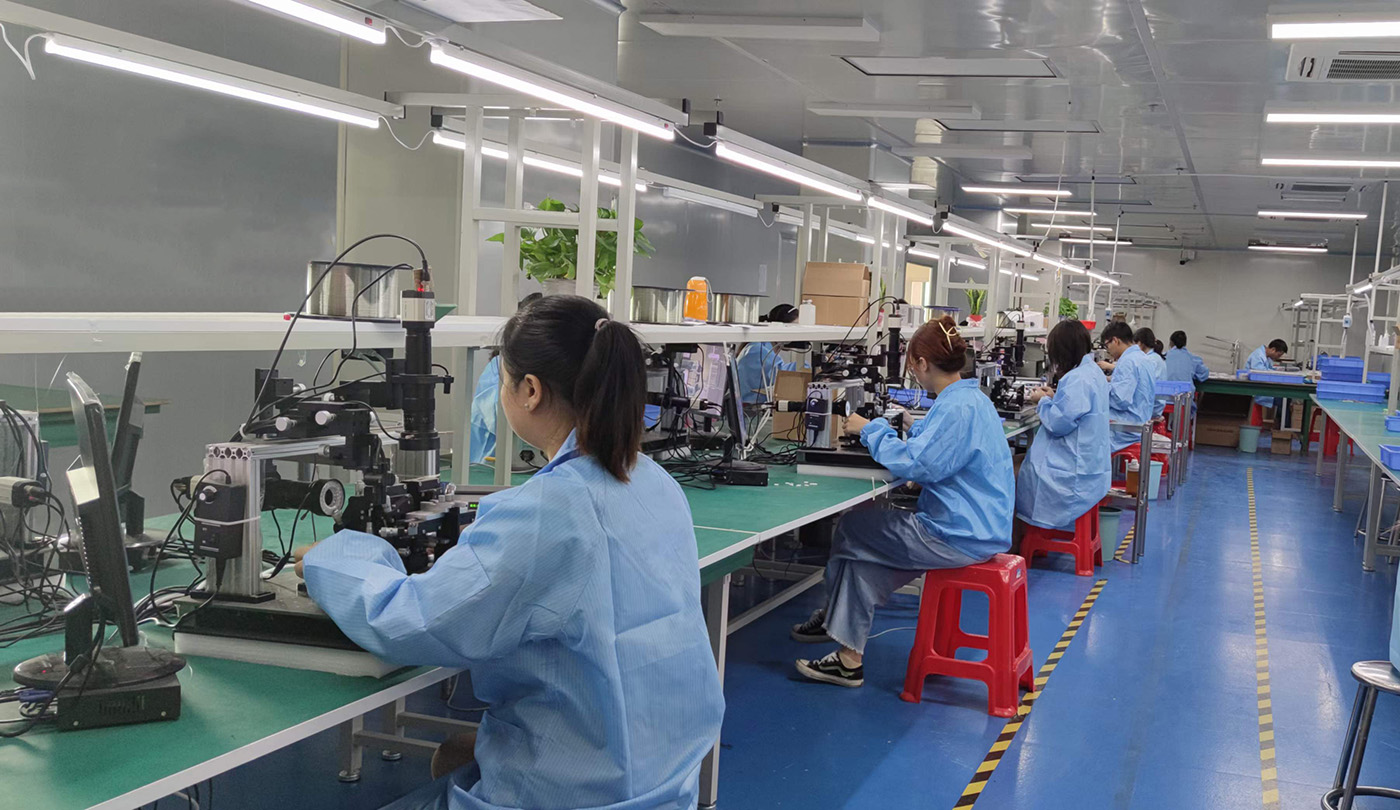
With more than 13 years of experience in manufacturing telecommunication fiber optic products, we follow strictly fiber optic industry standards by using mature scientific methods to deliver your products on time and ensure that 100% products are tested and inspected before shipment.
Years of sales and service experience have enabled us to win customers from different regions. Today, we have customers from East Asia, Southeast Asia, Middle East, Eastern Europe, Western Europe, Northern Europe, South America, North America, North Africa, and South Africa.
Win-win cooperation is our constant goal. Many our OEM and ODM products won the Telecom Operator tender and satisfy end-user request.
10G SFP+ cabling systems are custom-adapted to unique installation restrictions, temperature ranges, and electromagnetic properties across various industries.
Connecting core switch distributions to access layers. Utilizes SFP+ DAC for short runs within server rooms and active optical transceivers for floor-to-floor vertical risers, ensuring zero degradation of high-speed local communications.
Where high-voltage machinery generates heavy electro-magnetic disturbances. Passive copper is replaced by double-jacketed armored single-mode transceivers or AOCs, guaranteeing 100% signal isolation and structural robustness.
Massive arrays of clustered computing resources. Standardizing 10G SFP+ DACs for immediate server network interface cards (NICs) to top-of-rack switches lowers latency while reducing cumulative power supply demands and thermal output.
How current SFP+ physical layer topologies align with upcoming high-performance standardizations and migration paths.
Modern network engineers design cabling architectures with future upgrades in mind. The physical infrastructure of 10G SFP+ systems forms the geometric foundation for subsequent upgrade paths. By utilizing standardized racks, patch panels, and optical distribution frames (ODFs), enterprises can transition smoothly to 25G SFP28, 100G QSFP28, and even 400G QSFP-DD when traffic demands surge.
Investing in high-quality optical components like structured MPO/MTP fan-out systems and premium singlemode cabling pathways ensures that the physical optical plant does not need to be refitted during subsequent transmission upgrades. Upgrading simply requires replacing the active terminal transceivers while keeping the physical trunk line intact.
Industrial focus has shifted heavily toward minimizing the power envelope of data centers. Active Optical Cables (AOC) and high-density passive DAC products are at the forefront of this green transition. Modern active transceivers integrate silicon photonics chipsets that lower power usage by up to 30% compared to legacy architectures, directly reducing refrigeration demands in deep computing facilities.
Furthermore, manufacturing processes are aligning with international environmental declarations such as RoHS and REACH. Utilizing lead-free glass fibers, halogen-free jackets (LSZH), and recyclable packaging reduces the electronic waste footprint throughout the installation lifecycle.
Expert answers addressing the technical nuances, mechanical attributes, and global procurement concerns for SFP+ systems.
Passive SFP+ DAC cables do not contain signal conditioning electronics. The raw electrical signal is directly transmitted across the physical copper twinaxial core. Because of this, passive DACs are restricted to shorter distances (typically up to 5 or 7 meters) but have extremely low power consumption (<0.1W) and high reliability. Active DACs feature signal-boosting ICs in the connector housing, extending transmission limits to 10 meters over copper, though they consume slightly more power (approx. 0.5W to 1W).
Generally, SFP+ hardware is backward compatible, but standard SFP ports (which run at 1Gbps) cannot support the 10Gbps transmission speeds of SFP+ cables unless both linked devices can be manually configured to operate at 1Gbps. It is crucial to verify if the port firmware and host system support multi-rate negotiation (1G/10G) before attempting deployment.
Active Optical Cables (AOC) offer an all-in-one factory-terminated assembly. This eliminates worries about optical connector cleanliness (a common point of failure for manual fiber termination and installation). AOCs are highly recommended for short-to-medium distances (under 100 meters) because they are easier to route, are lightweight, and typically have a lower initial procurement cost than purchasing separate transceivers and matching patch cords.
Each compatible module and cable assembly undergoes strict EEPROM validation testing at our Hong Kong and China facilities. By utilizing actual target hardware (such as switches from Cisco, Arista, Juniper, and Huawei), we code and test the microcontrollers within each transceiver module to assure seamless vendor identification, DOM (Digital Optical Monitoring) system feedback, and fault-free operation.
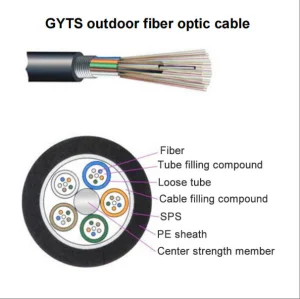
Outdoor deployments (like GYTS fiber optic cables) depend on moisture barrier designs, UV-resistant outer jackets, and tensile strength members. Standard polyethylene (PE) outer jackets combined with loose tube water-blocking gel compounds protect the internal fiber glass cores from physical stress, temperature fluctuations, and environmental degradation, securing a service lifetime exceeding 25 years.
Explore our highly reliable high-speed active transceivers, attenuators, rackmount chassis, and outdoor cabling assemblies designed to complete your network architecture.
 KOCENT OPTEC