Explore our high-performance optical interface adapters and passive components manufactured under strict ISO9001 and Telecom-grade metrics.
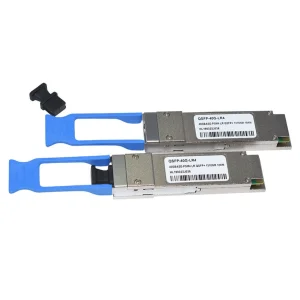
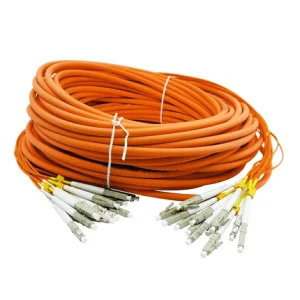
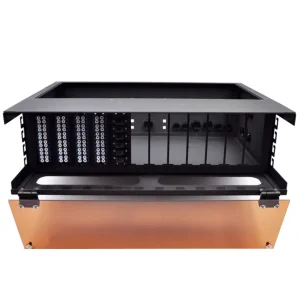
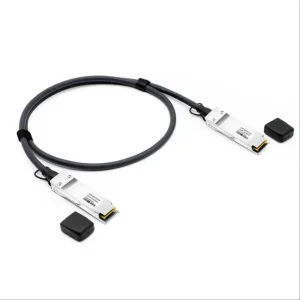
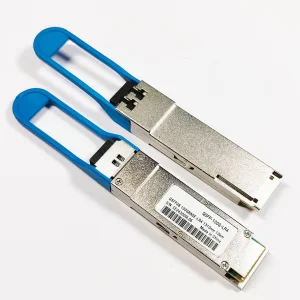
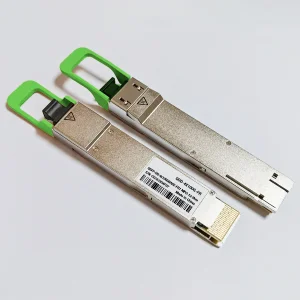
In the rapid progression towards ultra-broadband architectures, the 40GBASE-SR4 (Short Range 4 Lanes) protocol remains a foundational pillar for enterprise datacenters, edge nodes, and high-performance computing (HPC) networks globally. Engineered to operate over multimode fiber (MMF) infrastructure utilizing 850nm Vertical-Cavity Surface-Emitting Laser (VCSEL) arrays, the 40G SR4 transceiver utilizes 4 parallel independent transmit channels and 4 receive channels. This parallel configuration achieves an aggregate bandwidth of 40 Gbps via an MPO/MTP-12 connector interface, offering a cost-effective alternative to single-mode fiber variants for applications up to 100 meters on OM3, and 150 meters on OM4 media.
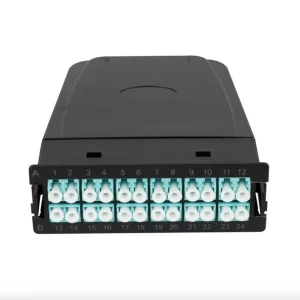
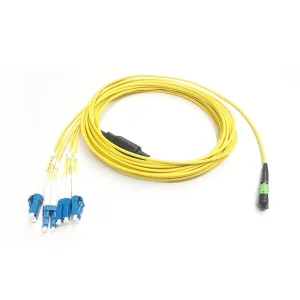
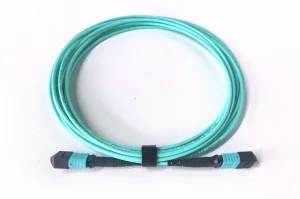
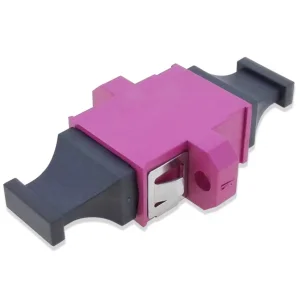
As semantic search queries on Google demand more authoritative insights into physical network design, it is crucial to recognize that 40G SR4 modules are not merely standalone hardware units. They function within a closely coupled network ecosystem comprising high-density MPO/MTP cassette modules, harness patch cables, and active optical transceivers. By utilizing a 4x10G breakout structural cabling system, operators can seamlessly migrate from legacy 10G SFP+ to 40G QSFP+ interfaces without re-laying structural optical trunk lines, securing long-term capital expenditure (CAPEX) savings.
| Parameter Type | Standard Specifications | Kocent Premium Specs (Enhanced) | Operational Impact |
|---|---|---|---|
| Wavelength | 850nm | 850nm VCSEL Array | Optimized for OM3/OM4 MMF attenuation profiles |
| Data Rate per Lane | 10.3125 Gbps | 10.3125 - 11.2 Gbps (OTU3 compatible) | Supports both standard Ethernet and OTN applications |
| Transmission Distance | 100m (OM3) / 150m (OM4) | Up to 150m (OM3) / 200m (OM4) | Extended loop reach for larger facility topologies |
| Power Consumption | 1.5W Max | < 0.8W Typical | Reduced thermal load, enabling higher density switch stacking |
| Connector Interface | MPO-12 / MTP-12 Male | Low-Loss MTP-12 (Elite Option) | Insertion loss reduced from 0.7dB to < 0.35dB |
Analyzing key structural factors that cloud computing centers, financial institutions, and telecommunication providers prioritize during global procurement processes.
Global operators run multi-vendor switches (Cisco, Juniper, Arista, Huawei, Nokia, etc.). Purchasing managers require transceivers with custom EEPROM coding that bypass firmware lockouts, ensuring 100% hot-swappable performance without system alerts.
As bandwidth demand scales, cost-per-gigabit is critical. High-density parallel optics (like 40G SR4 utilizing MTP couplers and modular cassettes) significantly drop cooling and rack footprint costs over long-term installation life cycles.
Telecommunications environments require rigorous conformance checks, including Bit Error Rate (BER) tests lower than 1E-12, Telcordia GR-468-CORE certifications, and RoHS compliance to guarantee uninterrupted service delivery.
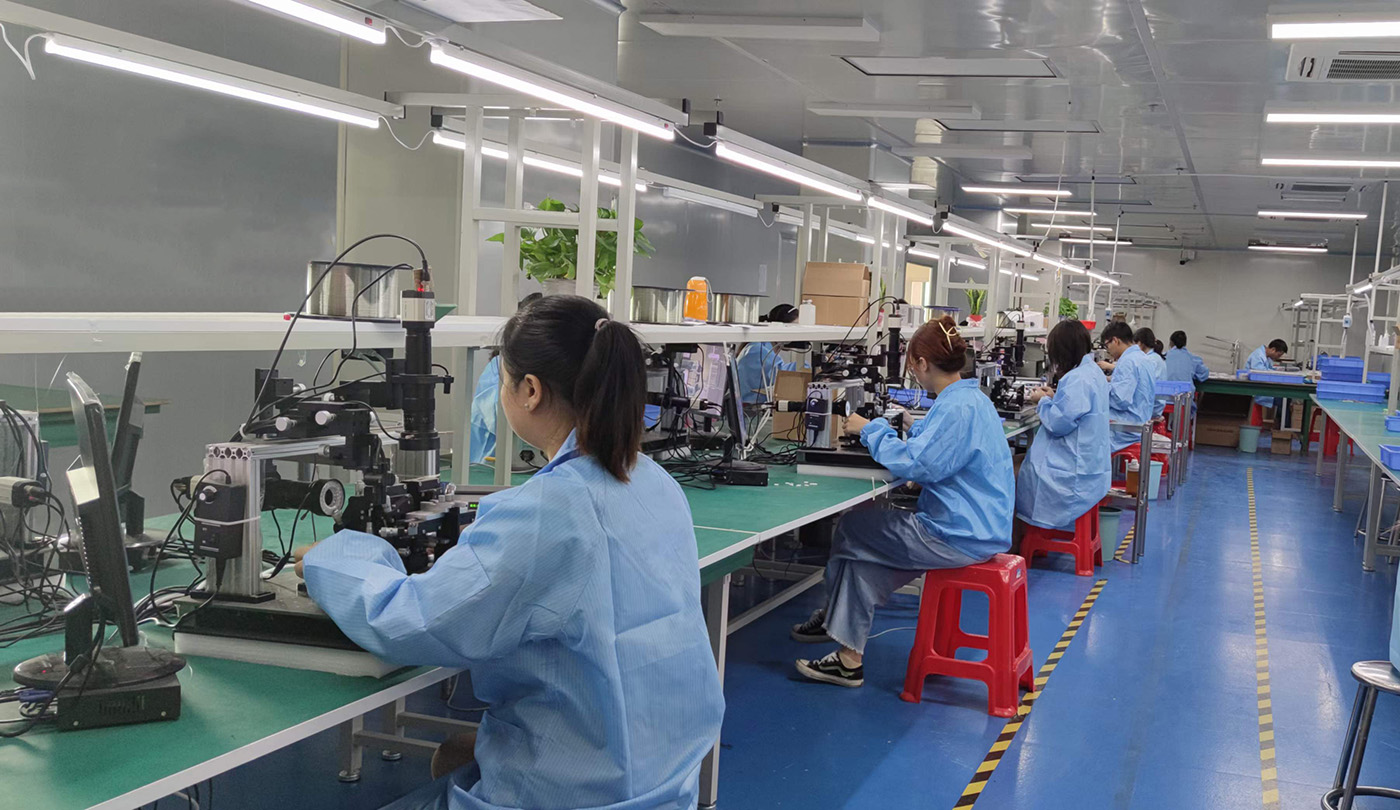
In the optoelectronics manufacturing sector, China has transitioned from a basic assembly model to an intelligent, automated Factory 4.0 paradigm. At Kocent Optec Limited, our production environment is integrated with automated optical alignment machinery, state-of-the-art robotic fiber termination lines, and real-time MES (Manufacturing Execution Systems).
This deep industrial integration ensures two distinct advantages for our global clients:

Years Industrial Experience
Tested Before Shipment
Insertion Loss Precision
Global Operators Trust Us
Your Trusted Partner in High-End Fiber Optic Active & Passive Systems
Kocent Optec Limited, established in 2012 in Hong Kong as a hi-tech communication enterprise, stands today as one of China's leading fiber optic termination product manufacturers and solution providers. We are dedicated to developing and manufacturing fiber optic communication products ranging from passive components to active optical transceivers for telecommunication networks, enterprise structures, and modern cloud datacenters.

By leveraging our extensive engineering experience and robust production capacity gained over the years, we magnify the operational outcome for our valued customers. This ultimately expands their core competencies and helps them outperform competitors in highly competitive environments.
We place strong emphasis on close customer collaboration. We define ourselves not simply as a supplier, but as your strategic partner in high-density fiber optic connectivity solutions. We believe our technical differentiators translate directly into your long-term business advantages.
With more than 13 years of specialized manufacturing experience in telecommunication-grade fiber products, we strictly adhere to international fiber optic industry standards (IEC, Telcordia, IEEE). Using mature, scientific quality control methodologies, we guarantee on-time project delivery while ensuring that 100% of finished products undergo rigorous testing and inspection before they leave our factory doors.
Over years of dedicated service, we have built relationships across diverse geographic markets. Today, our footprint covers East Asia, Southeast Asia, the Middle East, Eastern Europe, Western Europe, Northern Europe, South America, North America, North Africa, and South Africa.
Win-win cooperation remains our core focus. Many of our high-standard OEM and ODM products have successfully won major Telecom Operator tenders and satisfy strict end-user service level agreements. Our terminal telecom operator partnerships include: SingTel, Vodafone, America Movil, Telefonica, Bharti Airtel, Orange, Telenor, VimpelCom, TeliaSonera, Saudi Telecom, MTN, Viettel, Bitel, VNPT, Laos Telecom, MYTEL, Telkom, Telekom, Entel, FiberTel, StarFiber, Ooredoo, Beeline, Azercell, and many other leading enterprises worldwide.
How global enterprises integrate 40G SR4 modules, patch cords, and distribution systems into physical infrastructure.
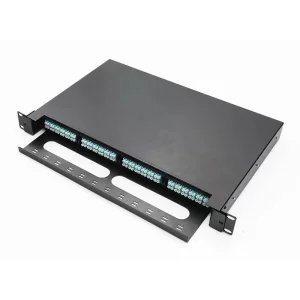
Utilized as primary aggregation layer interconnects. Combining 40G SR4 transceivers with high-density 288-core MPO/MTP patch panels enables rapid top-of-rack (ToR) switch to end-of-row (EoR) core connection deployments.
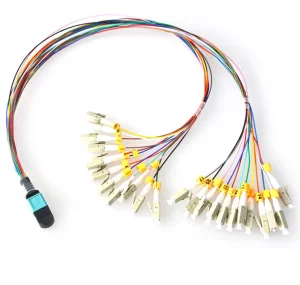
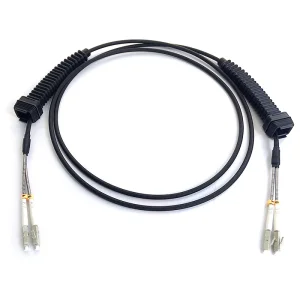
Where local data processing requires high bandwidth but physical space is limited. Modular 12/24-fiber cassettes and space-saving LC-MTP fanout cables reduce cable congestion, improving airflow and operating efficiency.
Connecting core telecommunication switching rooms. The 100% pre-terminated MPO trunk cords facilitate rapid failover deployments and high availability networks required by tier-1 operators.
Providing technical answers to help system architects and procurement managers make informed decisions.
Under standard IEEE 802.3ba specifications, a 40GBASE-SR4 transceiver supports link distances up to 100 meters over OM3 multimode fiber (MMF) and up to 150 meters over OM4 multimode fiber. Utilizing high-performance components and optimized VCSEL arrays, Kocent Optec's premium transceivers can achieve stable transmissions up to 200 meters on OM4 and OM5 grade cables, given low insertion loss connector parameters (insertion loss < 0.35dB).
The 40G SR4 uses parallel multimode technology, requiring an MPO/MTP-12 fiber optic connector and 8 active fibers (4 transmitting and 4 receiving at 10G each). Conversely, single-mode alternatives like 40G LR4 use wavelength division multiplexing (WDM) to transmit over a single duplex LC interface, carrying signals over 4 distinct wavelengths on a single fiber pair over distances up to 10km. SR4 is more cost-efficient for short runs inside data center racks, while LR4 is deployed for long distances.
Yes. We implement an advanced hardware EEPROM coding system in our testing labs. Before shipping, each module is verified on corresponding brand switches to match exact compatibility protocols, avoiding system errors and ensuring full access to Digital Diagnostics Monitoring (DDM) capabilities.
Polarity ensures that the transmitter on one end connects to the receiver on the other end. Standards define three methods: Type A (Straight-through), Type B (Crossover), and Type C (Pair-flipped). Type B is the industry standard for parallel fiber connections, matching 40G SR4 transceivers correctly across structured paths. Utilizing mismatched polarities will disrupt the signal path.
Modern production facilities utilize high-precision automation systems for optical coupling alignment and computerized end-face polish inspection. This significantly reduces the variance in insertion loss, ensures return loss is kept above the telecom-grade threshold of 35dB (for multimode) or 60dB (for APC single-mode), and reduces physical failures under variable temperature environments.
Complementary infrastructure components, active optical modules, and testing equipment for physical plant upgrades.
 KOCENT OPTEC